Most of these ideas cost nothing but a request to your photographer: a second pass at the cake cut, a macro lens for the rings, a walking pose instead of a stiff one.
A few need real planning, like the sunset session, which means starting the ceremony at least 1.5 hours before sunset, or a drone shot that may add to the price.
Your venue and your timeline decide which ideas are yours: sparklers need a dark sky, aerials need open ground, and a pet in a bow tie or a classic car only works if you can bring one.
1. Kiss, Kiss!
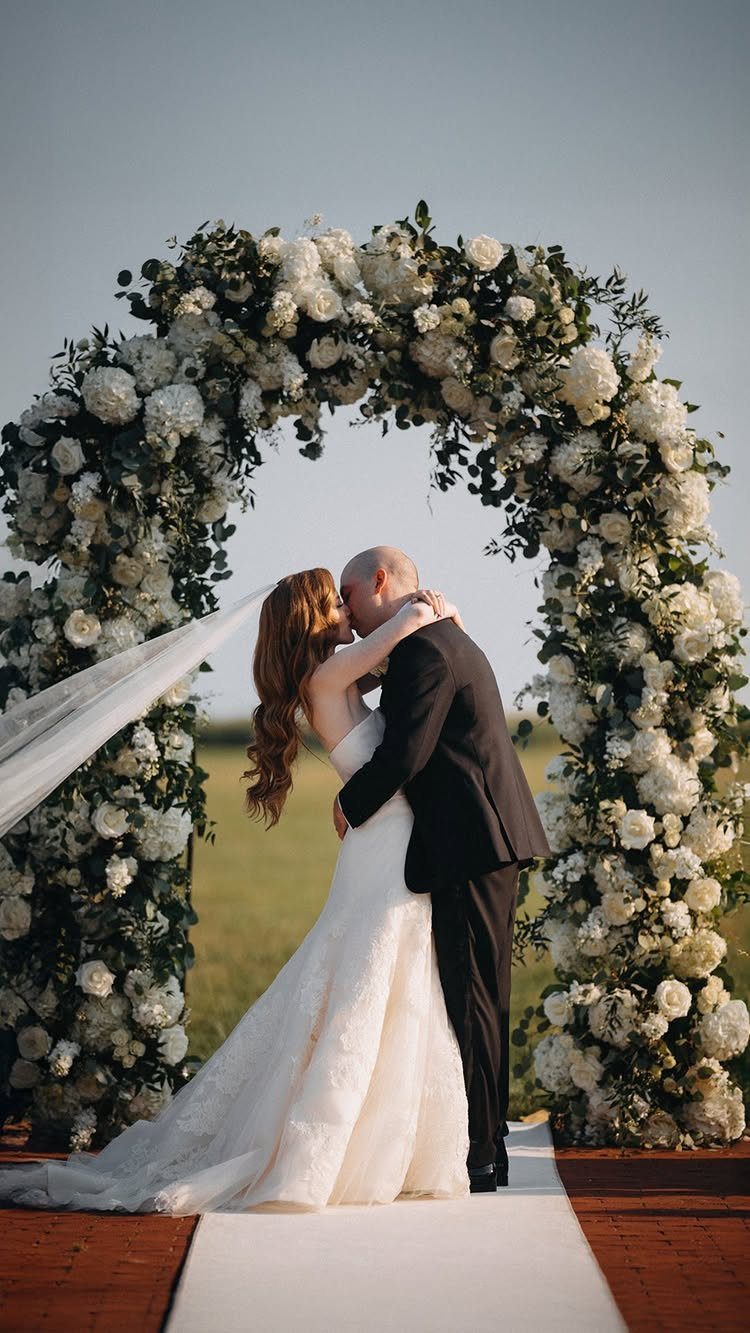
A kiss under a florals-heavy arch gives you a frame built into the shot. The white arch does the composing, so the couple only has to lean in and hold still for a beat.
Ask your photographer to shoot it twice: once wide, so the arch and the field read as a place, and once tight on the two of you. I would pick the wide one for the wall.
2. Wedding Rings
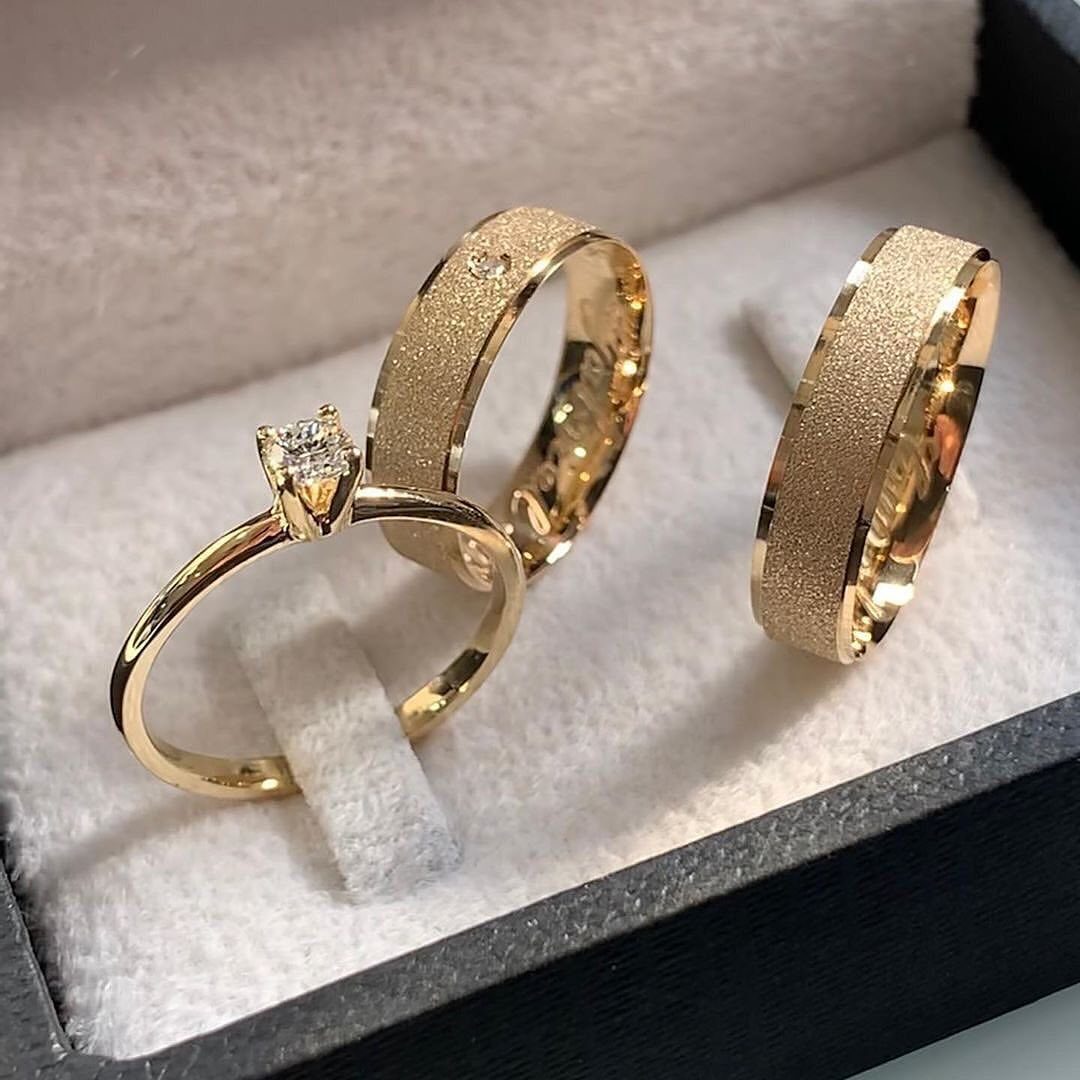
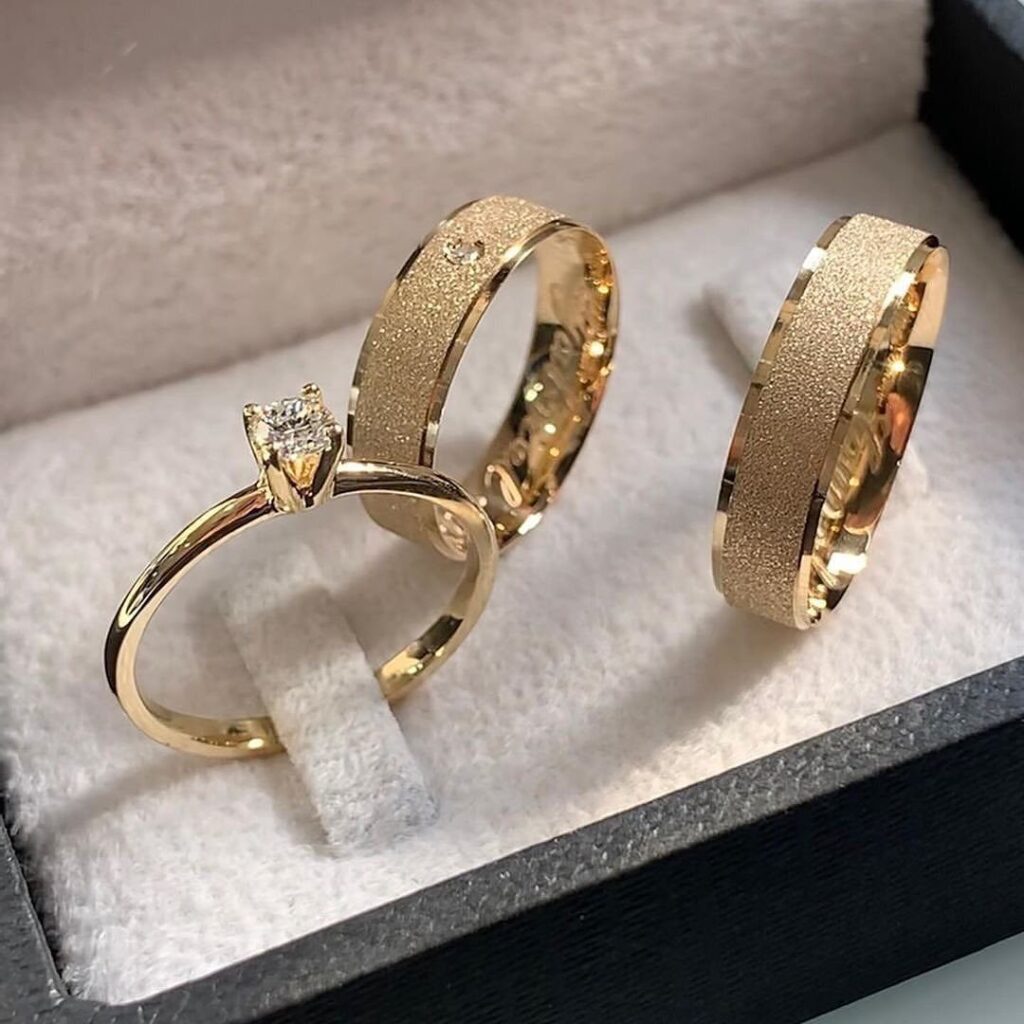
Rings photograph best when they sit still in something soft.
Ask the photographer for a macro lens; it costs nothing extra to request, and it shows the setting and the band edges.
3. Wedding Party!
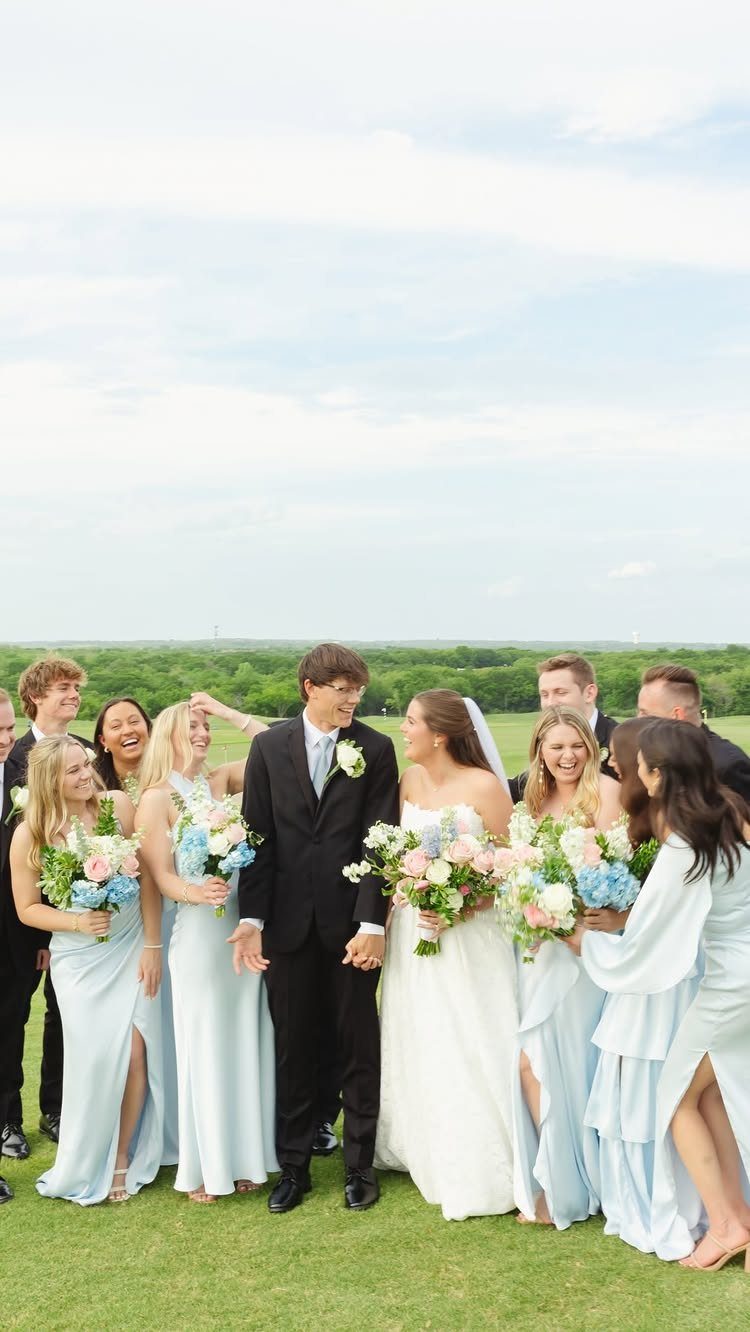
A wedding party standing on a lawn can look like a lineup or like friends, and the difference is contact. Hands held, shoulders touching, the couple pulled into the middle of the group: that reads as warm.
Matching colors help the frame.
Take one posed frame and one where everyone laughs. I would keep the laughing one.
4. Cake Cutting
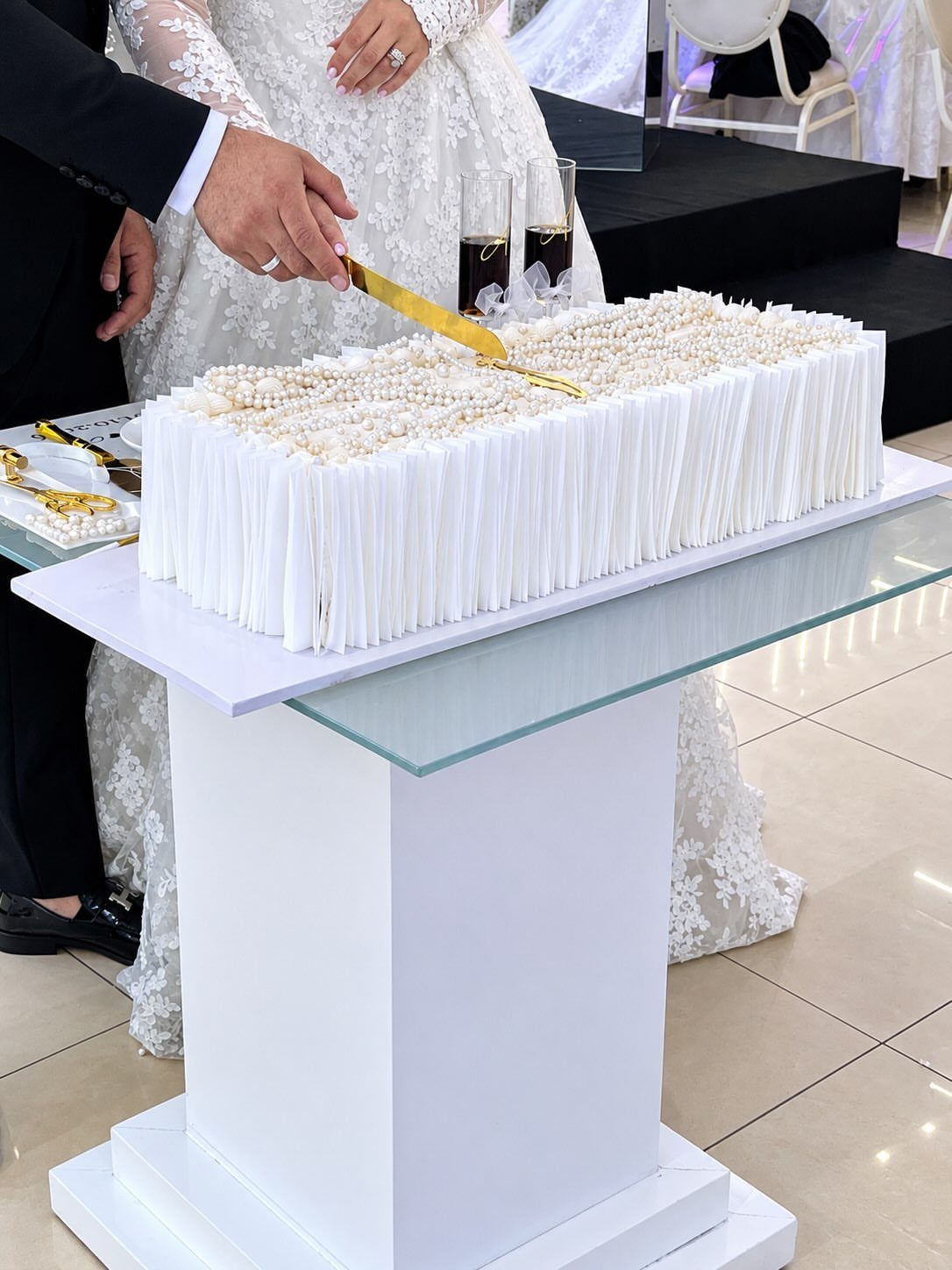
The cake cut lasts about a minute, so plan for it. Tell the photographer when it happens and ask the DJ or emcee to announce it, so guests gather close and nobody wanders into the frame.
Set the cake where the light is good, on a clean pedestal with the flutes behind it.
Have the couple cut slowly and look at each other, not the knife. Ask for a second pass if the first one is rushed.
5. Getting Ready Photos
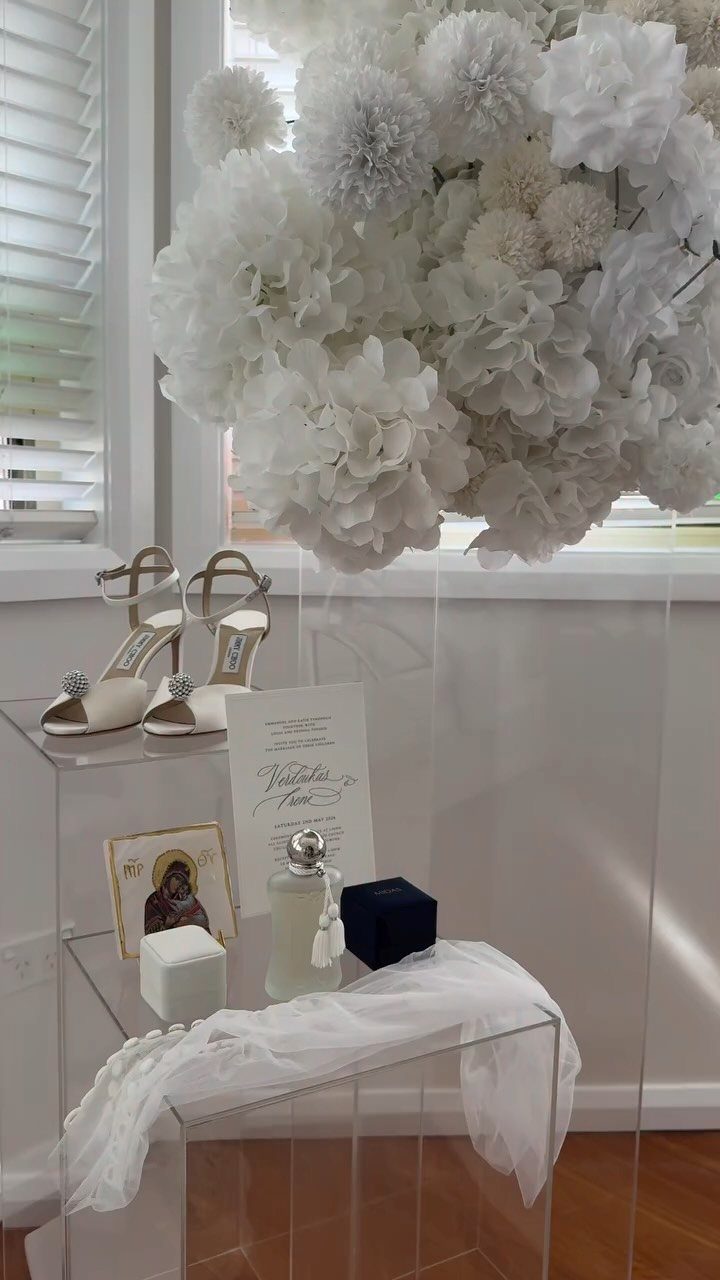
Gather them in one spot before the photographer arrives, so none of the shoot time goes to hunting for a missing earring.
Clear acrylic stands lift each item and keep the background clean, and a big arrangement of white flowers overhead adds depth. I like this better than flat lay on a bed, because the pieces stay separate and easy to read.
6. Walking Down the Aisle
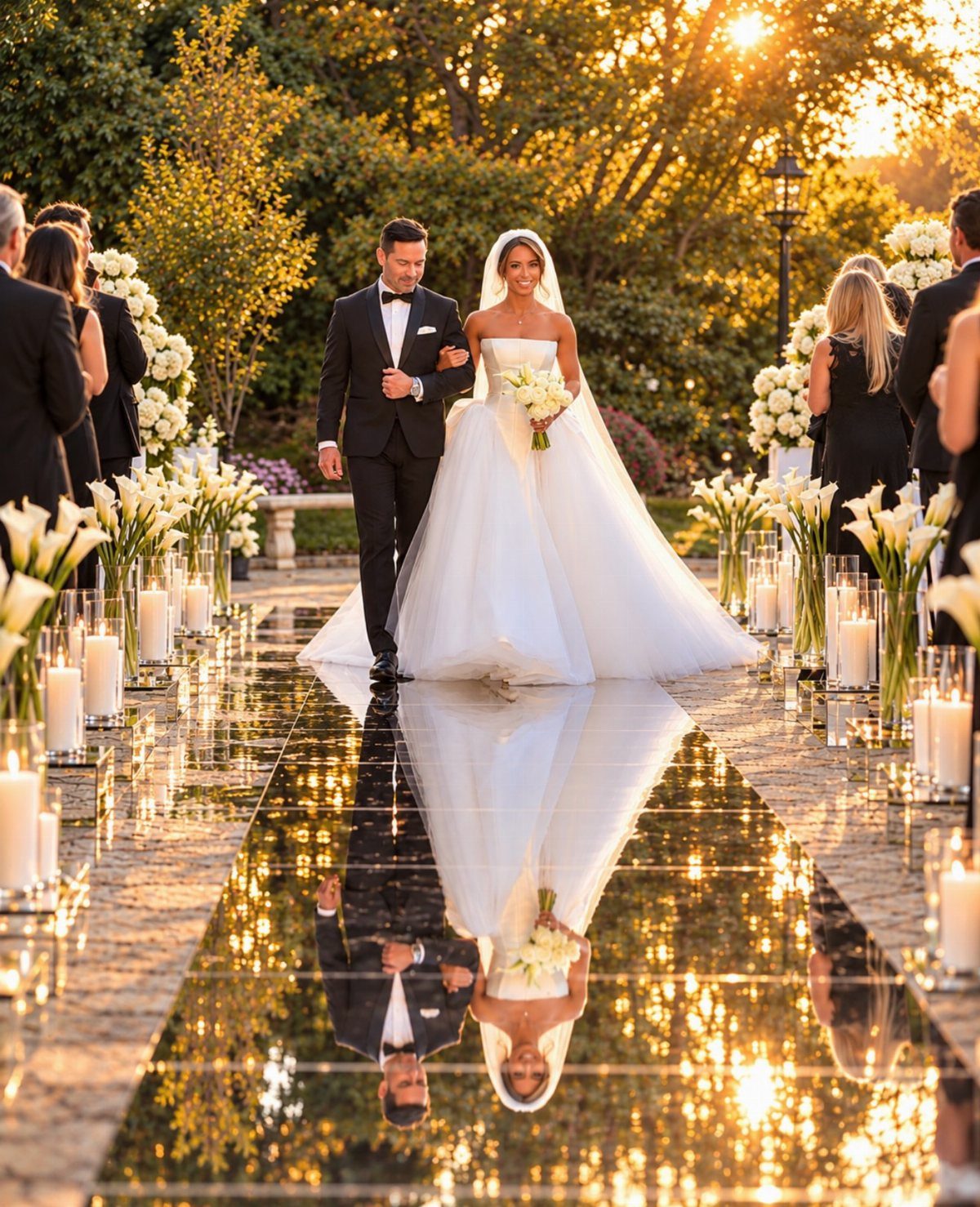
Slow down.
The aisle is short, and most couples cover it too fast for a single good frame. Walk at about half the speed that feels natural, and pause for a breath at the halfway point.
Ask the photographer to shoot from the far end, looking back at you, and then again from behind.
7. Couple Portraits
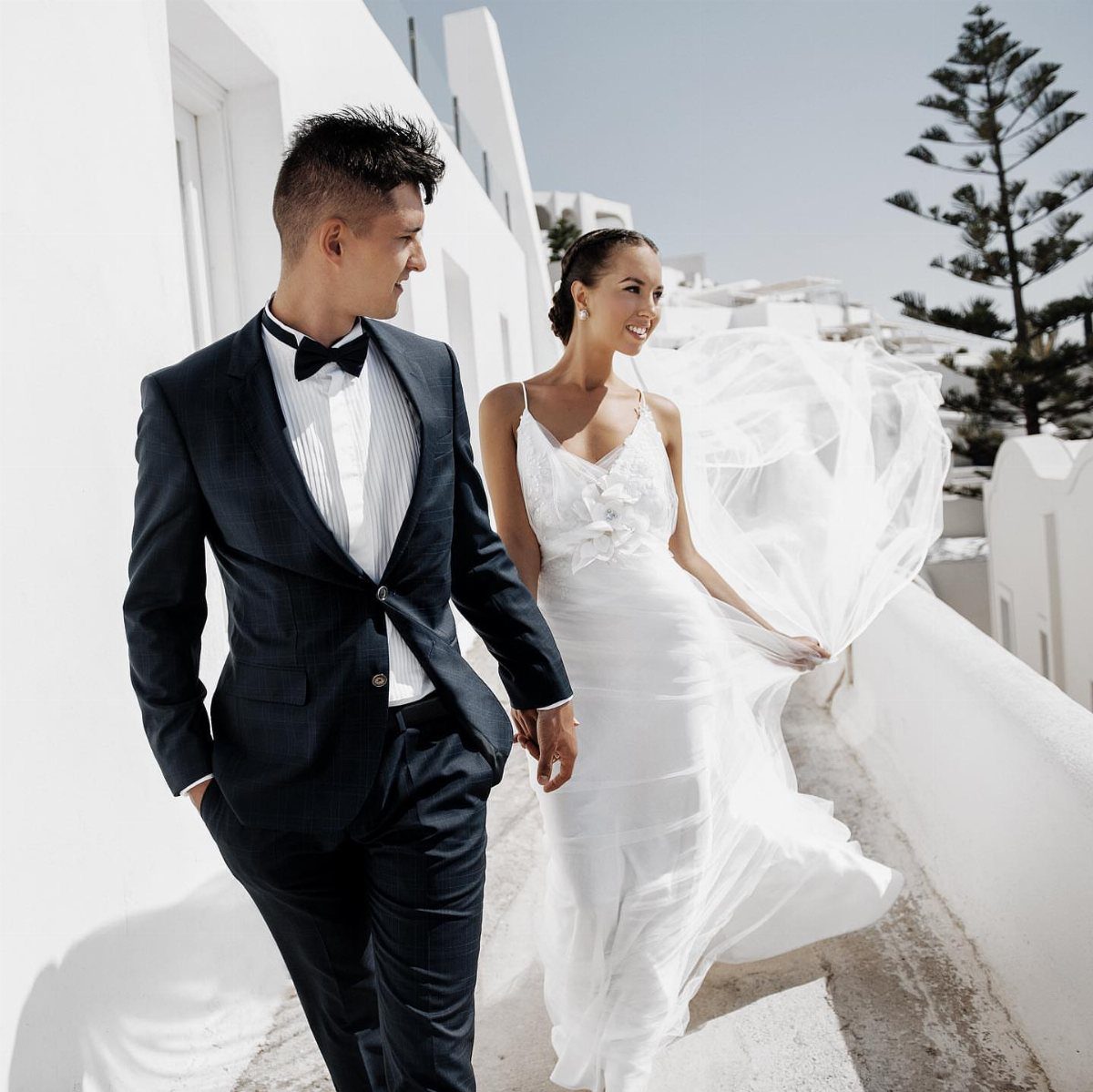
Couple portraits work best when the two of you are moving. Walking hand in hand gives you a natural pose, and the veil trailing behind adds motion without any direction.
White buildings and open sky keep the frame clean, so the dark tuxedo and white dress stand out. Pick a location with simple backdrops like that, and let the photographer follow you rather than stopping you for each shot.
I would choose a walking frame over a stiff pose for the wall.
8. First Look
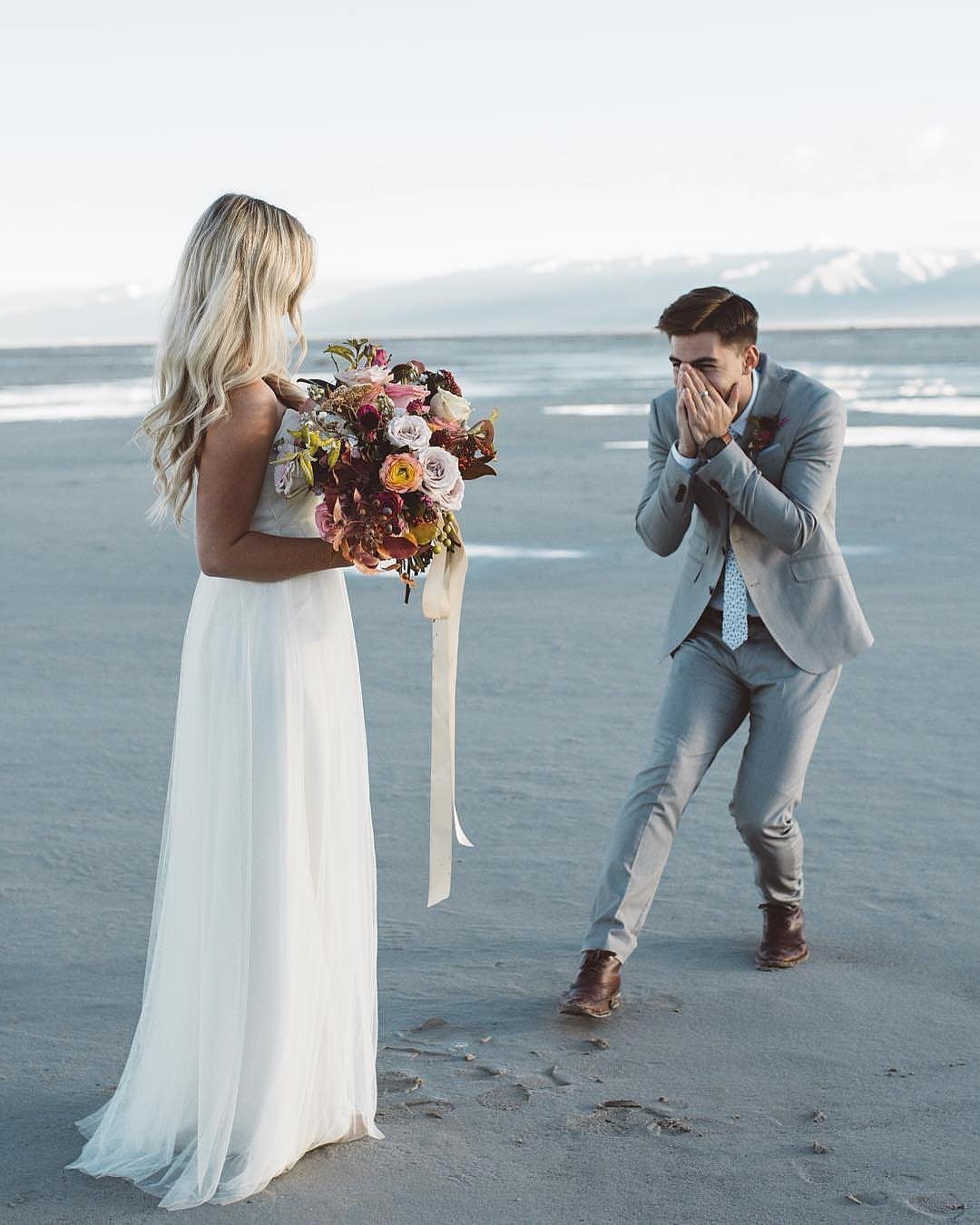
A first look moves the big reaction away from the aisle and into a private moment, before anyone else is watching. One of you waits with your back turned; the other walks up and taps a shoulder.
Wide open ground, like a flat stretch of salt or sand, leaves nothing to compete with the reaction. Ask the photographer to stand back with a longer lens, so the hands over the face read clearly.
I would plan for it. Those first seconds are the ones you will look at longest.
9. Bridal Portraits
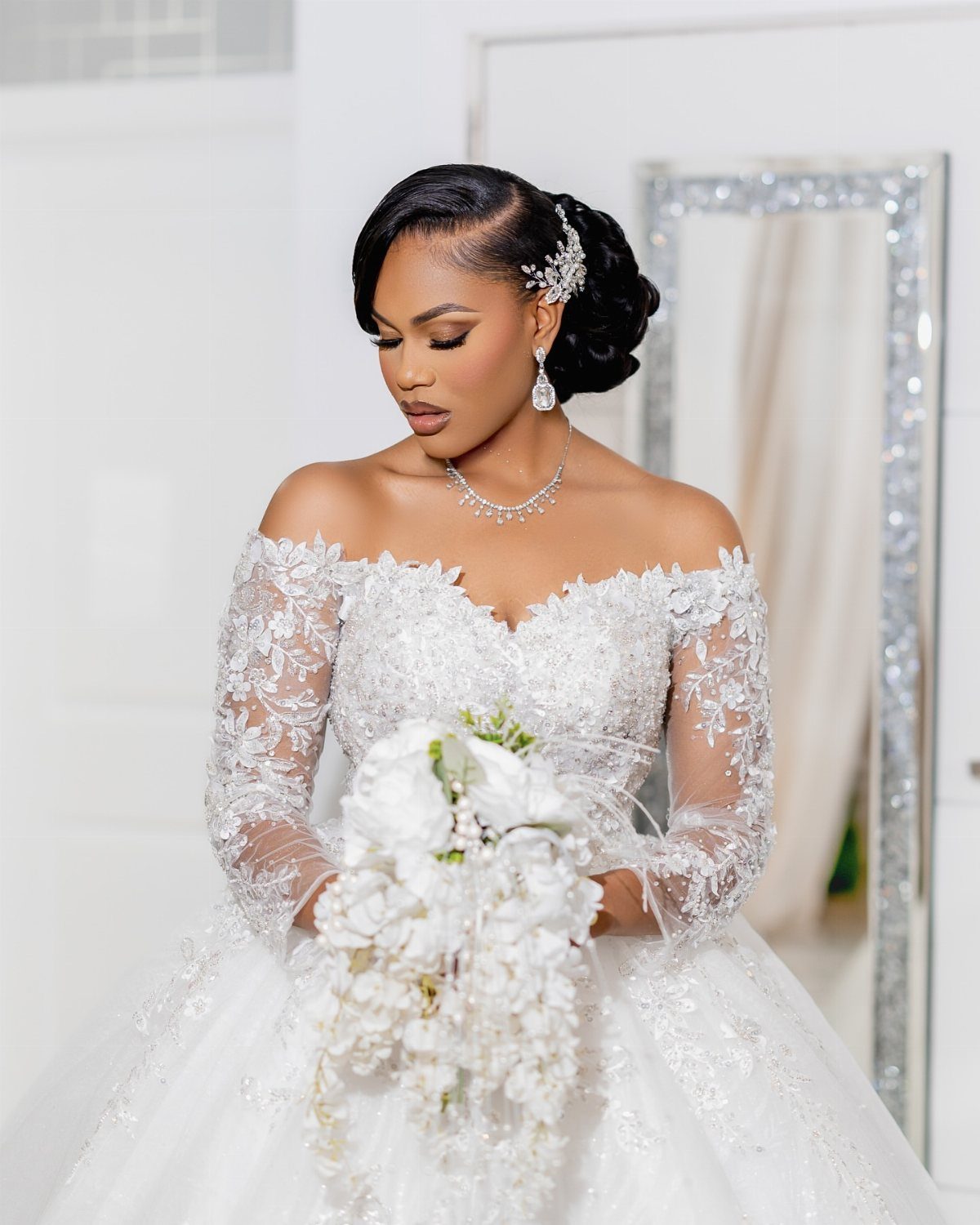
Bridal portraits give the dress its own frame, with no one else to share it.
Bright, even light from a big window keeps the lace detail sharp. Ask for a few minutes alone with the photographer, before the crowd arrives, so you can relax.
I would hold the bouquet low and let the dress do the work.
10. Wedding Exit with Sparklers
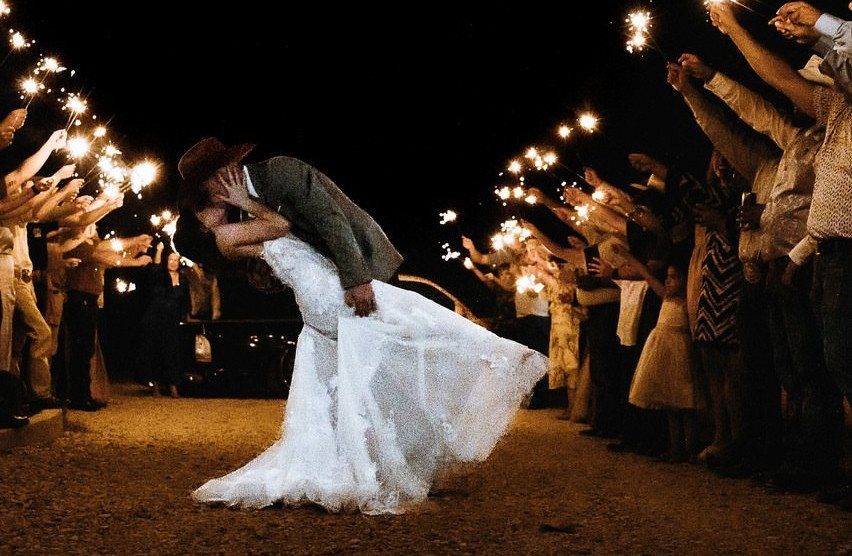
A sparkler exit is over in seconds, so line everything up first. Guests need their sparklers in hand and lit before you appear, which means someone has to be in charge of the lighters.
Have the photographer shoot from the far end as you walk through, then stop for a kiss, since a dip works well and puts the sparks all around you. Night is the point; a dark sky makes the light read.
11. Family Portraits
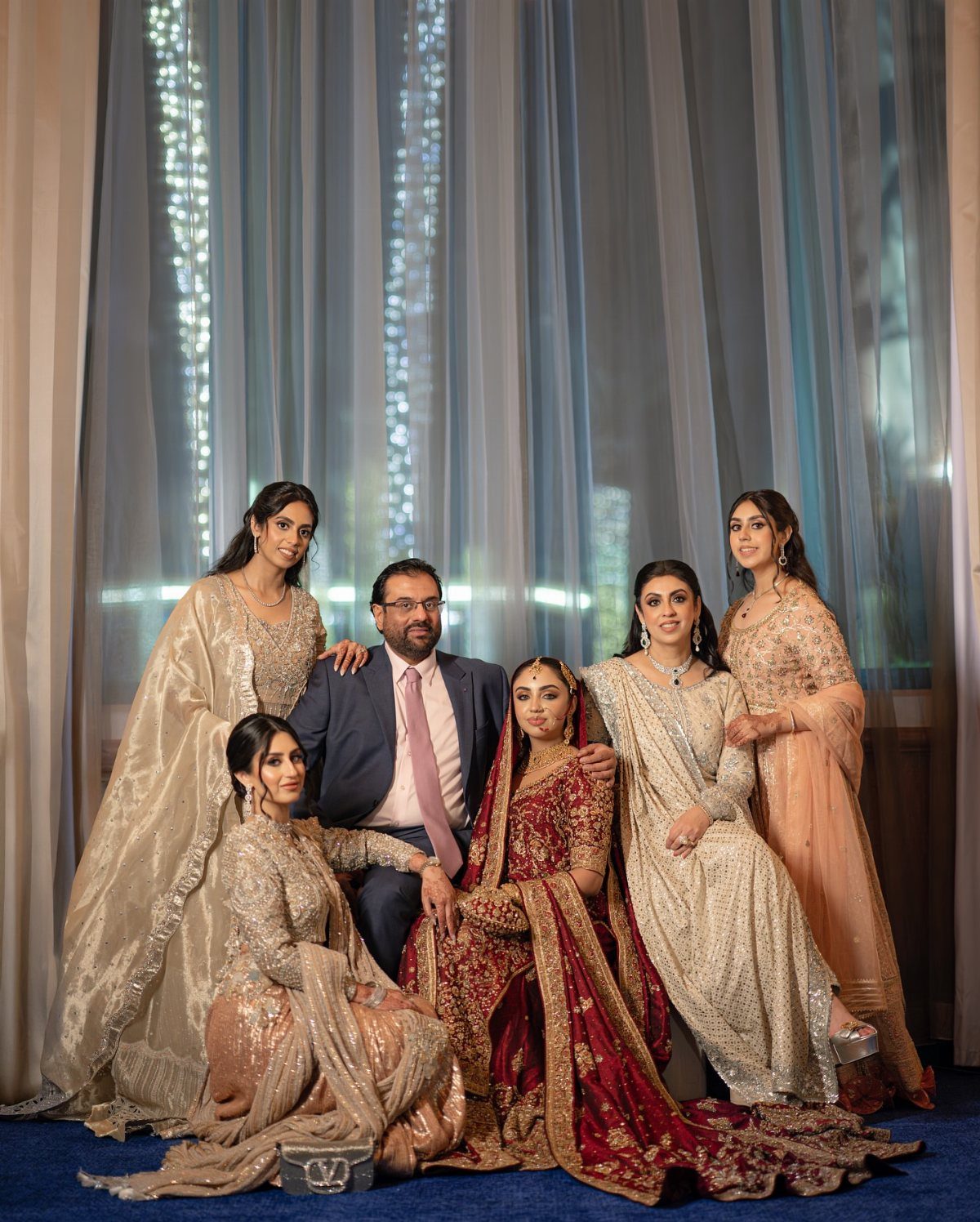
Family portraits go faster when you hand the photographer a list of groupings ahead of time. Start with the largest group and work down to the smallest, so relatives can leave as soon as they are done.
A plain backdrop lets the outfits carry the color, so skip busy patterns behind the group. Take one formal frame and one where everyone is laughing.
I would keep the laughing one, but I would never skip the formal.
12. Champagne Tower
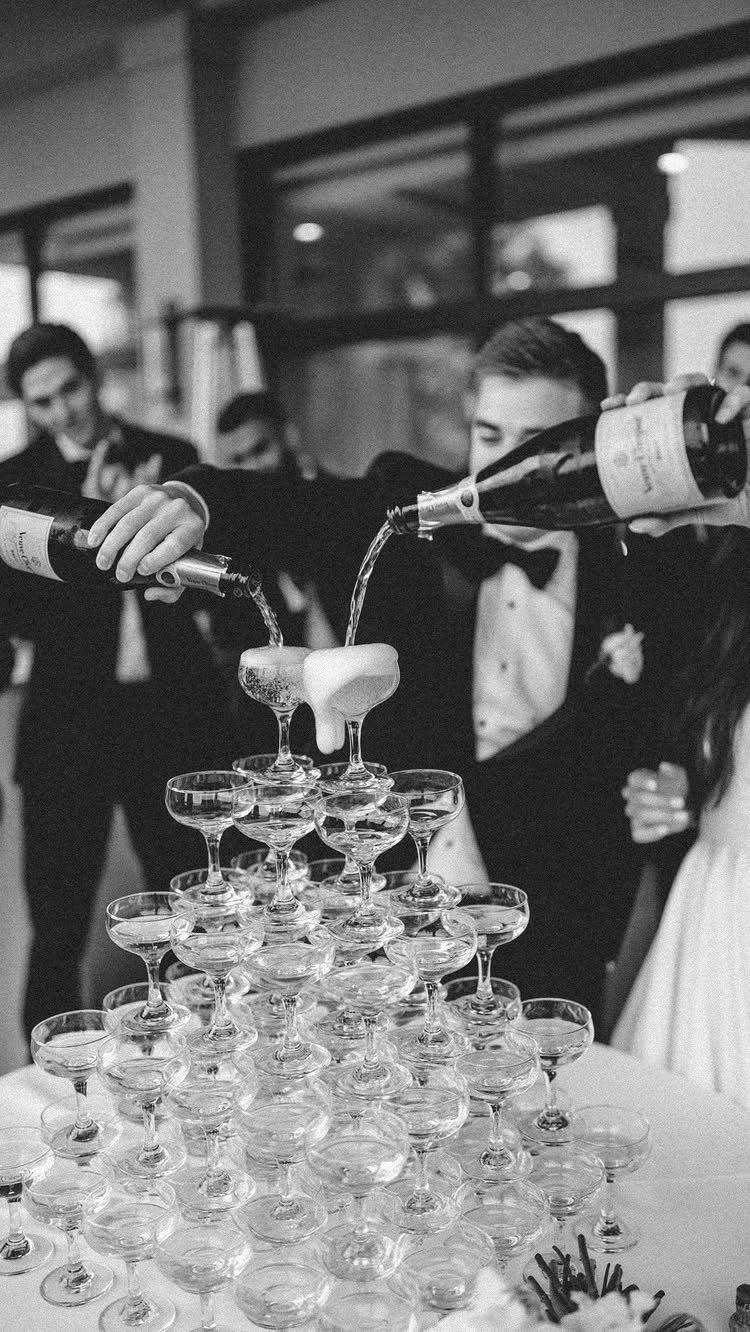
A champagne tower is stacked coupe glasses in tiers, poured from the top so each level fills the one below. Pour slowly, and split the bottles between helpers so the work goes quickly.
Set it on a sturdy, level table; a wobble ruins the whole thing. Tell the photographer when it happens, since the pour lasts only a moment.
Black and white suits it well, because the glass and the liquid catch the light with no color competing.
13. Pets Dressed for the Occasion
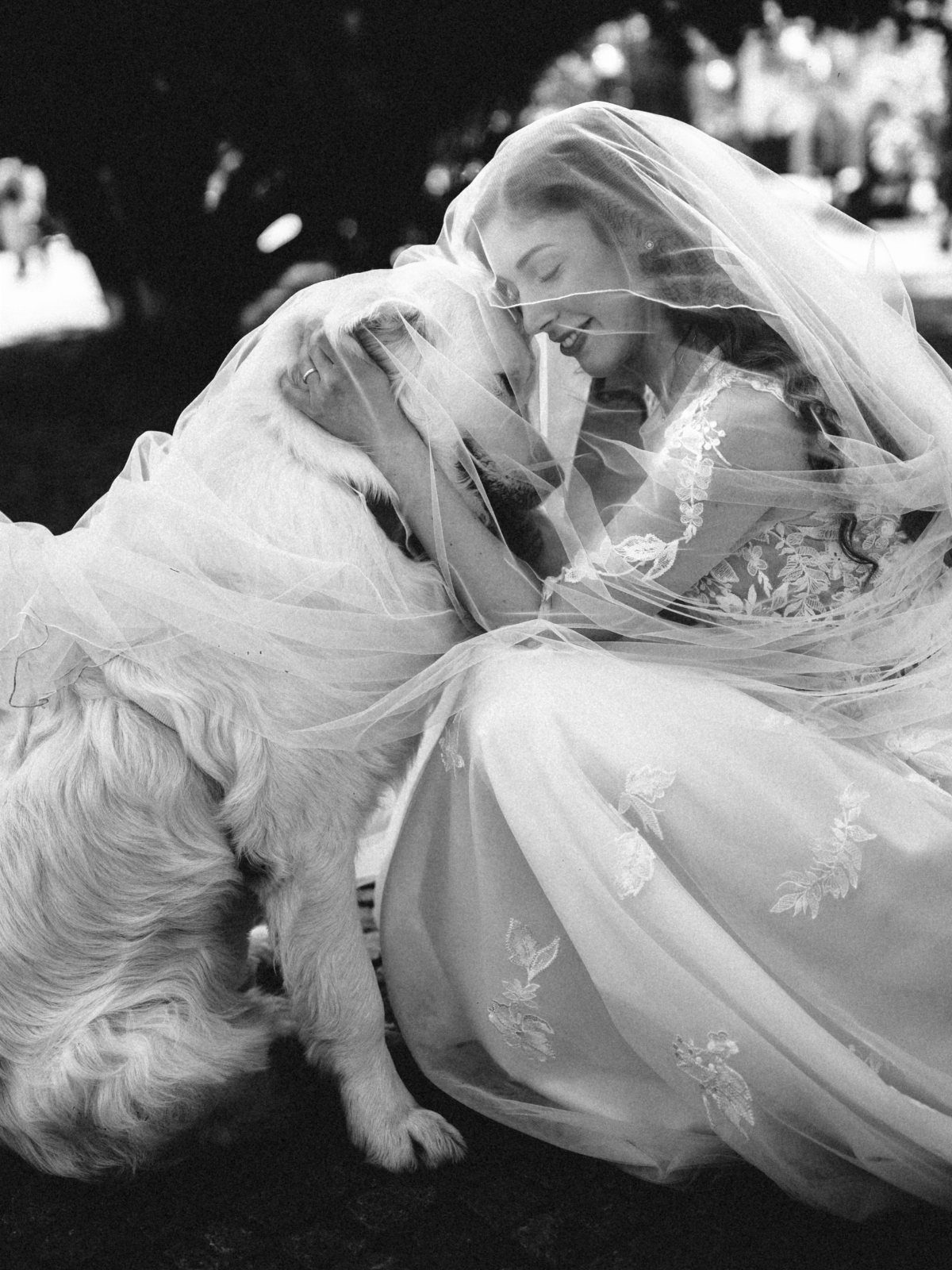
A large dog under the veil with you makes a frame no solo portrait can match. Hug the dog close and let the veil drape over both of you.
Have a friend hold the leash just out of frame, and ask the photographer to shoot a few extra frames, since dogs rarely hold a pose.
For a wall print, I would take this over a plain portrait.
14. The Veil
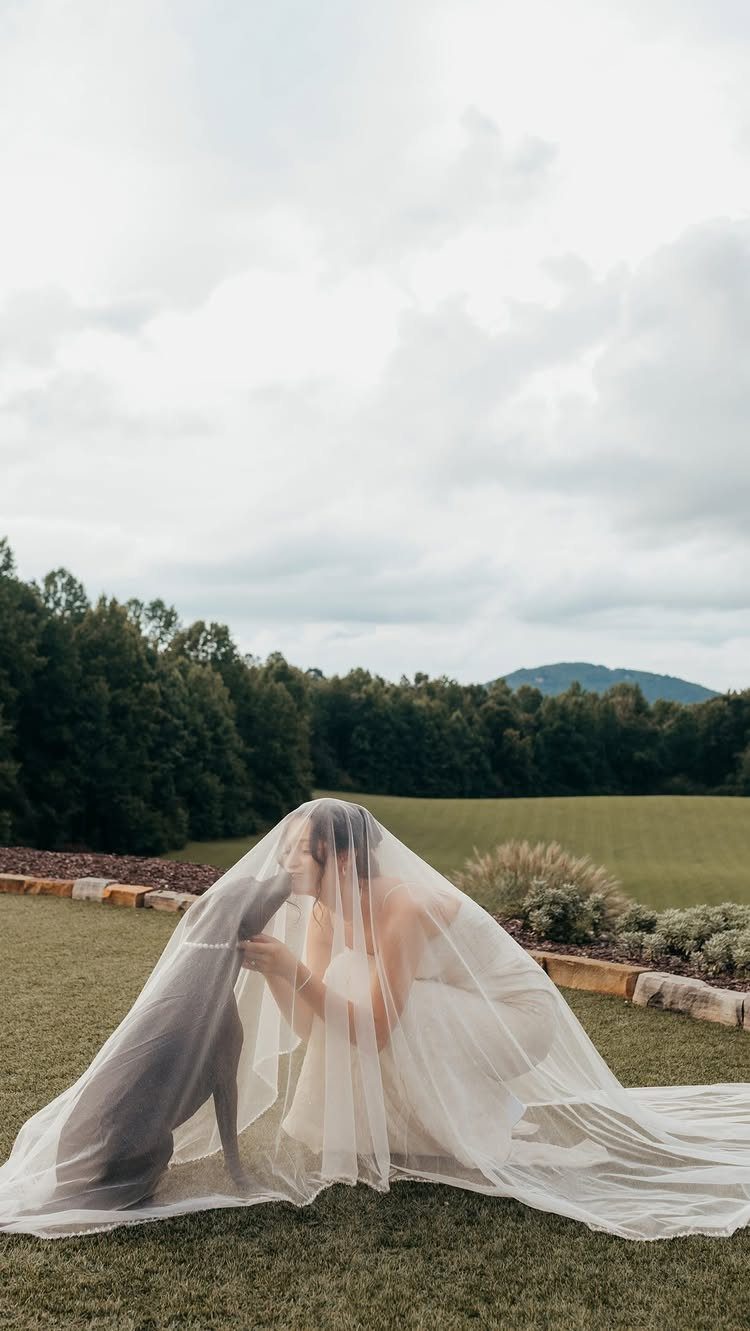
A veil gives the photographer more to work with than any other piece of the outfit. Pulling the veil over yourself and a pet is one version; a long veil spread out on the grass is another.
Open ground with trees and hills behind keeps the white clean. Crouch low and let the fabric fall naturally rather than arranging every fold.
Ask your photographer for several different veil shots instead of just one. I would keep the playful one.
15. The Walk
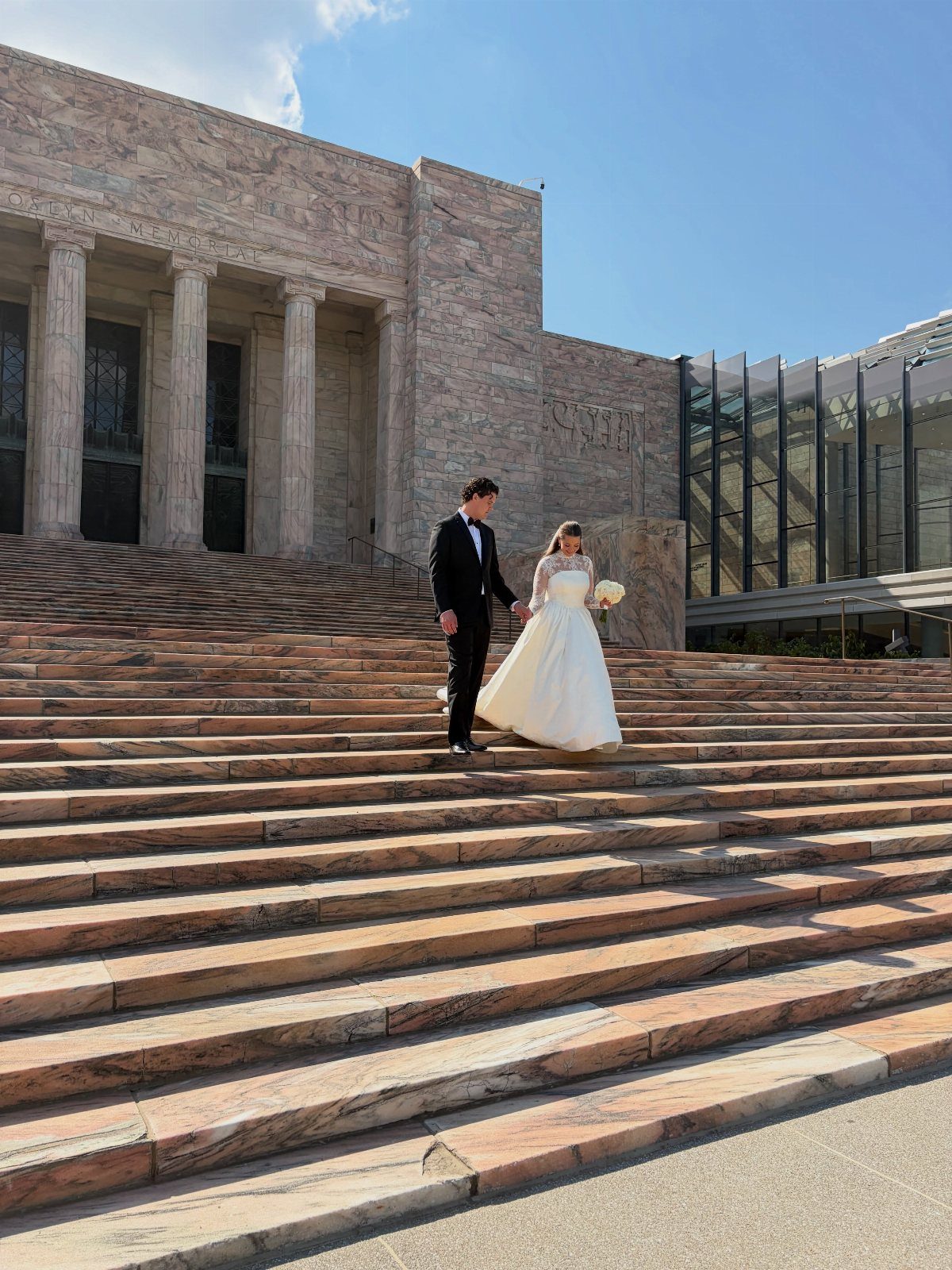
Wide steps give a walking shot room to unfold. Start at the top, hand in hand, and walk down slowly while the photographer stays back and shoots the whole building behind you.
A grand facade with columns frames the two of you without any props. Ask for one frame at the top, one midway and one at the bottom, so the pictures read as a journey rather than a single pose.
For the wall, my pick is the frame from midway through the walk.
16. The Table Decor
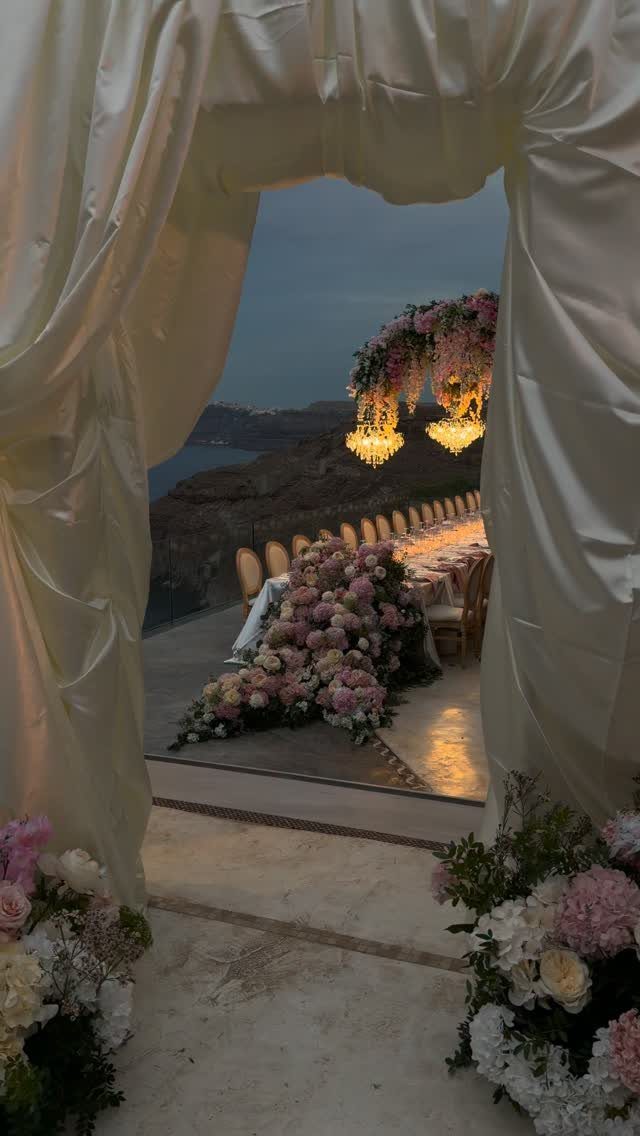
Long tables with floral runners and chandeliers overhead give a reception a look all its own, and one runner does the work of many small centerpieces.
Ask the photographer to shoot the table before guests sit down, when the flowers and lights are untouched. Shoot it from the end, looking down the length, so the repeating pattern leads the eye toward the sea.
Dusk light makes the chandeliers glow, so schedule that shot for then. I would take this over a close-up of one centerpiece.
17. Classic Car
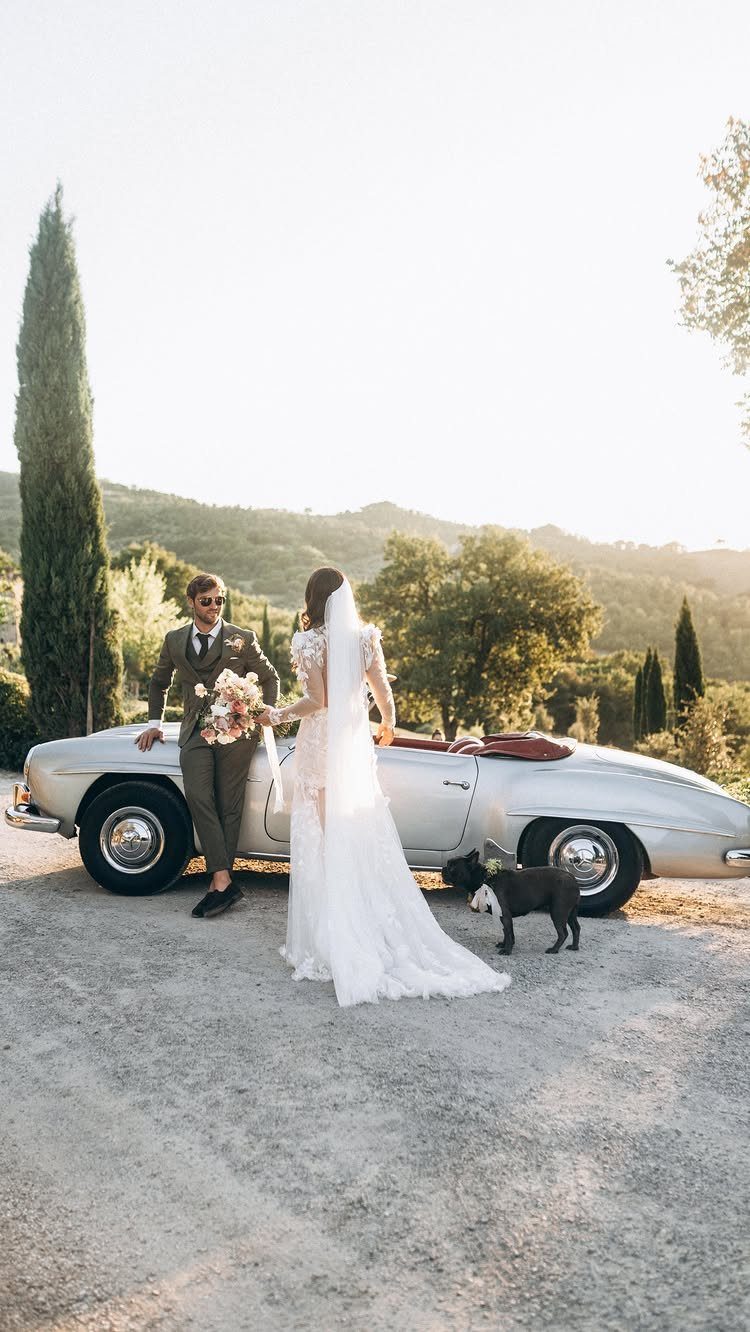
Arriving in a silver vintage convertible gives you a backdrop that cannot be faked. Take the portraits right beside it, with open hills behind, so the car and the setting share the frame.
A small dog standing next to the couple adds a bit of warmth to a classic car shot. Plan for this before the ceremony, while hair and outfits are fresh, and tell the photographer the car’s arrival time.
I would keep one frame of the two of you leaning on the car, relaxed.
18. Dancing Photos
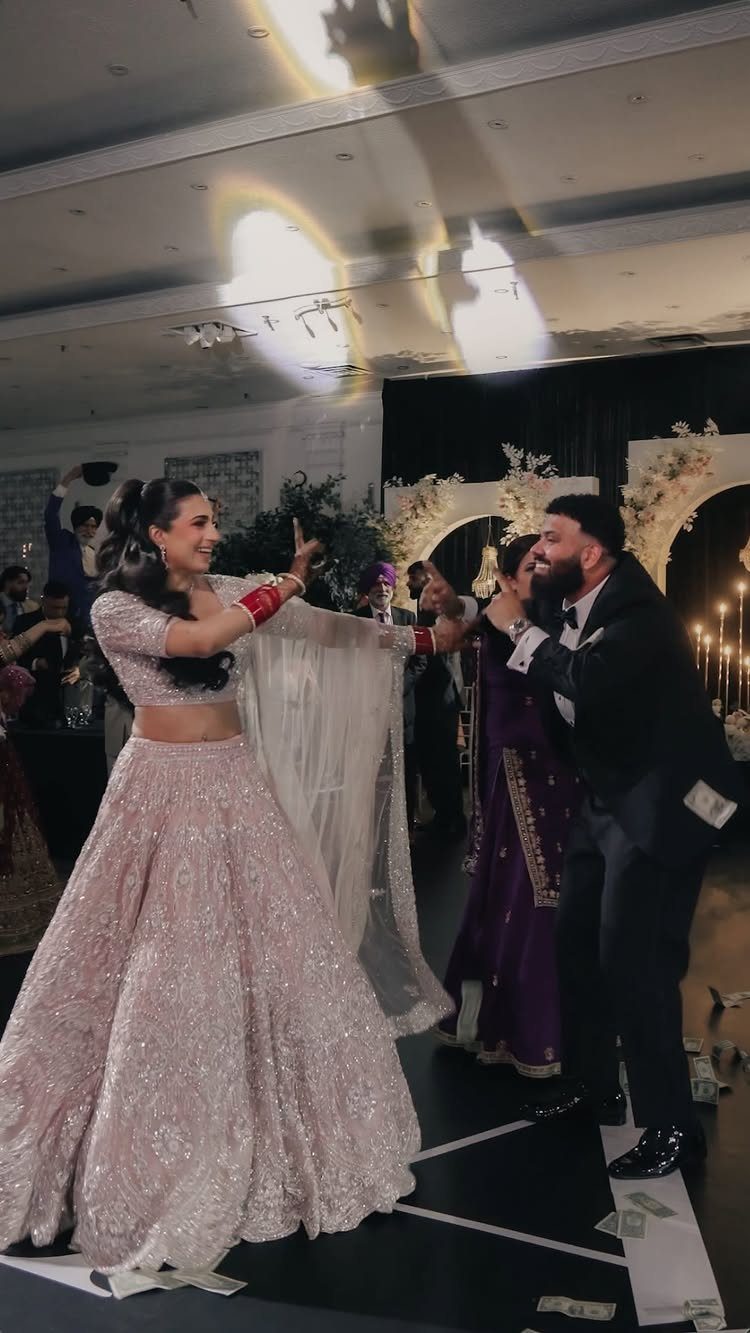
Dance photos work best when you ask for both the couple and the crowd. Tell the photographer to shoot you two first, then step back for the guests and decorations behind you.
Bright, colorful outfits show up well against a busy room, so a pink lehenga stands out even with guests around. Dance before the energy fades, since the early songs give the cleanest frames.
I would choose the candid, mid-spin shot over a posed one.
19. Silhouette Against a Sunset
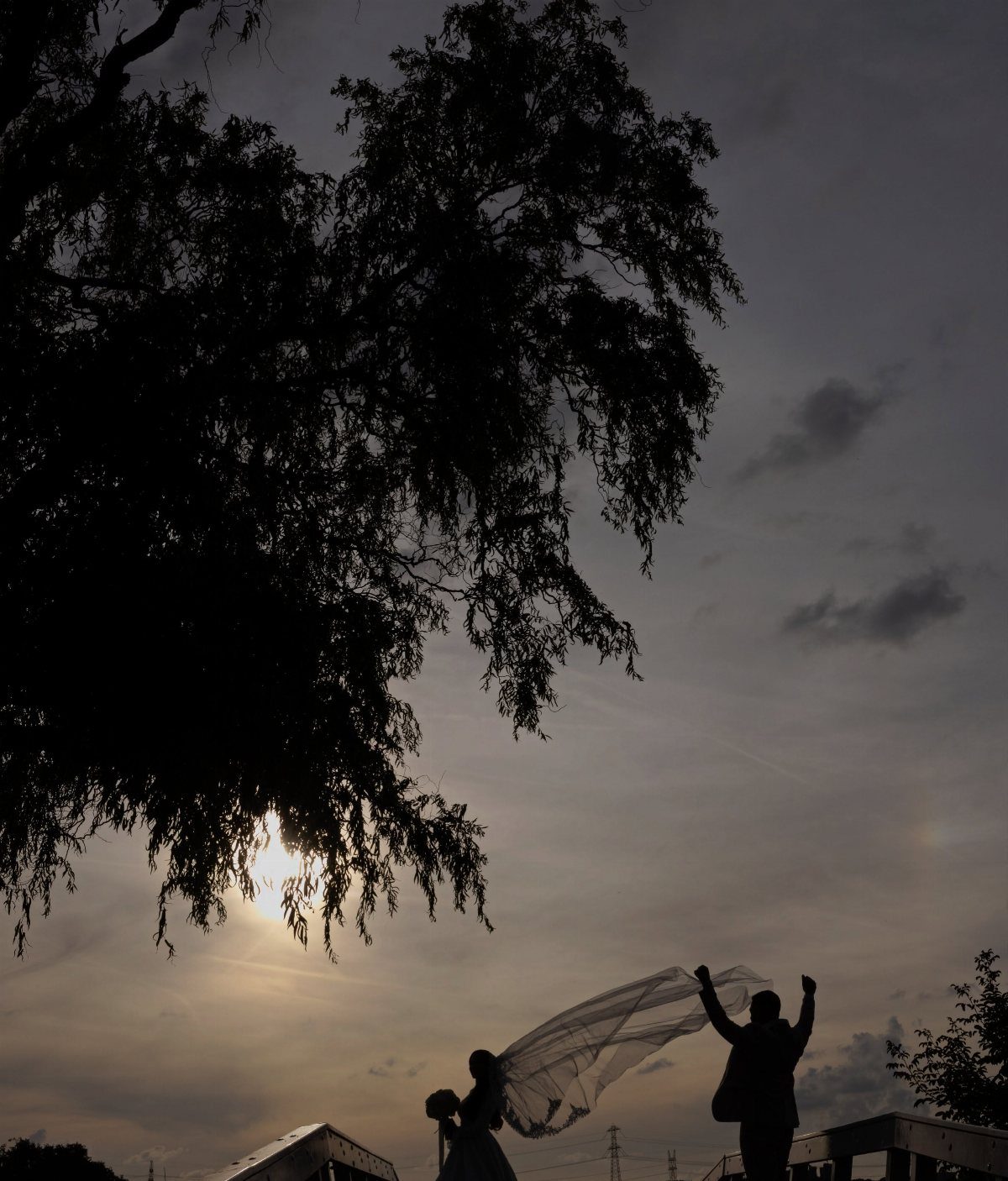
A silhouette turns the couple into pure shape, so the pose matters more than the faces. Stand apart from the tree trunk, and let the veil blow out to one side where the sky shows through it.
Raised arms read clearly against a bright sky, and a flowing veil adds a second line. Ask the photographer to shoot with the sun behind you, and plan the session for the last stretch of daylight.
Sunset gives you only a short window, so line up the pose before the light peaks. I would choose the frame with the veil in motion.
20. Aerial Shots of the Wedding Venue
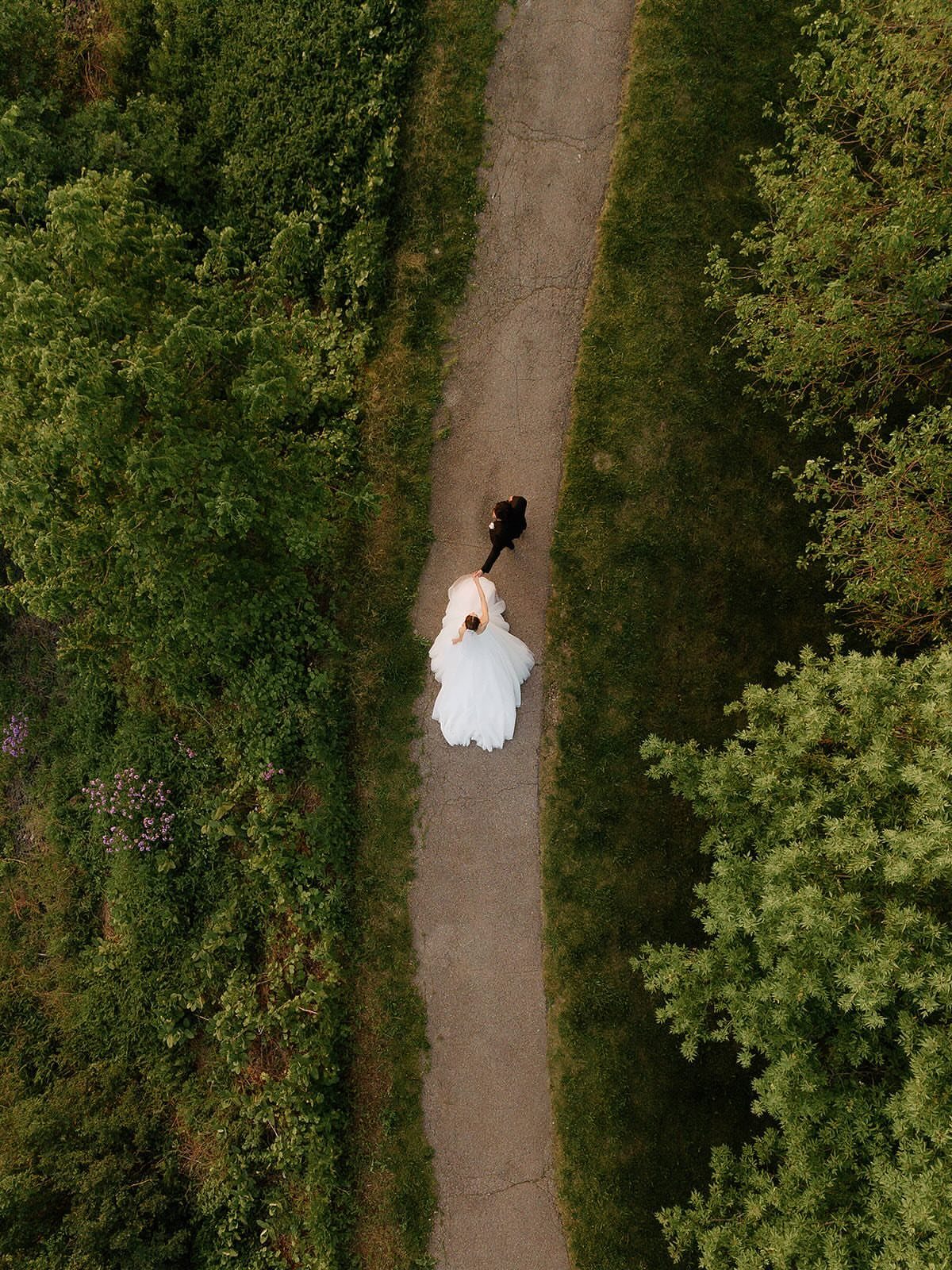
Aerial shots show the couple as part of the place, small on a path with trees all around. A dirt trail through green foliage makes a natural line for the eye to follow.
Ask your photographer whether drone work is part of the package, and what it adds to the price. Walk slowly and stay on the path, so you stay easy to spot from above.
A dog beside the bride adds a nice touch of scale.
For a single wall print, a wide aerial wins over a close portrait: it shows the whole venue and the setting around it, and it still holds up from across a room.
21. Black and White Photos
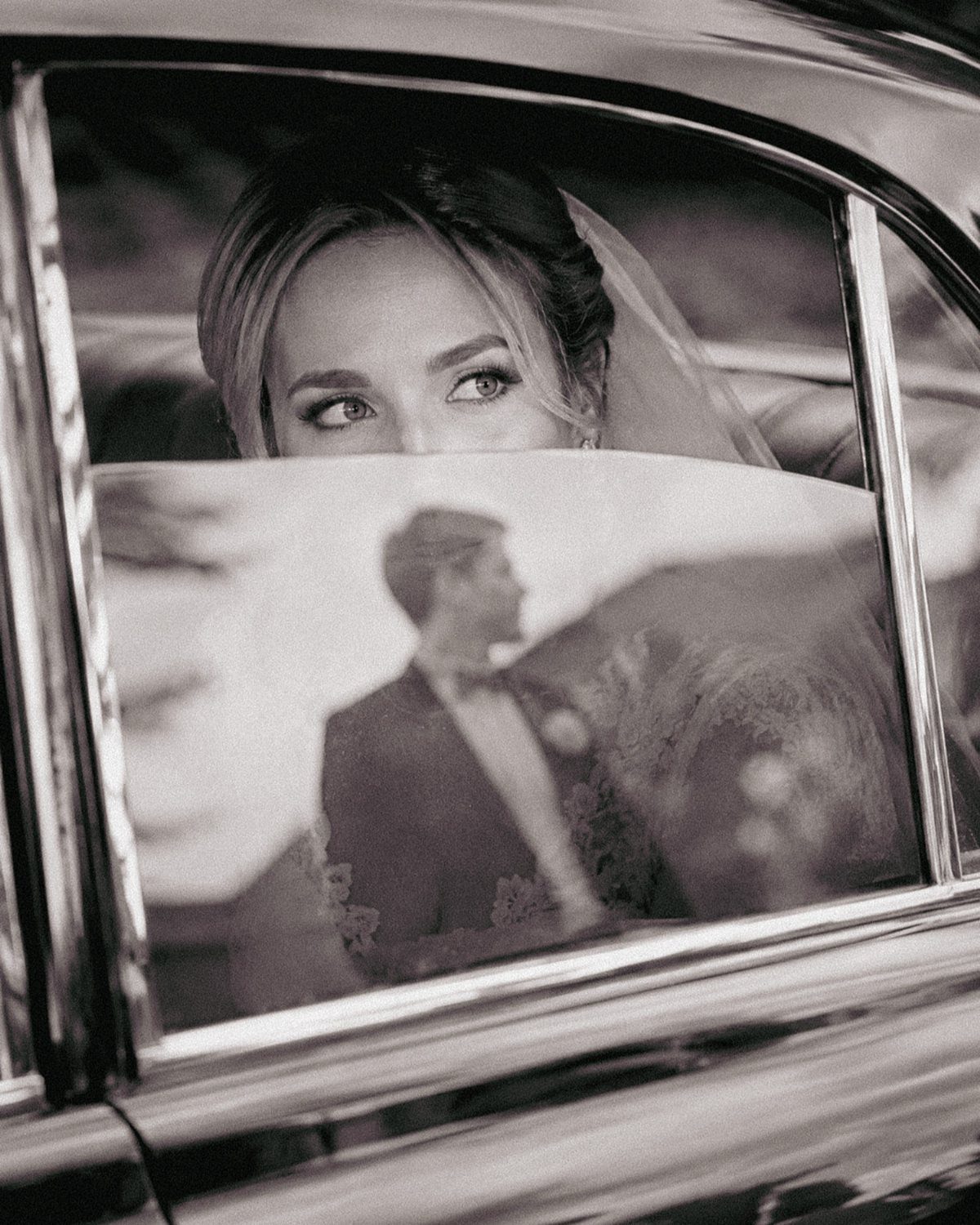
Black and white strips out color so reflections, texture and expression carry the picture. A bride behind a car window, with the groom mirrored in the glass, is a layered frame that color might clutter.
Tell the photographer you want a few frames planned for monochrome, since glass and veil lace read best when the light is soft. Candid moments suit it well.
You can also convert a color frame later, so ask for both versions. I would pick black and white for the quiet, in-between shots.
22. Children at the Wedding
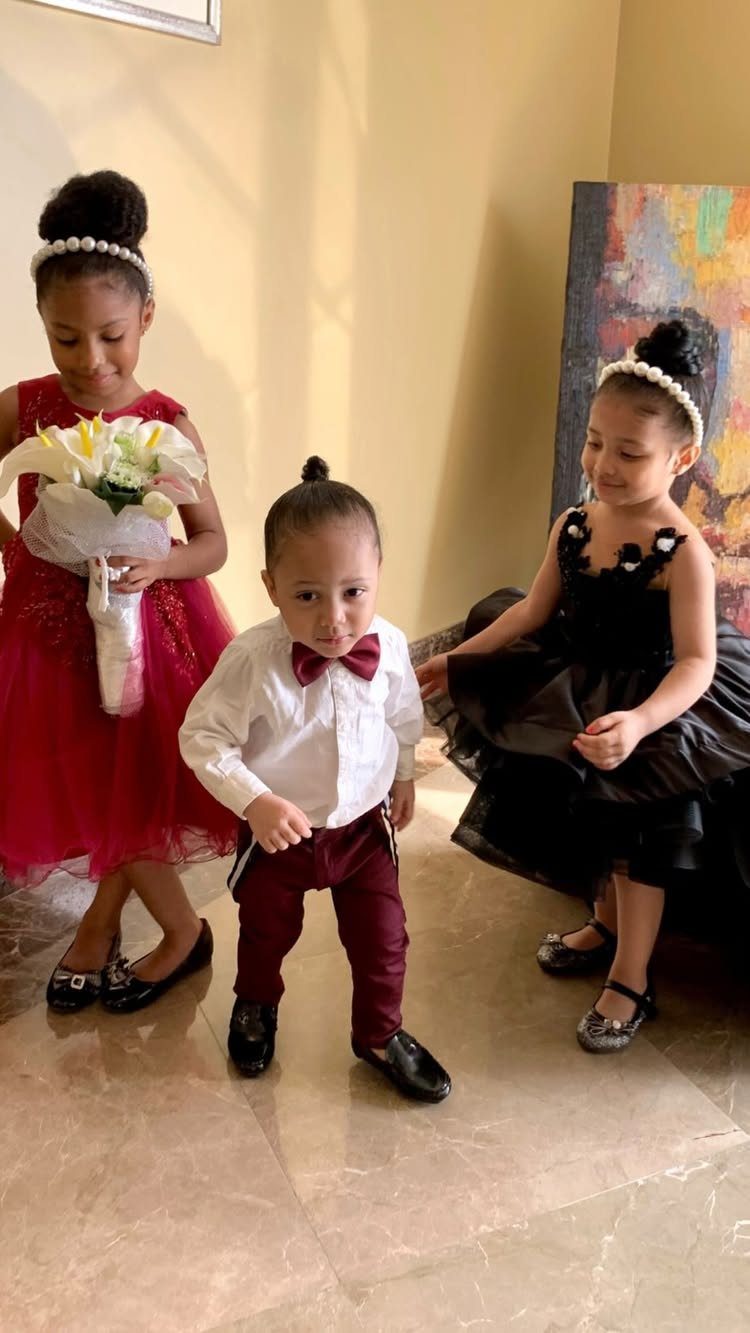
Kids in formal wear look best when you let them be kids. Group them together for one quick frame, hand the girl a small bouquet, and keep the session short before they get restless.
A plain, bright room with a marble floor keeps attention on their outfits. Shoot them early, while their clothes are still neat and their patience lasts.
Ask the photographer for a posed frame and a loose one. I would keep the loose one, since children rarely hold still for long.
23. Architectural Details of the Wedding Venue
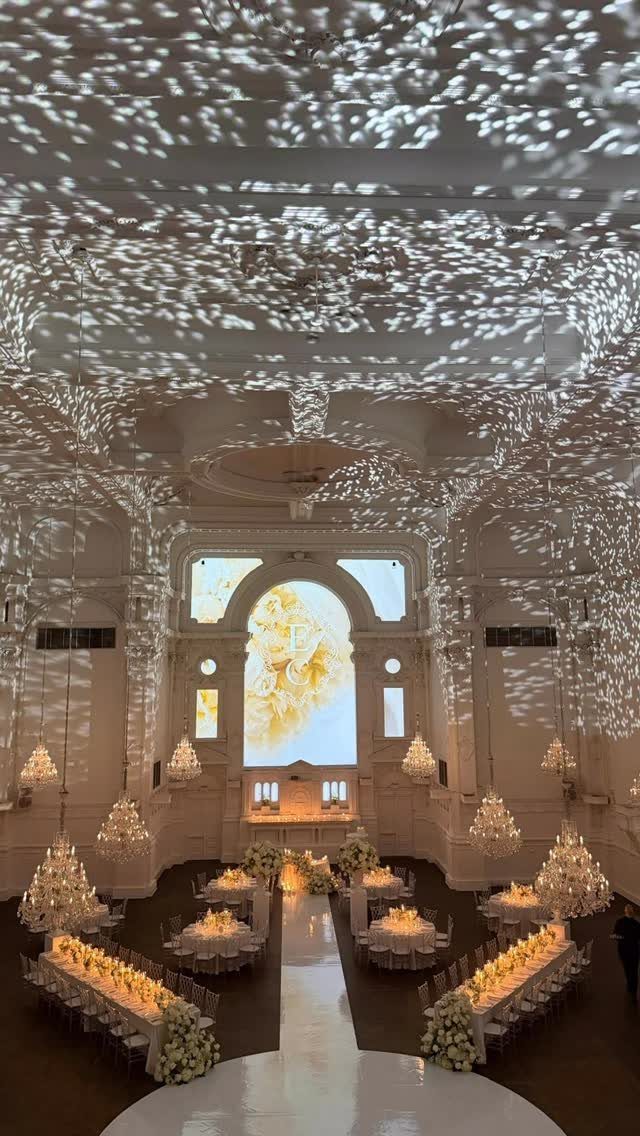
Ornate ceilings and chandeliers are worth a frame of their own. Ask the photographer to shoot the room empty, before guests arrive, with the white aisle and tables lined up and the chandeliers lit.
Shoot from the doorway or a corner for depth, and tilt the camera up to catch the ceiling.
Projected lights or a logo on a venue wall can look very different on camera, so ask your photographer to test the shot beforehand and decide whether it stays or gets switched off.
A full view of the room beats a tight detail shot, because the wide frame shows the space your guests actually stood in.
Tips for Posing
Angle your chest and chin toward the lens; pulling away from it makes you look hesitant and shrinks the frame. That small tilt of the body is what makes a frame feel close, and it costs you nothing.
Loosen up wherever a joint bends: elbows, fingers, wrists. Clenched hands look stiff on camera, so exhale, shake out your fingers, and hold each other loosely.
Keep moving.
Give your hands a job: a slow sway, a trail of fingertips down an arm, or a gentle push of hair off a forehead all look natural. Small movements look natural because they are natural.
When the photographer says "walk toward me" or "snuggle up," keep going until you hear a stop. Stopping early is the most common way a good moment gets cut short.
Before the shoot starts, tell the photographer which poses or angles make you uncomfortable. There is no wrong way to stand, and the little imperfections are usually what make a frame feel real.
Timing for Photos
The timeline decides which photos you can get, so build it around the light first and everything else second. If the sun sets early at that time of year, plan for it.
For a sunset session, start the ceremony at least 1.5 hours before sunset. If your venue has trees, remember the sun will drop behind them sooner than the official time.
Block out at least 10–15 minutes for couple portraits, and more if you can spare it. Squeeze them into less and you tend to get nice but surface-level pictures.
Without a first look, you can shoot the wedding party sides separately before the ceremony.
Have a rain plan. Clear umbrellas photograph well, and if the venue has an indoor or tented space, that works as a rain backup too.
Involving Guests
Guests who are present make better pictures than guests who are filming. Invite guests to watch the ceremony with their own eyes, and think about an unplugged ceremony where phones and cameras stay in pockets and bags.
The reactions your photographer catches then show real emotion instead of people squinting at a display.
Say it kindly on a sign at the entrance, and have the officiant mention it once before you begin. Tell guests the photographer will share the pictures afterward, so nobody feels they are missing out.
A request to the photographer to capture guest reactions during the vows and ring exchange gets you shots you will keep. Laughter and tears from the front rows are worth a few frames of their own.
Frequently Asked Questions
What wedding photos should be taken?
Cover the whole day: getting-ready details, the walk down the aisle, couple portraits, the wedding party, family groupings, the cake cut and the dancing.
Write out the family groupings before the day and share them with the photographer, and mention the cake cutting time too, because it is over in roughly 60 seconds and is easy to miss.
Close-ups of the rings, shots of guests reacting during the vows, and a final scene such as a sparkler send-off fill out the rest of the set.
How to make wedding photos unique?
Build shots around your own setting and your own people.
A large dog under the veil with you, a silver vintage convertible with open hills behind, or a silhouette at sunset with the veil blowing out to one side can’t be copied from anyone else’s day.
Candid, in-motion frames also beat stiff poses, so ask the photographer for one posed version and one loose one, and keep the loose one.