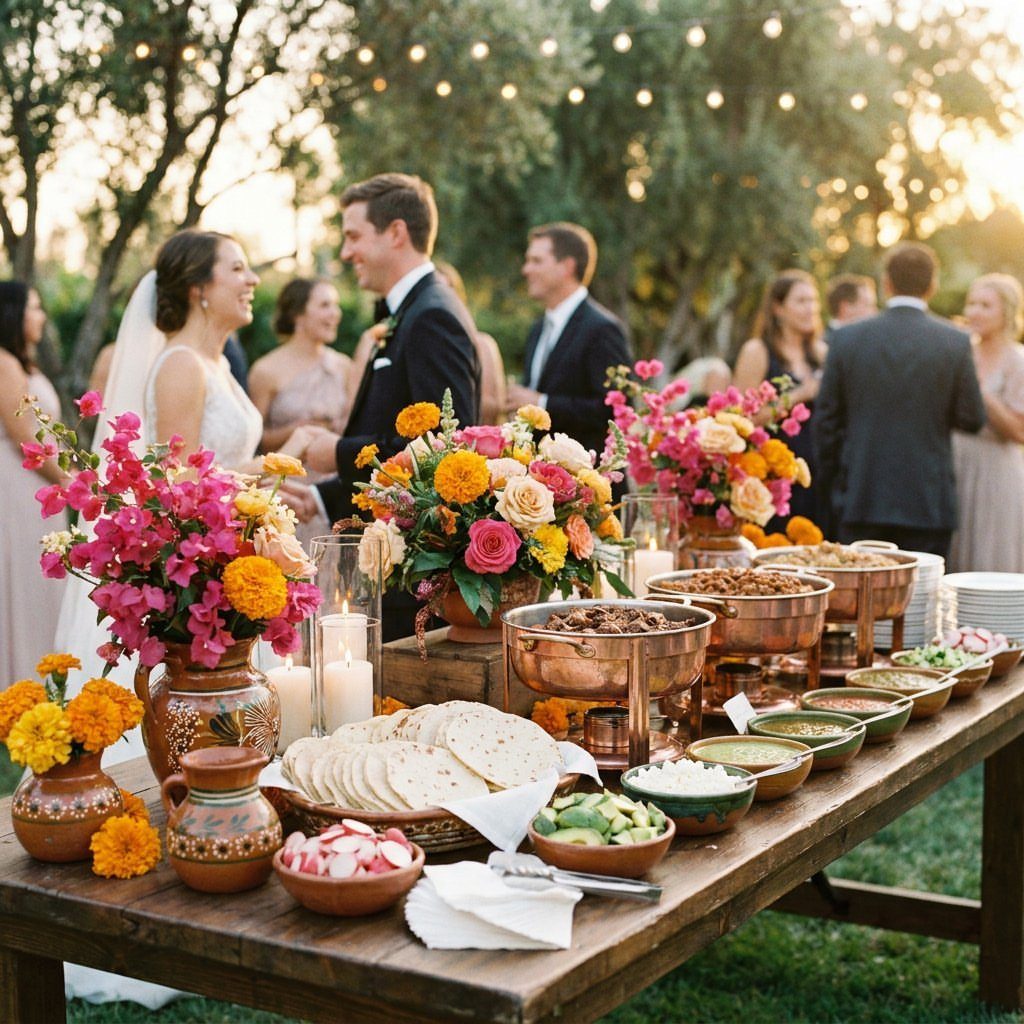
Guest count moves the food bill more than any menu swap, so the number of people you invite decides which of these ideas fits.
The list runs from single-bite mac and cheese and fruit skewers to a taco bar or a BBQ buffet.
The cheapest ones lean on beans, rice, pasta, fruit and potatoes, and the pricier ones need more staff, rentals or a better cut of meat.
A bigger crowd pushes you toward the stretchy staples; a smaller one leaves room to spend on a showpiece.
1. Taco Bar
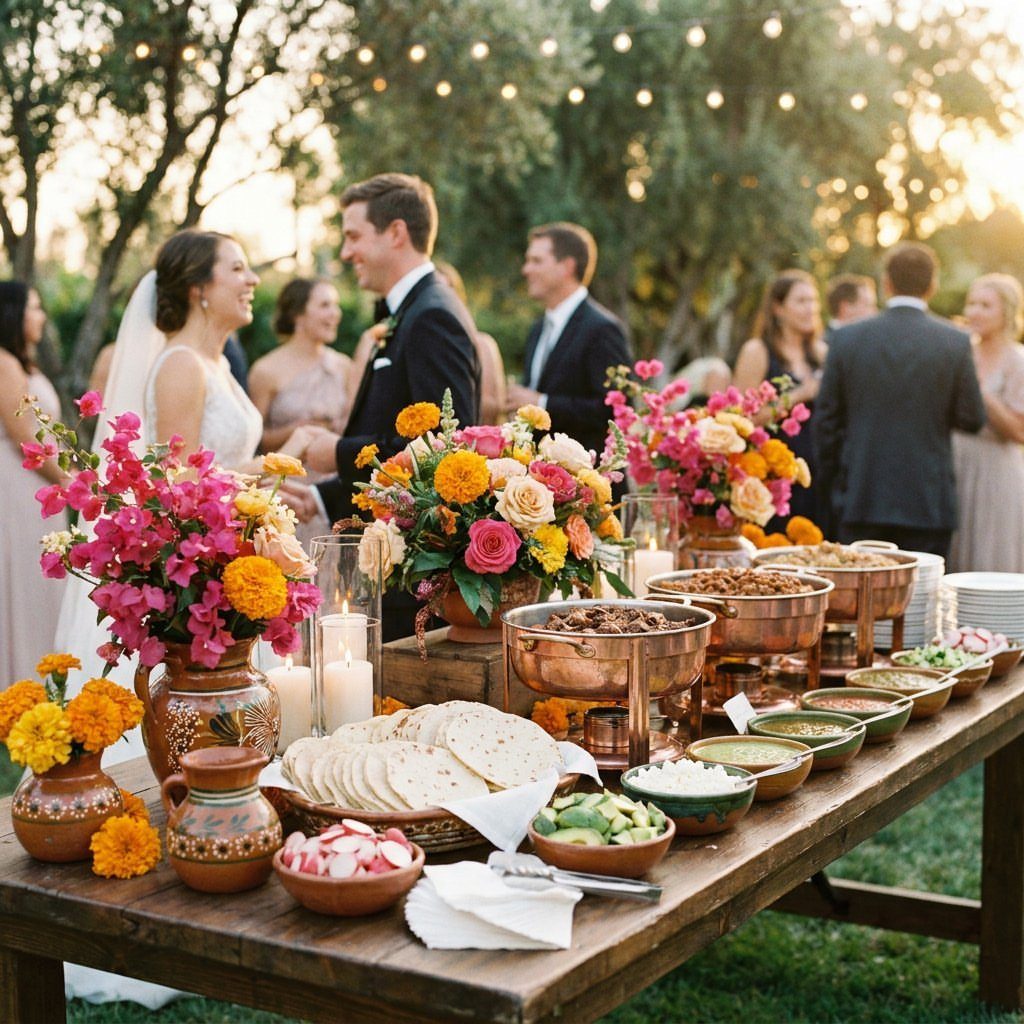
Copper pots of fillings next to a stack of tortillas let guests build their own plate, and that is why a taco bar suits a tight budget: cheap staples do the heavy lifting.
Beans, rice and shredded meat stretch far, and toppings in small bowls let each guest decide what goes on.
I would label every bowl, since guests with allergies will want to check. Add one or two spicy options for people who like heat.
2. Pasta Station
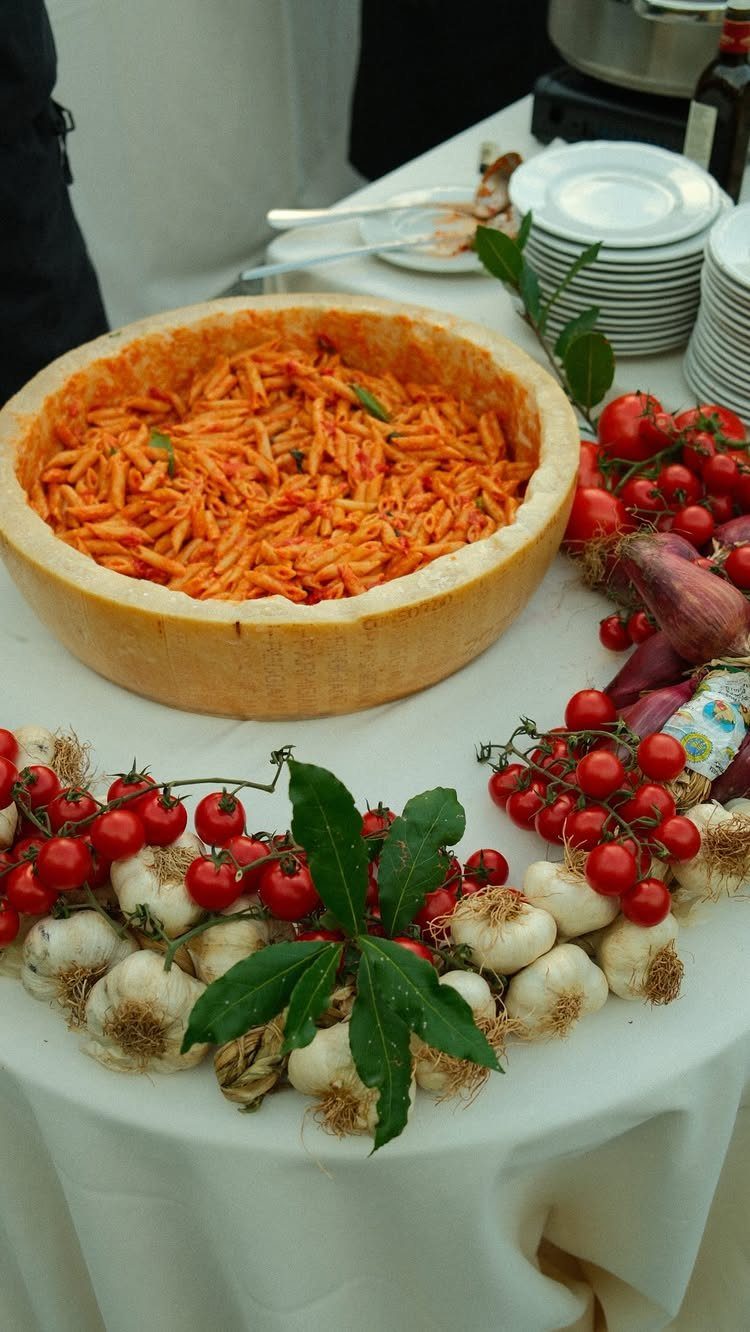
Pasta with red sauce, served from a hollowed cheese wheel, is the showpiece version, and it makes a modest ingredient list look generous.
Pasta is also forgiving on cost, because one sauce and a couple of shapes can feed a crowd.
Skip the wheel if it strains your budget; a good pot and a bowl of fresh cherry tomatoes still look like a plan. I would keep the sauce simple and spend on the cheese.
3. Dessert Bar
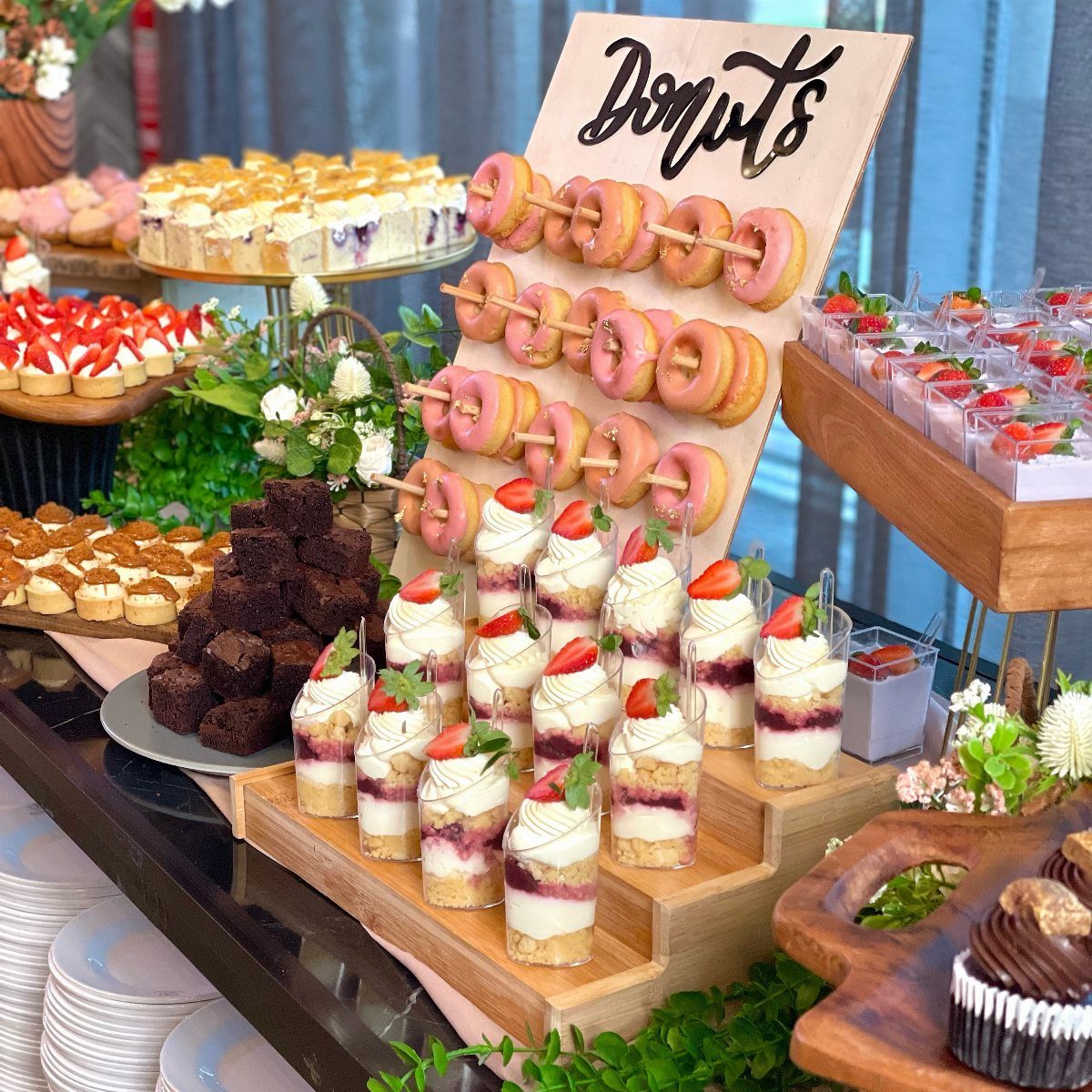
Cutting a brownie into bite-size squares keeps portions small and the cost down.
A donut wall is my favorite piece, since it holds a lot in little space and doubles as decor. Put a sign on it so guests know what they are looking at.
4. BBQ Buffet
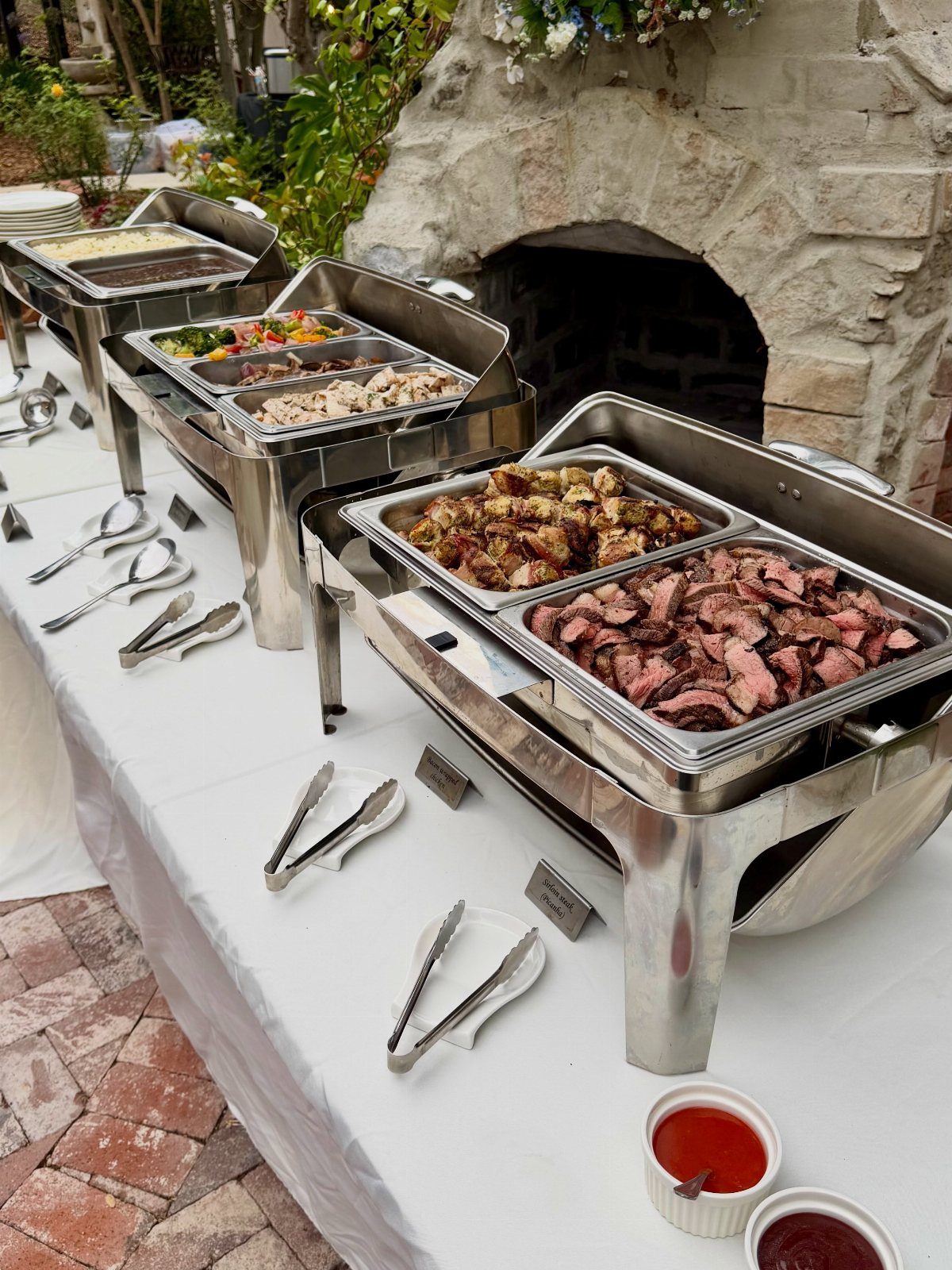
Sliced steak, roasted potatoes and a few salads in chafing dishes make a buffet that feels hearty without table service. Serving this way means fewer staff to pay.
One meat is enough if the sides carry the plate, since potatoes and salads cost far less per serving. Set the line up so guests can move down it from both sides if the crowd is big.
5. Slider Station
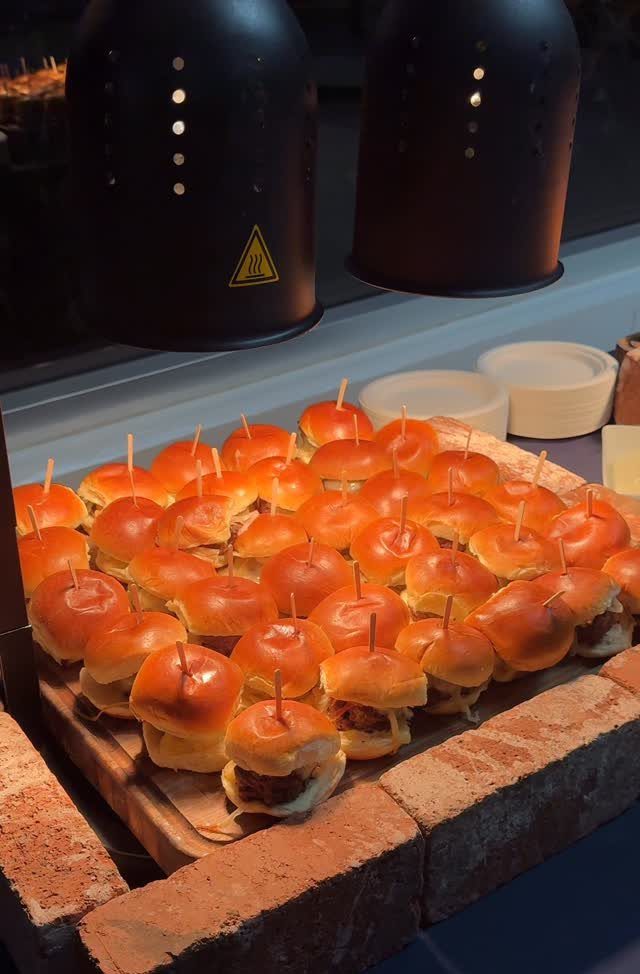
Mini sliders pinned with toothpicks can be eaten with one hand while holding a drink, which suits a mingling crowd. Because each one is small, guests can try two flavors without committing to a full sandwich.
Keep sliders warm with a pair of heat lamps over the board, and serve them on wood, which looks better than a plain tray. I would offer 2 fillings at most and keep the buns simple.
6. Brunch Buffet
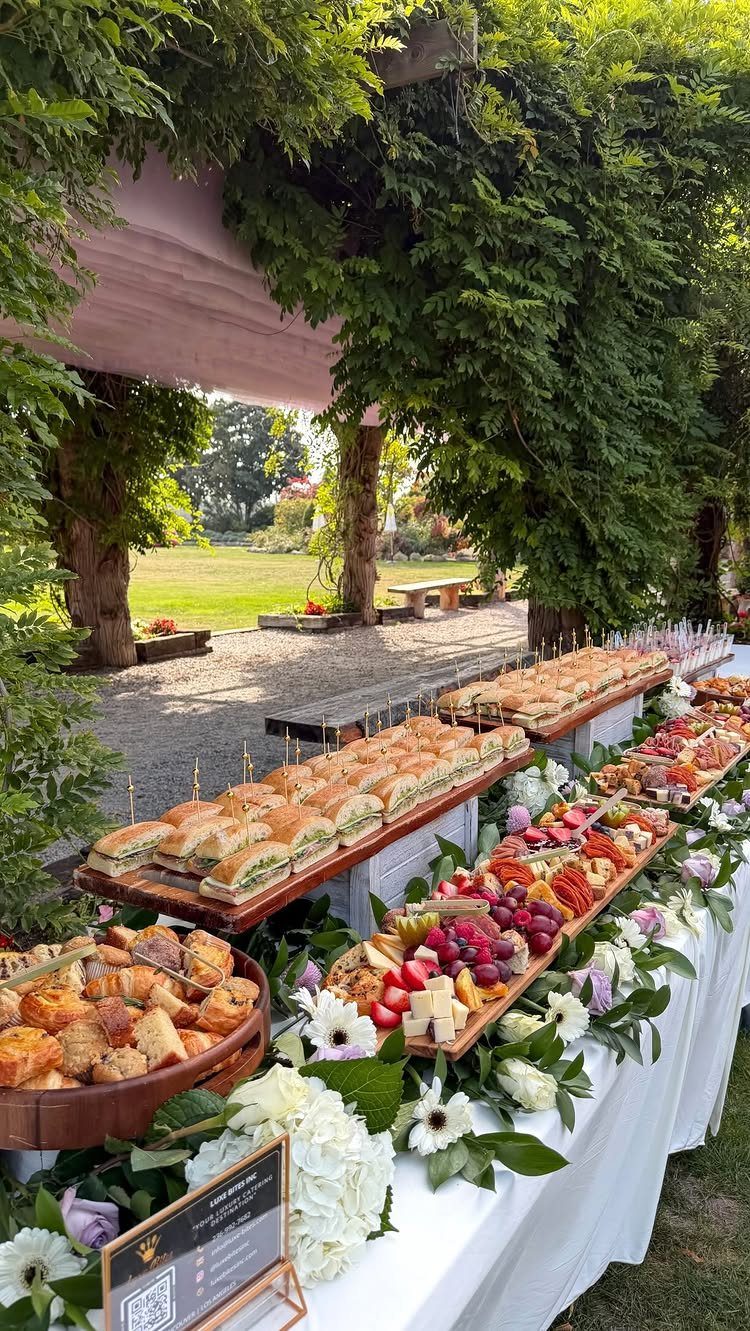
Sandwiches, fruit platters and pastries on white tables cover a morning reception with food that is easy to prep ahead. Cold items need no kitchen on site, which keeps the setup simple.
I would rely on fruit to fill space, because it looks abundant and costs little.
7. Grazing Table
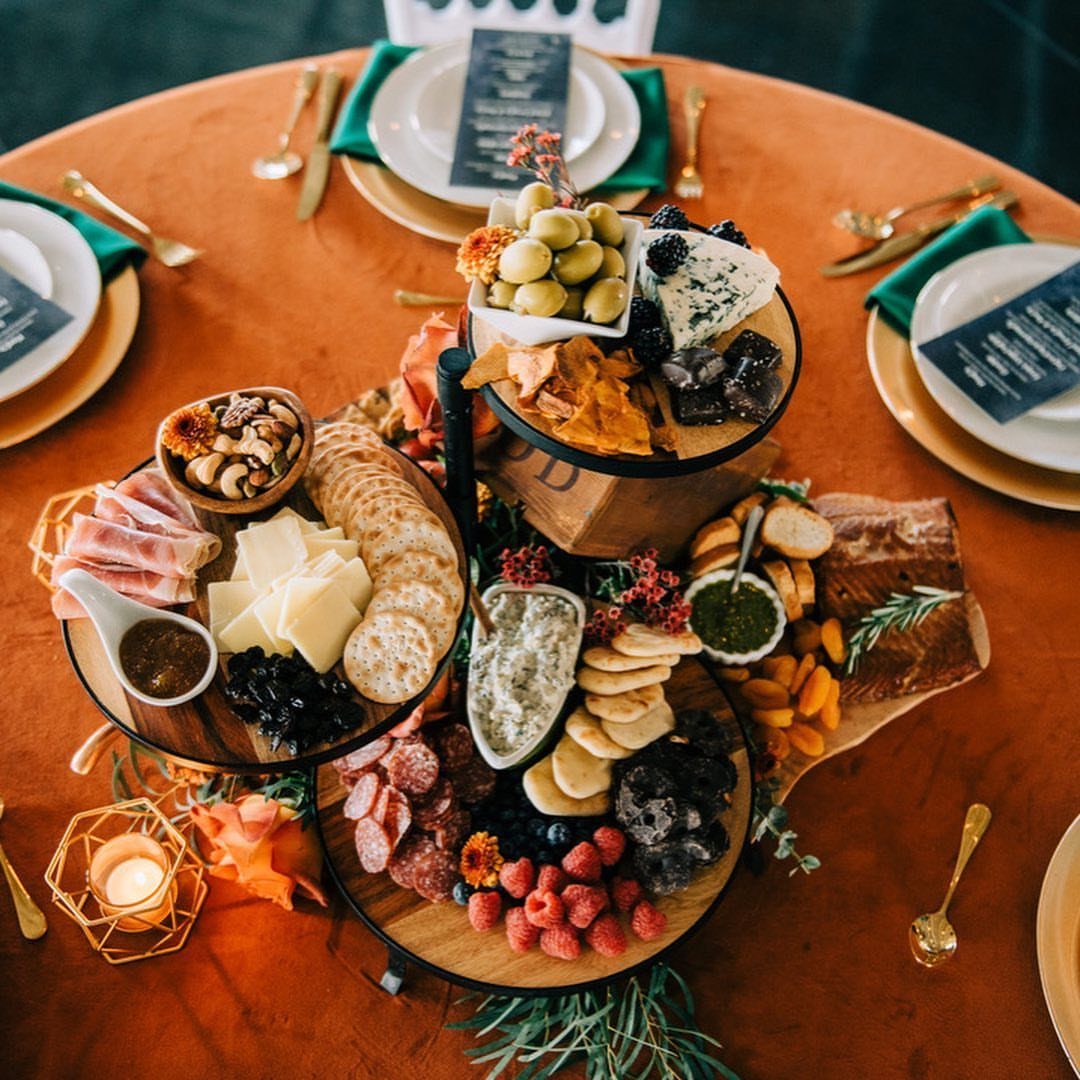
Tiers do the work here: stacking cheeses, meats, fruit and crackers on a multi-level wooden platter makes a modest amount of food look abundant. Height fills the table without more groceries.
I would keep the linens bold, as in the orange cloth, and let the board be the only decoration. Put crackers and fruit on the lower levels, where guests reach first.
8. Cold Meat Platters
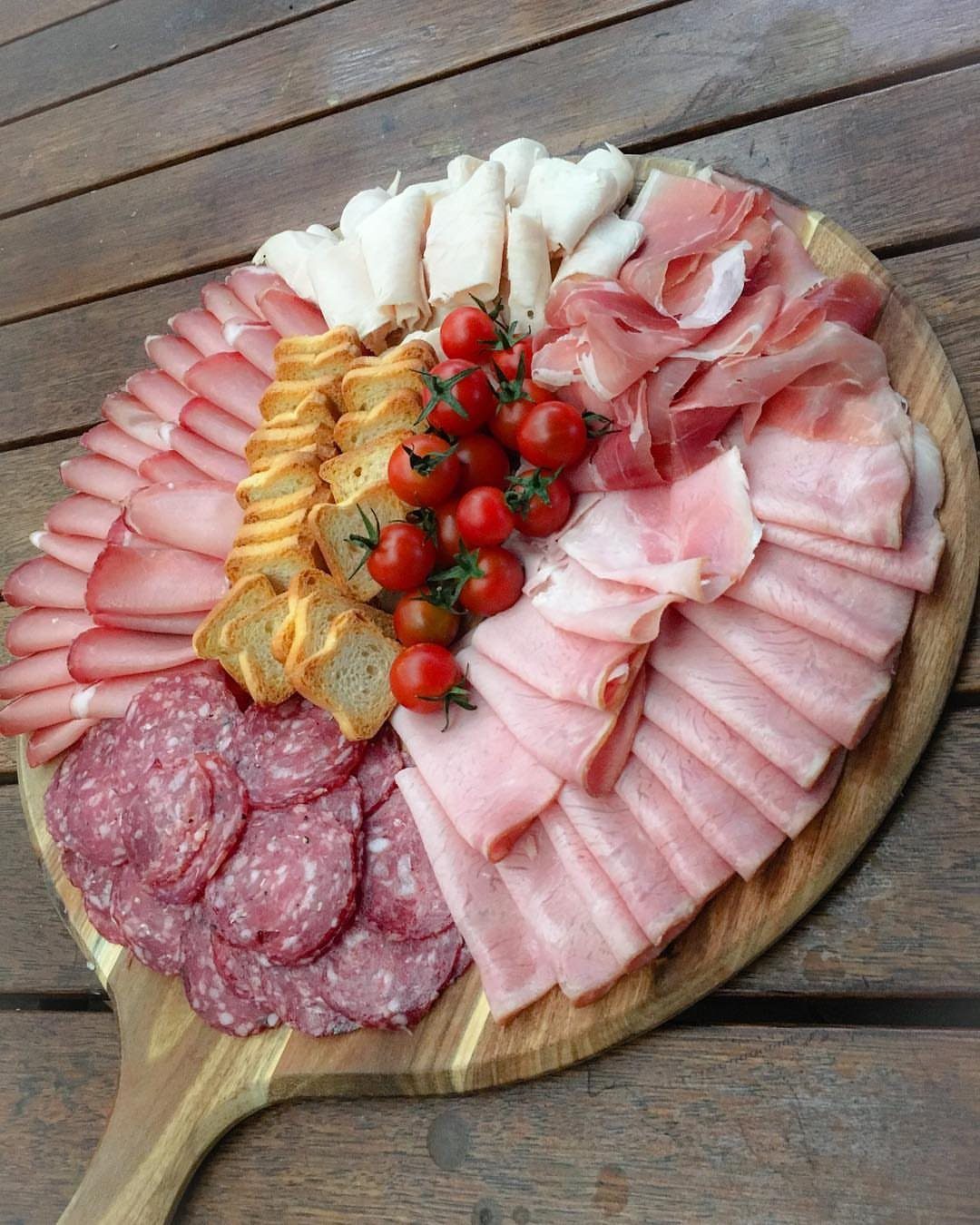
Slicing is the only labor, and a deli can do it for you.
I would buy one or two cured meats and let the tomatoes and bread fill out the board. Make several smaller boards rather than one huge one, so guests do not crowd.
9. Finger Foods Fruit Skewers
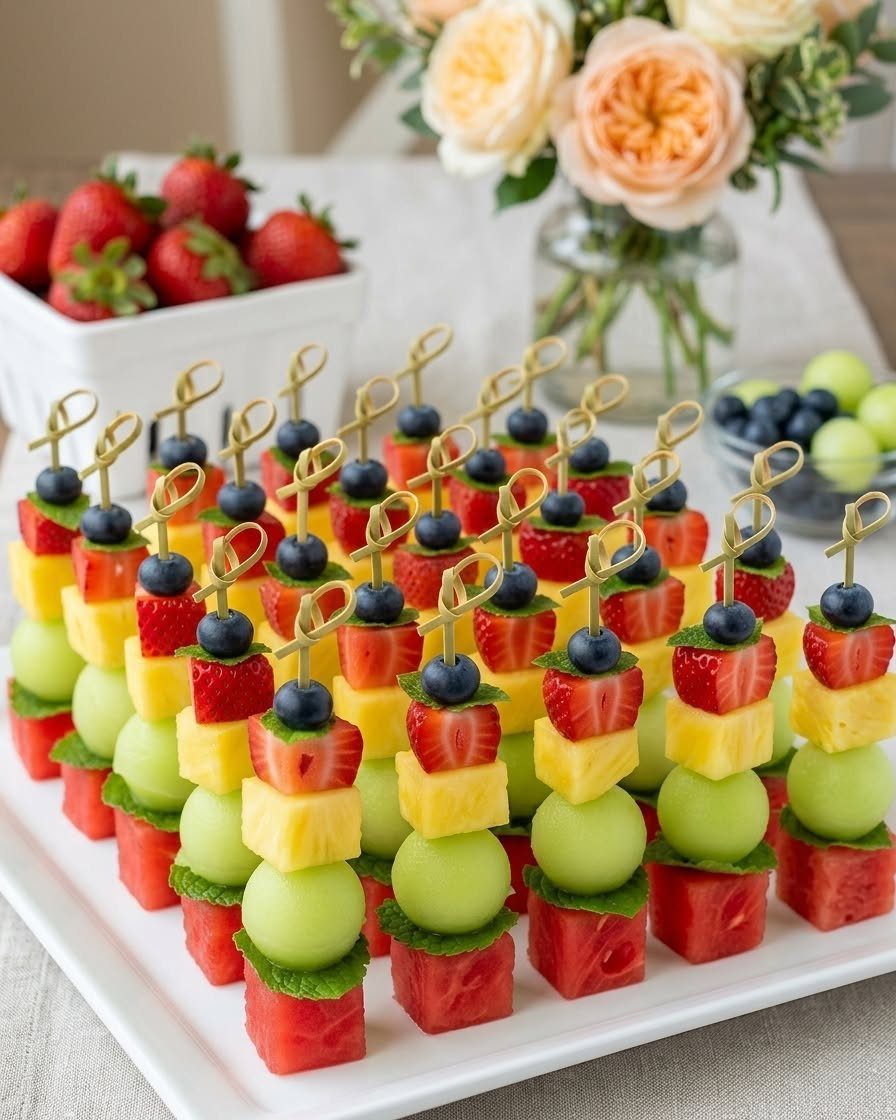
Watermelon, honeydew, pineapple and strawberries threaded on skewers, with blueberries scattered on top, turn plain fruit into something guests can carry. Fruit is cheap per serving, and the colors need no extra decor.
I would cut the pieces to similar sizes so each skewer looks even. Build them the morning of the wedding and keep them chilled until the platter goes out.
10. Individual Rice Cups
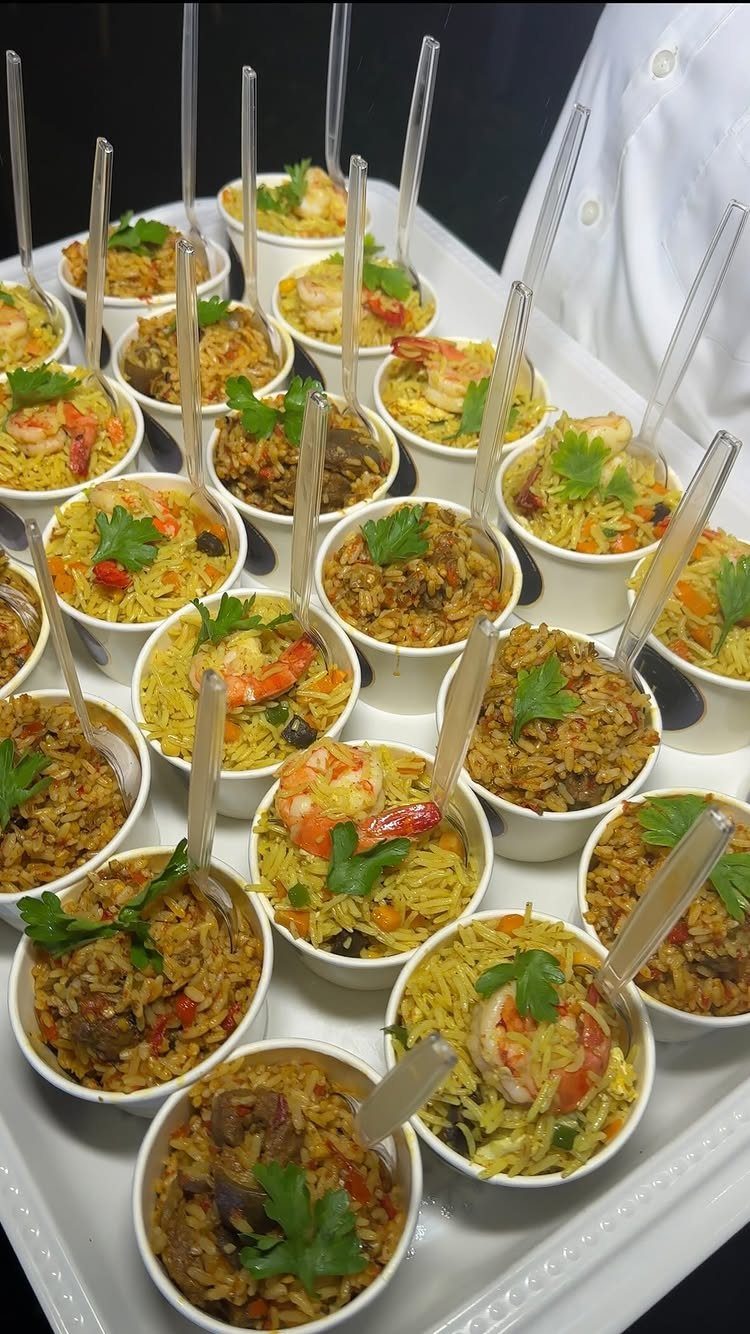
Spooning seasoned yellow and brown rice into small white cups, then topping each with a shrimp and a pinch of parsley, gives guests a full bite with no plate and no knife.
A clear plastic spoon in each cup keeps cleanup easy.
Rice is the budget anchor here, so spend on the topping. I would use shrimp on some cups and vegetables on others, and fill every cup the same amount.
11. Bite-Sized Mac and Cheese
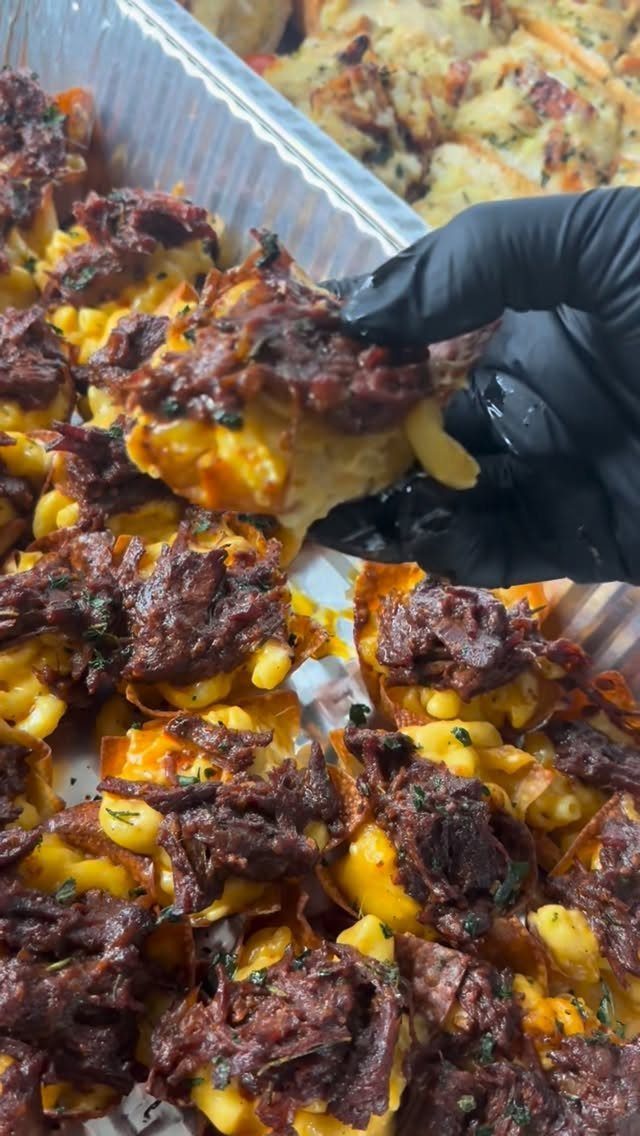
Macaroni and cheese in single-bite portions, crowned with shredded beef, takes a comfort dish and makes it cocktail-hour food. Pasta and cheese sauce are cheap, and the beef adds the savory note that makes it feel like a choice.
Serve from a foil catering tray to save on rentals. I would keep the beef portion small, since a little goes a long way on top.
12. Salad and Sides Buffet
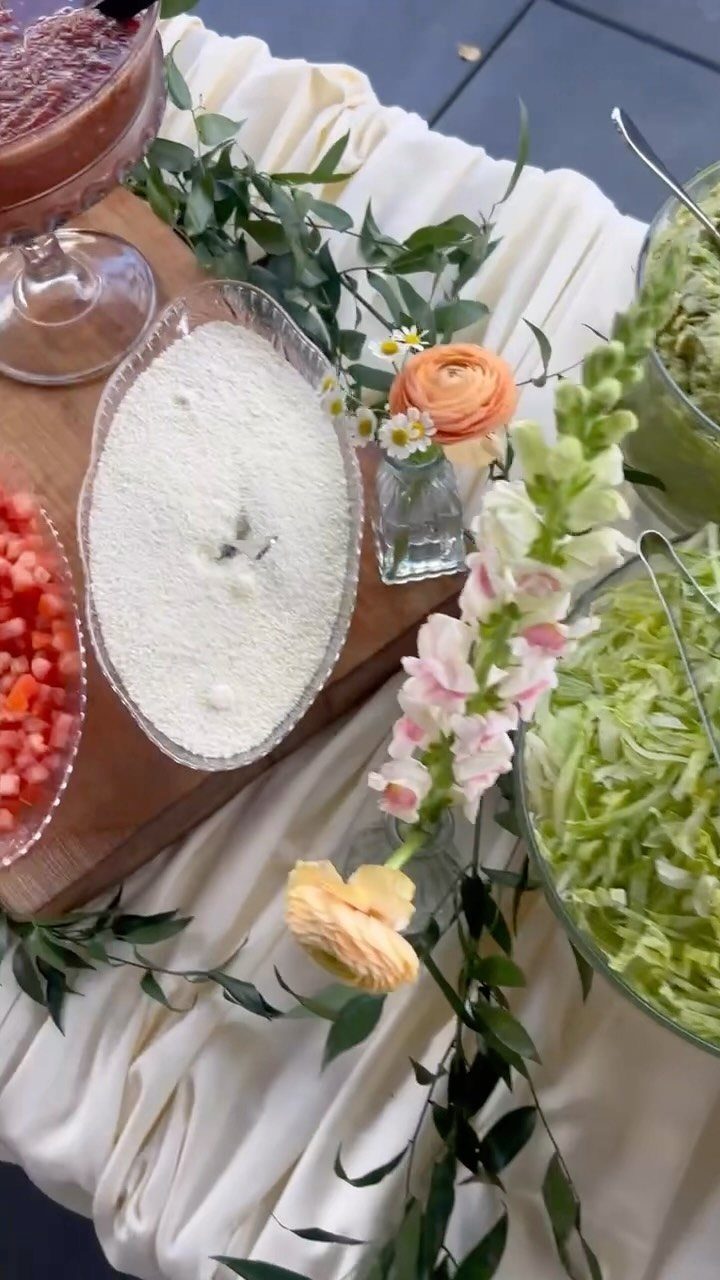
Bowls of green salad, cubed watermelon and two dips, one white and one red, on a white-draped table make a spread that costs very little per head. Vegetables and fruit stretch further than almost any other course.
Small flowers and greenery tucked around the bowls are cheap and look planned. I would use the dips to make the salad feel like more than a side, and keep the watermelon cold until guests arrive.
Tips for Reducing Costs
Guest count moves the food bill more than any menu swap, so trim the list before you trim the menu. Every person you cut removes a full meal, a drink and a place setting.
A daytime wedding also helps. Guests expect less food and less drink at a morning or afternoon reception, and that lowers the total without making the day feel smaller.
Be careful with venues that include their own catering. You are often locked into their menu and their prices, so a place that lets you bring in an outside caterer gives you room to compare quotes.
Cash gifts can also pad the food budget. HoneyFund is a free registry service that lets guests send cash online, including relatives who can’t make the wedding; it takes a small cut of every gift.
Whatever you save on the food and drinks budget can roll into the honeymoon fund instead.
Choosing a Catering Style
No serving style is cheapest in every case. Price depends on the caterer, the venue, staffing, rentals, equipment and location, so I would not pick a style on a guess.
Ask each caterer to quote the same menu in 2 styles, then compare the totals. That is the only fair way to see what staffing and rentals add.
A short plated menu keeps a formal dinner manageable: one main entrée, one vegetarian alternative, two sides, salad, bread and dessert. Kitchens and servers handle that far more easily than a menu with several entrée choices.
For a casual day, a buffet or food stations let guests control portions and handle dietary needs on their own. Stations also get people moving around the room.
Using Seasonal Ingredients
A seasonal menu works best when it stays short. A seasonal salad, roasted vegetables, a simple chicken entrée, a grain or potato side, bread and dessert make a balanced meal without a long list of dishes.
Pick a theme to hold it together.
Fewer, cheaper ingredients look deliberate when they follow one idea, and fried chicken, fried okra and macaroni and cheese read better as a Southern menu than as leftovers at the end of a buffet line.
Other themes that stay cheap include comfort food, California cuisine (grilled cheese, avocado sandwiches, grilled fish or chicken, green salads), Southwestern or Tex-Mex, and healthy eats.
Frequently Asked Questions
What is a normal wedding menu?
Most menus have appetizers, a main course and dessert. Cocktail hour often brings hors d’oeuvres with a few signature drinks, then a favorite like roasted chicken or beef tenderloin, and cake to close.
Time of day, venue and your own tastes change all of it, so there is no single standard.
How can I have a cheap but nice wedding?
Guest count drives the food bill harder than anything on the menu, so start by shortening the list. Hosting in the morning or afternoon trims the bar and the food, and the day still feels full to guests.
What is the cheapest catering option for a wedding?
Buffets and food stations tend to cost less than plated dinners, though no style wins on price every time. Quotes swing with the caterer, the venue, how many staff are needed, rental costs and where you live.
Have each caterer price one menu two ways, plated and buffet for example, and the gap between totals shows what staff and rentals add.
Does a seasonal menu save money?
It can, if you keep it short. A balanced plate can be as plain as a seasonal salad, roasted vegetables, chicken, a potato or grain side, bread and a dessert.
Tie it to one theme, such as Southern, comfort food or Tex-Mex, so fewer, cheaper ingredients look deliberate.
Should I book a venue that includes its own catering?
Be careful with it.
You are often locked into the venue’s menu and prices. A venue that lets you bring in an outside caterer gives you room to compare quotes, which is where savings usually come from.