Wedding hair flowers run from a floral headband that holds itself in place to fresh flowers pinned in one stem at a time, and the fresh end asks the most of you in prep and care.
Your hairstyle and how much you want to deal with on the morning decide the pick.
Hair worn down suits a headband or crown, an updo can carry fresh flowers or a comb, and silk flowers can be set days ahead so nothing wilts.
1. Floral Headbands
A headband is the easiest way to get flowers into your hair without building a style around them.
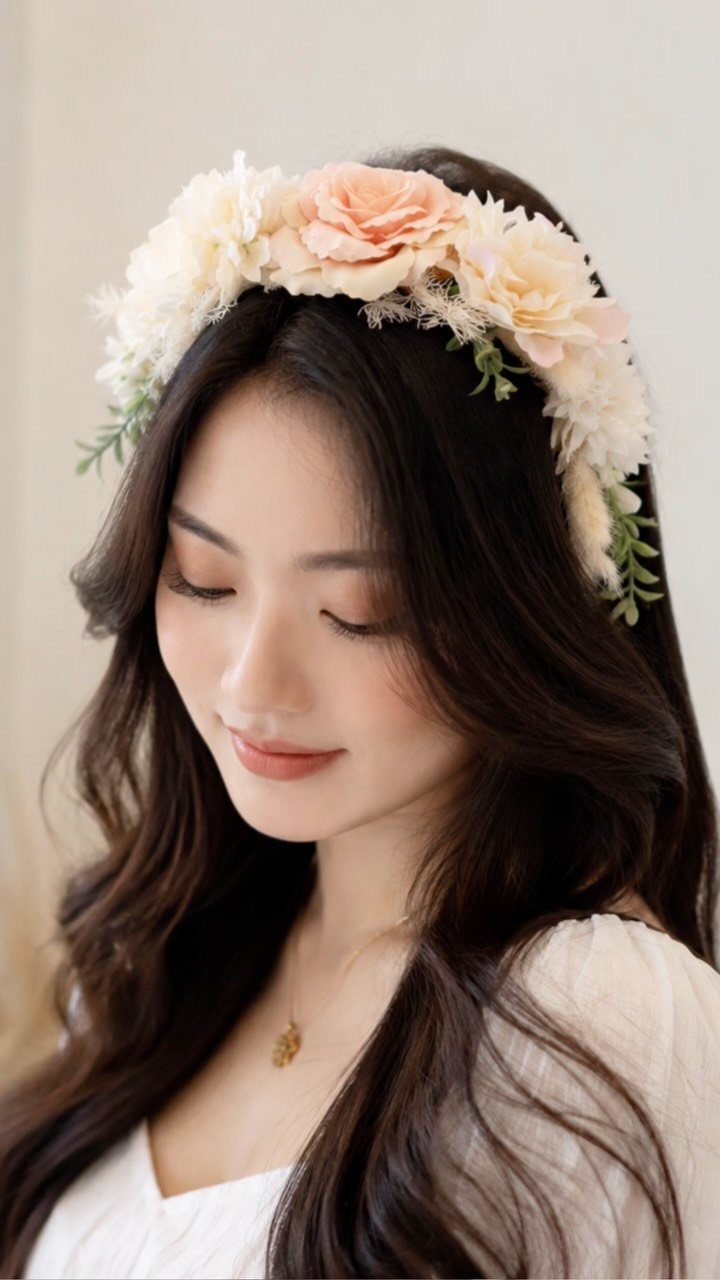
The band does the holding, so your hair can stay down and wavy, loose and simple, and the flowers sit like a frame across the top of your head.
I would pick one in a color story close to your bouquet, such as peach and cream, so the two read as a set.
Try it on with your hair styled the way you plan to wear it on the day.
2. Flower Crowns
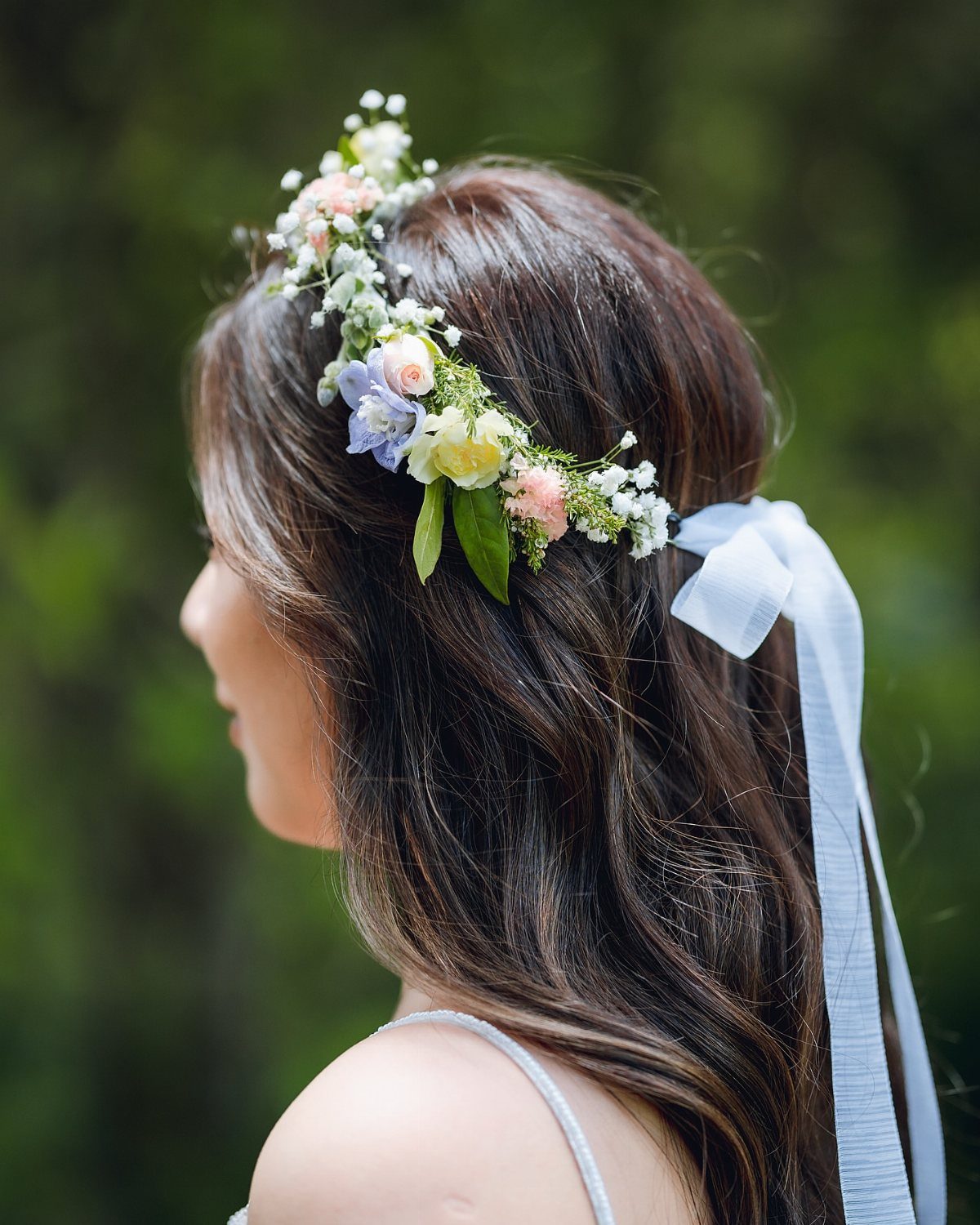
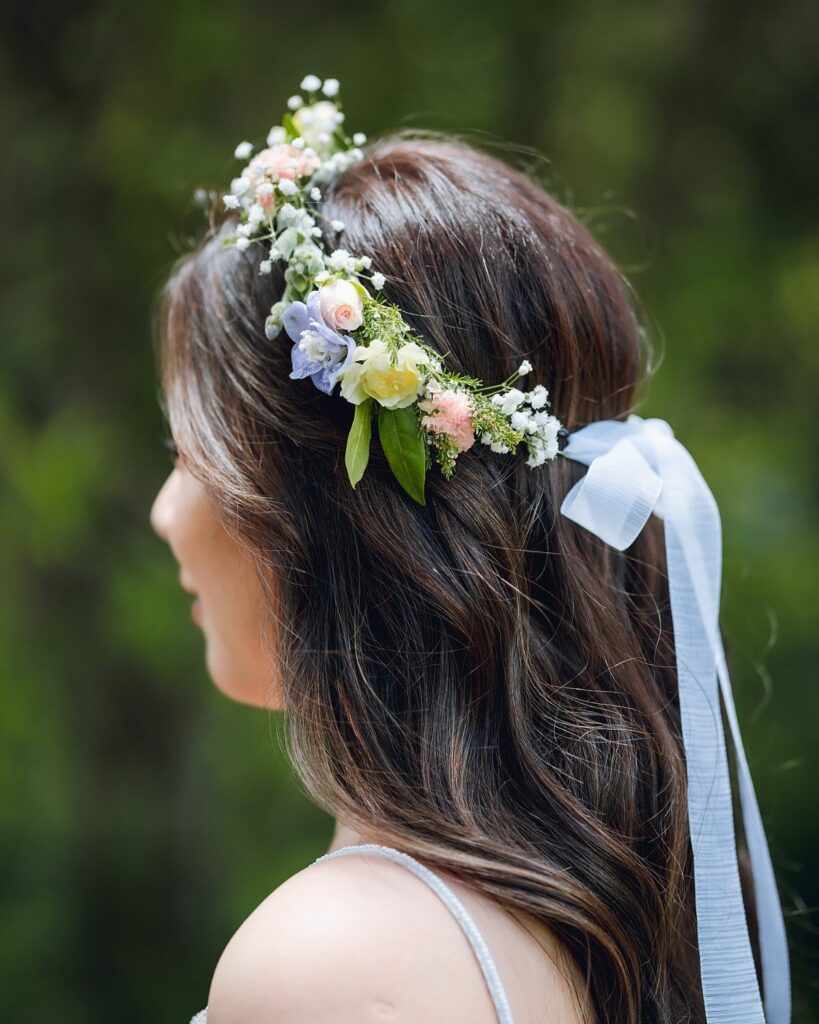
Wrapped in a full circle, a flower crown looks best in a soft palette: pastel roses with baby’s breath, finished with a white ribbon that tails down your back.
Ribbon ties let you adjust the fit, which beats a rigid ring. I like a crown with hair left loose beneath it, since the flowers are already the whole statement.
Ask your florist to match the blooms to your bouquet, and settle the fit before the wedding morning.
3. Fresh Flowers
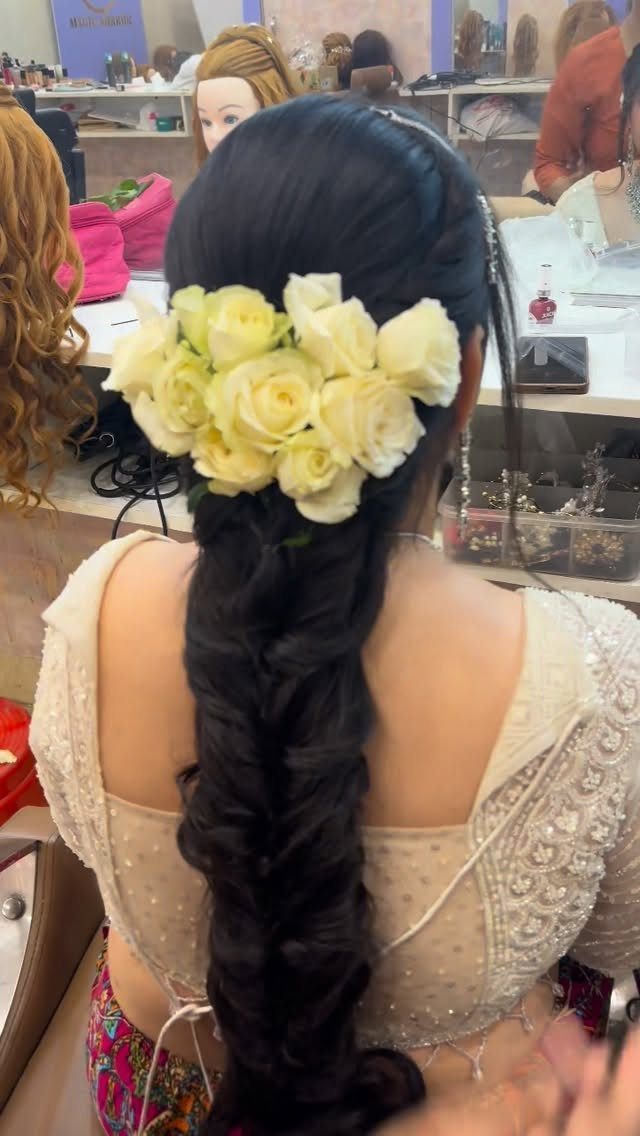
Fresh flowers tucked into a braid, like a cluster of white roses set along the plait, give a look that no accessory copies. The petals are real, and so is the scent.
Bring this idea to your hairstylist early so they can plan where each bloom sits. Ask your florist to supply a few extra stems, because blooms get bent or bruised in handling.
I would choose this over a prefab piece if your hair is already in a braid or updo, since the flowers can follow the line of the style.
4. Flower Combs
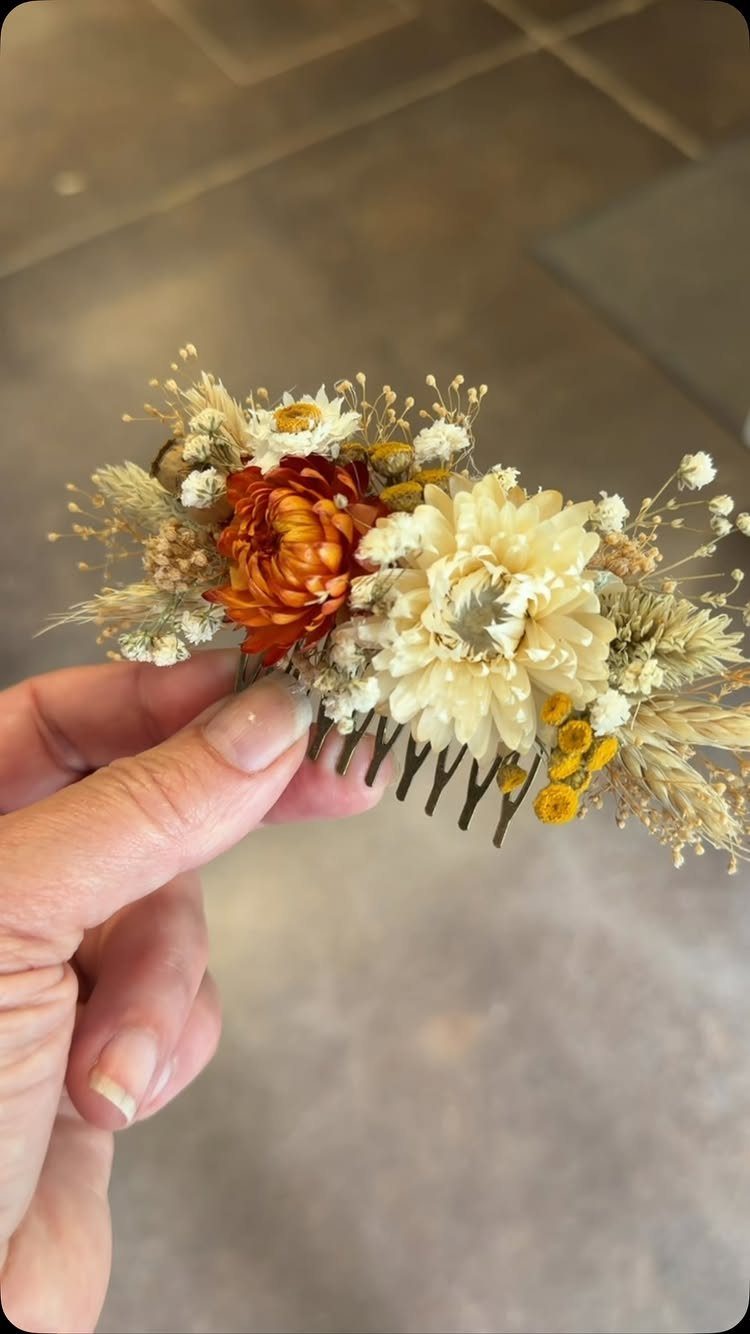
Pinned into an updo or half-up style, a flower comb slides in with a few small teeth and stays put without a full headpiece. Dried blooms in orange and cream, mixed with baby’s breath, give it a warm, earthy tone.
Dried flowers are lighter than a crown and can be made well ahead of the day, so there is no last-minute scramble. Buy or order yours early and test where it sits with your actual hairstyle.
5. Single Flowers
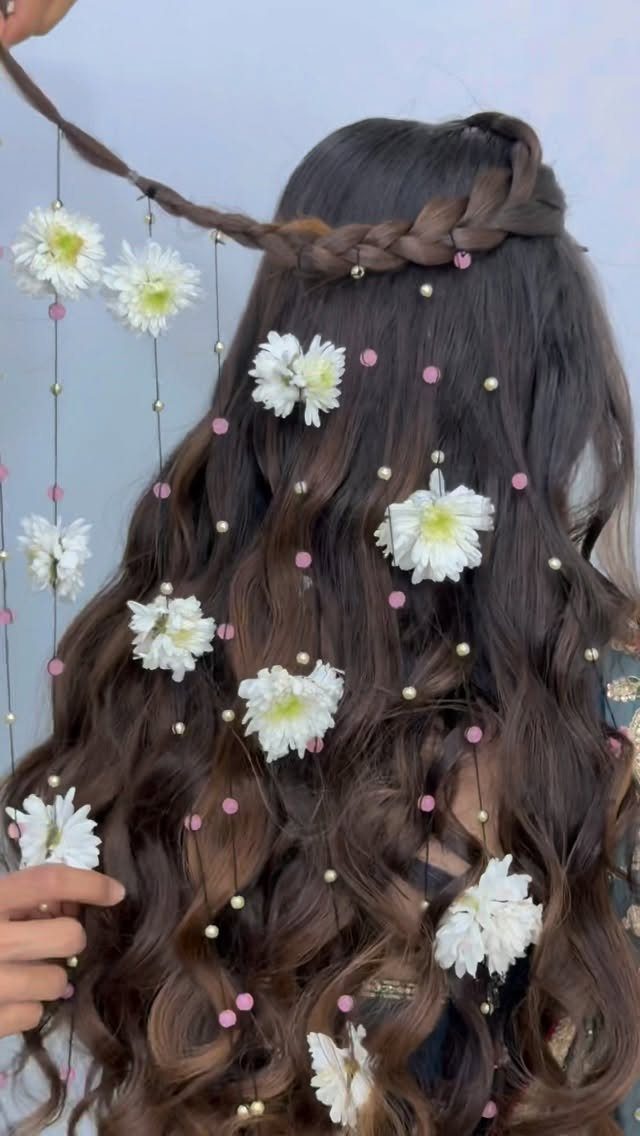
A few small white flowers, scattered through a braid and fixed with beaded strings, let you add flowers in pieces rather than as one big statement. You decide how many, and where.
This suits you if a crown feels like too much. Place them along a braid or around a twist, and keep the spacing uneven so it looks natural.
I would start with fewer than you think you want, then add more at your trial.
6. Silk Flowers
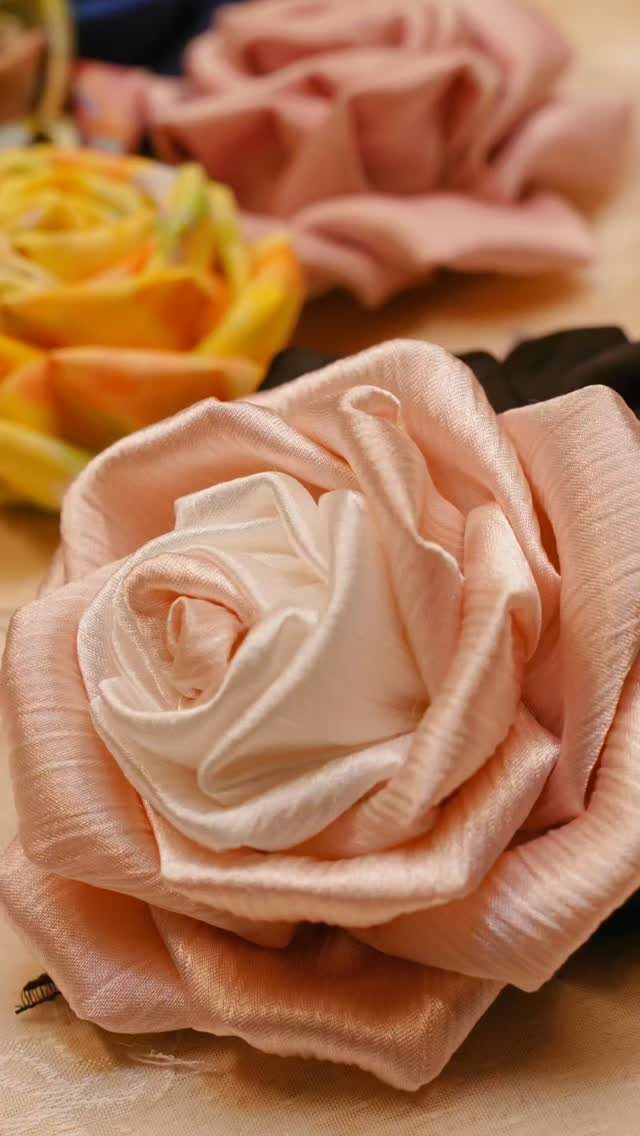
Silk roses in soft peach, yellow, and pink hold their shape, so you can wire or pin them into place days ahead and stop worrying about wilting.
That makes them my pick if you want your hair finished early and no surprises on the morning. They also double as a keepsake, which fresh blooms cannot do.
Fabric petals never look quite as alive as real ones in close photos, and that is the price of flowers that won’t wilt. Choose a mix of sizes and tones to help.
Choosing the Right Flowers
Weight and hardiness decide which flowers survive a wedding day. A heavy bloom wilts within an hour and drags on your hair, while a light, sturdy one stays put and still looks good by the time photos wrap up.
I would ask your florist which varieties hold up best out of water, and choose from that short list rather than from a color chart. Pretty and fragile loses to slightly less showy and still fresh at the reception.
There are really no rules on style. A handmade comb or a full crown can be made to your color and mood, so let durability narrow the field first, then pick the look.
Styling Tips for Flowers
Check every flower from all sides before you call it done. Hold a hand mirror behind you, or ask your stylist to take a photo of the back, since guests see that view during the ceremony.
Sturdy stems can slide right into an updo, though a bobby pin crossed over the base holds a flower in place far better than tucking alone.
Ask your florist to bind each stem in floral wire and tape; that wrapping gives a bloom the stiffness it needs to stay put and keeps it looking fresh for hours.
One stem often gives you several blooms and buds, so you can spread a little across the style instead of buying many. Delphinium and spray roses both work this way.
Flower Preparation
Keep your flowers in the refrigerator until your stylist is ready for them. Cold storage slows wilting, so they look fresher in the final photos.
Ask your stylist to add the flowers last, after the hair itself is finished and sprayed. That way the blooms spend the least time out in the open and aren’t bent or crushed during styling.
Wrapping each stem in floral tape and a thin length of wire keeps it sturdy and fresh through the day, and it makes the stems easier to pin.
Frequently Asked Questions
What flowers are good to put in my hair for a wedding?
Pick light, sturdy blooms.
Dahlias, spray roses, and freesia are good choices, and delphinium works too. A quick call to your florist settles it: ask which varieties last longest without water, then build your hair pieces from that list.
Can wedding guests wear flowers in their hair?
Nothing in what I know of wedding hair flowers says they are reserved for the bride, and there really are no rules on style.
A guest can wear a single flower, a small comb, or a headband. Keep it modest if you want the bride’s look to stay the focus.
What are the flowers in hair called?
They are usually called floral hair accessories.
The specific piece has its own name: a flower crown, a floral headband, a flower comb, or a single hair flower. Silk and dried versions go by the same names as fresh ones.