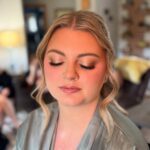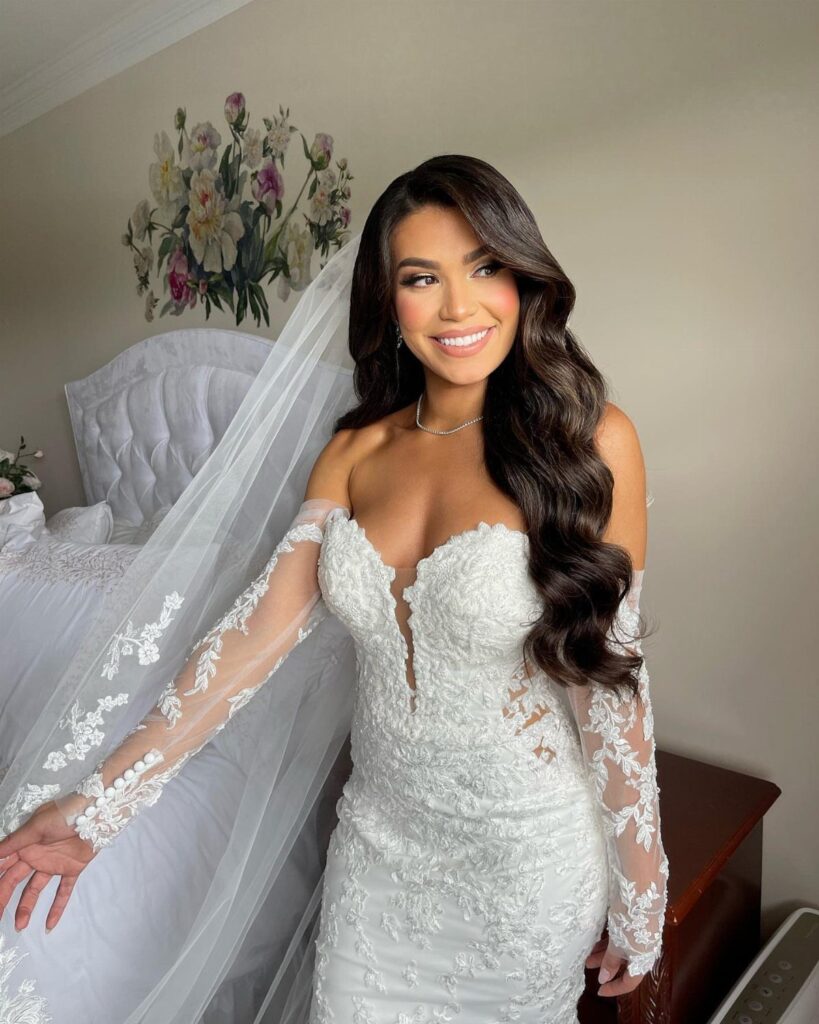
The dress neckline decides which of these hairstyles is yours: a strapless or spaghetti strap gown leaves hair down or half up open to you, while a high neckline calls for an updo or a low style that clears the neck.
The styles in this list run from a smooth classic chignon to romantic curls that take real time to set, and they differ most in how much of your morning and budget they claim.
1. Braided Wedding Hairstyles
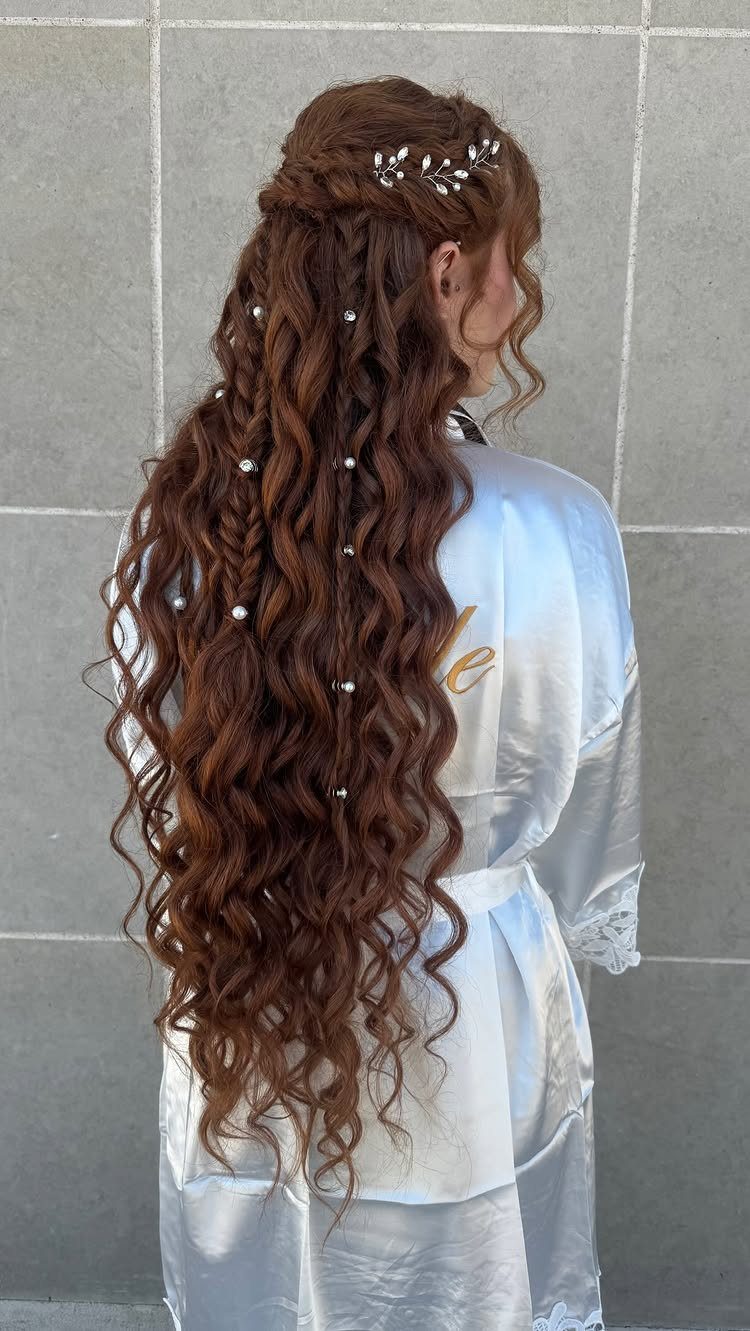
A braid can be as plain as one plait down the back or as layered as a double crown at the front, and that range is why it works on a budget.
Ask your stylist to price the simple version first, then add pieces one at a time.
The maker of this look wrote that it combines a braided double crown, side twists woven into the braids, a touch of fishtail in the back and 2 mini braids on the sides.
I would pick one or two of those details, not all of them. Pearl pins finish it for the least money.
Braids hold up well on long curly hair like this, since the curl gives them texture to grip.
2. Half Up Hairstyle
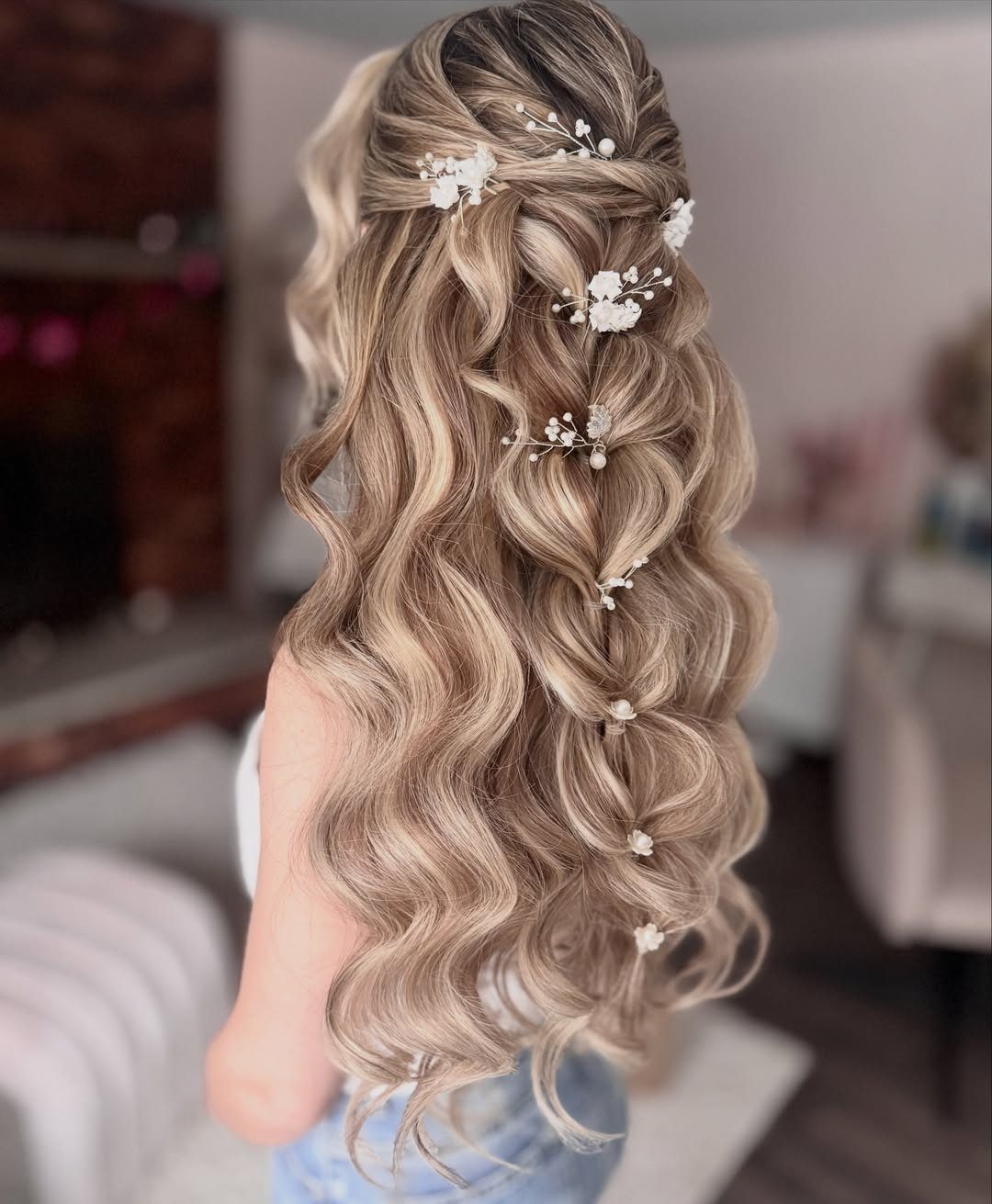
Half up keeps the length down and the face open, which makes it an easy call if you can’t decide between an updo and loose hair.
Small white flowers pinned along the gathered section do the decorating, so you may not need a veil comb at all.
I like it best on hair with some wave or curl already in it, because the lower half stays full. Bring your dress neckline to the trial, since a high back can compete with all that hair.
3. Classic Chignon
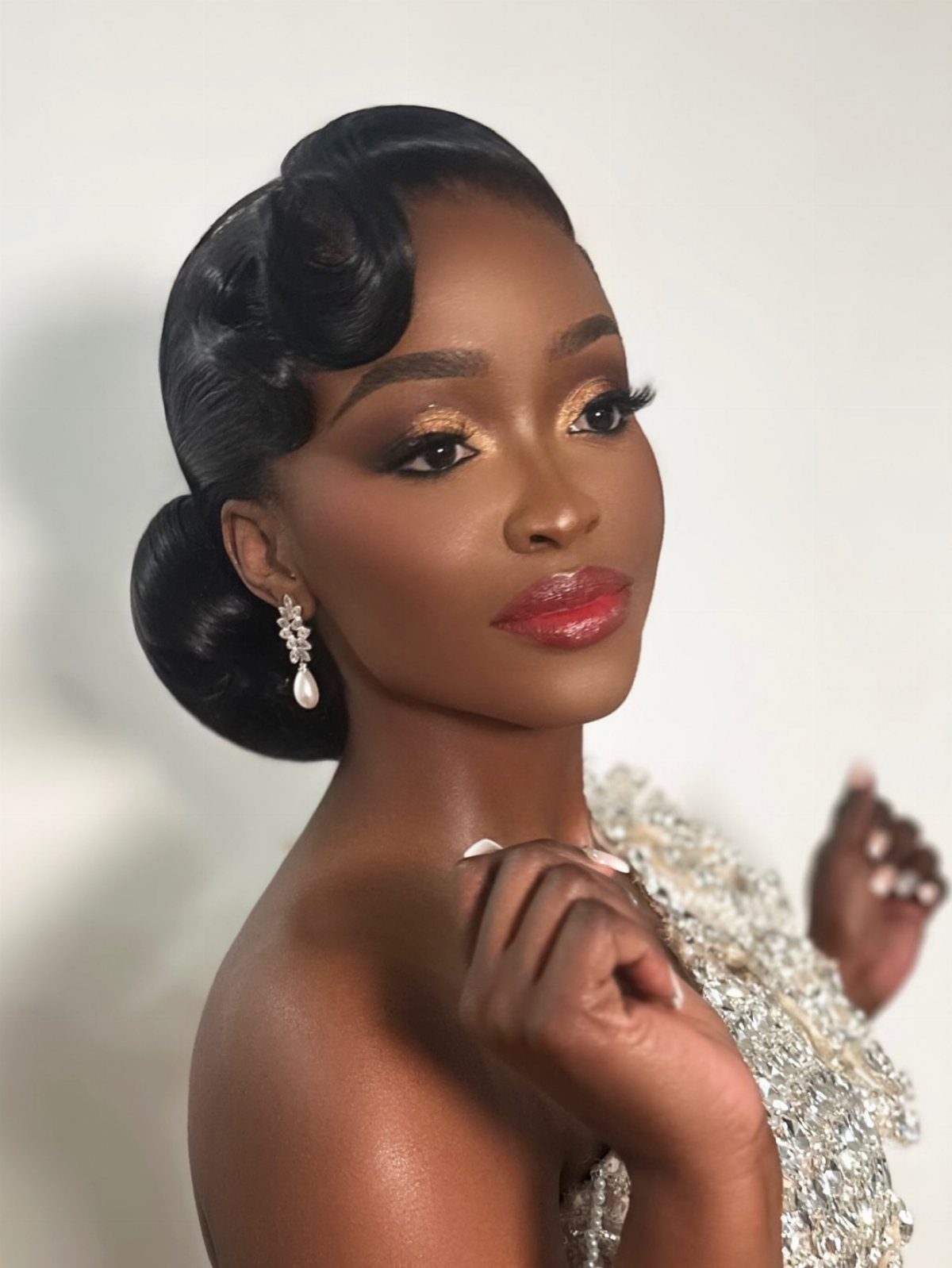
Low and smooth, a chignon sits at the nape and leaves the neck, shoulders and earrings fully in view.
A classic chignon needs little else: pearl studs are enough jewelry, and with a sparkly or heavily beaded dress the hair should stay bare of pins, combs, and crystals.
Smoothness is the whole job here, so book a trial and ask the stylist how it will hold through a long day. Of all the updos, I would trust this one most for photos from every angle.
4. Ponytail Hairstyle
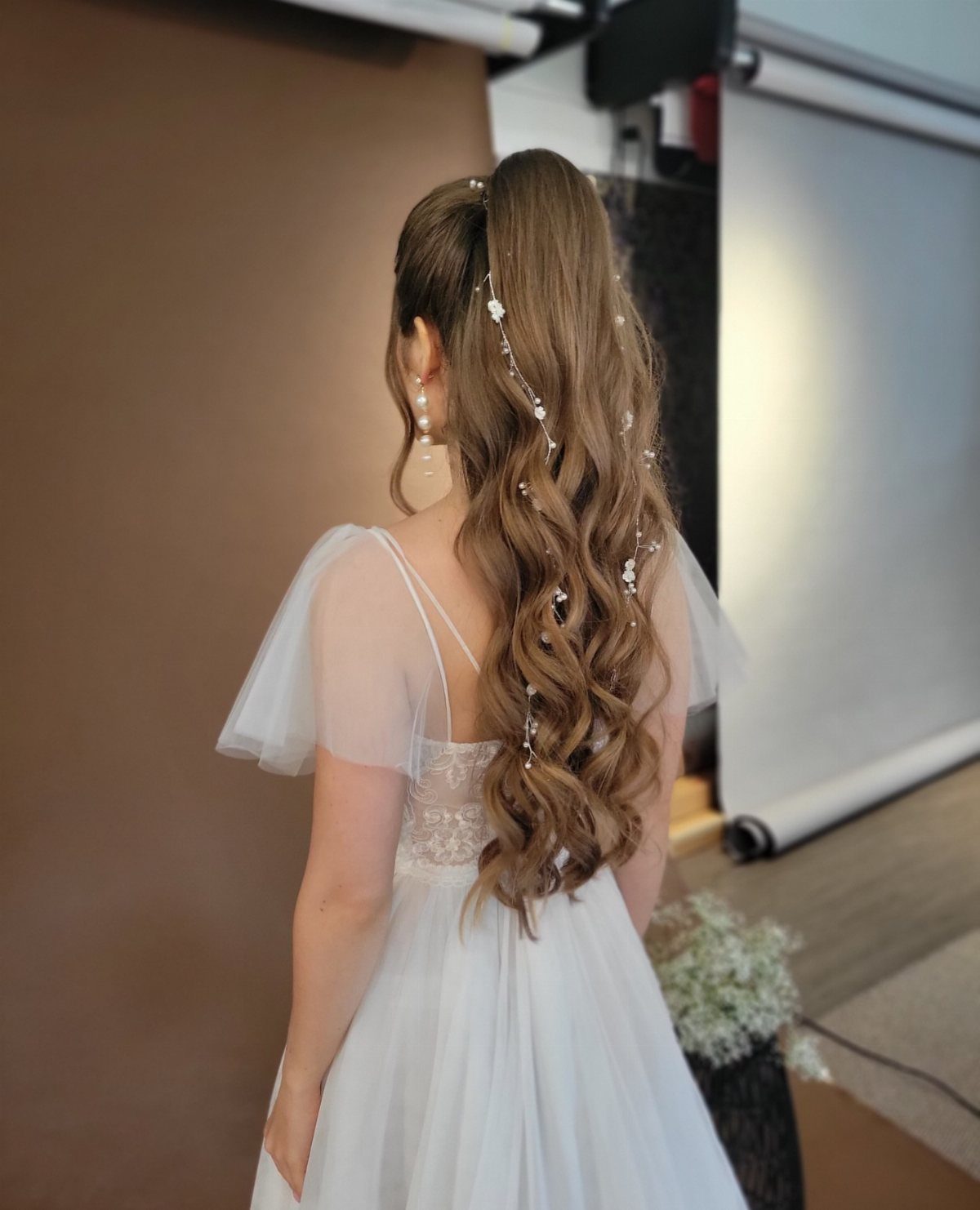
A high ponytail with long curls running down it is a wedding look that still feels like a ponytail. Curl the length first, then wrap or pin the base so the elastic disappears.
Pearls threaded through the tail add polish without much cost.
I would choose this for a simple gown, where the hair becomes the detail from the back. Test it with your veil, if you wear one, because placement needs planning.
5. Textured Updos
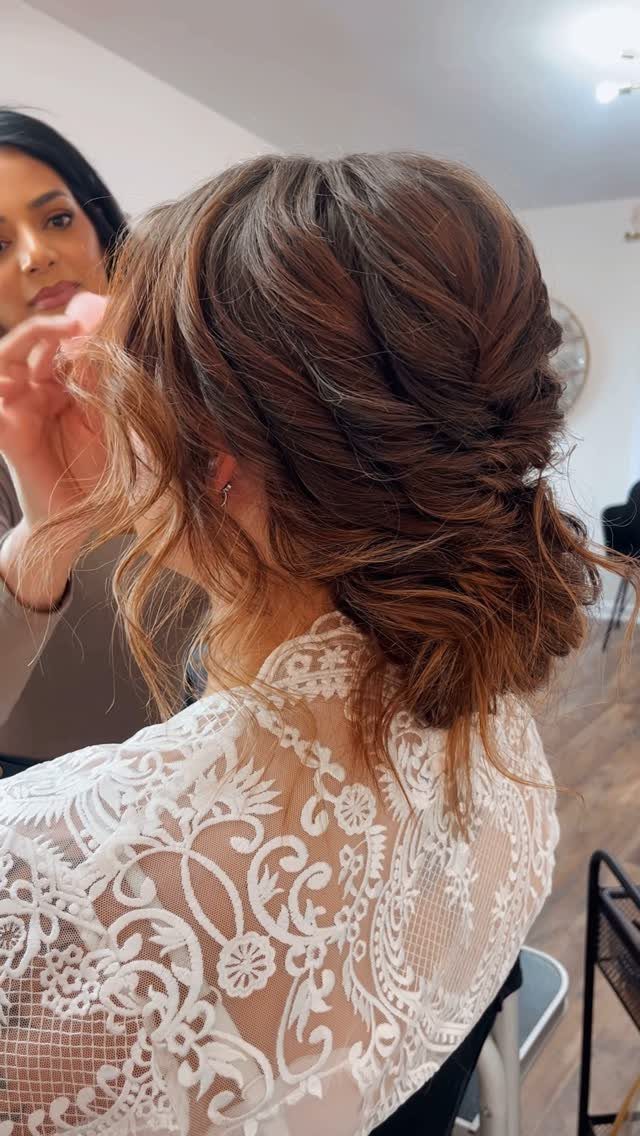
Texture means the updo is meant to look soft and slightly undone, so no one expects perfection. A low placement, as above, pairs nicely with lace because neither fights the other.
Ask your stylist to build it on second-day hair or add texturizing product, since freshly washed hair slips.
Bring a photo of the exact looseness you want. Stylists mean very different things by "messy."
6. Romantic Curls
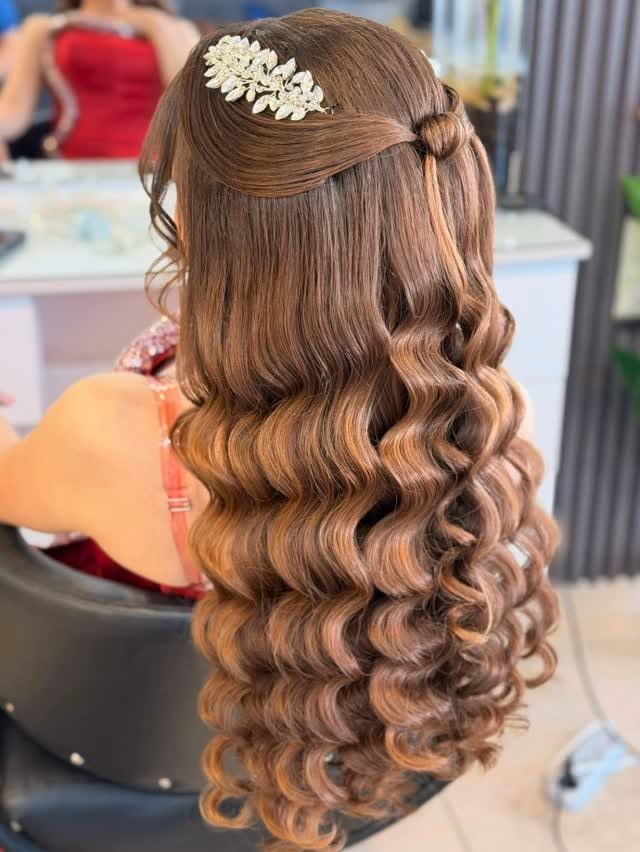
Tight ringlets read as romantic in a way loose waves do not, because every curl stays defined from root to end. A single floral accessory tucked to one side is plenty.
Curls this small take time to set, so ask your stylist for an estimate and build it into the morning schedule.
I would keep the rest of the styling quiet, since the hair carries the look. Hold the curl pattern with a trial run before you commit.
7. Slicked Back Wedding Hair Styles
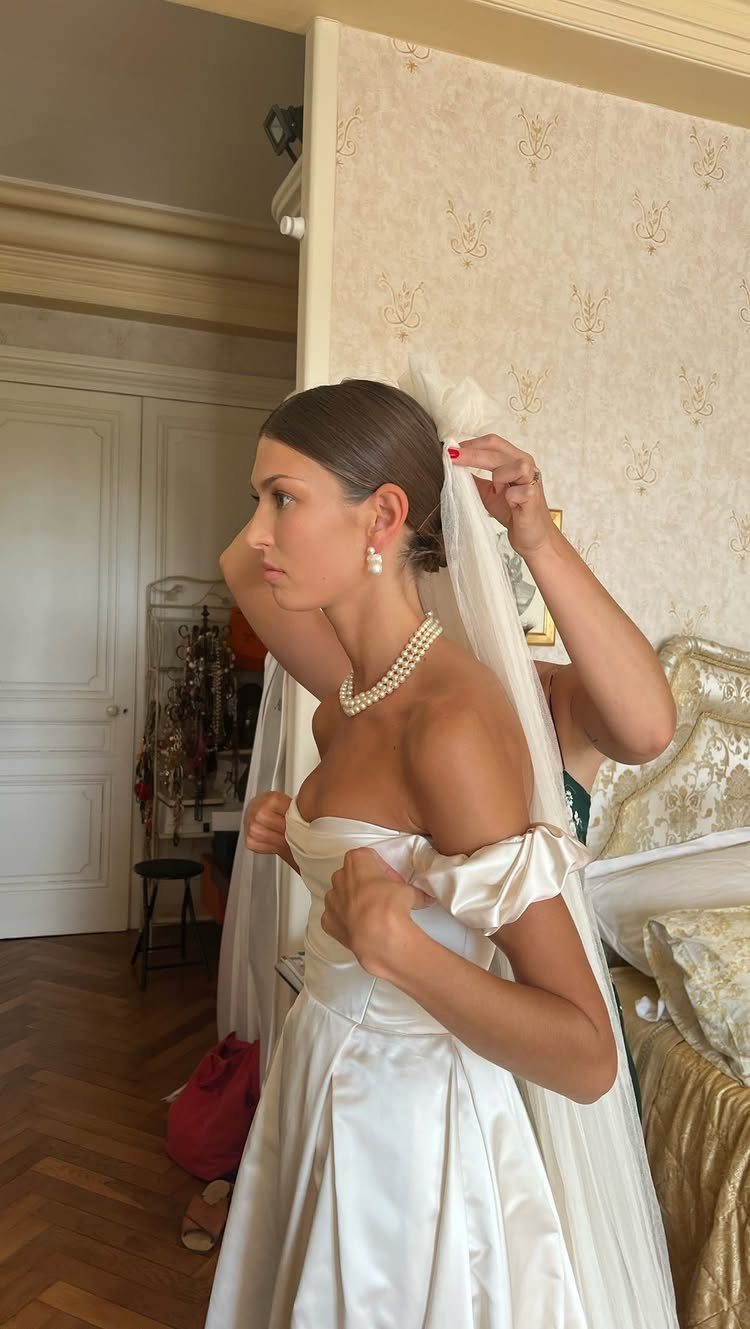
Sleek hair asks for very little else. With a satin gown and a low bun, the shine of the hair and the fabric does the work, so a veil set just above the bun is all the styling it needs.
I would pick this for a bride who wants a clean line from the neck down. A pearl necklace, as visible here, is plenty of jewelry.
Slicked hair shows every bump, so book a trial and check the back view in photos before you commit.
8. Twisted Updo
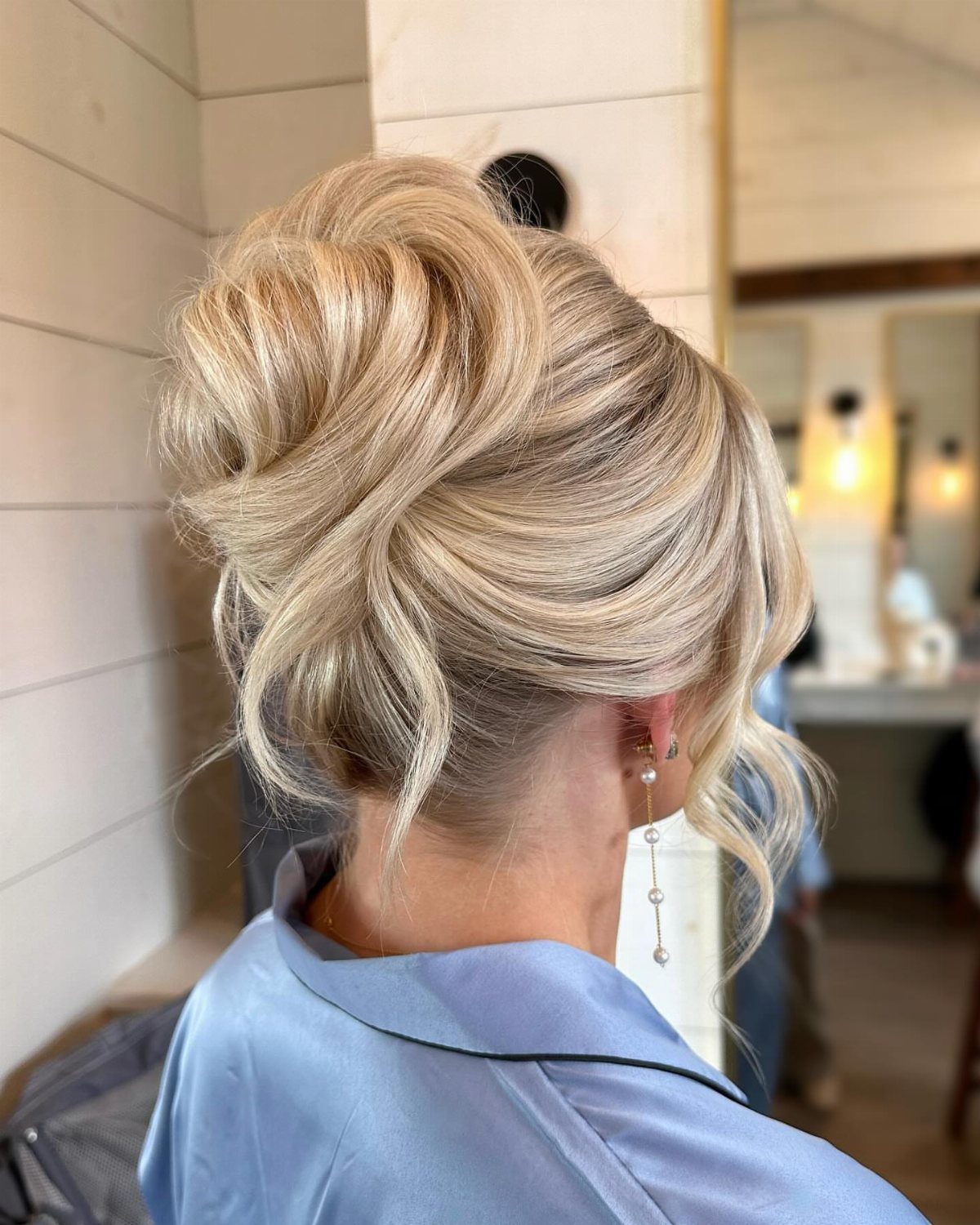
Twisting the hair upward into a tidy roll gives you an updo that looks dressed up without looking stiff. Pearl earrings are enough on their own, since the twist already draws the eye to the ear and neck.
I like it for a bride who wants something between a smooth chignon and a loose texture. Bring a photo of the twist’s direction and height to your trial, because stylists place them differently.
If you plan to wear a veil, test it at the trial too.
9. Romantic Waves
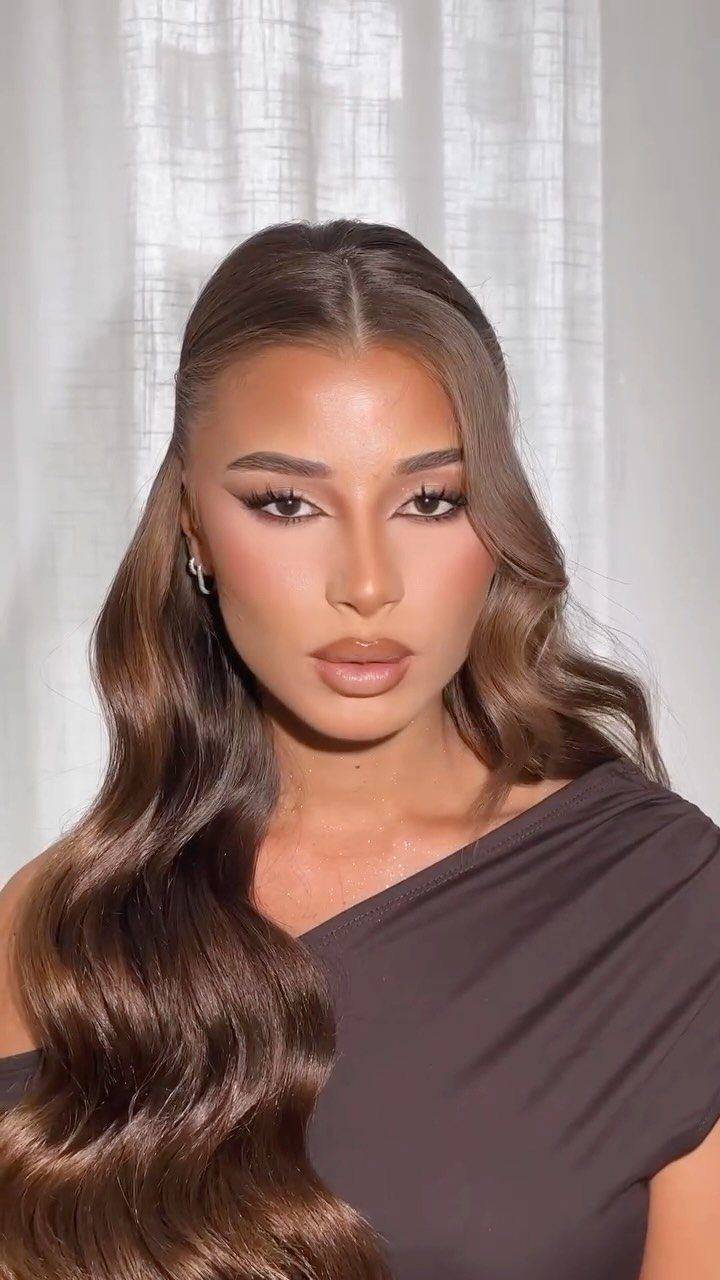
Waves pulled back from the face keep the length on display while giving your makeup a clear stage.
Polished waves, as here, look brushed and even, so ask your stylist to set them in the same direction for a uniform finish.
For me this is the safest pick if you want long hair to stay long.
Since the waves sit loose, practice sitting, hugging and dancing in them at the trial, and see what they do by the end of an hour.
Hair Accessories
Your flower budget probably has room for a few extra stems. Ask your florist to set aside some of the blooms already on order for your hair, so you skip a separate purchase and the colors match the bouquet.
If your hair is short, a flower crown is a smart option, since it adds fullness where length can’t. Order a spare in case one wilts or crushes before the ceremony.
Headbands and pins work the same way: pick one accessory as the focus and keep the rest plain. Decor shouldn’t outshine you, and neither should a crowded head.
“Always make sure that you feel beautiful and confident but never take away from the bride,” says hairstylist Ricky Fraser. “A wedding guest should always follow the lead of the bride and the setting of the event.”
— Vogue
Choosing the Right Hairstyle
Start with your personal style, then let the neckline settle the details.
With a strapless or spaghetti strap dress, you have the most freedom: hair down or half up both show off bare shoulders.
With a high neckline, pick an updo or a low style that clears the neck; that way nothing competes with the dress.
Every hair consultation goes better with a photo of the dress on your phone, since the neckline and back details drive most of the decisions.
A stylist can judge the pairing in seconds when they see the neckline, and I would trust that over a hairstyle photo alone.
DIY vs Professional Styling
Doing your own hair is a fair choice, especially if you want to look like yourself. If you already curl or pin your own hair with confidence, that’s a real way to save money.
A professional earns the fee in staying power.
A pro has small habits, like layering pins and prepping with texture spray, that hold a style from cocktail hour through the last dance, and they are hard to copy on your own head.
If you hire one, I would book early and plan the timeline backward from the ceremony. If you go solo, practice the full look more than once before the day.
Frequently Asked Questions
How do I do my hair on my wedding day?
Your everyday style comes first; the neckline of the dress then decides what the hair actually does. Strapless and spaghetti strap dresses leave the shoulders bare, so hair worn down or half up works without any trouble.
A phone photo of the dress, front and back, tells your stylist more than a description will, because the neckline and the back shape most of the choices.
Can I do my wedding hair myself?
Yes, especially if you want to look like yourself and already curl or pin your own hair with confidence. Doing it yourself can cut a few hundred dollars from the budget, which is real money on a tight number.
Practice the full look more than once before the day, because a style has to hold from the ceremony through the last dance.
Is it worth hiring a professional for wedding hair?
For staying power, yes. Hiring a stylist means booking months ahead and working the morning schedule backward from the ceremony start.
What are some popular wedding hairstyles?
Updos, braids, half up styles and loose waves or curls are the most common choices.
Updos range from a smooth low chignon to a soft textured twist, and braids can be a single plait or a layered double crown. Half up and waves suit brides who want to keep their length.