The ideas here run from a popcorn bar to a food truck, and what picks one is who does the work: if friends can top off pans and lift covers, a self-serve taco bar or a pasta bar costs the least, but if nobody can staff the table, a food truck or a good caterer is the better buy.
1. Taco Bar
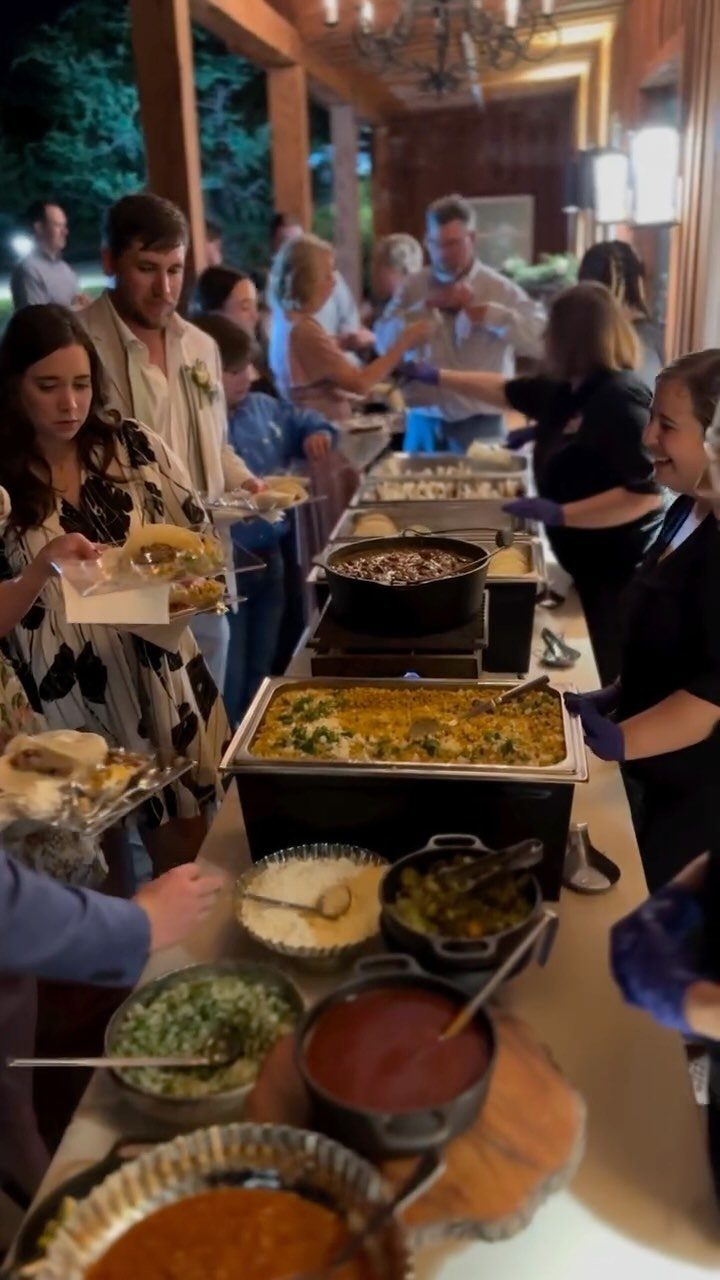
A taco bar puts the work on your guests, and that is why it suits a tight budget. Seasoned meats, rice, and salsas go in chafing dishes along one long table, and each person builds a plate their own way.
Label every pot, and set a vegetarian protein beside the meats so nobody gets stuck with just rice. Keep the salsas in separate bowls with their own spoons.
Give kids the same line; a plain taco is easy for them to assemble.
2. BBQ Pulled Pork, Burgers, and Sides
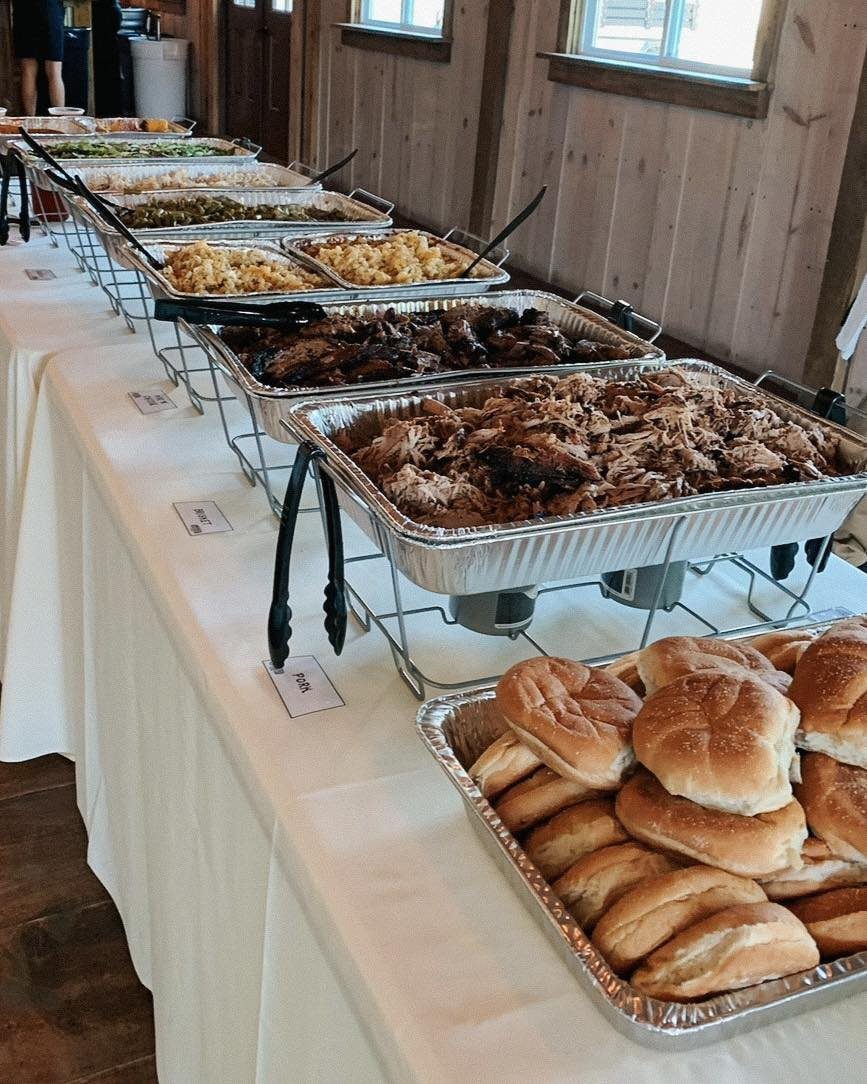
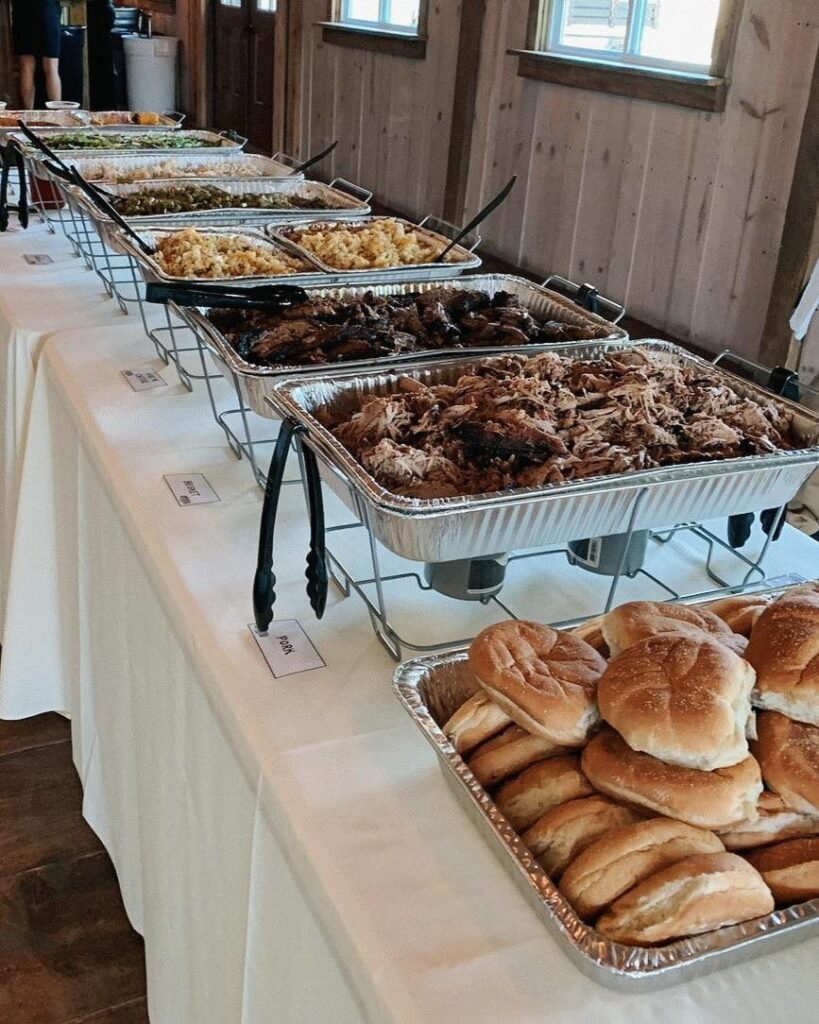
Pulled pork is a budget favorite because a casual crowd already knows what to do with it. Aluminum trays hold the pork, grilled meats, sides, and rolls, and a small label on each tray keeps the line moving.
I would put the buns at the front of the table and the meats after, so plates fill in the right order. Pair the pork with a burger option for guests who skip it.
Pulled pork and burgers suit a relaxed venue, a barn, backyard, or park pavilion, where nobody expects white tablecloths.
3. Dessert Buffet
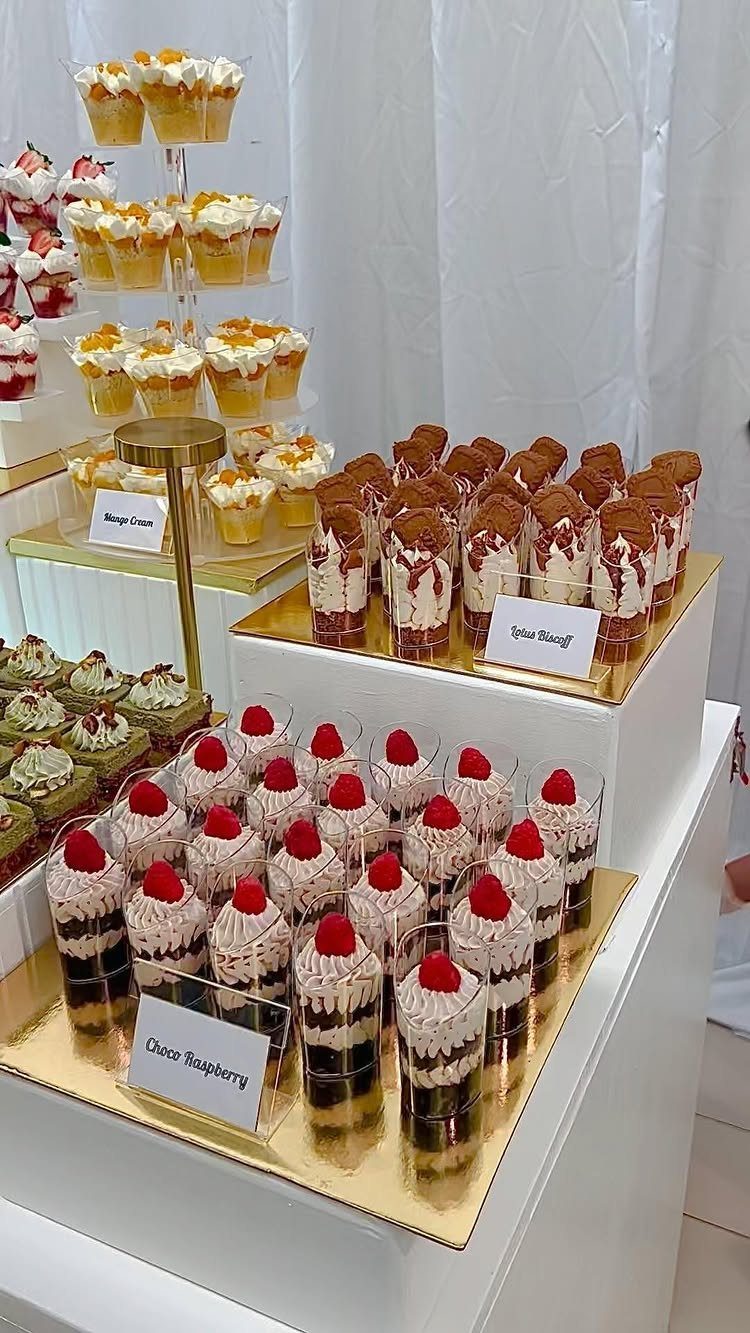
Swap the single tiered cake for a spread of small desserts, and guests get to pick their own flavor.
Stands matter more than the sweets: height makes a modest table look generous. Label each flavor so guests can spot allergens and favorites.
Choose three or four flavors rather than ten. Individual cups also skip the cutting and plating a cake demands.
4. Biryani Rice
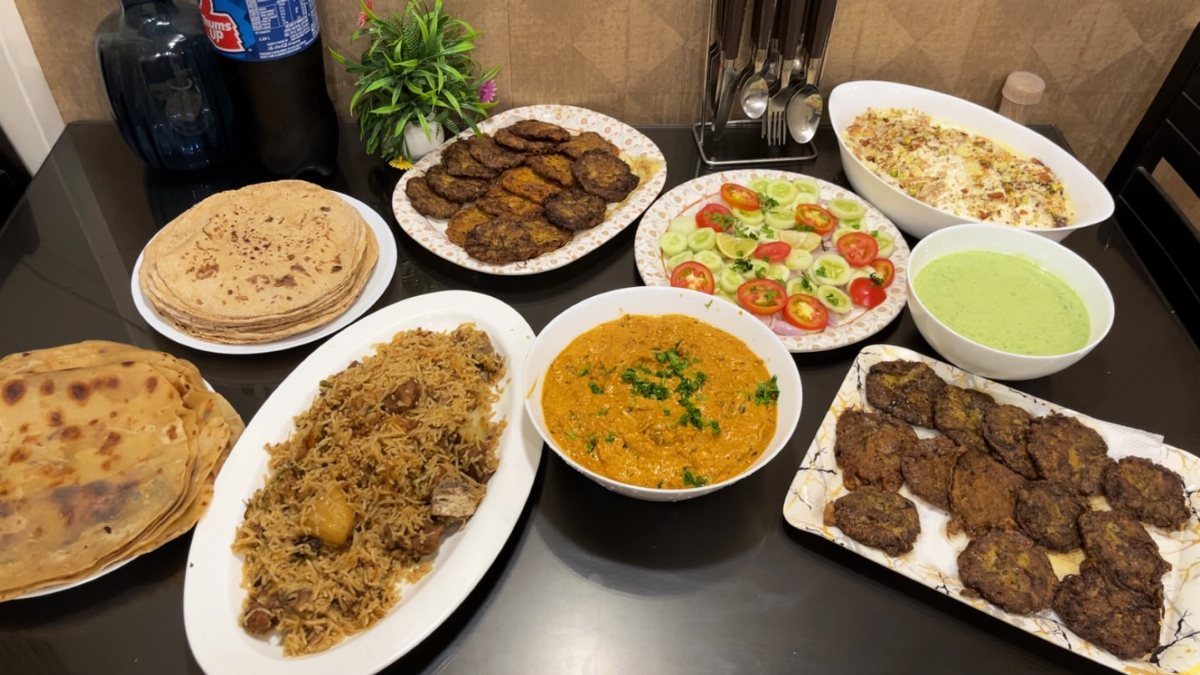
Biryani is a full meal in one pot, which makes it a smart anchor for a big guest list. Around it, a curry, flatbreads, cutlets, a salad, and cooling raita round out the plate without much extra work.
I like raita beside any spiced rice, since it balances the heat for guests who want it mild. Put a vegetarian curry on the table too.
Ask a caterer who cooks this cuisine for a living; rice at this scale is hard to get right at home.
5. Food Truck
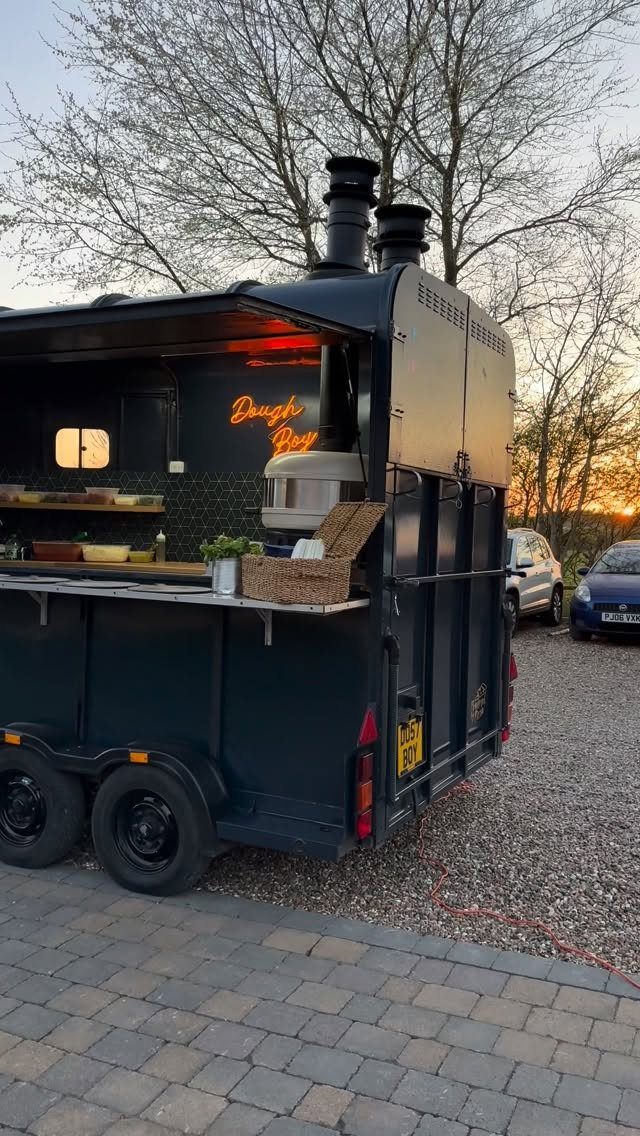
A food truck brings the kitchen and the serving window with it, so you skip the buffet setup entirely. Guests line up, order, and eat outside, which suits a relaxed evening wedding.
Park it on flat ground, such as a gravel driveway, and leave room for a line that does not block the cars.
Confirm before booking how the truck prices a set guest count, since that decides whether it beats a standard caterer.
Sunset is a lovely time for it to open.
6. Finger Foods
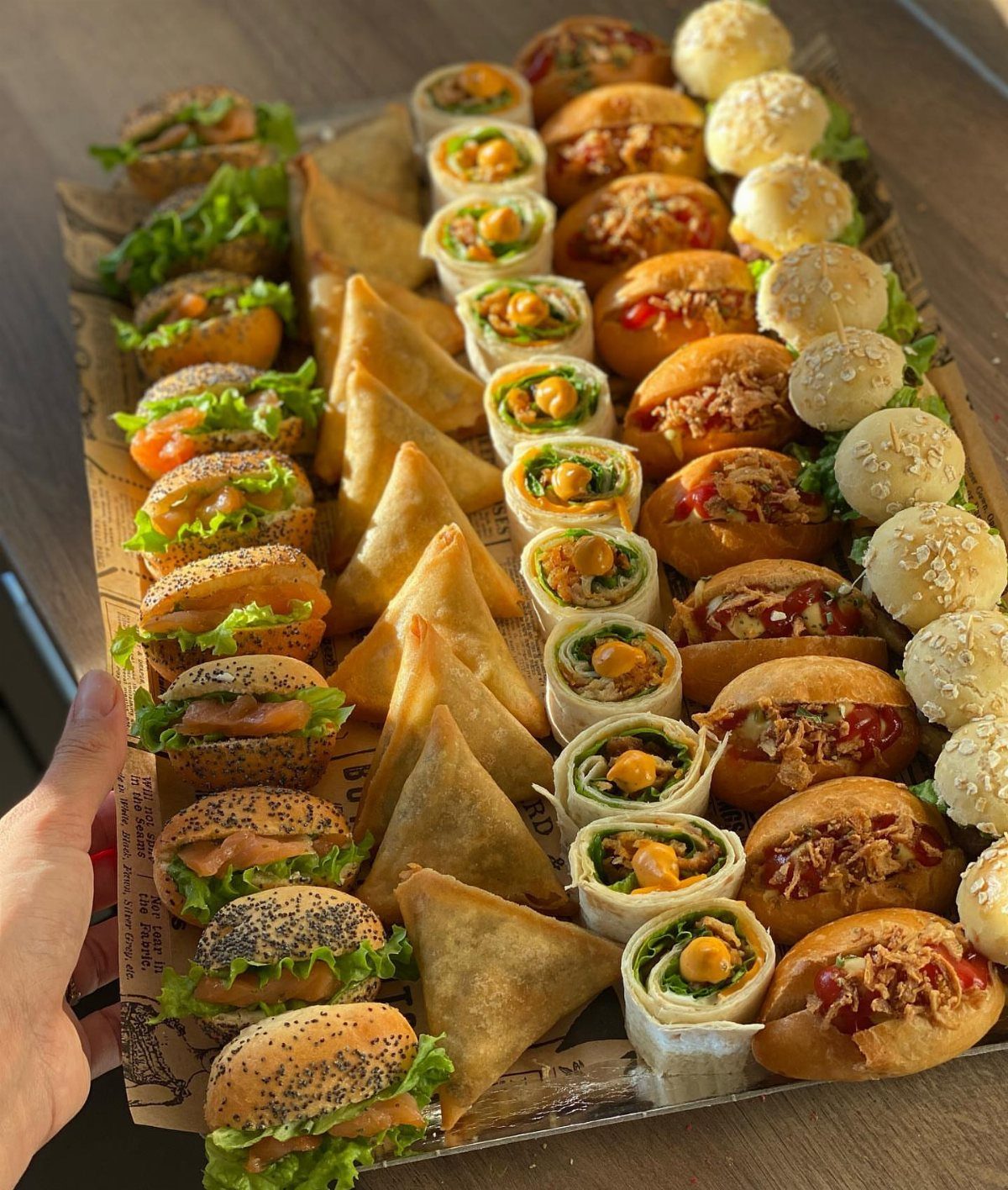
Finger foods keep guests moving and talking, because nobody needs a table or a fork. Mini burgers, wraps, and samosas on one platter give guests variety in a single bite each.
Lining platters with newspaper-print parchment looks charming and hides grease. Pick items that hold up at room temperature, since trays will sit out.
One caution: bites add up fast. I would offer more pieces per guest than seems reasonable, or pair them with a heartier station.
7. Gourmet Sandwich Station
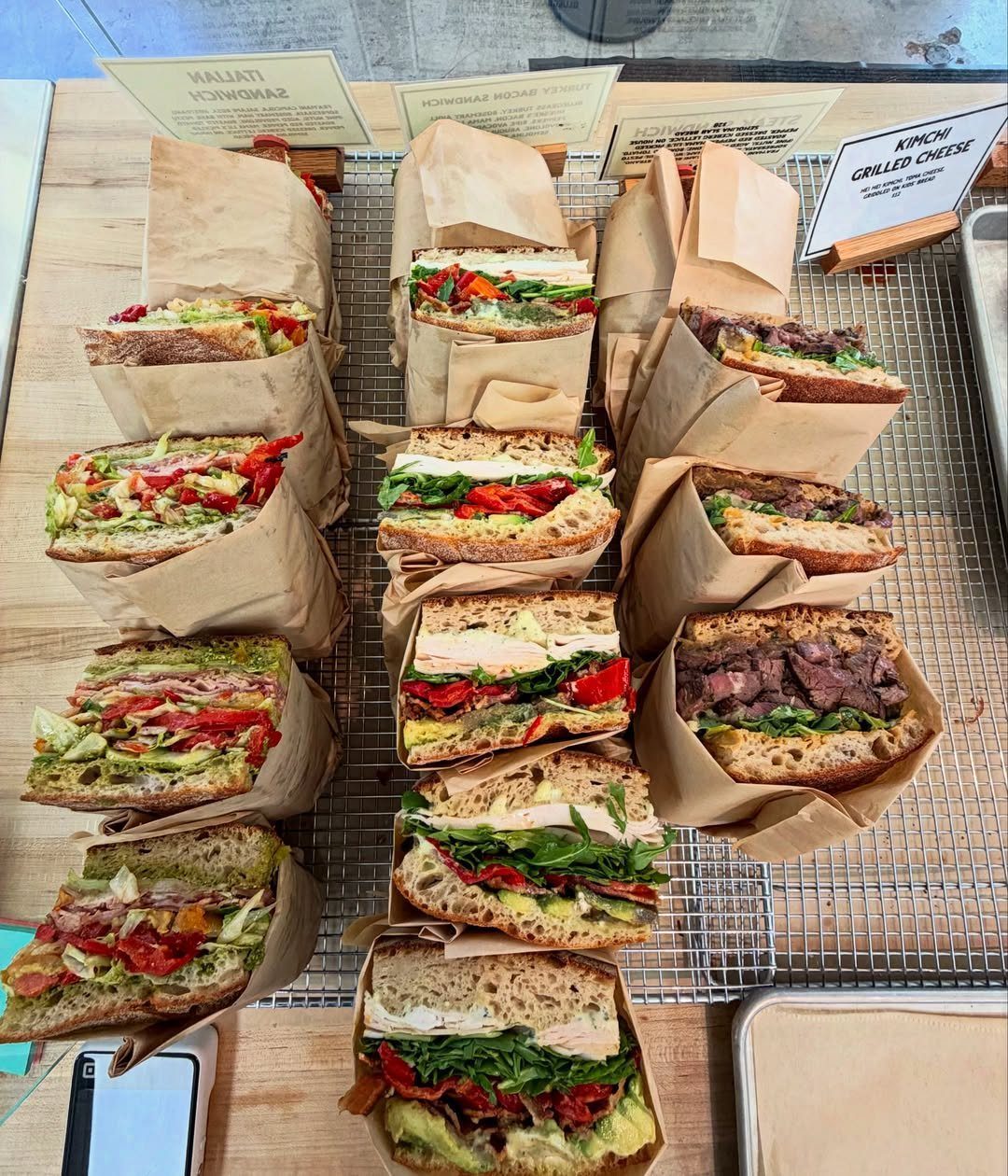
Wrapped sandwiches turn lunch into grab-and-go: each one is portioned, labeled, and ready, so nobody stands at a counter waiting for a server.
Name every flavor on a small sign, as the Italian, turkey bacon, and kimchi grilled cheese signs do. Parchment wrap keeps them tidy and lets guests carry one to a seat.
Offer one vegetarian option at minimum, and cut sandwiches in half so guests can try two kinds.
8. Flavored Popcorn Bar
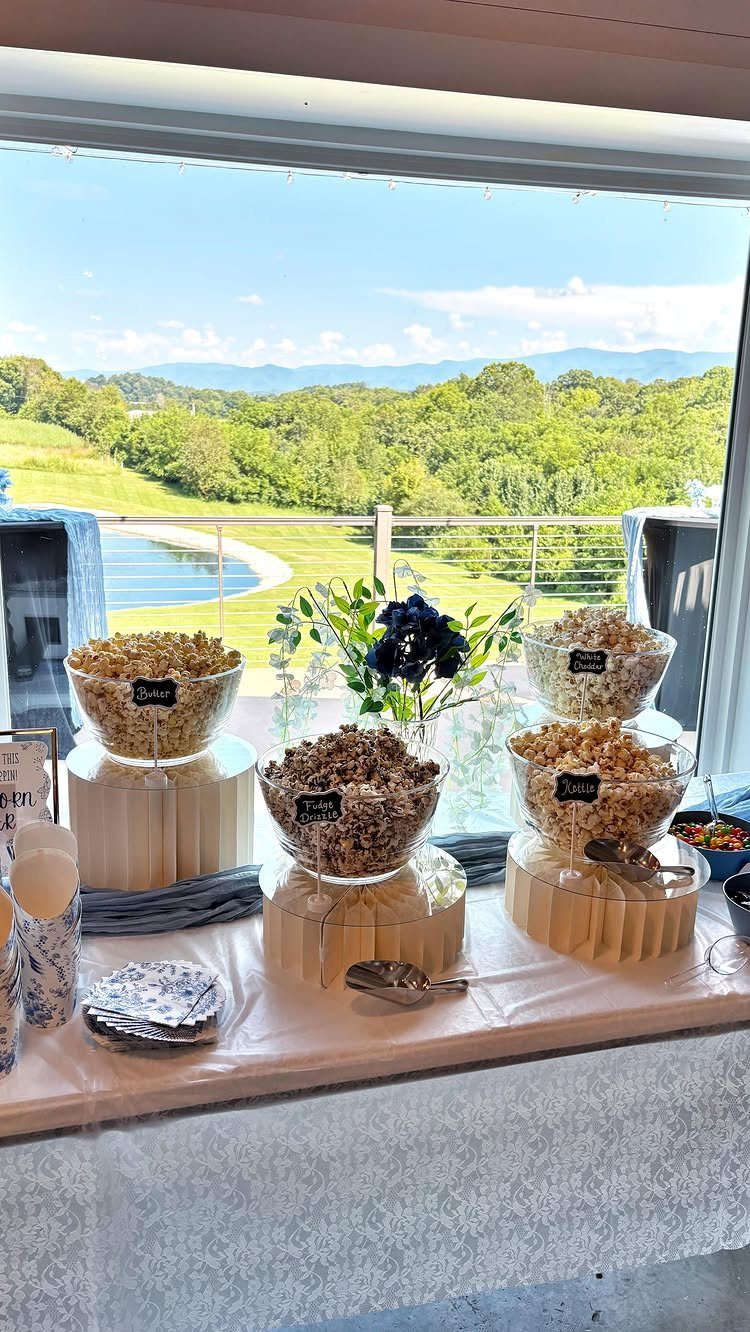
Popcorn is a snack that costs little and still looks like a deliberate choice when it sits in separate bowls.
Keep the flavor list short: butter, truffle drizzle, kettle, and white cheddar cover salty, rich, and sweet-leaning without turning the bar into a chore.
Raised pedestals make a plain white table look styled, and a label on each bowl helps guests choose.
I would treat this as a cocktail hour or late-night snack, since it will not replace dinner. Set out small cups or bags so guests can mix flavors.
9. Bagel and Spread Buffet
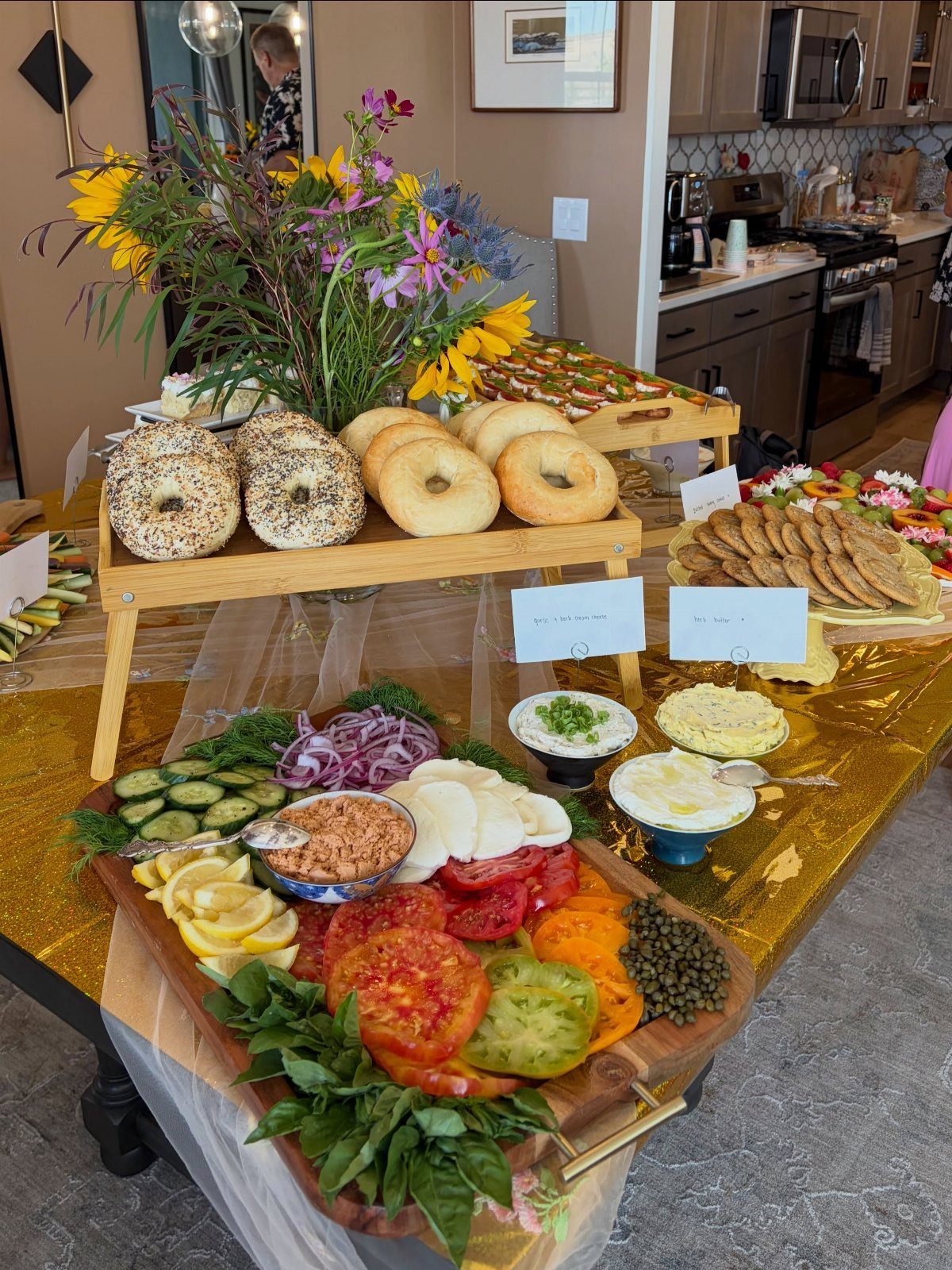
Bagels with spreads and vegetables make a brunch or daytime reception easy to set up at home, because almost nothing needs cooking. Slice the bagels ahead, then add cheese, crackers, dips, and a fresh vegetable platter around them.
A gold tablecloth and wildflowers do the decorating for you, so skip rented centerpieces.
Put out knives for each spread and label the dips. I would also keep a few extra bagels aside, since they vanish first.
10. Pasta Bar
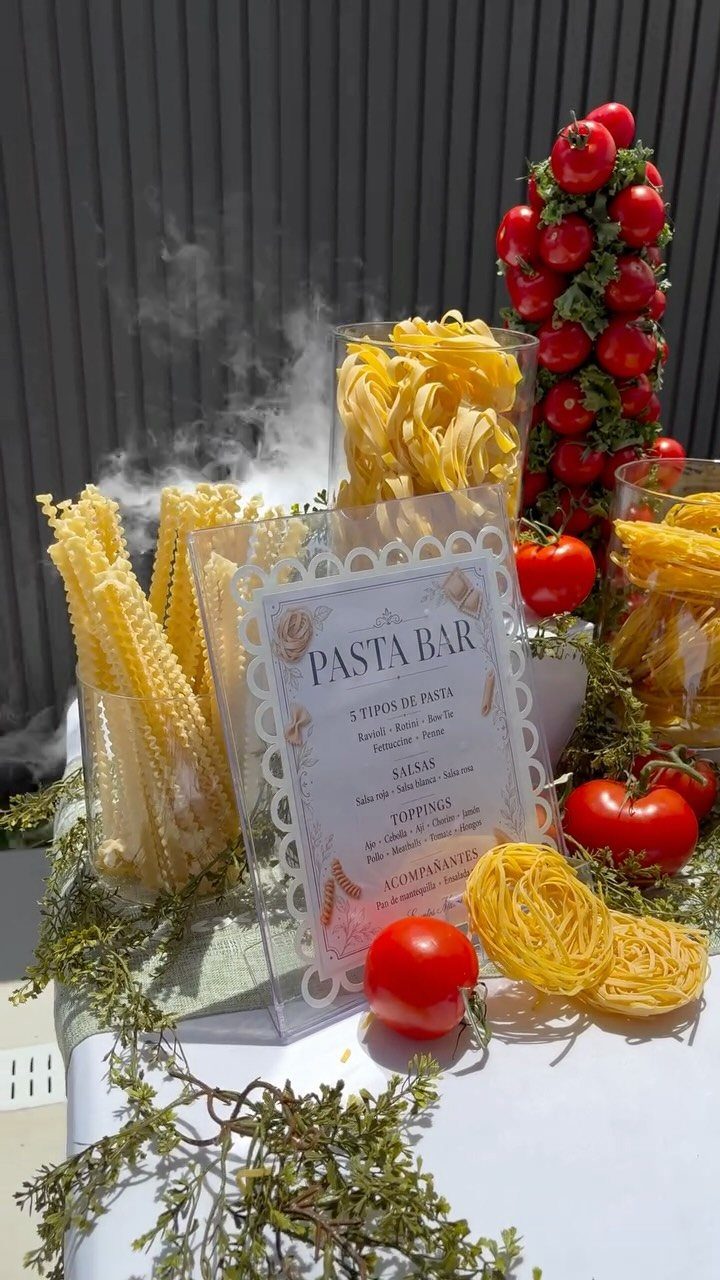
Jars of dry pasta lined up beside fresh tomatoes and greenery make a pasta bar easy to read: guests see the shapes and know what is coming.
Keep the choices short, with a few pasta shapes and a couple of sauces, and write them on a sign like the "PASTA BAR" menu. Fewer options mean a faster line and less cooking.
Pasta is cheap per plate, which is why I like it for a big guest list. Offer one sauce without meat.
11. Charcuterie Grazing Table
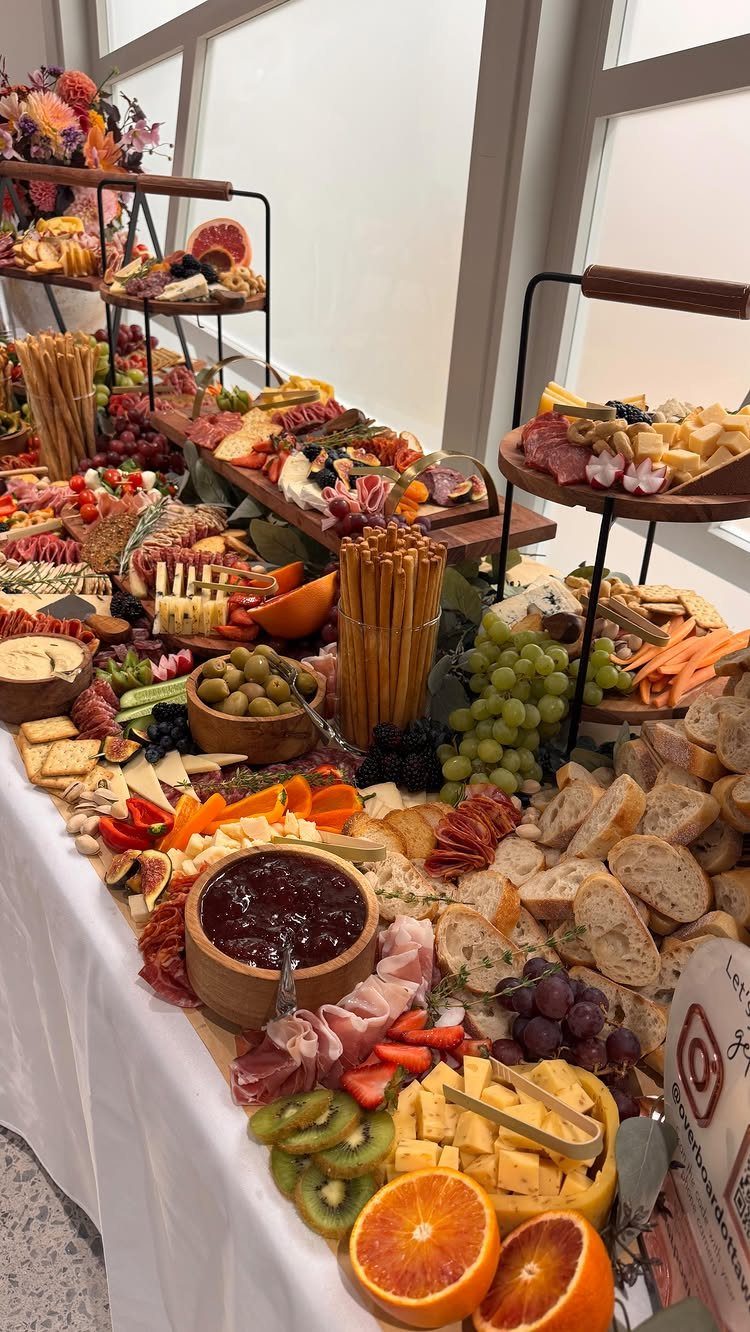
A grazing table replaces plated courses with wooden boards of cured meats, cheeses, crackers, breads, and fresh fruit, so guests eat all through cocktail hour.
Boards at different heights make a spread look fuller than it is. Fill gaps with fruit and bread, which cost less than meat and cheese.
I would place it near windows or open space so guests can circle it from both sides. Cured meats and cheese sit out well, but plan a heartier station if dinner is skipped.
12. Brunch Buffet Spread
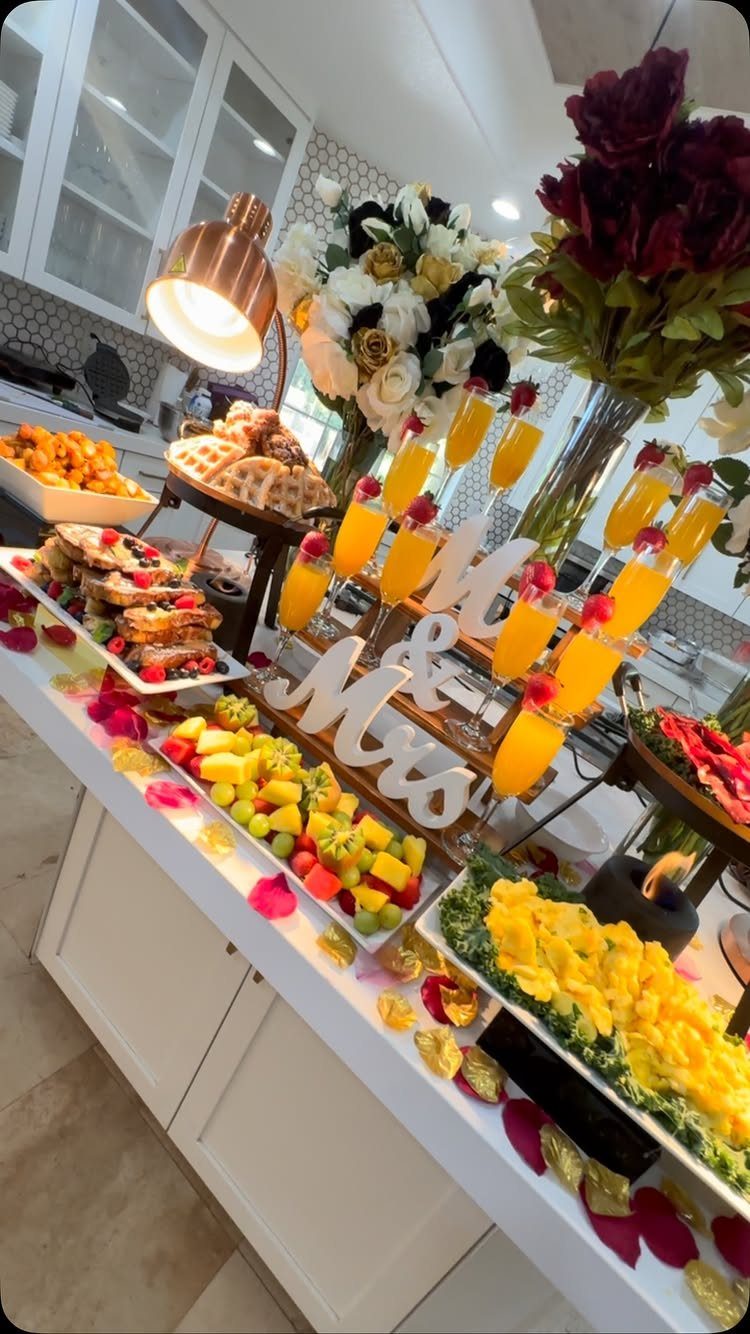
Brunch food is cheaper than dinner food, and a counter of fruit platters, pastries, and juice proves it. Fresh fruit fills trays fast and keeps the spread light.
Orange juice pours straight into glasses, and mimosas can use the same juice, so one purchase serves both.
Pastries go quickly, so I would add something savory if guests will be there past late morning.
Hidden Costs of Catering
The per-plate quote is just where the math begins.
Ask your caterer for a written, itemized breakdown that lists service fees, rentals, and gratuity, because gratuity is sometimes folded into the service fee and you don’t want to pay it twice.
Find out if the rental tables, chairs, linens, and plates are part of the price or billed on top. Alcohol can swing the final bill more than anything else, so get it priced separately.
If you handle the food service yourself, 3 small costs sneak up.
Serving equipment and disposables (foil trays, spoons, plates, napkins, cups, trash bags) run $35–$70. Ice runs $15–$30, and summer outdoor weddings need more of it than you expect.
Then there is the person running the food table, which costs $0–$80. Line up two friends or relatives ahead of time to lift covers and top off bowls, or hire a teenager for about $20 an hour over 3 hours.
Doing that job yourself in a gown or suit is a bad plan, and I would skip it.
Choosing the Right Caterer
Collect quotes from at least a few caterers, and compare them line by line rather than by the bottom number. A low total that leaves out staff or rentals is often the pricier option once those are added.
Schedule a tasting first, and only sign once you have tried the food. Taste the dishes you would actually serve, not just the showpiece.
Go through every line of the contract before your pen touches it. It should spell out what is covered, the headcount pricing, and every fee.
If your venue offers an all-inclusive package, much of this vetting may already be done, since venues often work with caterers they trust. Ask who the caterer is and what the package includes.
Timing and Venue Considerations
Evening dinner service tends to carry the highest price tag, so shifting the party to earlier in the day is among the easiest ways to shrink the catering bill.
A luncheon menu with quiches or a carving station typically costs less than steak or fish.
A weekday date can also lower costs. Ask venues whether they discount off-peak days.
Holding the ceremony and reception in one place saves on the extra venue and the logistics of moving everyone.
For an evening party, heavy appetizers served cocktail-style often come in below the cost of a multi-course plated dinner. I would still plan enough food that no one leaves hungry.
Frequently Asked Questions
What is the cheapest thing to cater for a wedding?
Taco bars and BBQ are among the most affordable choices. A taco bar puts the assembly on guests, with seasoned meats, rice, and salsas in chafing dishes.
What are some ideas for a family-style wedding menu?
3 styles suit a shared-platter menu best: pasta, barbecue, and a spread of heavy appetizers.
How much is food for a 250 person wedding?
Budget food often runs $8 to $18 per guest, so multiply that by your headcount of 250 and check the total against what you have set aside for the whole menu.