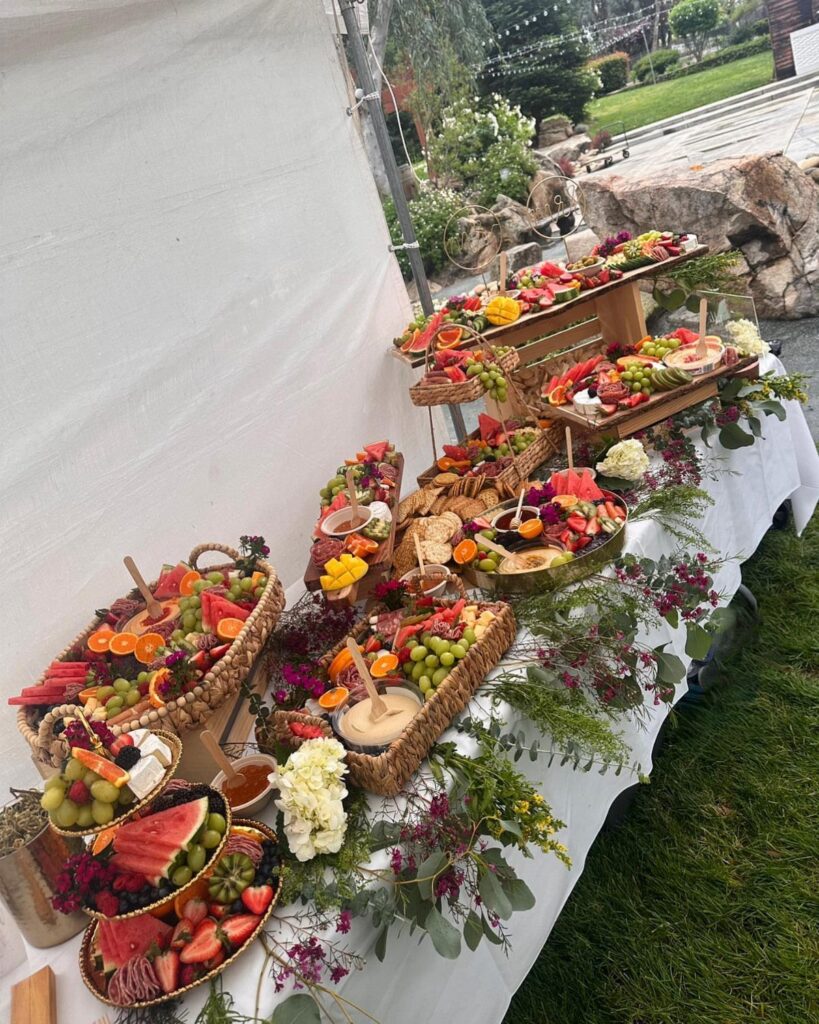
These ideas run from a cheese-and-cracker spread on wooden boards and crates to a full breakfast grazing table, with fresh flowers, greenery, signage, and height variation adding polish at almost any budget.
1. Variety of Food Options
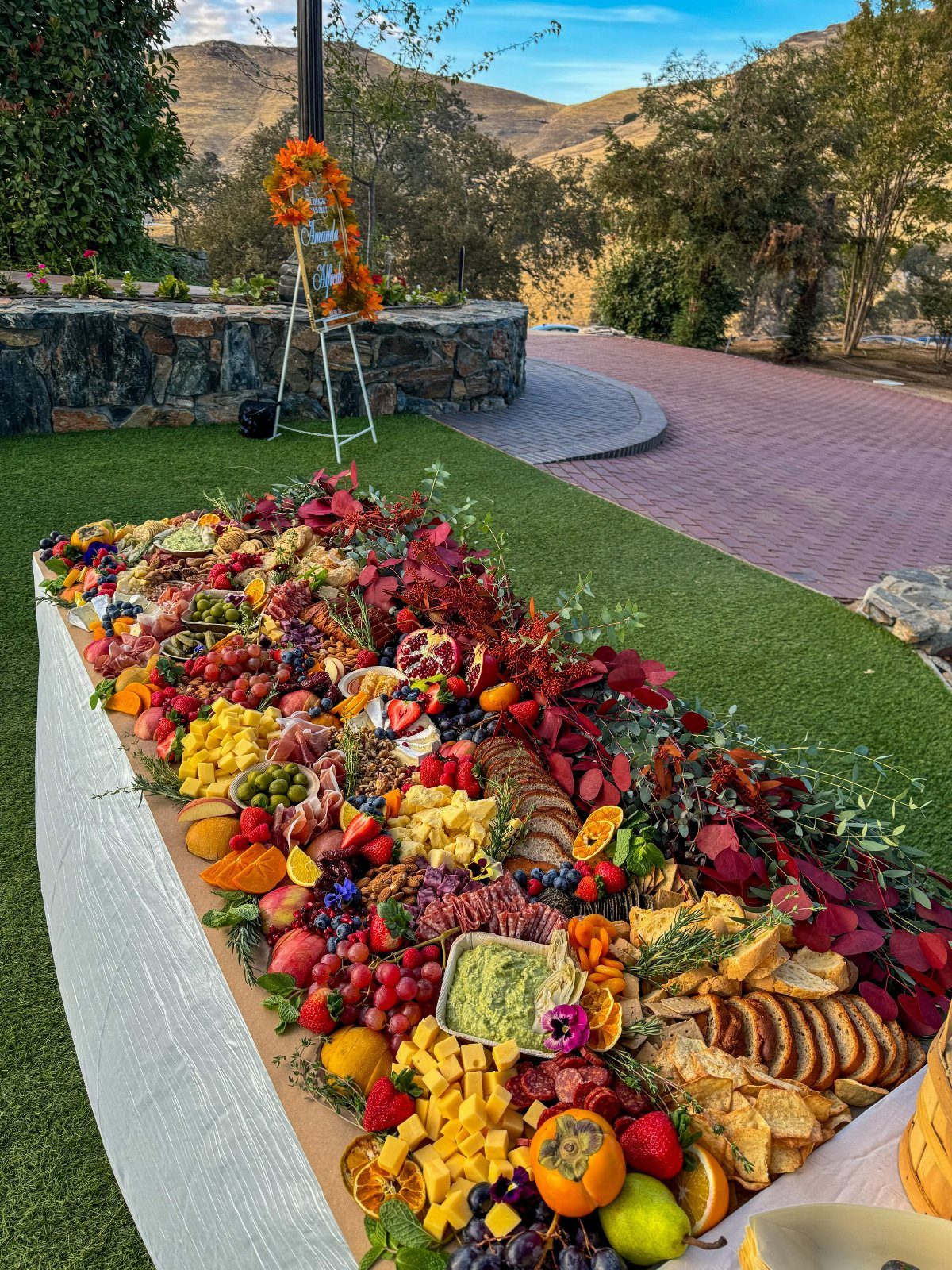
A table this long can hold a lot, and I would use all of that room on contrast: soft and hard cheeses, cured meats, fresh fruit, and crackers in more than one style.
Guests with different diets can each build a plate they like.
Keep every category generous rather than adding one of everything. A few items piled high look better than a lot of items sparsely scattered.
Fall leaves tucked between the foods fill gaps and tie the table to the setting.
2. Wooden Boards and Crates
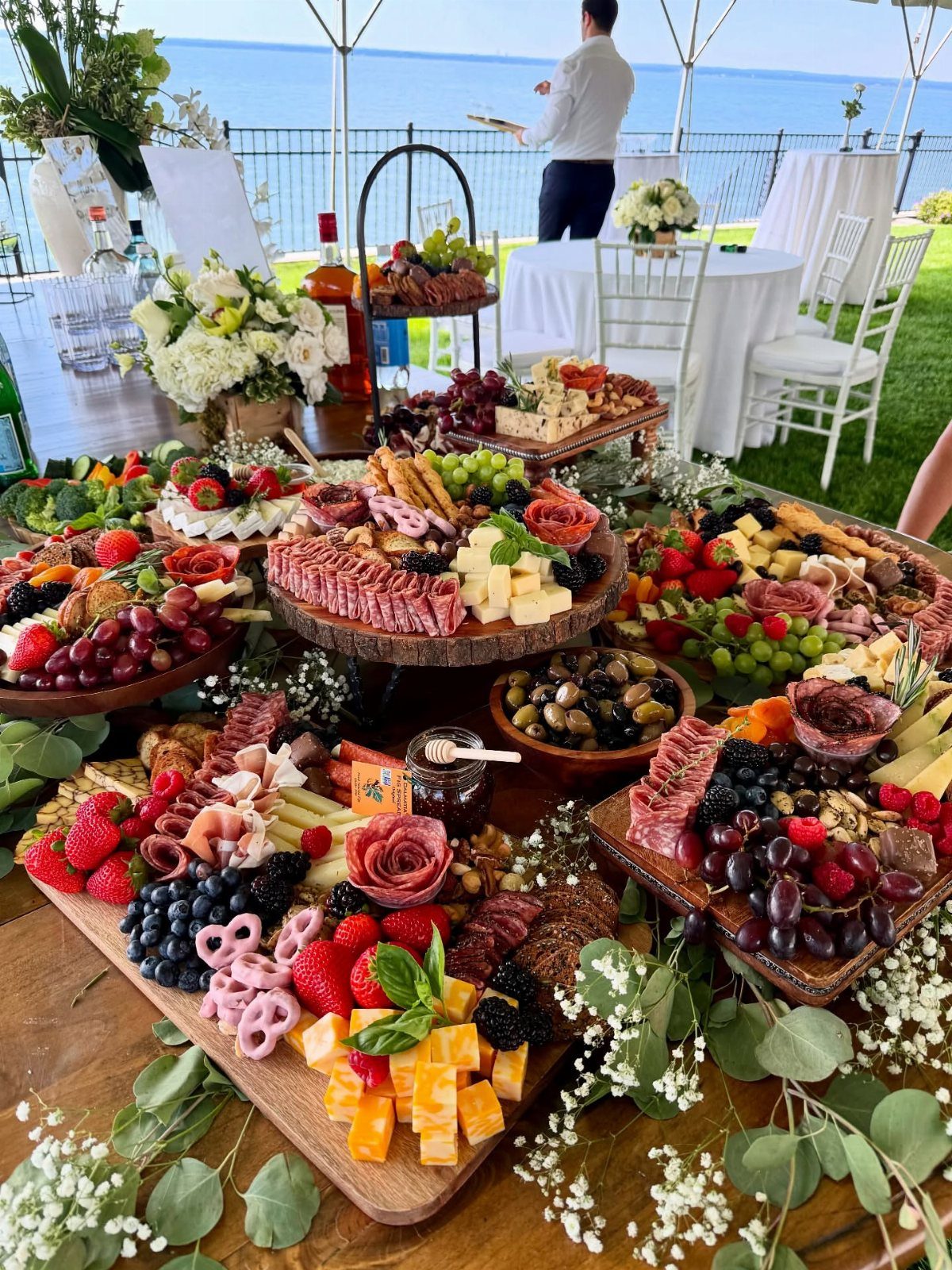
Wood does the quiet work on a table like this. Boards and platters in different sizes break a big spread into zones, so cheeses, meats, and fruit each get their own home.
I prefer mixing a few large boards with smaller ones over matching sets. The uneven shapes look relaxed, which suits an outdoor reception.
Crates can serve as a base to raise a board. Keep food off bare wood where you can, using parchment or a board surface that wipes clean.
3. Grazing Table Signage
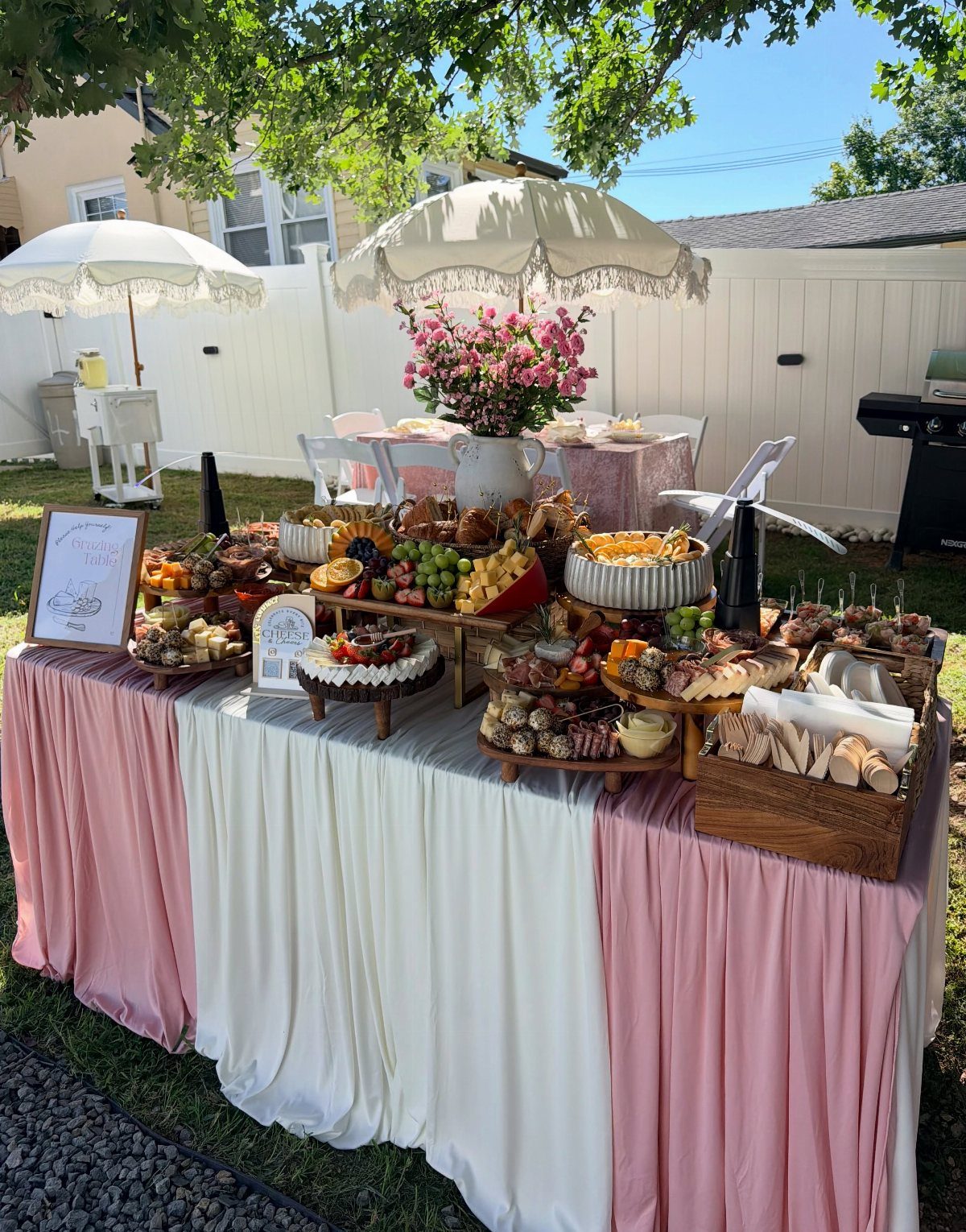
Small labels save you from answering the same question 80 times. Name each cheese and meat, and flag anything with nuts, dairy, or gluten so guests with restrictions can graze without asking.
A larger "Grazing Table" sign at one end tells guests what the spread is and that it is meant to be eaten from.
Print labels a bit larger than you think you need. People read them while holding a plate.
4. Touch of Greenery
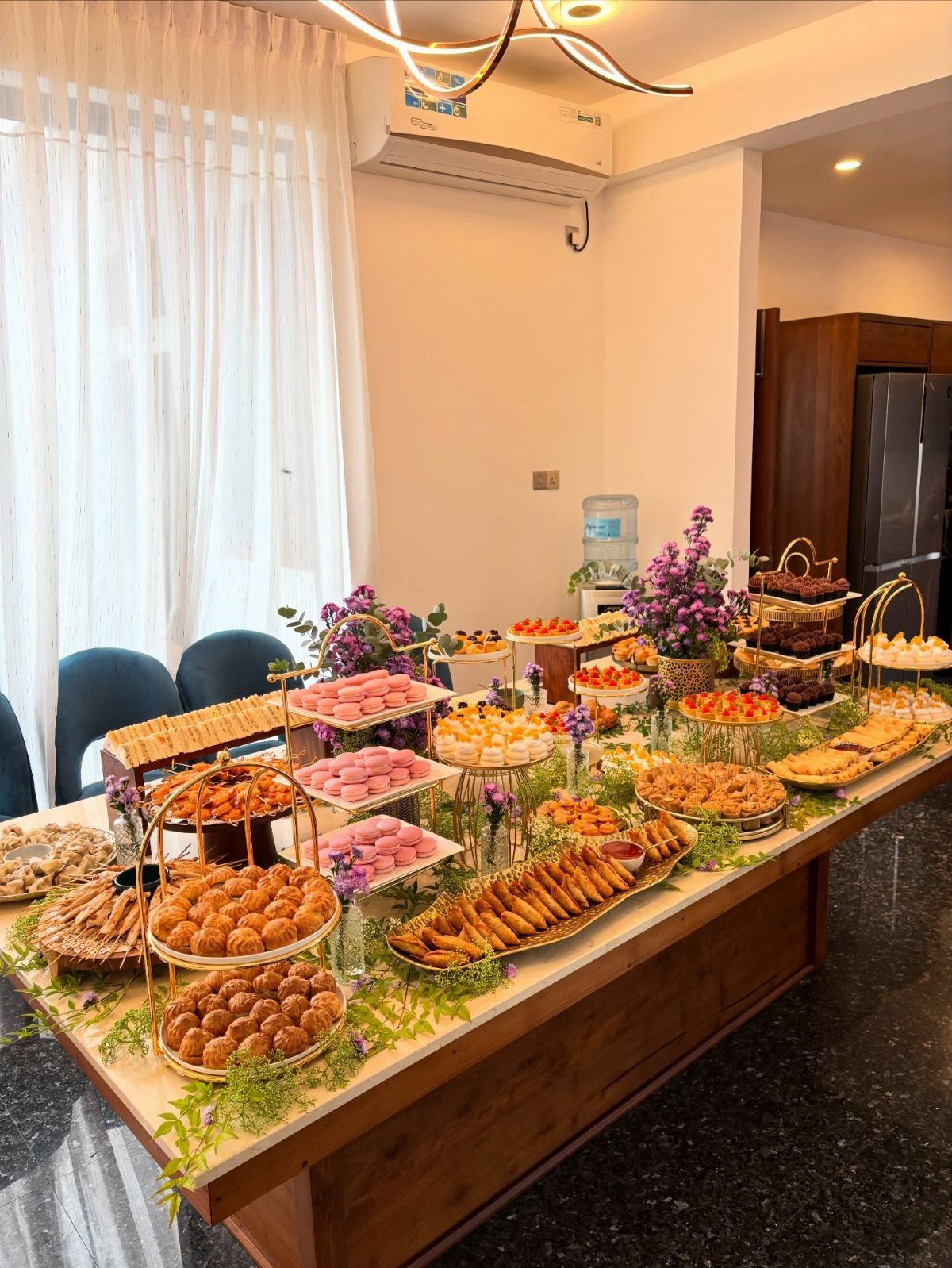
Greenery is the cheapest way to make a dessert table look designed. Small trailing vines laid along the edge and between plates soften the rows of pastries and macarons, and a few purple blooms add color without crowding the sweets.
I would keep the greens low and loose so nobody has to reach through them. Place them in gaps rather than over the food.
Ask your vendor or florist to supply it, so you are not trimming vines the morning of.
5. Seasonal Produce
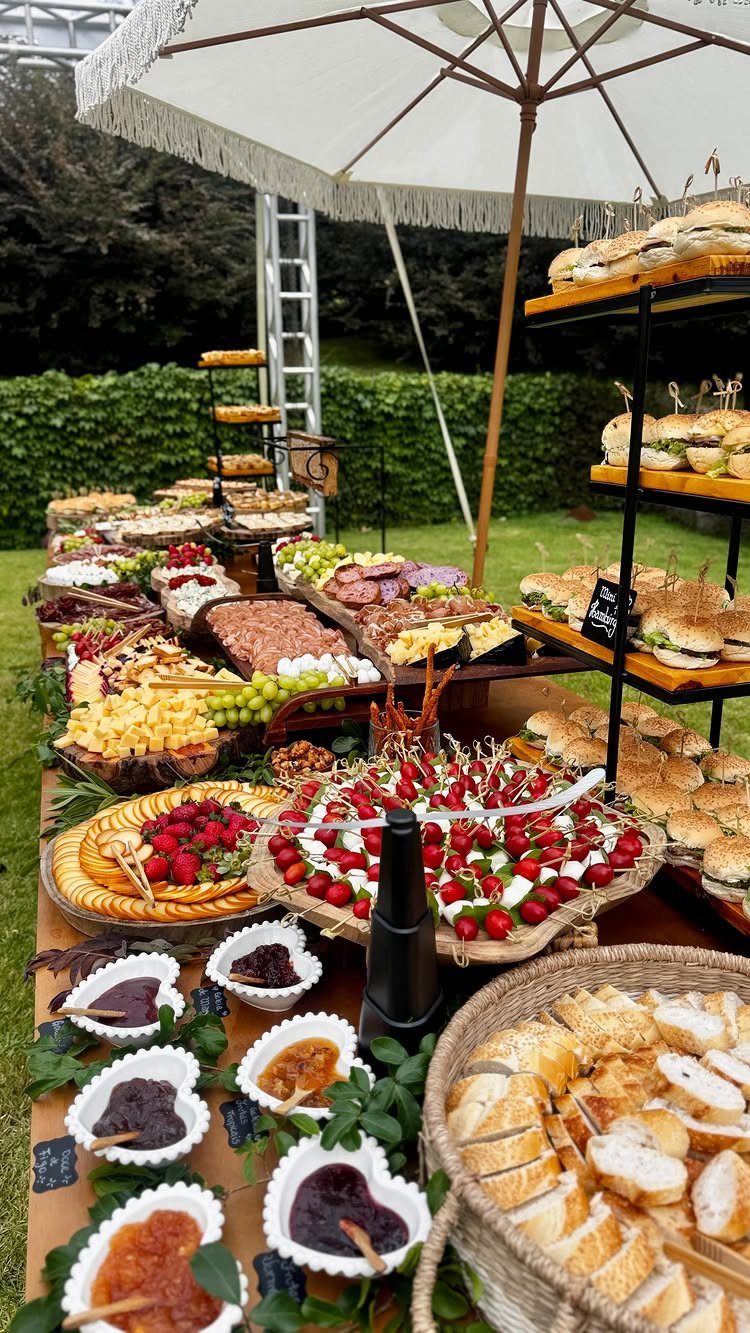
Build your fruit around what is in season at your wedding date, and let that guide the rest of the board.
In-season produce usually tastes better and runs cheaper than out-of-season, which matters when you are watching a budget.
I would choose two or three fruits and use plenty of each. Whole clusters of grapes look fuller than loose ones.
6. Height Variation
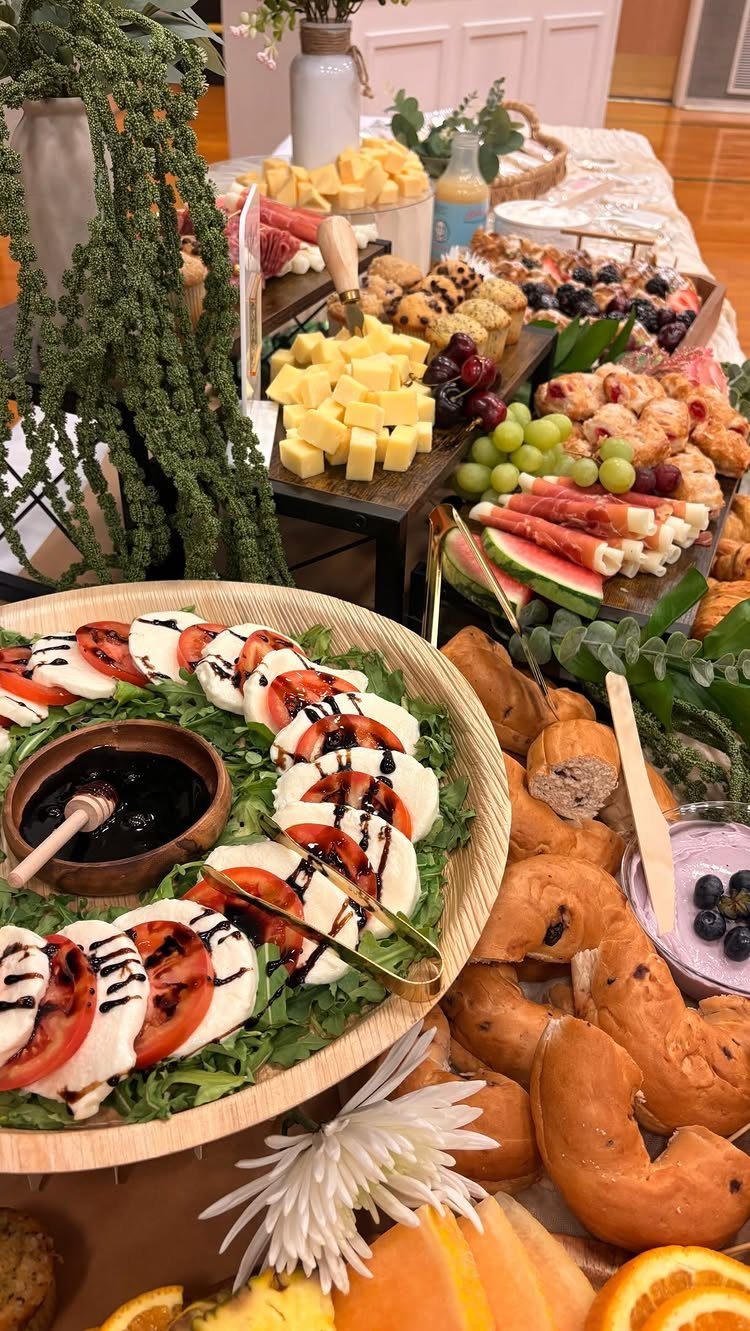
Flat tables look sparse faster than you would expect. Wooden risers lift some dishes above the rest, so a caprese salad, bagels, and cheeses sit at different levels and the eye moves across the whole spread.
Put the tallest pieces toward the back, or in the center if guests reach from both sides. Keep the front low so people can see and reach everything.
Risers also let you fit more food in the same footprint, which helps on a smaller table.
7. Self-service Format
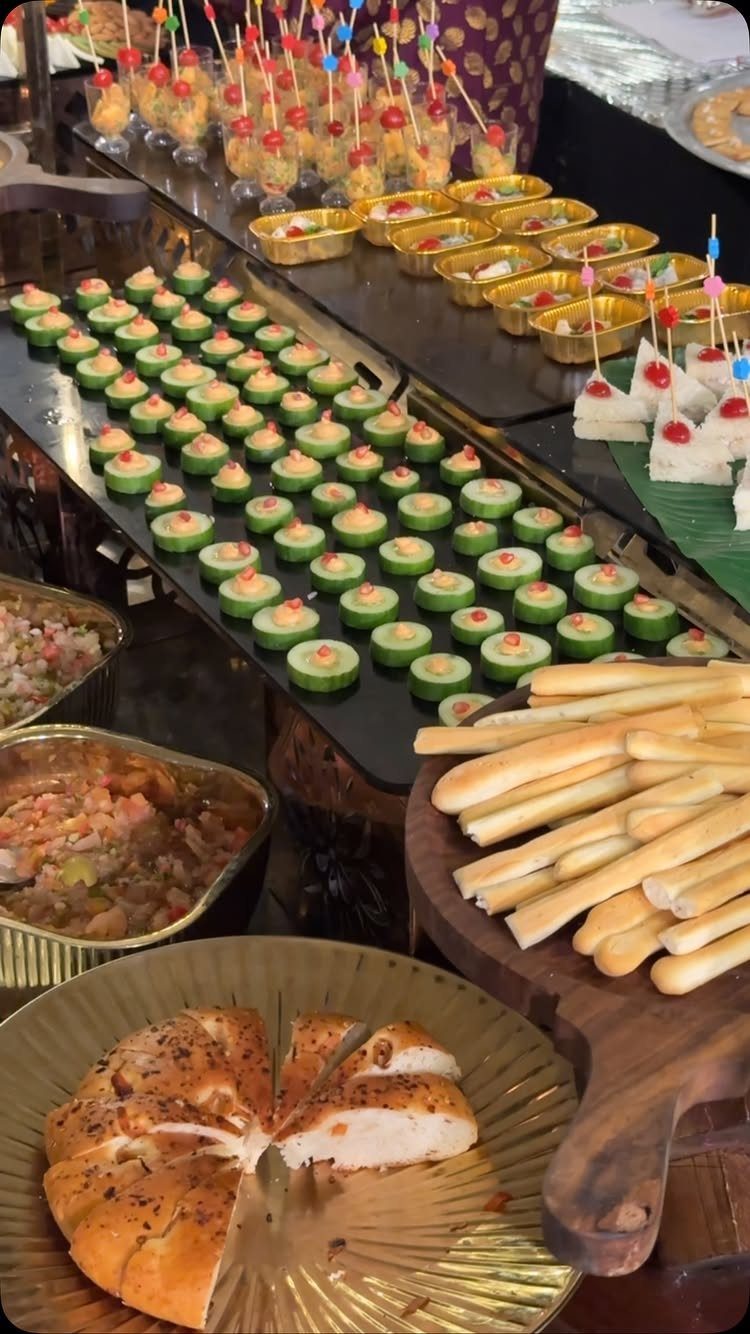
Guests who serve themselves move at their own pace, and that frees up a server or two on your catering bill. Tiered platters and trays hold cucumber bites, breadsticks, and sliced bread within easy reach.
I would put plates and napkins at the start of the line and keep the tiers low enough that nobody reaches over a tall stand.
Leave a clear gap between trays so guests can fill a plate side by side without bumping elbows.
Use tongs or small servers on anything guests would otherwise pick up by hand.
8. Breakfast Grazing Table
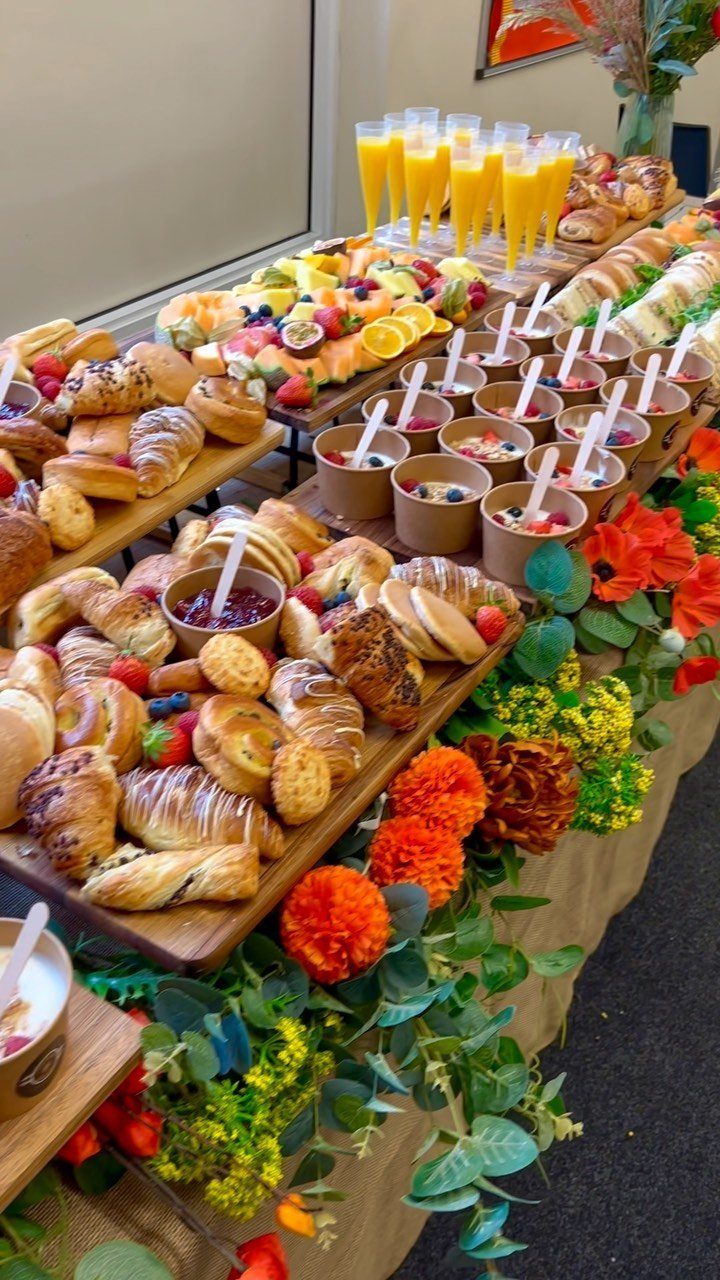
Together they read as brunch rather than a buffet.
Set the yogurt in individual bowls so guests can pick one up and go.
Put the juice at the end of the table so the line does not stall around it.
9. Sweet and Savory Mix
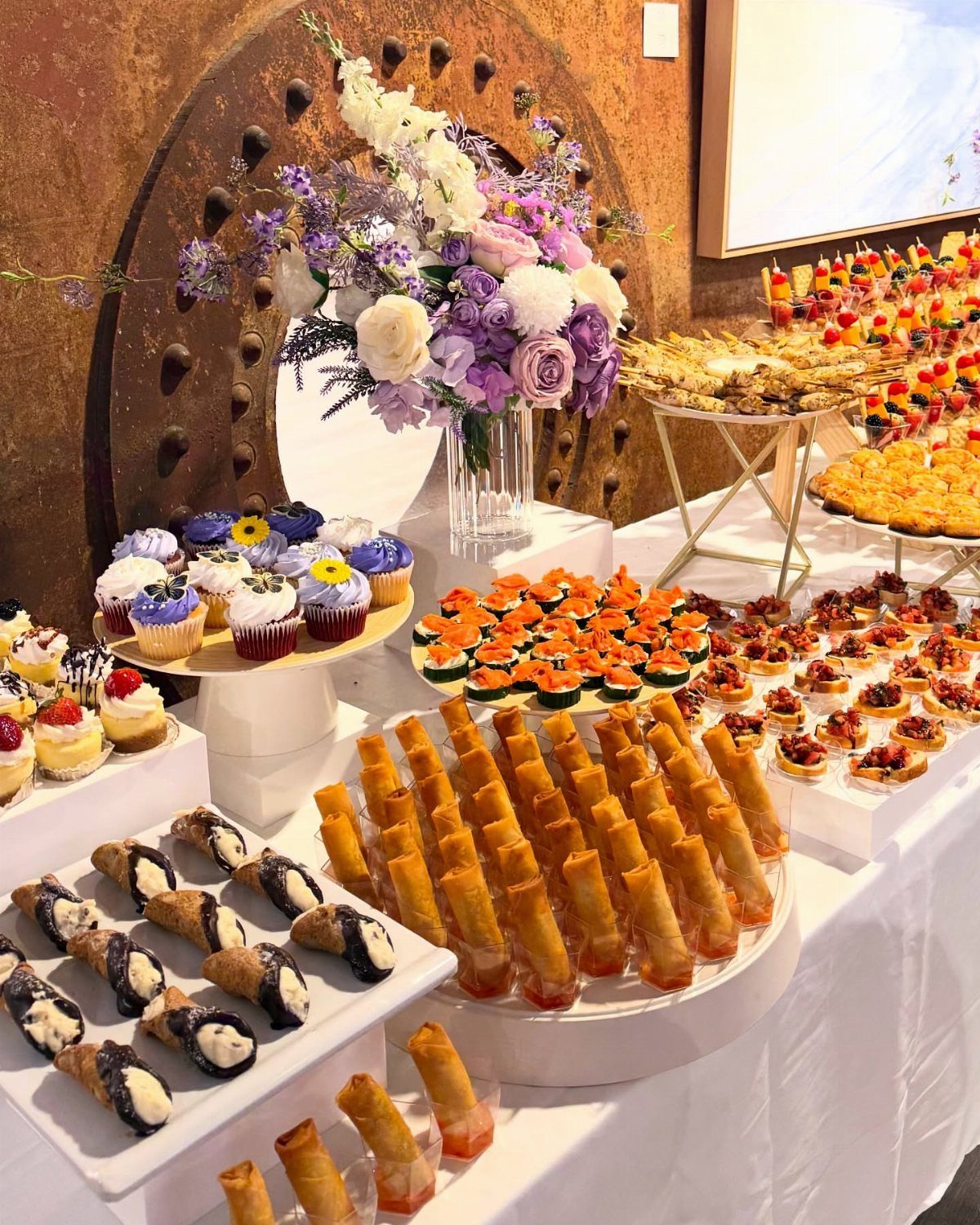
Cupcakes beside spring rolls and skewers tells guests they can mix it up, and many will eat dessert first anyway.
Splitting the table down the middle, savory on one side and sweet on the other, keeps flavors from crowding each other.
A large floral arrangement in the center, here in purple, helps divide the 2 halves. I would keep the savory side nearer the entrance, since people tend to fill up on it before they reach the cupcakes.
10. Cured Meats and Cheeses
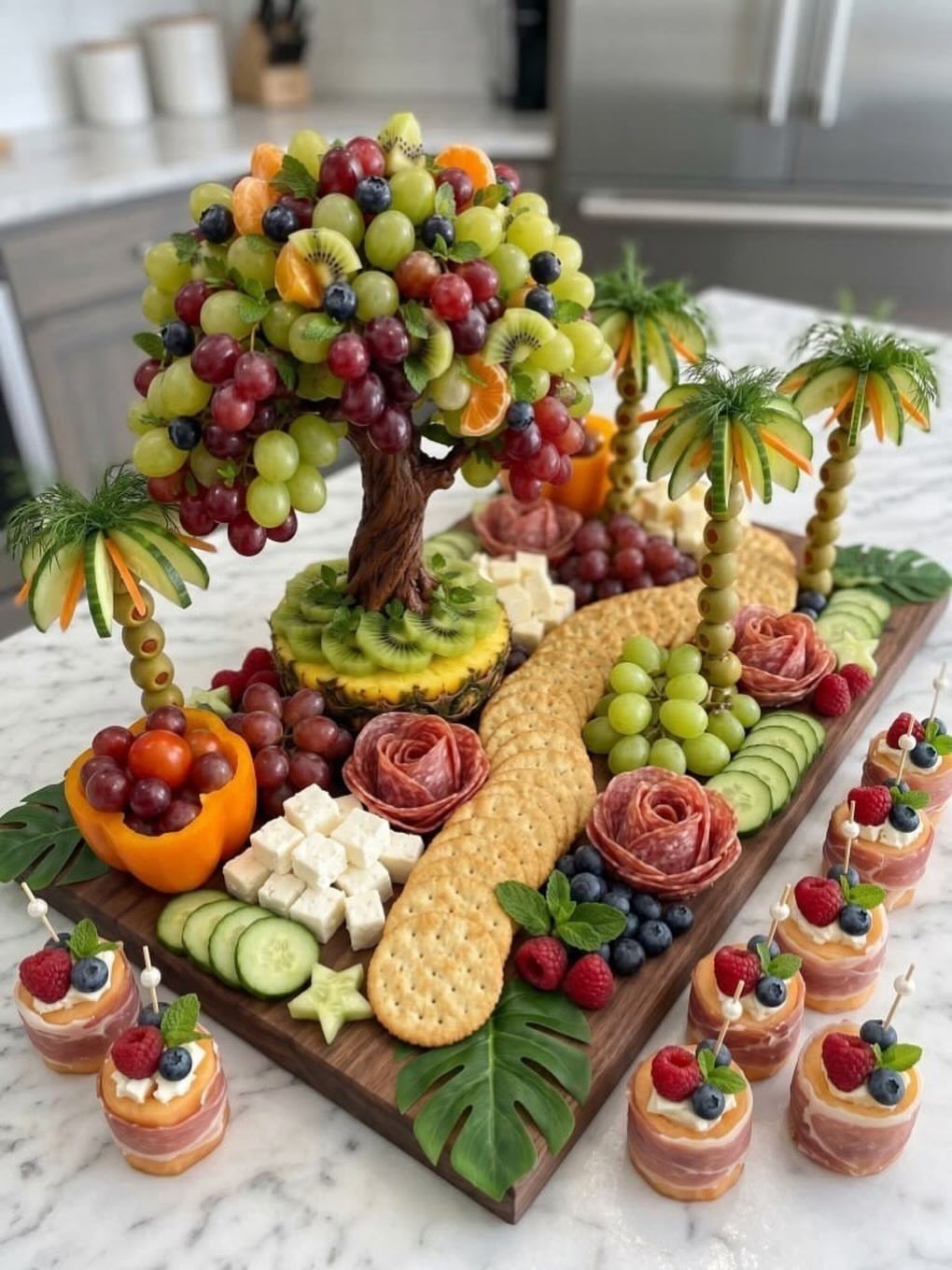
Cured meats rolled into roses are my favorite way to make charcuterie look like a centerpiece. Fan them out next to cheeses and crackers on one big wooden platter, and the board stops being just a snack.
Cheese and meat are the priciest part of a grazing table, so buy a few varieties and pile them high. Build the meat roses closer to serving time so they hold their shape.
Keep crackers in a separate pile so they stay crisp.
11. Fresh Flowers
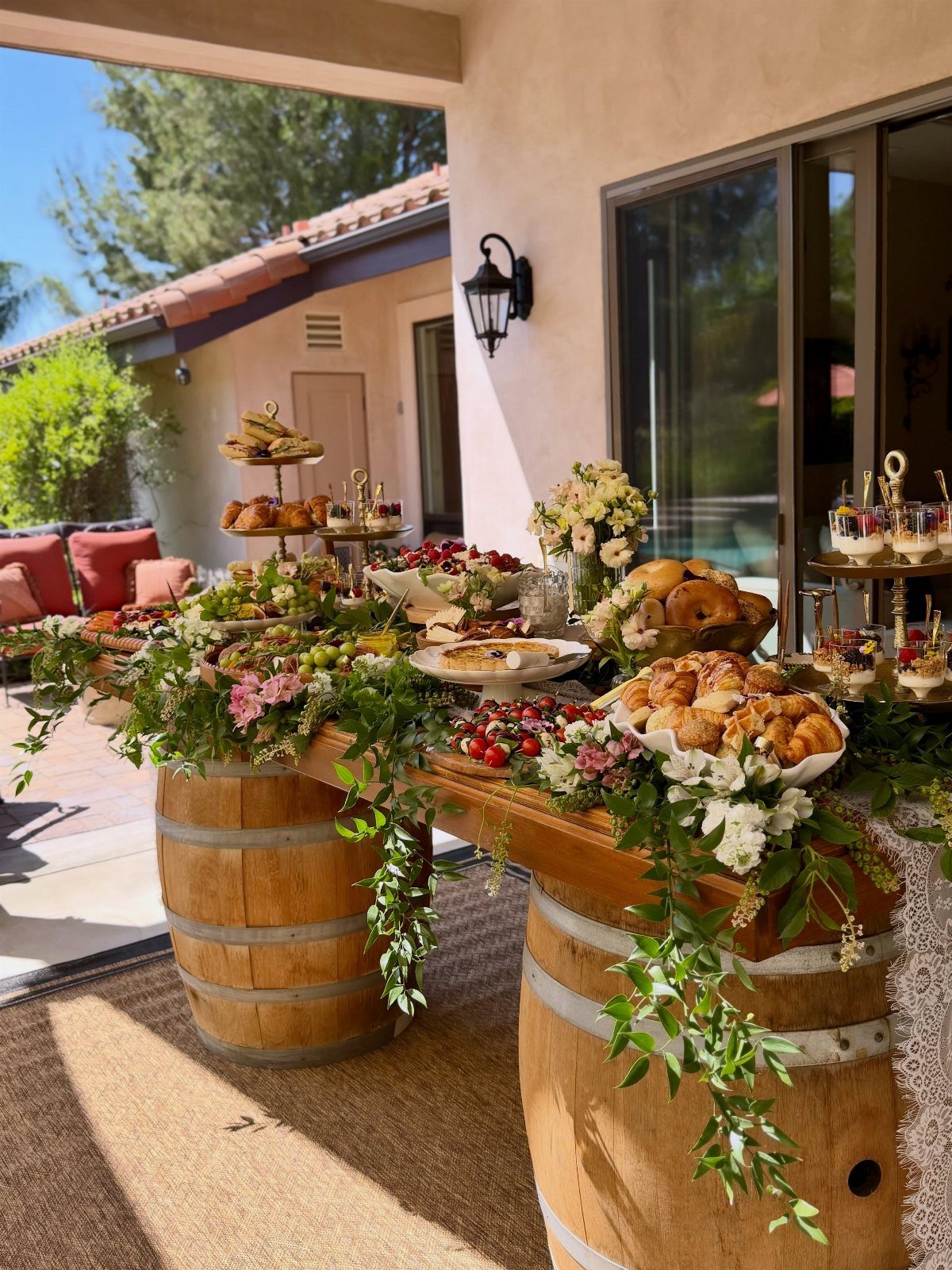
2 wooden barrels can serve as the table base, and the fresh flowers on top make an outdoor patio spread look finished.
White and pink blooms sit well beside food because they stay soft in color and do not compete with it.
I would set flowers in the gaps and along the edges, never where a guest has to reach. Ask your florist to deliver them already arranged, so setup is a matter of placing them.
12. Bowls and Trays
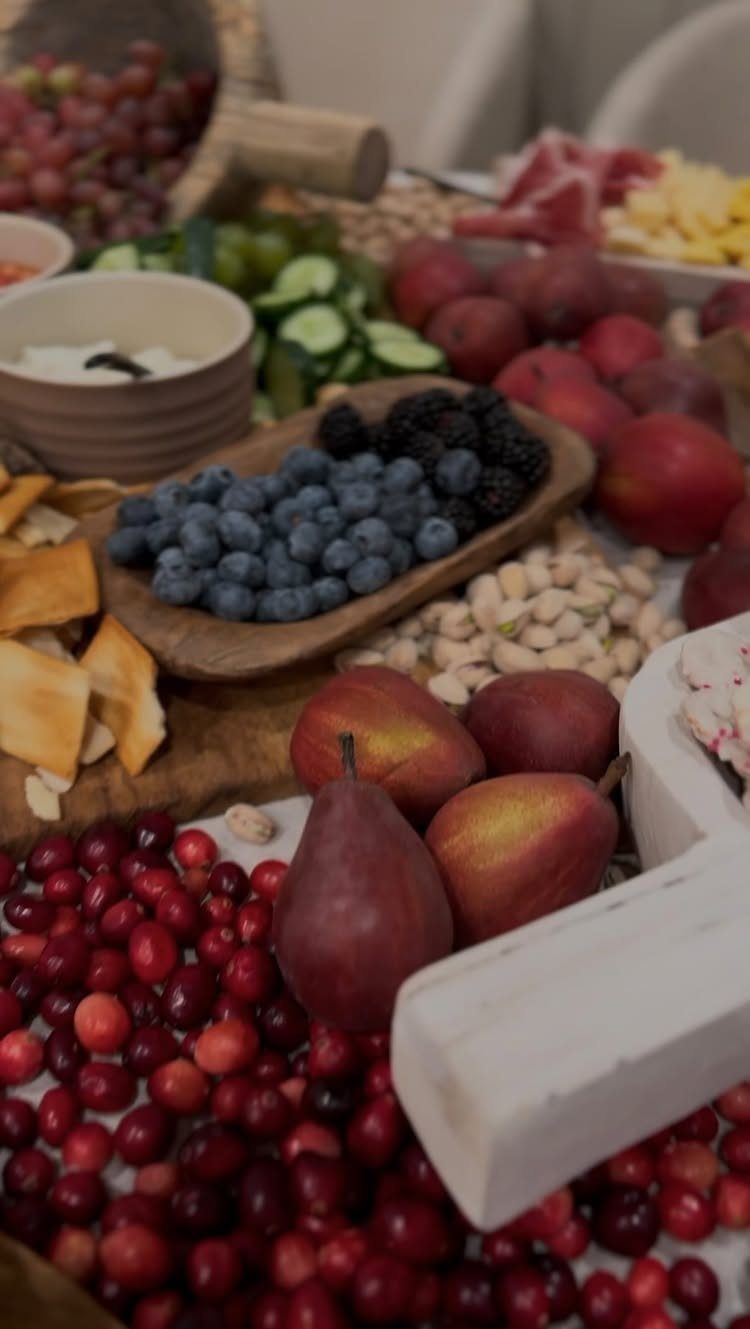
Bowls hold the small, loose things: blueberries, blackberries, cranberries, and dips.
Sorting by shape keeps berries from rolling into the crackers and gives each item a clear edge. I would vary bowl heights and tray sizes a little so the table does not look like a grid.
Choose bowls that are wide enough for a guest’s hand, and set a spoon in anything wet.
Relaxed Atmosphere Benefits
A grazing table suits a reception where you want people moving. Guests wander, talk, and eat when they feel like it, so conversation spreads across the room instead of clustering at assigned seats.
Plan the table’s position with that in mind. Put it where guests can circle it without blocking a walkway, and away from the bar so the 2 lines do not collide.
Decide when it opens, too. A table set out during cocktail hour or a lull before the dance floor fills gives people something to do while they mingle.
Differences from Buffets
A buffet works more like a real dinner, with hot dishes in chafers, stacks of plates, forks and knives, and guests who sit down to eat a full meal.
That difference should drive your decision.
If the grazing table replaces dinner, your guests will need real volume and probably something hot. If it supplements a meal or fills cocktail hour, the lighter format works well.
Tell your caterer which one you are ordering. Buffets prioritize volume and meal service, while grazing tables put presentation first, and the two are priced and staffed differently.
Planning Considerations
Start with cost per person. If you hire a caterer, give them your per-person budget up front; if you build the table yourself, that number sets your shopping list.
Next, ask about allergies before you confirm any food. Then decide what goes on the table: mostly meat and cheese, sweet, savory, or dessert only, plus any must-have flavors.
Tie in your theme through wedding colors, florals, or decor. Also settle when the table is served, whether happy hour, dessert, or something between.
Ask your caterer in writing whether serving utensils, small plates, and napkins are in the quote, because these items often get left off and cost extra to rent later. It is an easy detail to miss.
Wedding grazing tables are just one tasty way to add a touch of uniqueness to your cocktail hour or reception. And with food playing such an important role in tying your overall wedding theme together, catering should be at the top of your priority list.
Frequently Asked Questions
What should be on a wedding grazing table?
Variety beats volume here: pair a soft cheese like brie with a hard one like aged cheddar, add prosciutto or salami, set out grapes and berries, and offer both a plain cracker and a seeded one so every diet has something to build on.
Dips, spreads, olives, and nuts fit too. Stacking several of each item looks fuller and more generous than a single sample of everything spread thin.
What is the difference between a grazing table and a buffet?
Presentation drives a grazing table, which guests serve themselves from, while a buffet is closer to a sit-down dinner with hot food in chafing dishes, full plates, and silverware.
What are some good food ideas for a wedding reception?
A mix of savory and sweet works best.
Try cured meats and cheeses, seasonal fruit, caprese salad, spring rolls, skewers, and cupcakes. Putting savory on one end and sweet on the other keeps a brownie from picking up the taste of blue cheese.



