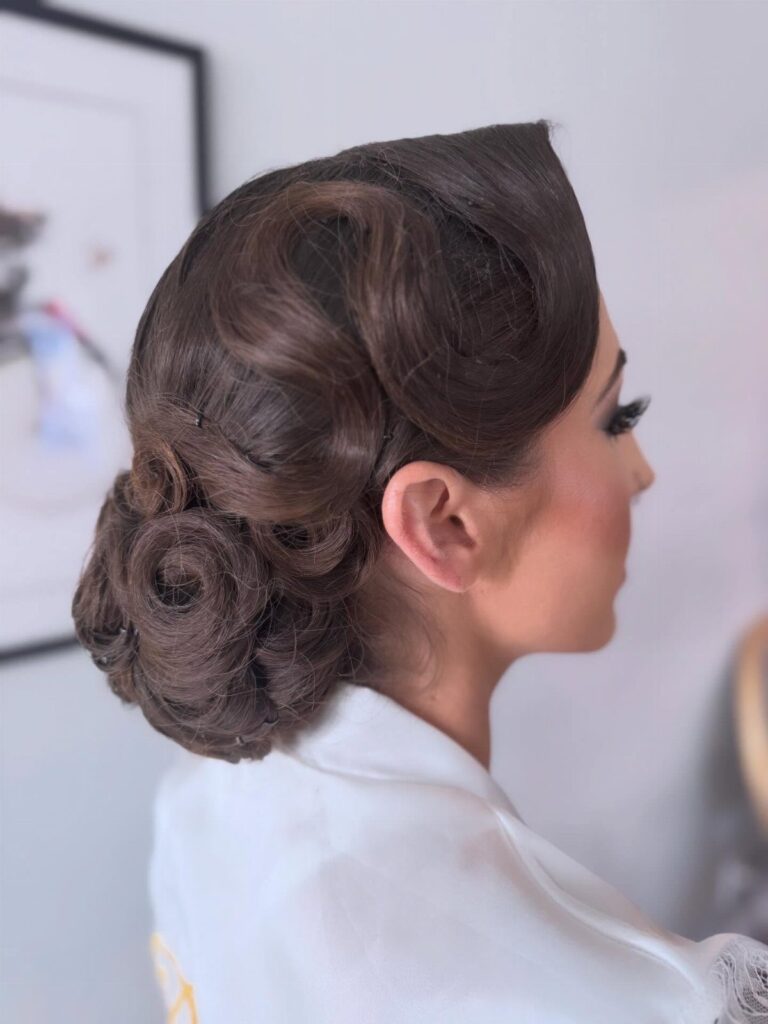
Hair length and texture narrow the field faster than taste does: a short cut suits finger waves or a silky curl bob, while medium length opens up victory rolls, a chignon low bun and half up half down styles.
The ideas here range from sleek 1920s finger waves to 1960s volume at the crown in a beehive or bouffant, and the jewels and hair accessories section shows how a pearl piece or a flower crown can change how any of them sits.
Settle your length first, then pick the decade, and your stylist gets one clear direction.
1. Chignon Low Bun
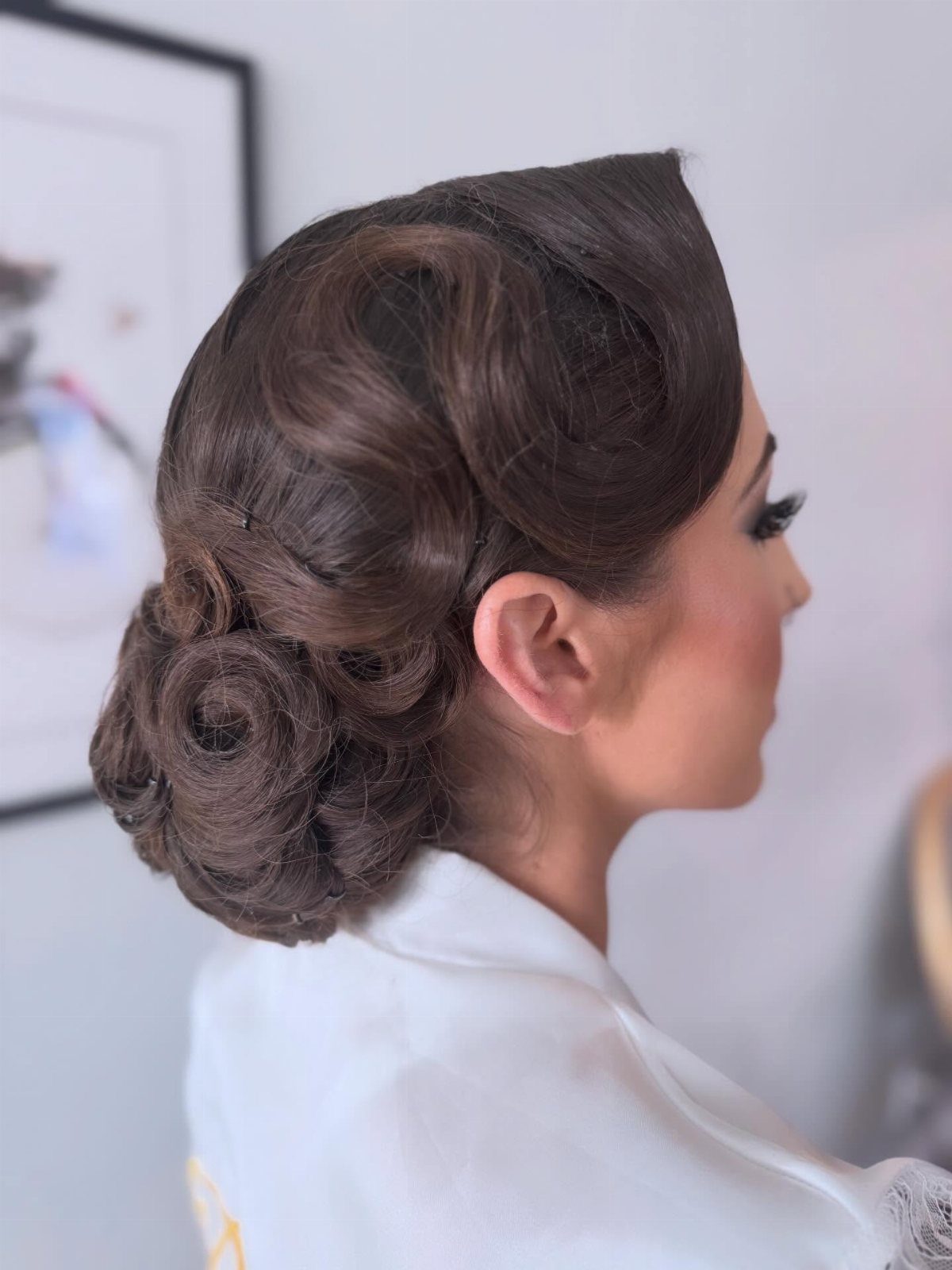
A low chignon sits at the nape of the neck, and that placement is why it works with nearly every neckline and veil. The structured waves along the front keep it from looking flat or severe.
I would choose this one if you want polish without much height. Ask your stylist to build the waves first and pin the bun last, so the shape holds together.
2. Victory Rolls
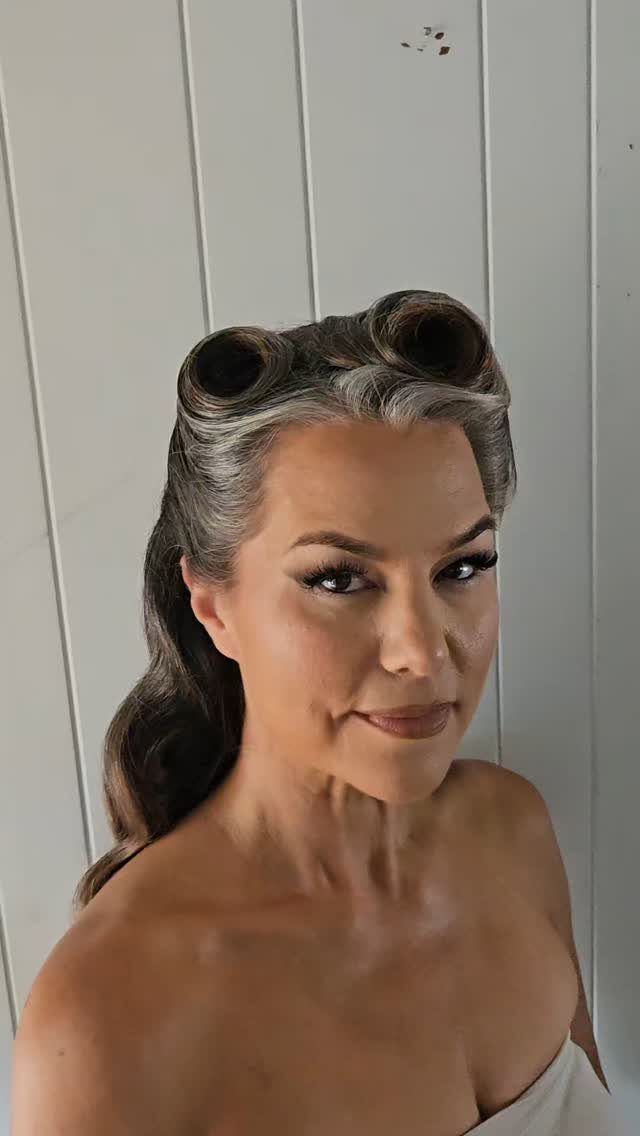
Victory rolls are sections of hair curled up and pinned into tubes, and they are the most obviously retro style here. Soft waves falling below the rolls keep the look from turning costume-like.
Because the style reads so strongly, I would pair it with a simple dress and minimal jewelry. It also suits grey-streaked hair well, since the rolls give the color real texture.
Book a trial, since placement of each roll changes the whole face.
3. Beehive
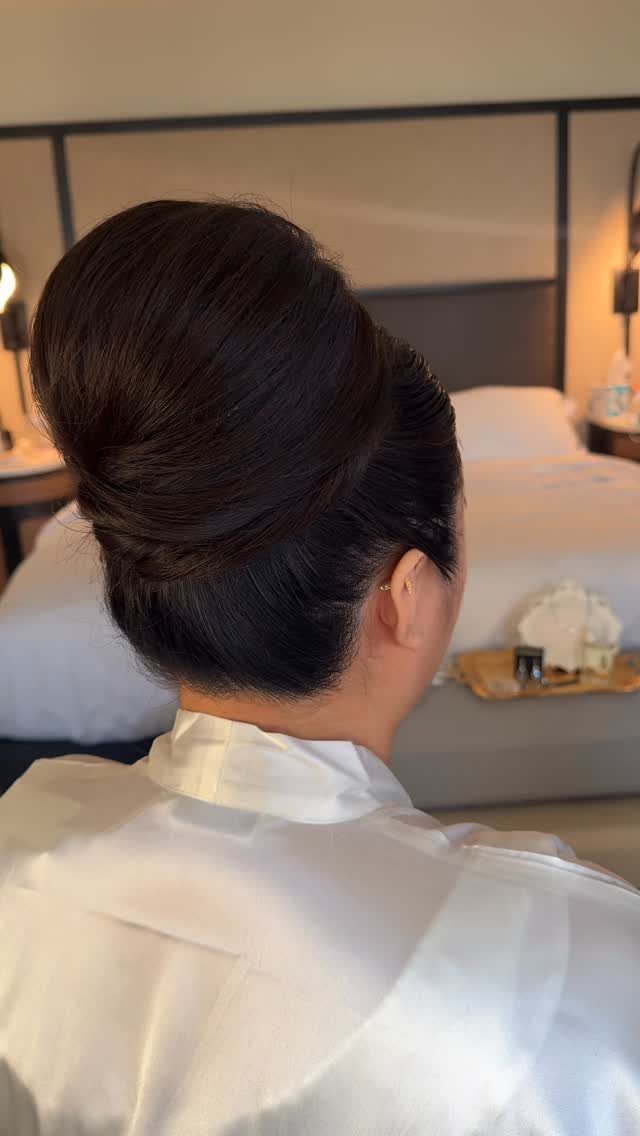
A beehive is all about height: hair is gathered and piled high, then smoothed into a rounded dome. It is a 1960s shape, and it makes a bold statement from behind as much as from the front.
I like it for brides who want drama and a long, clean view of the neck. Choose a stylist who has built one before, because the proportions are easy to get wrong.
Wear a button-front getting-ready top on the day, so nothing drags through the hair.
4. Finger Waves
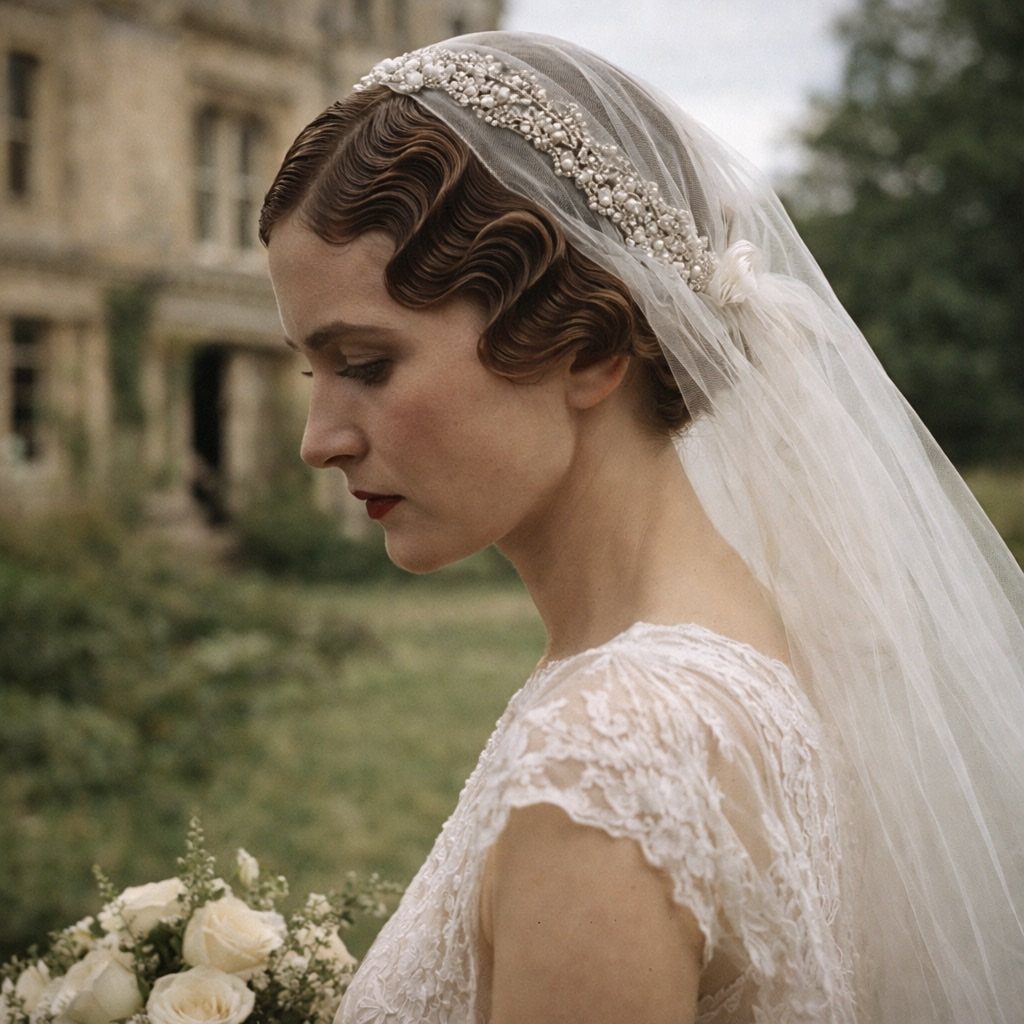
Finger waves are sculpted, flat S-shaped ripples set close to the head, and they look best with a sleek, polished finish.
Finger waves sit well with a beaded headpiece and lace, since the sleek ripples give the detail room to show.
My pick for a bride who wants vintage without volume. A veil can be placed at the back, so the waves stay fully visible from the side.
Ask your stylist how long the set takes, and plan the morning schedule around that.
5. Bouffant
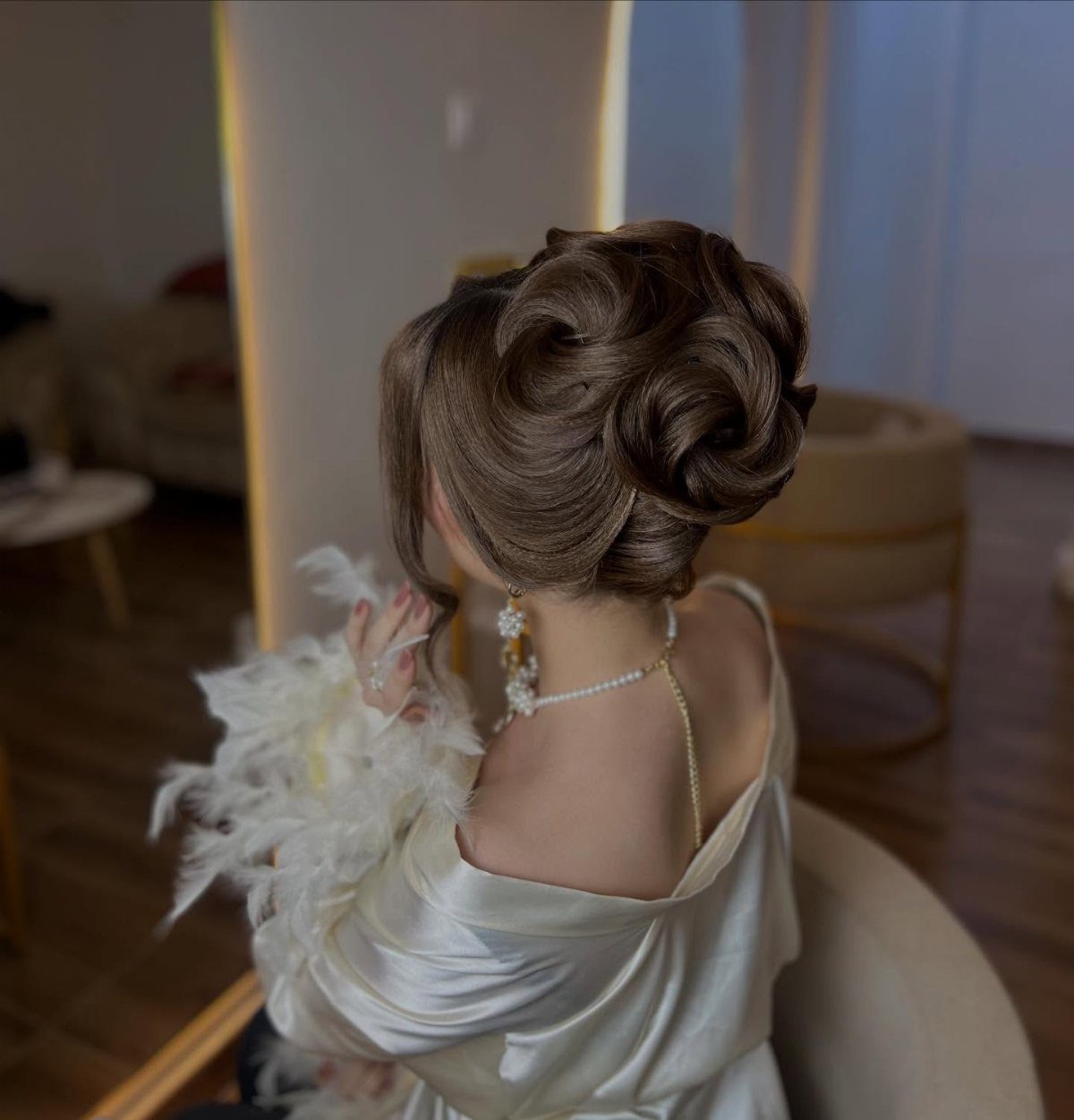
A bouffant puts the volume at the crown, with hair teased and smoothed over for a soft, rounded lift. Pearls and a feather accessory suit it, since they echo the retro mood without competing with the height.
I would pick this over a beehive if you want something a little softer. Keep accessories to one or two pieces, so the shape stays the focus.
Have your stylist test it with your veil placement at the trial.
6. Old Hollywood Waves
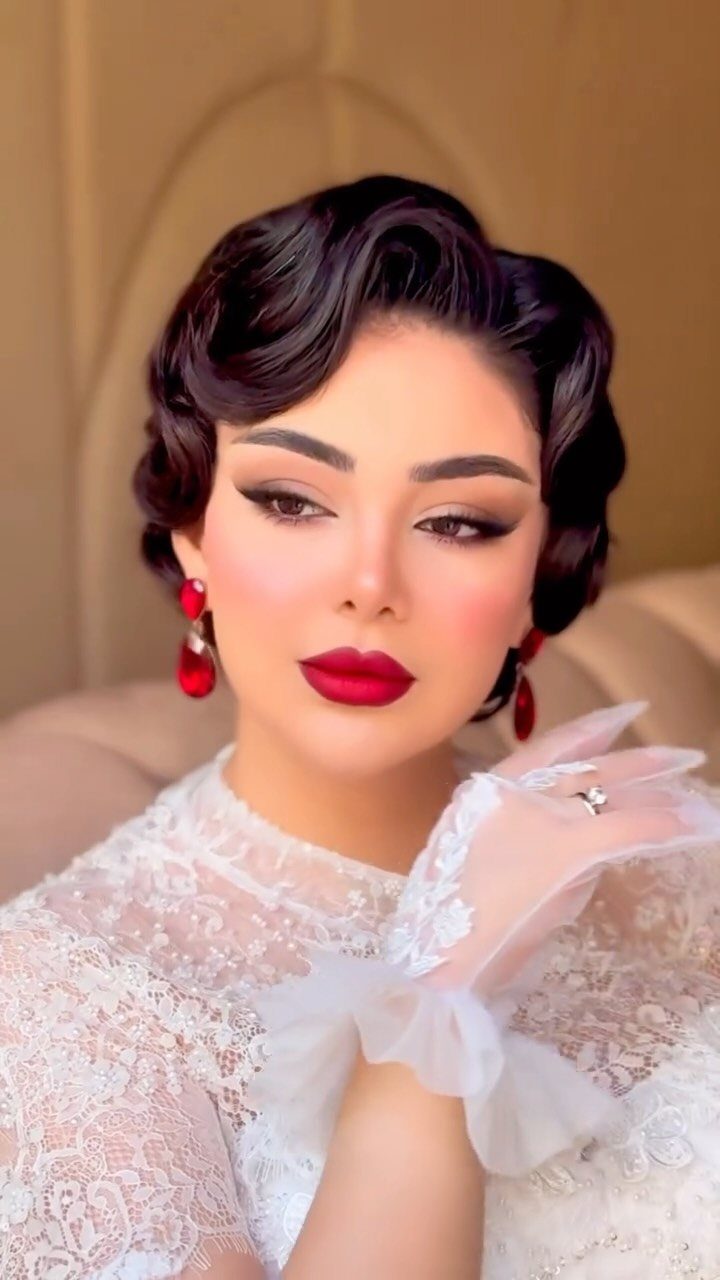
Old Hollywood waves are deep, sculpted waves brushed out into one glossy, polished sweep, like a classic film star.
Red lipstick and sheer gloves push Old Hollywood waves further toward full glamour, so add them only if you want that much drama.
This is my favorite for a bride who wants high drama with a classic dress. The finish matters most: smooth, shiny waves look expensive, while frizzy ones lose the effect.
Bring a clear reference photo to your stylist, and show the angle of the waves you want, since the part and the direction of the curl decide the whole look.
7. Side-Swept Waves
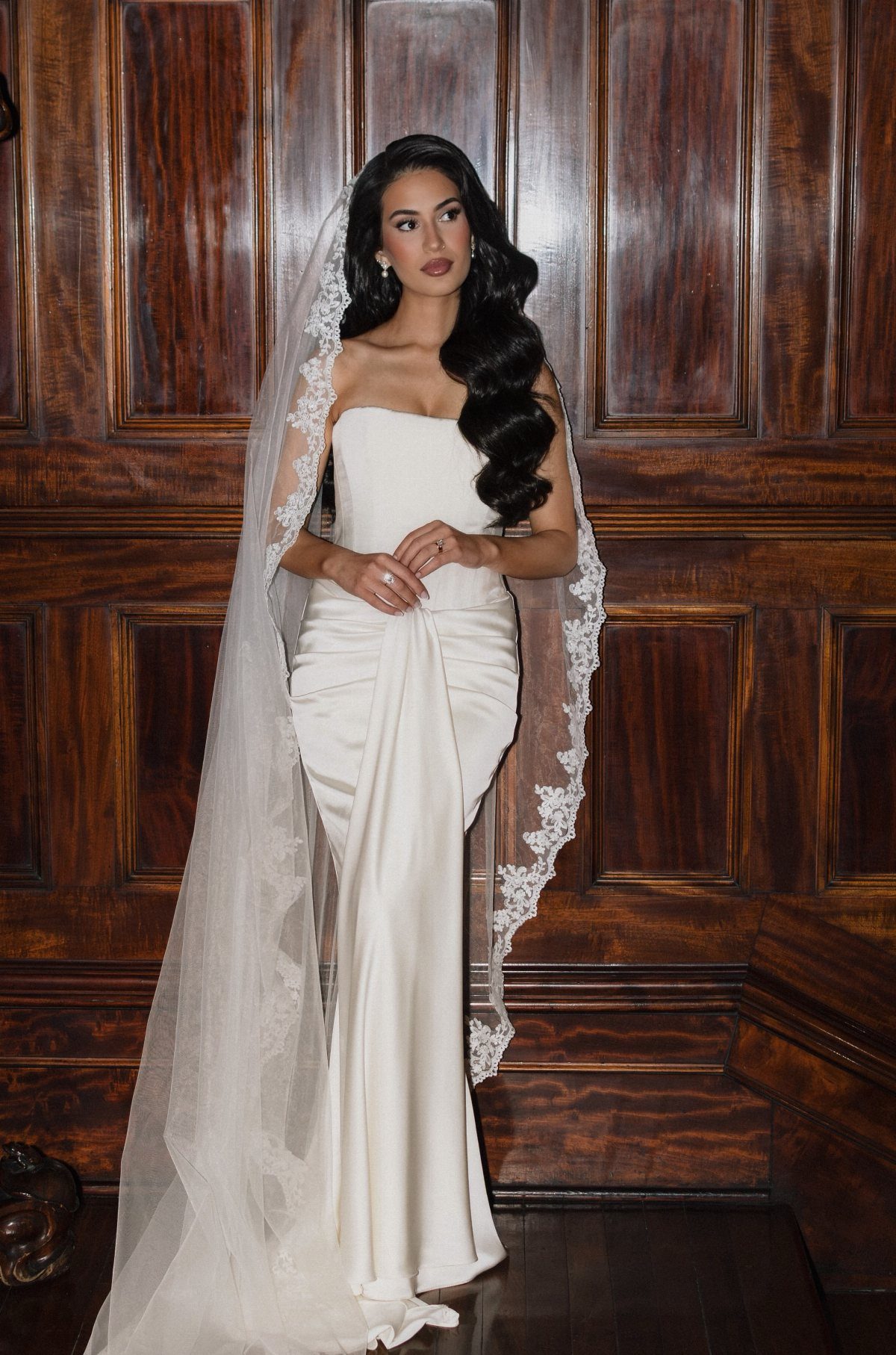
Side-swept waves gather the hair over one shoulder, which leaves the other side of the neck and shoulder bare. That asymmetry gives a strapless neckline room to show.
I like this for a bride who wants romance without much structure. Ask your stylist to pin the hair at the back so it stays put, and decide which side before the trial, since a veil sits differently on each.
8. Half Up Half Down
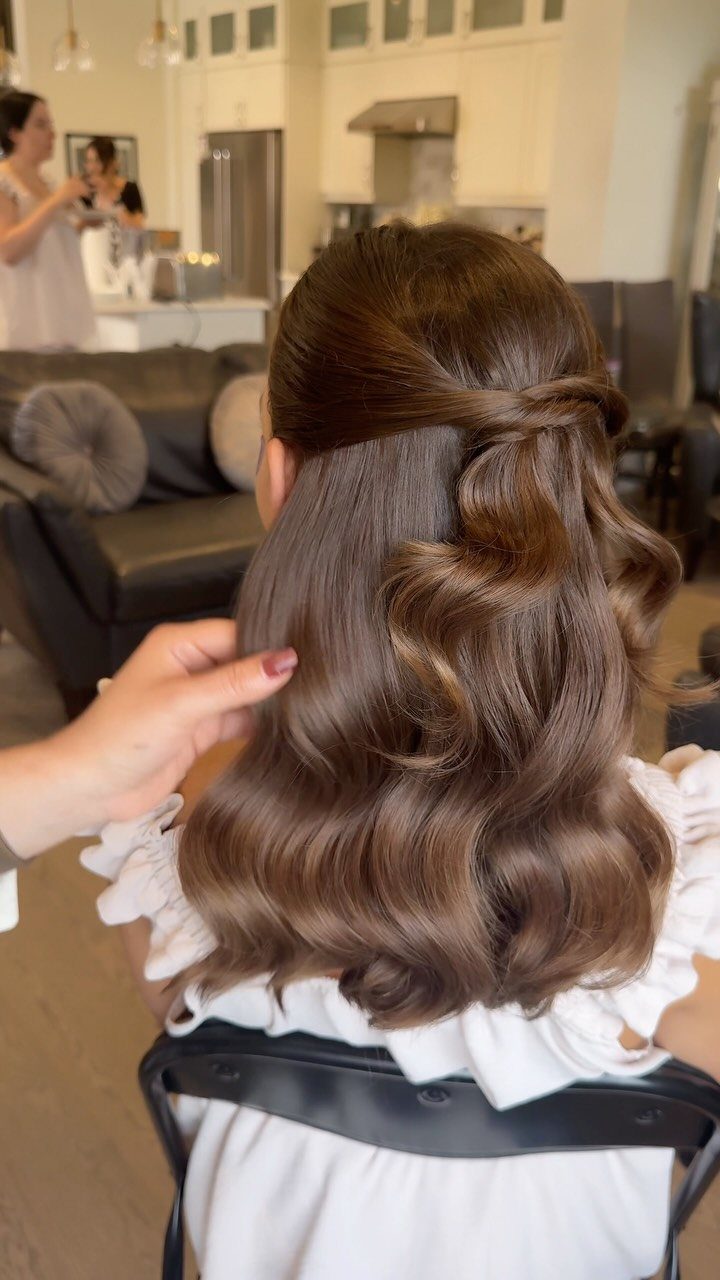
Half up half down keeps the length loose while the top section is pinned back, so you get the softness of curls and the tidiness of an updo in one style. Voluminous curls and waves suit it well.
I would choose it if you can’t decide between wearing your hair up or down. Have the curls set before the top is pinned, and test it at the trial with your veil.
9. Jewels and Hair Accessories
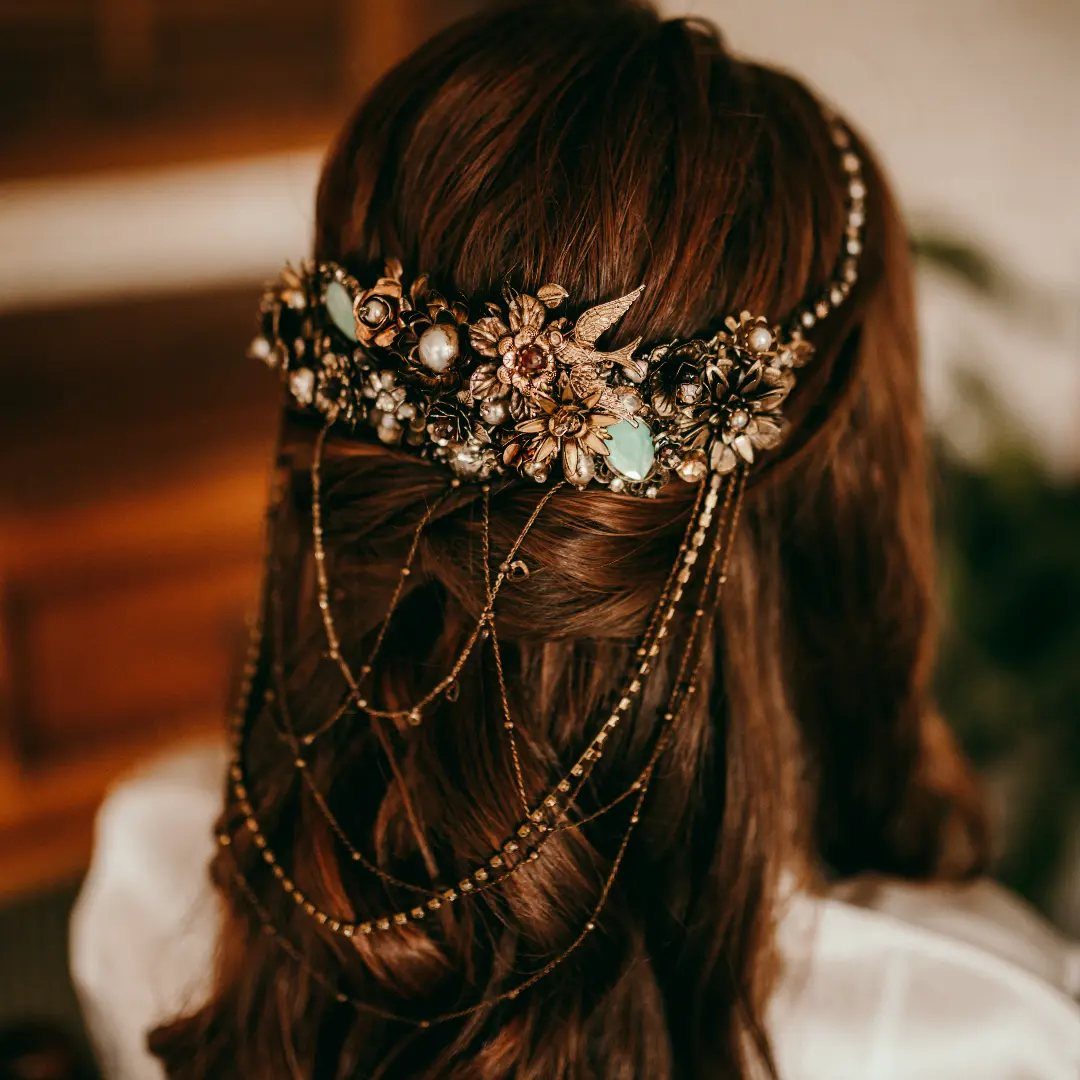
A headpiece with pearls, gems and draped chains can carry a whole vintage look on its own, even over loose waves. The hair underneath only needs to be soft and simple.
My advice is to pick one statement piece and skip other jewelry near the face.
Pack the headpiece for your hair trial, since a stylist can only pin it so it stays put once they have seen how it sits against your style.
10. Flower Crowns
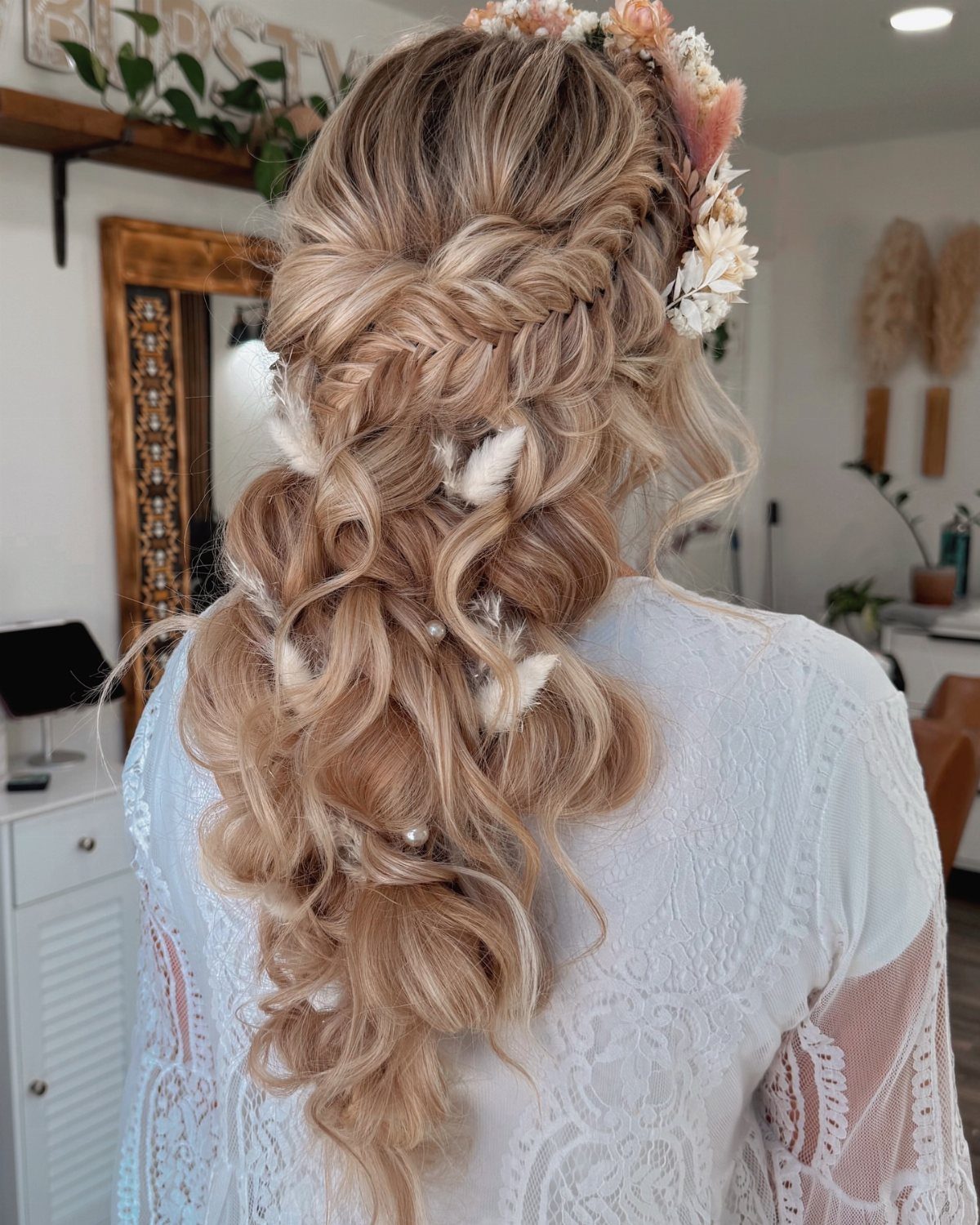
A crown of large flowers brings a whimsical, garden feel, and it pairs naturally with braids and loose curls. Lace in the dress echoes the softness.
I would choose it for a relaxed ceremony.
Order it a bit ahead and bring it to the trial, so the stylist can place it where it sits comfortably. Real or faux flowers are your call; faux costs less to replace if something goes wrong.
11. Silky Curl Bobs
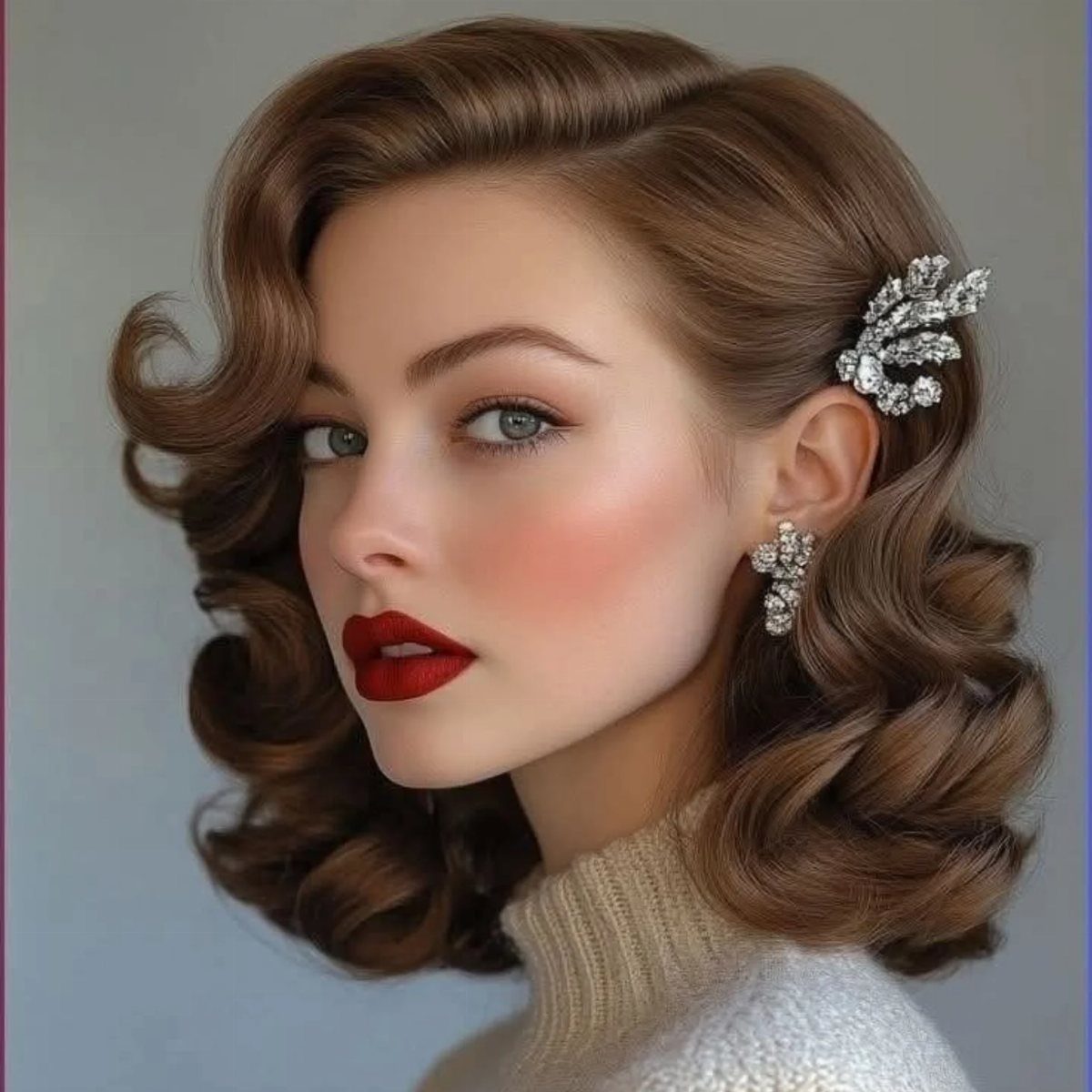
A curled bob is short, soft and playful, and a small sparkling clip gives it all the ornament it needs. Red lipstick completes the retro mood.
I like it for a bride who wants vintage without length to manage.
Keep the curls smooth and glossy rather than tight, and pin the accessory where it catches light. Ask for a trial, since short hair leaves little room to adjust on the day.
Choosing the Right Era
Pick the decade before you pick a single pin or comb.
Each era has its own shape: 1920s hair is sleek and sculpted, 1940s hair leans on rolls and polished curls, 1950s hair feels soft and romantic, and 1960s hair depends on controlled volume at the crown.
Settling this first gives your stylist one clear direction, and the result reads as intentional rather than costume-like. Mixing a 1920s accessory into a 1960s shape is where a look tends to go wrong.
Choose the era you already love in photos and films, since you will be looking at your own wedding pictures for decades.
Hair Length and Texture Considerations
Hair length narrows your options faster than taste does.
A short cut suits a sharp finger wave or a soft, curled bob. Medium-length hair suits victory rolls, chignons, and half-up styles.
Texture matters just as much. Pick reference photos where the hair matches your length and texture, and treat the era as the second filter.
A style shown on pin-straight hair will behave differently on natural curls, and your stylist can judge that gap better from a matching photo.
Veil and Accessory Planning
A veil’s comb, weight, and position all change how a style sits, so bring it to your trial and let your stylist see it on your head.
If you are leaning toward a birdcage veil, buy the 2-comb version over the 1-comb. A veil with 2 combs can be anchored in more spots.
Fresh netting tends to be stiff, so a lone comb can poke out at an odd angle unless the veil gets steamed and shaped beforehand, and most brides run out of time for that.
Rhinestones or lace sewn onto the veil have to come off with it when you remove it after the ceremony. A plain veil plus separate hair flowers, sparkly combs, or pearl pieces lets you keep the look going all night.
Keep the hairstyle in charge, and let every added piece play a supporting role.
Frequently Asked Questions
What are some vintage wedding hairstyles from the 1920s?
Sleek, sculpted finger waves are the signature 1920s wedding look, and a soft curled bob suits a short cut.
Because the ripples stay smooth and flat, a beaded headband or a lace veil gets the attention instead of competing with the hair.
What does the term “vintage wedding” mean?
Calling a wedding vintage means the look, from dress to décor, draws on a specific past era.
For hair, that means a recognizable shape from a past era, such as 1920s finger waves, 1940s victory rolls, 1950s soft curls, or 1960s volume at the crown.
A close recreation of the era is one route, and a lighter, updated version is the other; I lean toward the second, because it keeps the day from feeling like a costume party.
What are the hottest wedding hairstyles for 2026?
Vintage-inspired looks with a modern twist are leading, including Old Hollywood waves, 1960s-style volume, and 1920s finger waves.
Choose the era you love first, then fit it to your hair length, texture and veil. A 1960s bouffant needs enough length at the crown, while a sleek bob suits a polished 1920s wave.
What are some classic, retro hairstyles?
Beehives, victory rolls, Old Hollywood waves, finger waves, bouffants and low chignons are the classics. Each belongs to an era: finger waves to the 1920s, victory rolls to the 1940s, and the beehive to the 1960s.
Before booking a stylist, narrow the field by era, by how long your hair is, and by how much hold the style needs; then wear the veil to your trial so the whole look gets tested together.



