Which poses suit you depends on how at ease you feel being directed, and the list runs from easy standing shots to ones that ask for more movement and more instruction from your photographer.
The list runs from the Serene Solo Bridal Portrait and Head on His Shoulder, which suit couples who dislike being posed, to The Dip and The Lift, which take a planted stance and a little physical effort.
Laughing poses need nothing but the two of you.
1. Face to Face
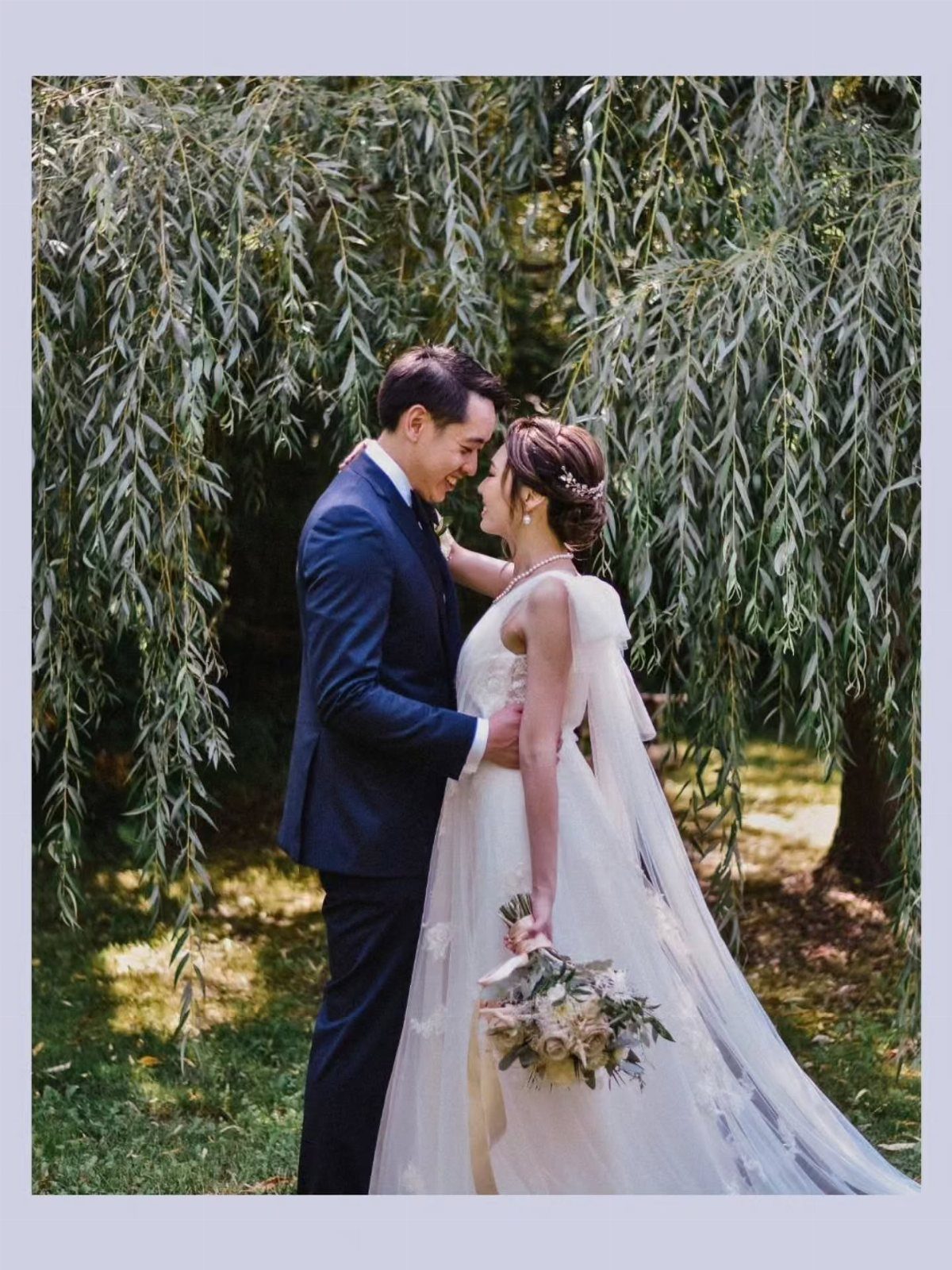
Standing close, foreheads nearly touching, gives the couple something to do besides look at a lens. That is why this pose reads as intimate: you are looking at each other, not performing.
Shade like the willow canopy helps, because nobody squints.
Let the bouquet hang low at her side so it stays out of the space between you. Then breathe, say something quiet to each other, and let the photographer shoot while you talk.
2. The Dip
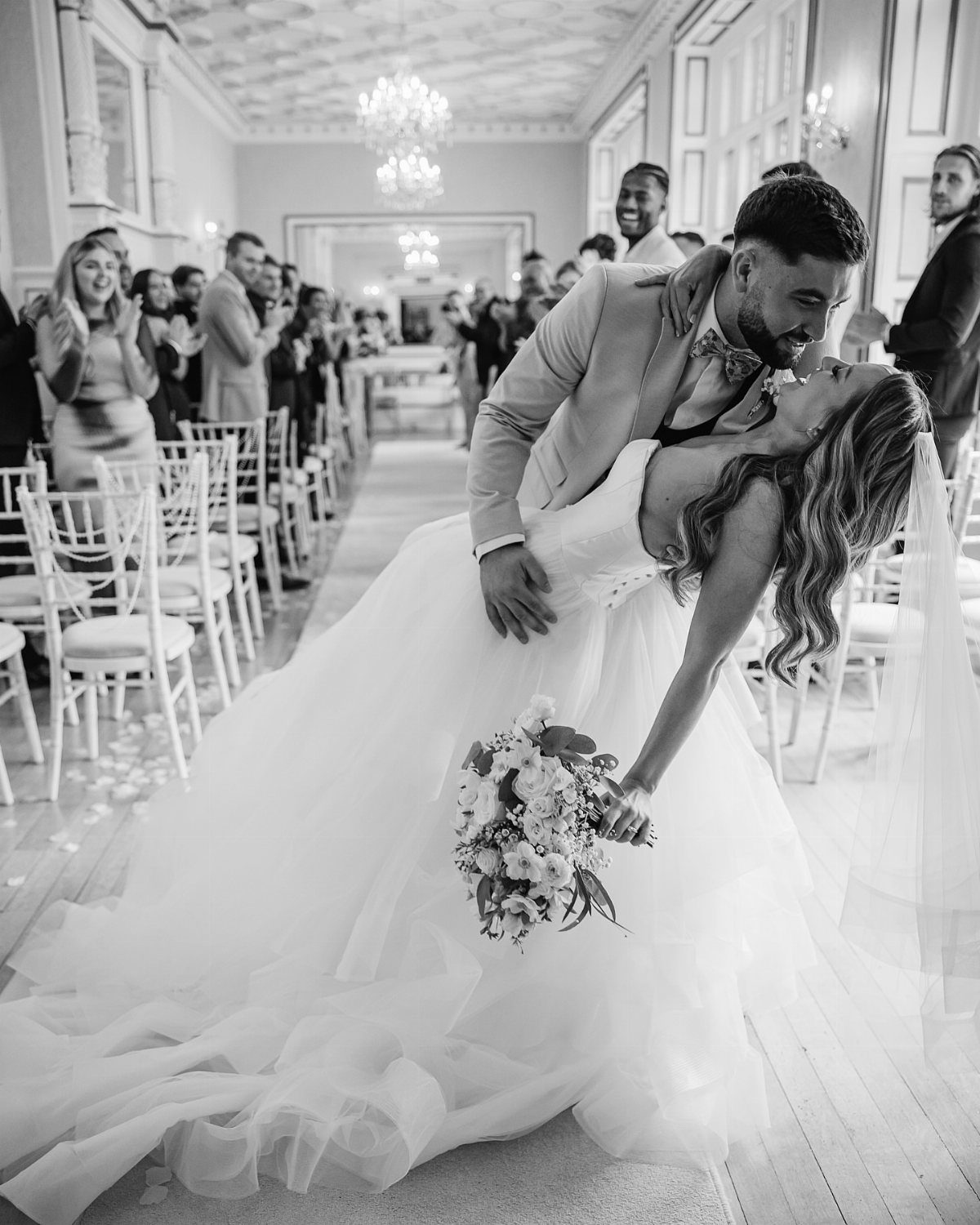
A dip works best when the groom plants his feet wide and bends his knees before he lowers her.
Keep it shallow. A deep dip strains his back and makes her stiff, and neither shows up as romance.
She should arch slightly and let her head tip back.
Hold the kiss for a few full seconds so the photographer can catch it. In a crowded hall, I like asking guests to step back first, so the frame stays clean around you.
3. The Celebration Pose
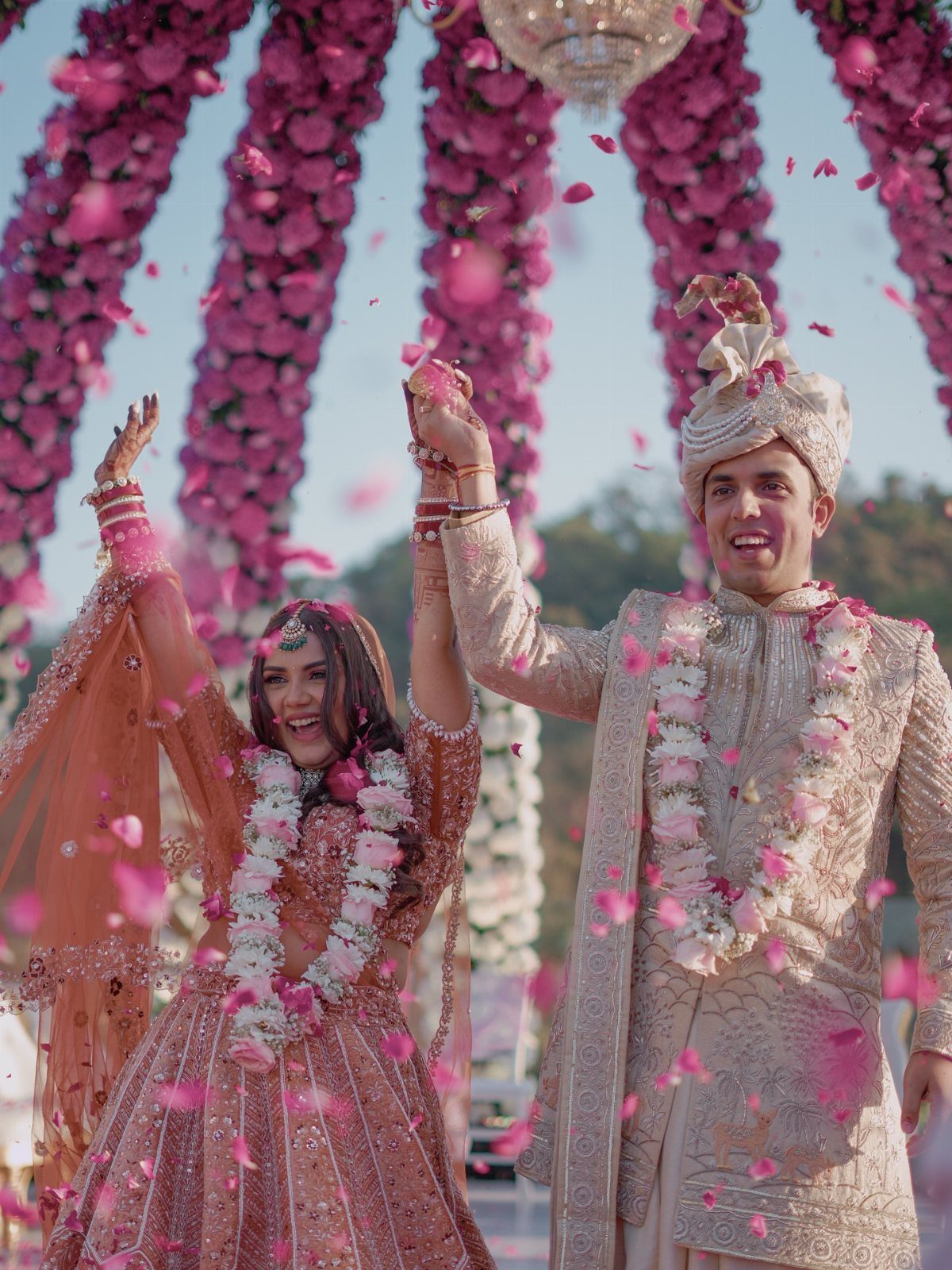
Hands raised together, big grins, and a moment of pure "we did it." That is the whole pose, and it needs no coaching beyond a countdown.
Ask the photographer to shoot a burst while you lift your hands, then again as you lower them.
The in-between frames are often the best ones. Tell guests or helpers to toss petals right on the count so the timing matches your joy.
4. Facing the Camera
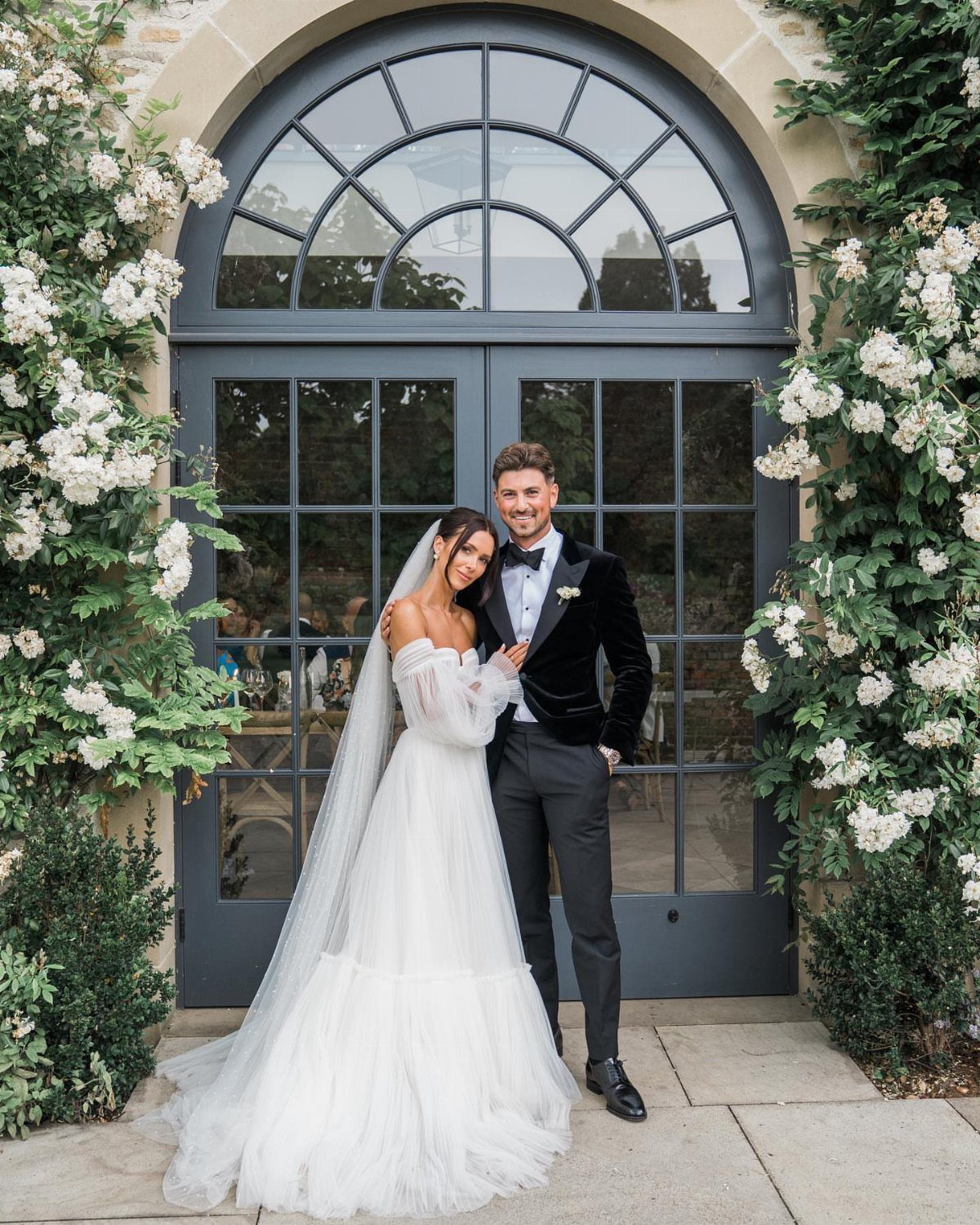
Both of you squared up to the lens, shoulders touching, is the portrait every family will want on the wall, so I would never skip it.
Keep it simple: shoulders angled slightly toward each other, chins level, weight on the back foot.
Do it early in your portrait time, while you are fresh. Ask for a few frames with a real smile and a few with a calm, soft one.
5. The Walk Toward Camera
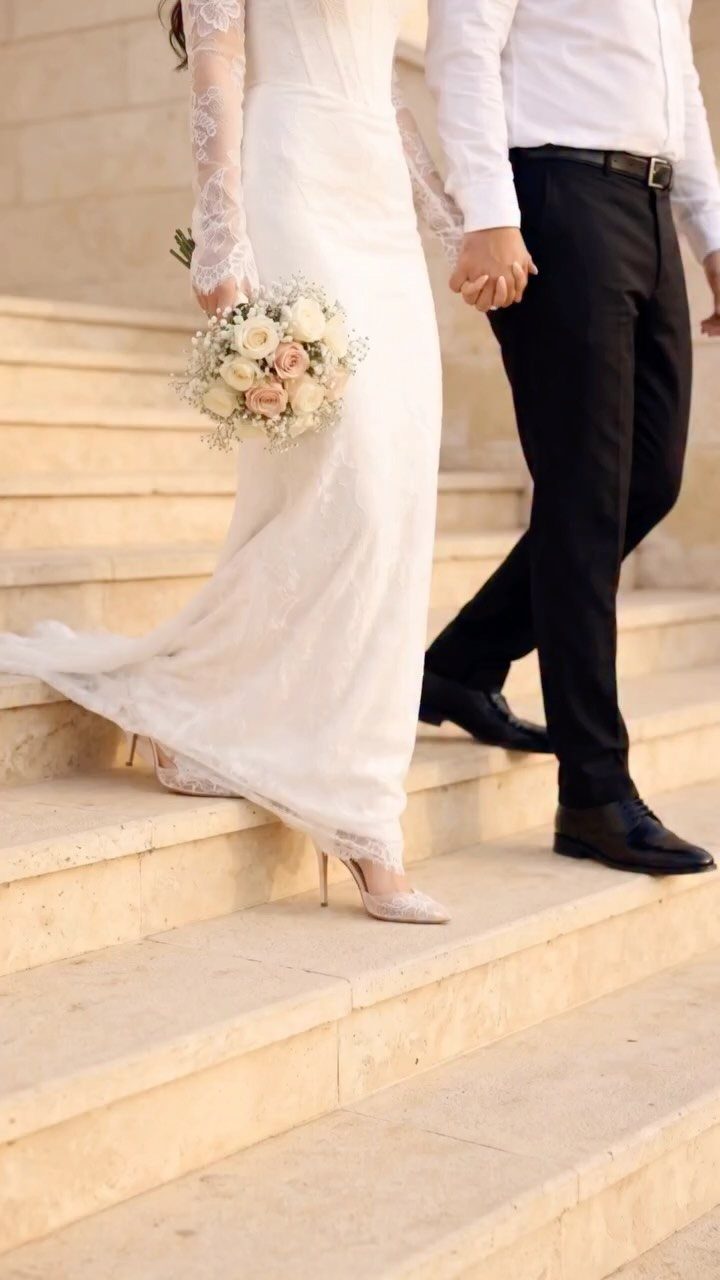
Walking toward the camera feels awkward for about a minute, then it gets easy. Some couples and wedding party members need a little warming up before they relax, so I save this pose for after a few easier ones.
Keep your hands linked, trade glances every so often, and take your time with each step.
Slower than feels natural is usually right. On stairs, watch your footing and gather the dress skirt in your free hand.
6. Laughing Poses
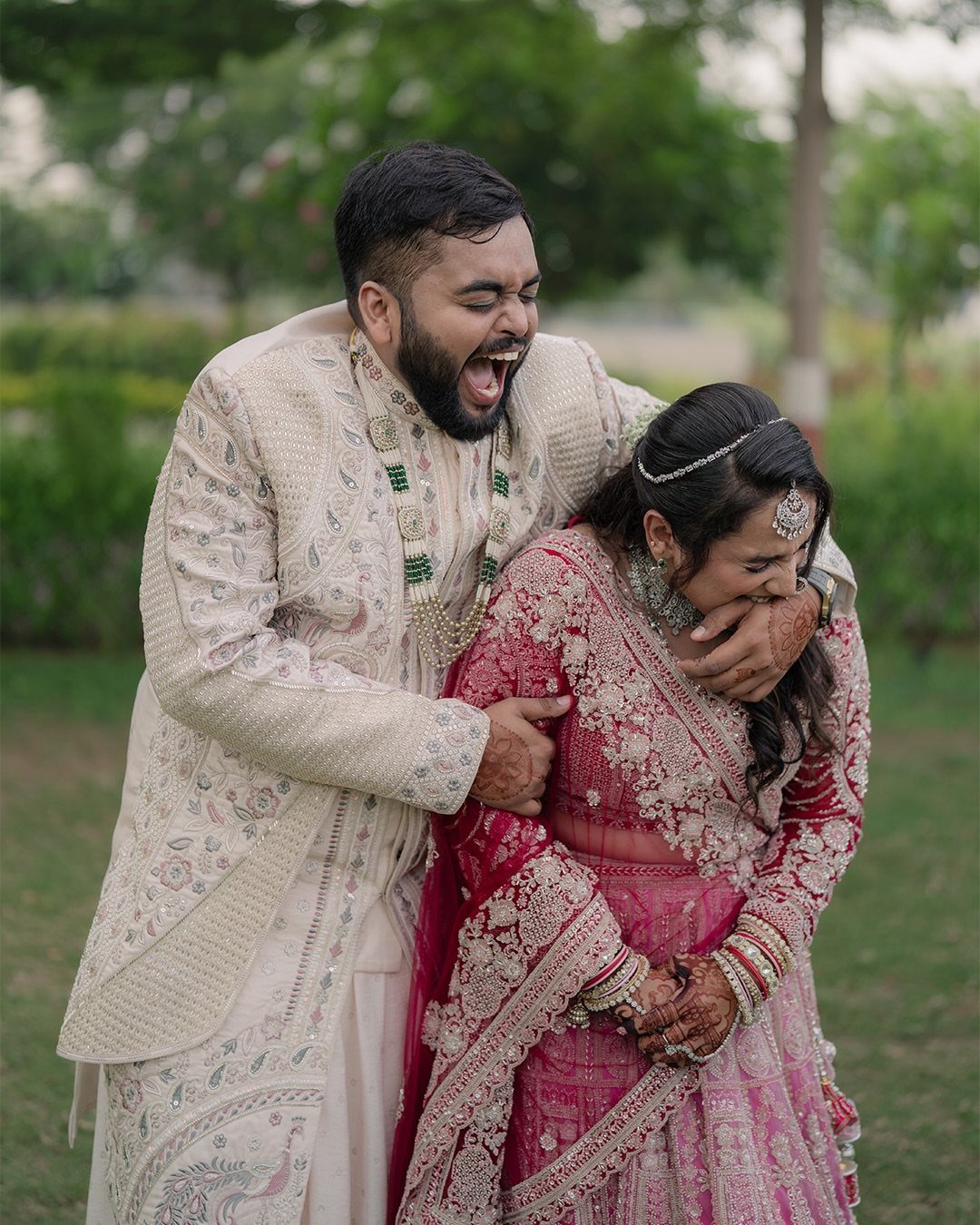
Real laughter is the easiest pose to pull off, since you only have to be yourselves. Nobody needs to be told where to put their hands.
Skip "say cheese."
Have the photographer ask a silly question, or tell each other a private joke, and let the shutter run. Expect a few messy frames; the one with the open mouth and squeezed-shut eyes is often the keeper.
7. The Lift
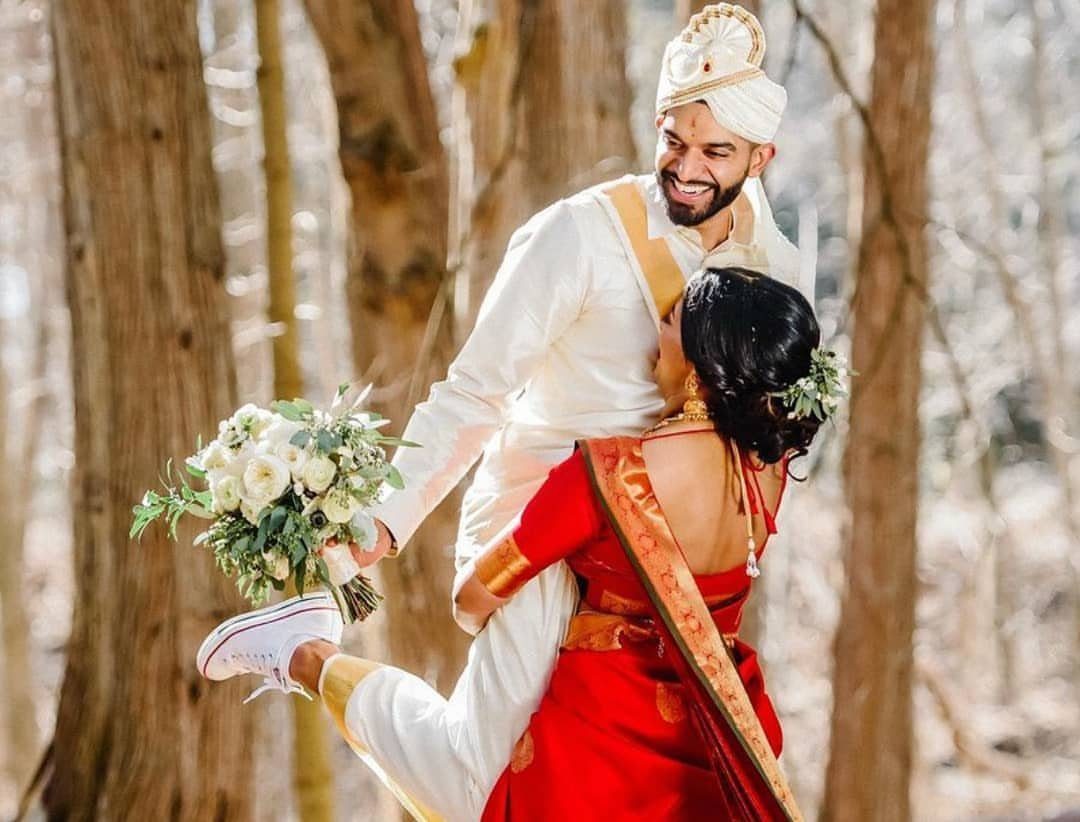
A lift is the playful one in the set, and a groom who holds his bride around the waist or under the knees gets the laugh without any fuss.
Sneakers on the bride are a smart call for this pose, since she can kick her feet up high without worrying about heels or a wobbly landing.
Have him set his feet before he lifts, and keep the bouquet held close to her. Ask the photographer for 2–3 frames, then put her down before either of you tires.
8. The Bear Hug
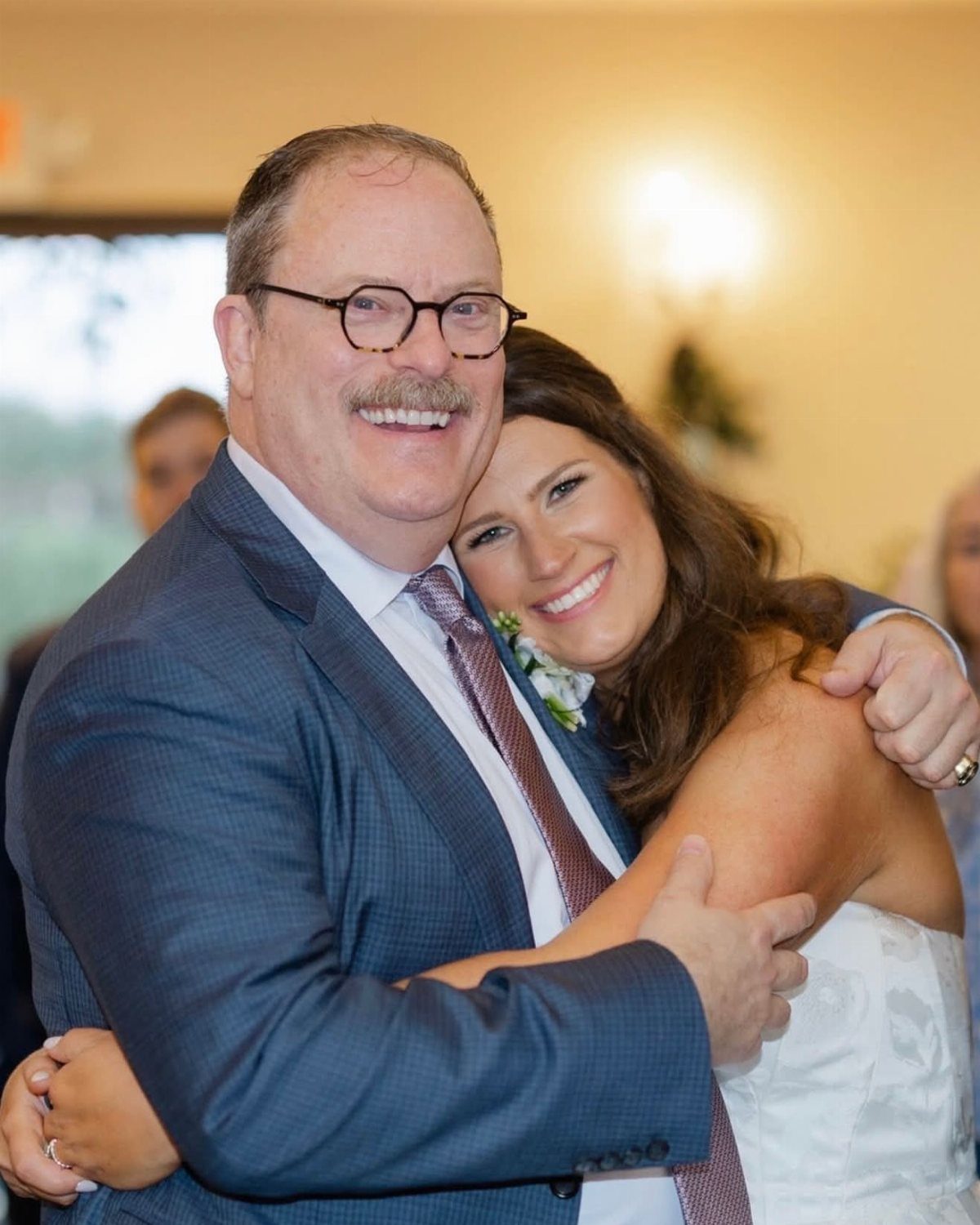
Close your arms all the way around each other and press your cheeks together. A bear hug looks warm because nobody is posing; you are simply holding on.
I would ask for one frame with eyes closed and one with both of you smiling at the camera.
Keep the bouquet low behind the partner’s back so it does not get crushed. If a parent or the groom does the hugging, the same advice holds: squeeze first, then smile.
9. Head on His Shoulder
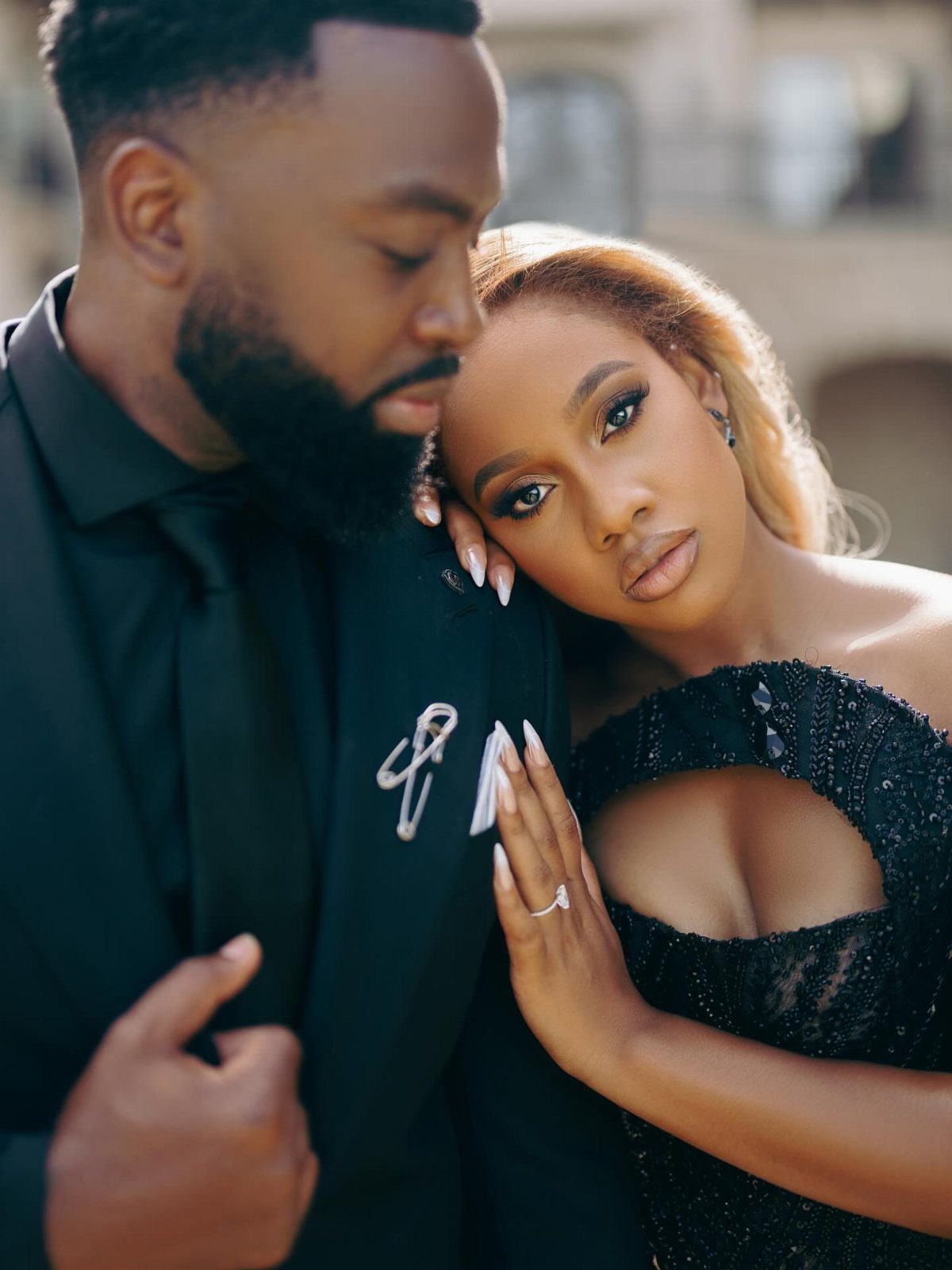
Resting her head on his shoulder is about as easy as a pose gets, and it suits couples who dislike being directed. Stand shoulder to shoulder, close enough that your arms touch, and let her tilt in gently.
He should stand tall and turn his chin slightly toward her.
Skip any stiff smile; a soft, relaxed face reads best. If their heights differ a lot, she can lean on his upper arm instead.
10. Kiss Her Hand
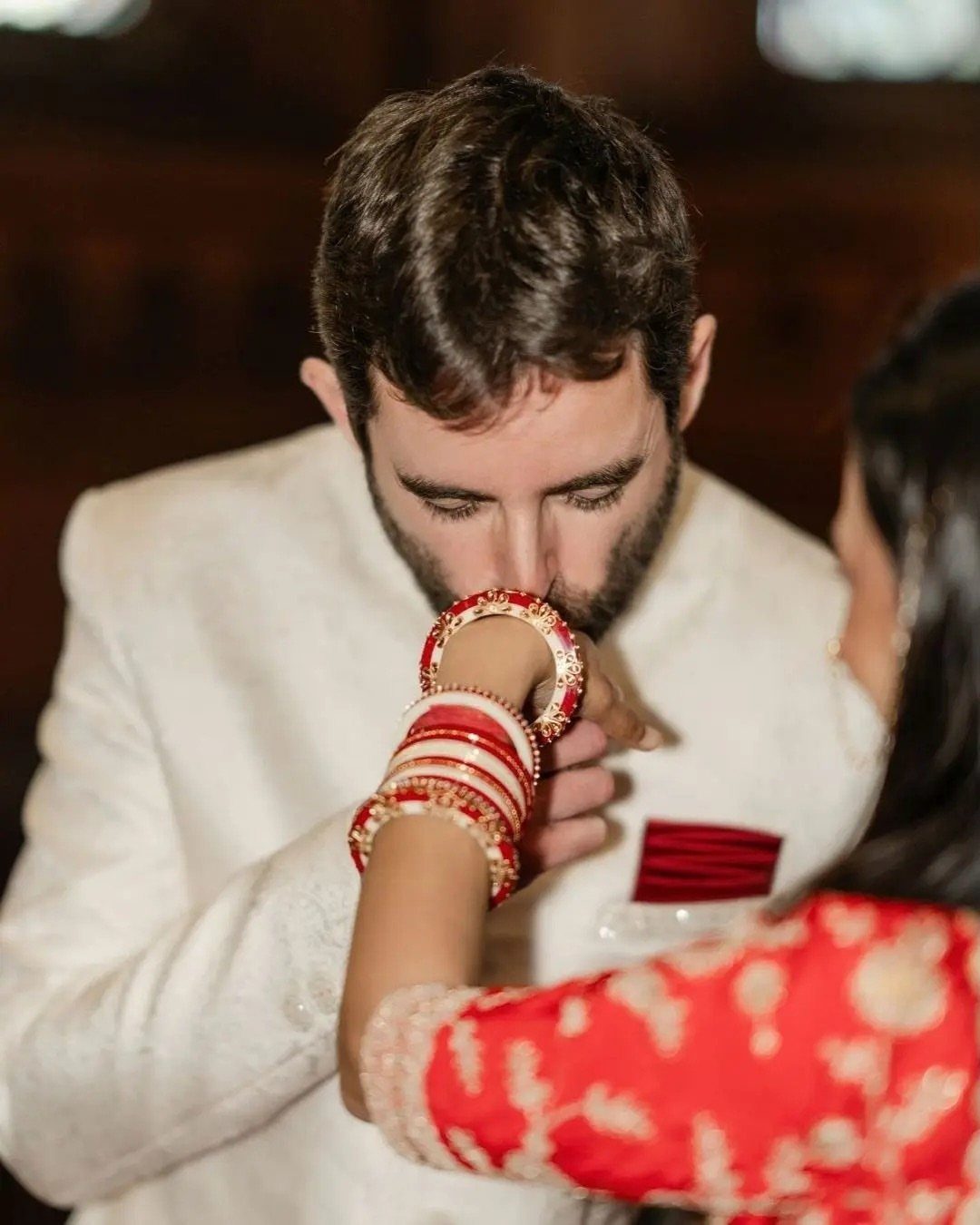
Few gestures say more with less effort than lifting your partner’s hand to your lips. He holds her fingers gently, bows his head, and she looks down at him or off to the side.
Hold the hand up so the rings or bangles stay visible; that detail is what makes the frame.
I like to keep the kiss light and slow, which lets the photographer catch it. Hands that are relaxed look better than hands held stiffly in the air.
11. Under the Veil
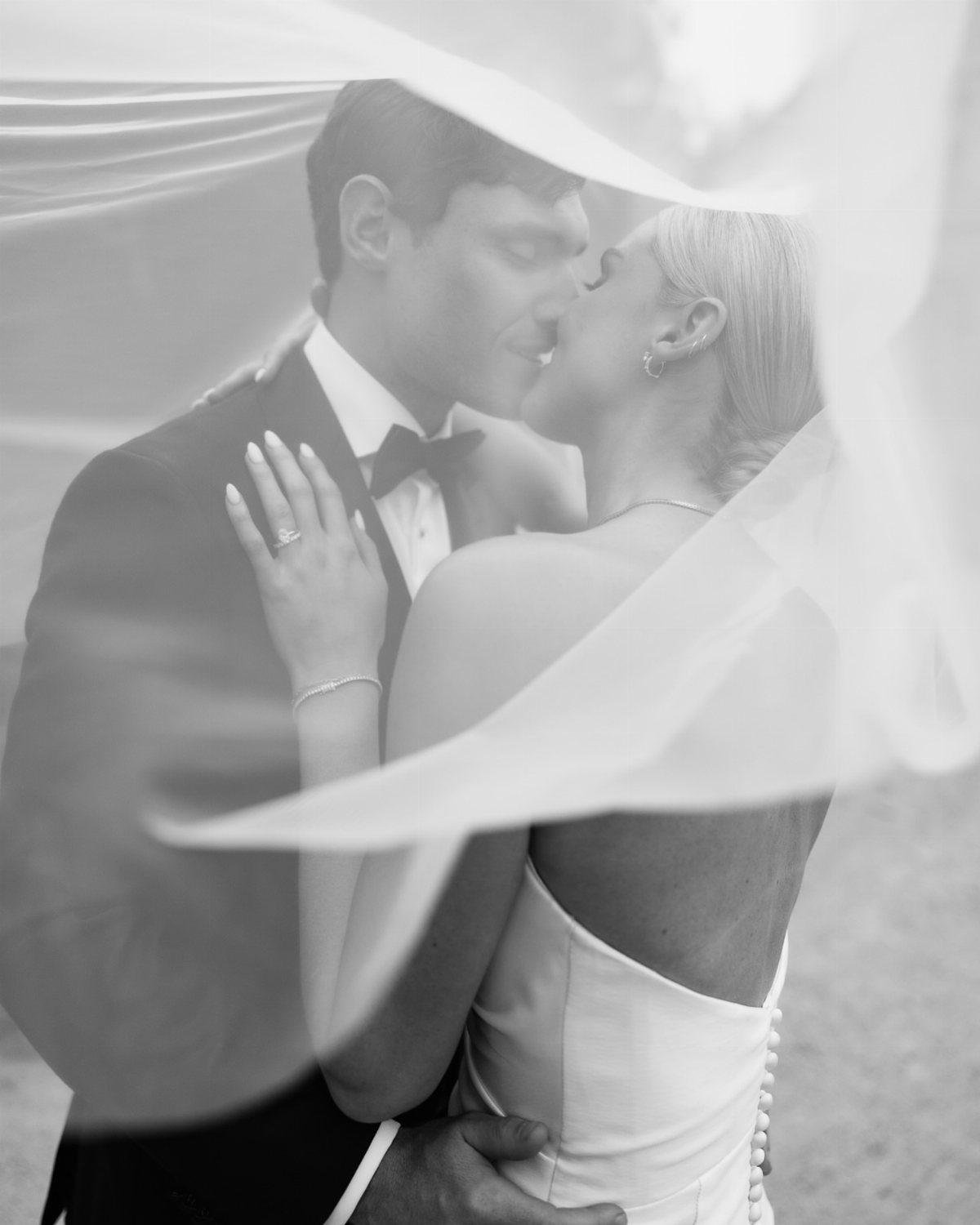
Draping the veil over both of you creates a tiny private room, and a kiss inside it looks tender. Ask a helper to lift the veil and settle it over your heads, then lean together and hold still.
Sheer fabric lets the light through, so face the brightest direction without squinting. Black and white suits this shot well, and I would ask the photographer for both versions.
12. Kiss on the Cheek
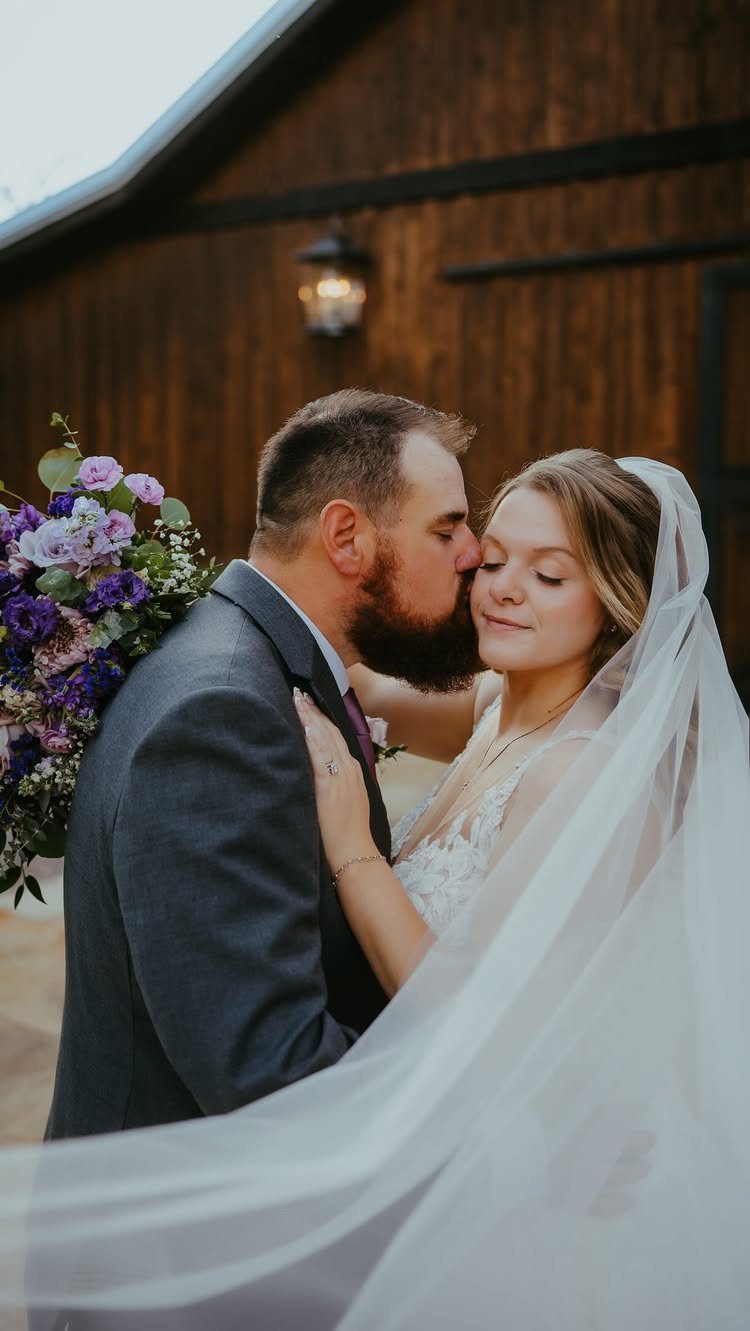
A kiss on the cheek is gentler than a full kiss and works when you feel shy about posing. He leans in from the side while she turns slightly toward him and lets herself smile.
Stand close, shoulders touching.
She keeps her chin level so the veil falls cleanly and does not bunch against his face. Hold the kiss for a couple of seconds and ask the photographer to keep shooting, since her reaction usually makes the best frame.
13. Romantic Kiss on a Bridge
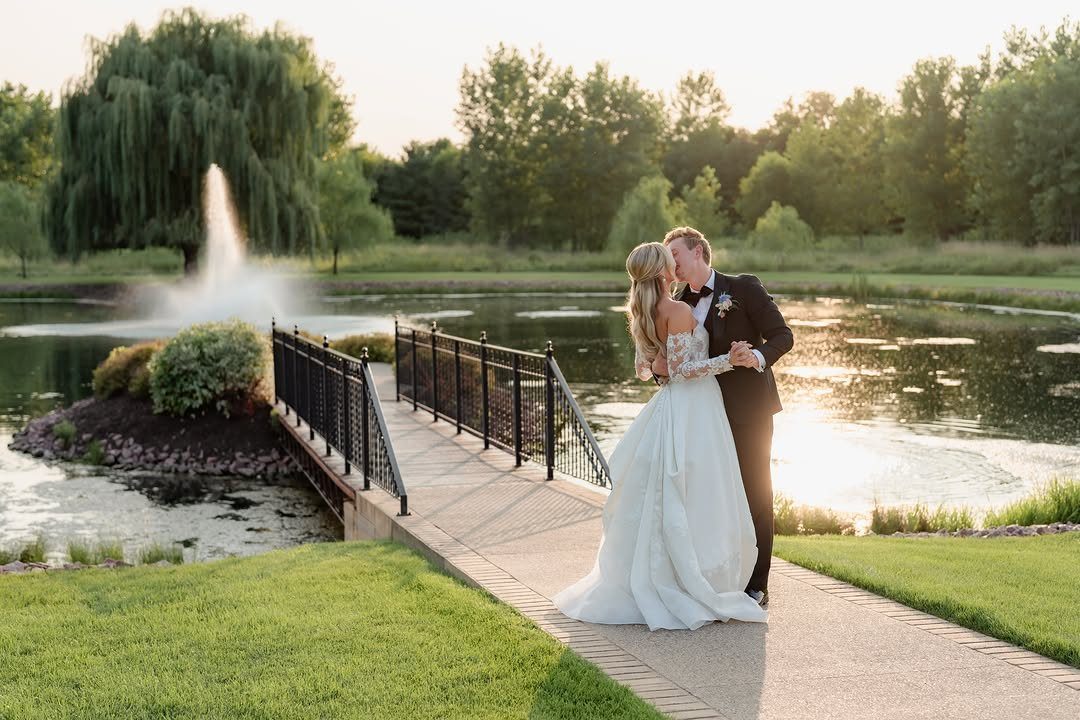
A bridge gives you a natural frame: the railing leads the eye, and the water and trees behind it keep the background soft. Stand in the middle, face each other, and let the kiss be slow instead of quick.
Ask the photographer to shoot from both ends of the span, since the pond and fountain look different from each side. Let the bouquet hang at hip level in one hand, and your faces get the whole frame.
With a black metal railing like this one, I would skip leaning on it for long; it can be cold or dusty on a good dress.
14. Serene Solo Bridal Portrait
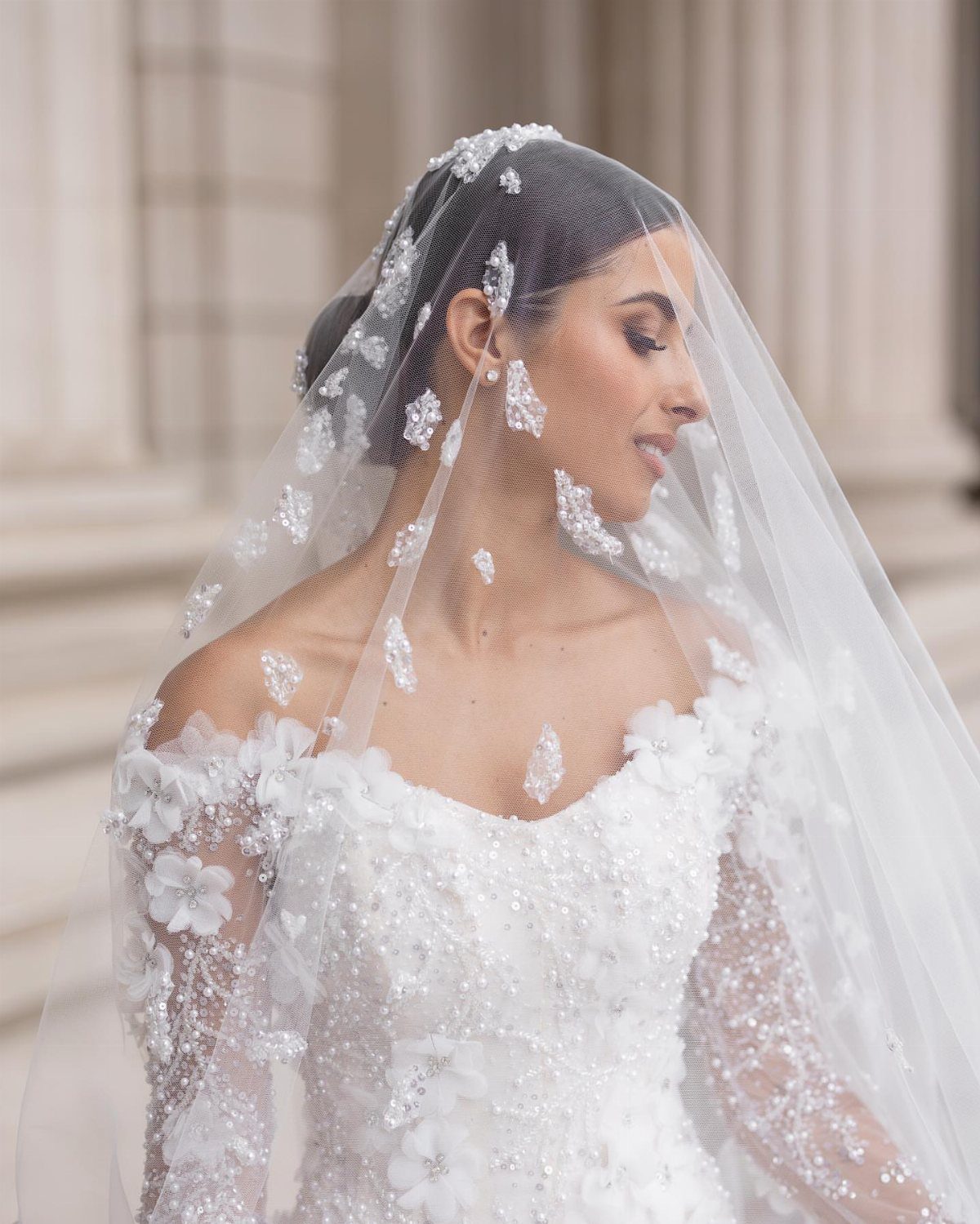
A solo portrait asks very little of the bride except stillness. Lower your gaze, close your eyes, and let the shoulders drop; the calm face does the work.
Take a slow breath in, then out, right before the shutter.
Eyes that blink mid-frame look worse than eyes closed on purpose, so close them gently and hold. With a sheer embroidered veil, ask a helper to arrange it so the lace sits flat across the gown.
A plain, light background keeps the attention on the dress, and I would always book a few quiet minutes for this one.
Comfort and Movement
There is no wrong way to stand in front of a camera, and the small imperfections are usually what make a frame feel real.
Lean toward the lens instead of away from it; that one habit changes how a whole set looks.
Keep your grip loose. Loosen anything that can flex: relax your elbows and fingers, breathe out slowly, and give your hands a quick shake if they feel stiff.
Keep moving, too. Tiny motions keep a pose alive, like a slow sway, a hand drifting down your partner’s arm, or a brush at their hair.
When the photographer gives a prompt like "walk toward me" or "snuggle up," keep doing it until they say stop. They will move around you and pick up on whatever you do on your own.
Timing and Lighting
Build the day’s timeline around the light, and check what time the sun sets on your date, since it goes down earlier in some seasons. A rushed schedule gets you decent but flat photos, and your portraits deserve real time.
For golden-hour pictures, start the ceremony at least 1.5 hours before sunset. Golden hour is the last hour before sunset, so plan your portraits to fall inside that window.
At a venue with trees, the sun disappears behind them earlier than the official sunset, so plan for that. Block out at least 10–15 minutes for couple portraits, and more if you can spare it.
Seeing each other before the ceremony, or holding the ceremony in late afternoon, frees up time for portraits once the vows are done.
Communication with Photographer
Experience in front of a camera isn’t something you have to bring. Nearly every pose is a small twist on a handful of basics, so a long, detailed shot list only slows the day down.
Pick a few favorites to talk through with your photographer, and leave room between them for candid frames and wedding party portraits.
Be honest with your photographer about how at ease you feel being posed, whether that means stiff and awkward or happy to follow direction.
Some people warm up slowly and relax once they get going. Others dislike posed shots so much they want fewer, or none.
If that is you, ask for portraits to be done quickly. Couples like that often end up enjoying them more than they expected, especially with a relaxed photographer who keeps things fun.
Frequently Asked Questions
What are the top poses for a wedding photoshoot?
The dip, a walk toward the camera, and a close face-to-face stance with foreheads nearly touching are the classics.
They work because you either look at each other or simply move, so nobody has to perform. Add a laughing frame and a bear hug, and you have a set that covers calm, playful and tender.
How can I feel comfortable in front of the camera?
Keep your body loose and keep moving.
Loose elbows and soft fingers read as calm on camera, so let a long exhale drop your shoulders, then keep moving a little with a slow sway or a hand trailing down your partner’s arm.



