These poses run from a kiss under ribbon wands to a quiet walk shot from behind, and they cost almost nothing beyond the time you set aside for them.
What picks yours is how comfortable you are facing a lens: if eye contact feels stiff, choose Back to Back, the Over-the-Shoulder Look or the View from Behind Toward Window, and if you enjoy the camera, go for The Dip or The Twirl.
Venue and outfit matter too, since a full skirt or a veil suits certain poses better than others, and the Veil Shot only works if you are wearing one.
Rehearse two or three before the day, because portrait time is short.
1. The Carry
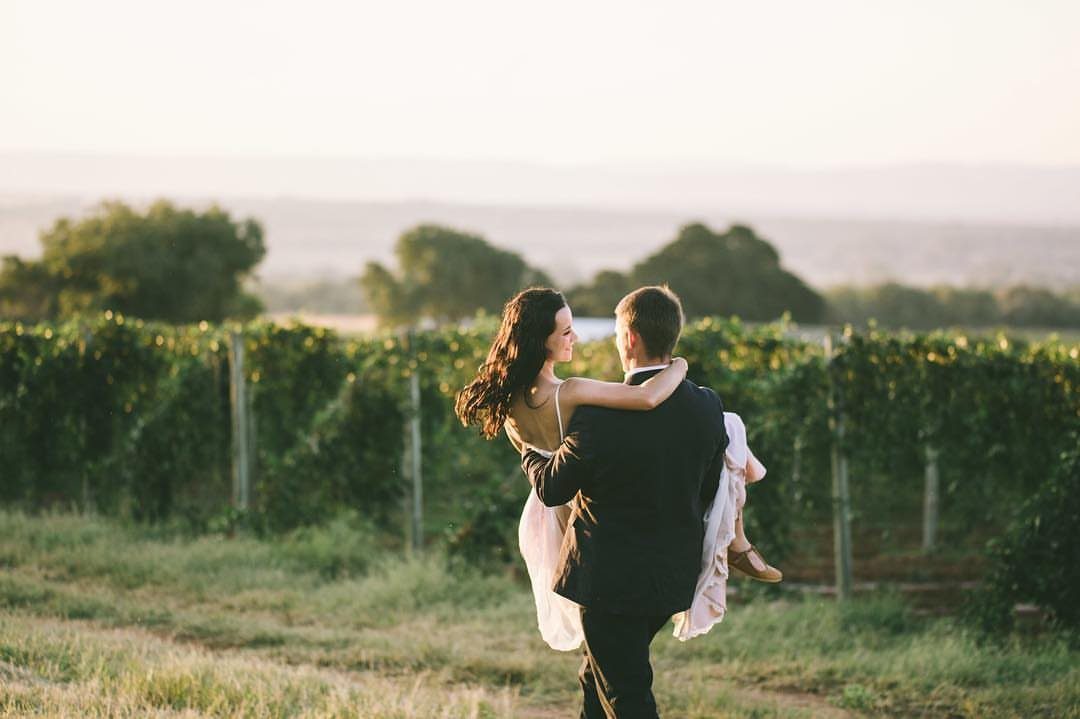
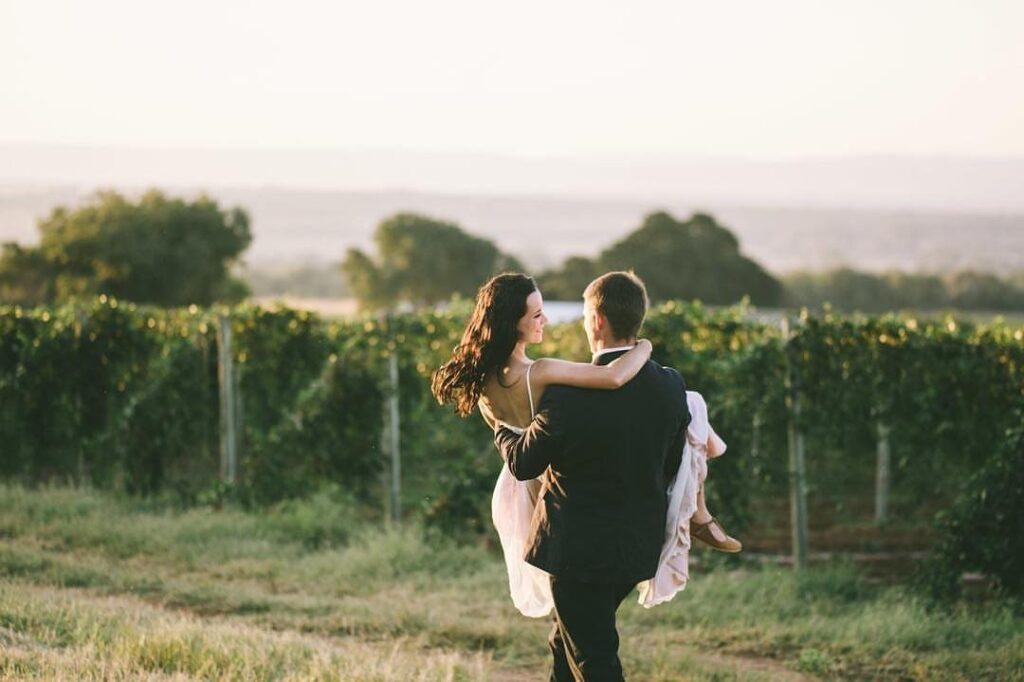
A full-length frame is what makes this pose work. Give the photographer enough room to catch her whole dress and his stride, and the skirt does the dynamic part for you.
Ask the carrier to bend his knees before lifting, and keep the pace slow so the fabric has time to fall.
I would pick open ground like a vineyard row over a tight path, since the shot lives on space around the two of you.
2. Walking Together Hand-in-Hand
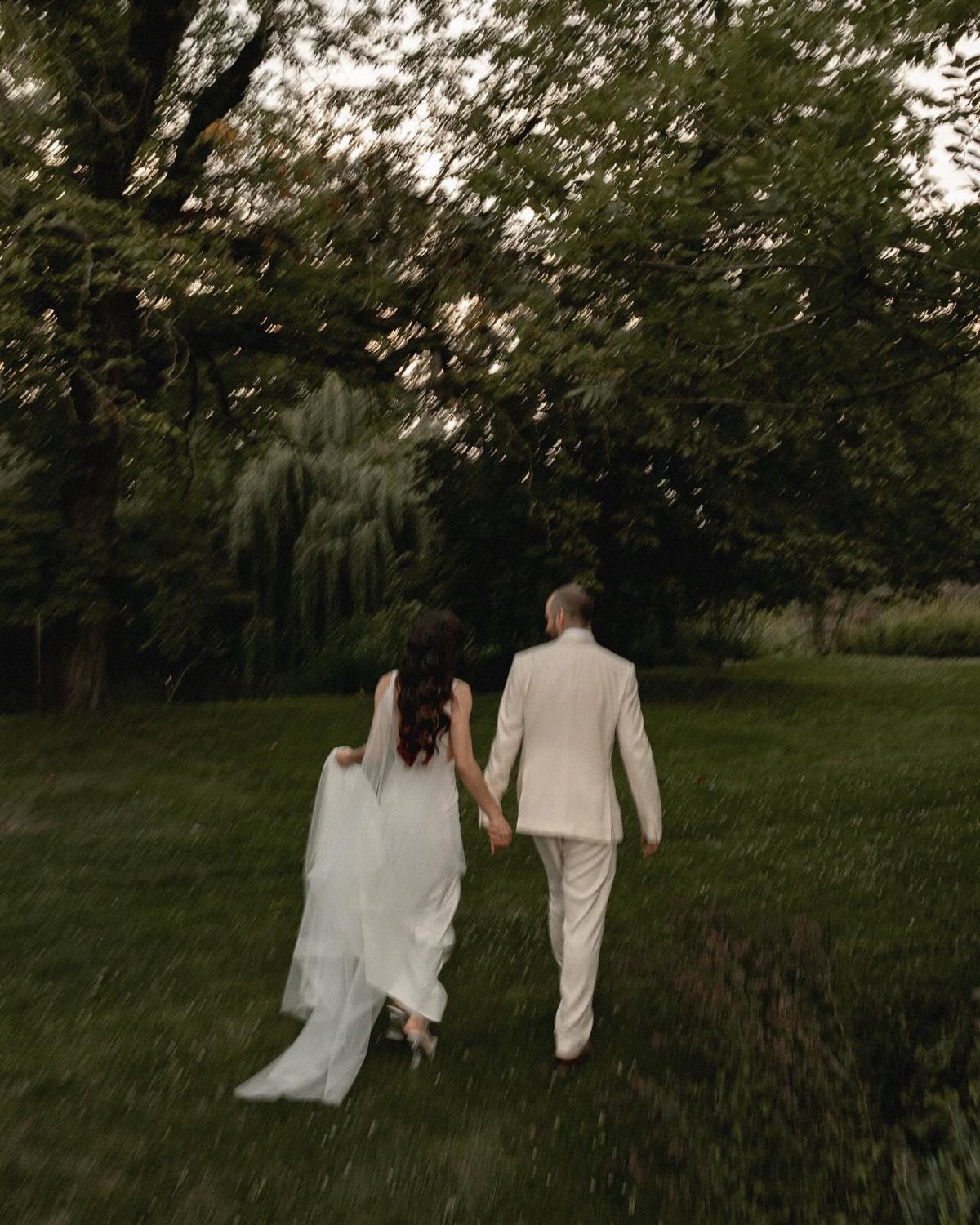
Shot from behind, a walk becomes a quiet frame about the road ahead. Nobody has to look at the lens, which makes it a relief for couples who dislike posing.
Walk at an easy pace, hands loosely joined, and let the photographer trail a few steps back.
I like grass and trees behind you, as the green keeps the focus on 2 figures moving together. Ask for a few takes, because the first one is usually stiff.
3. Forehead Kiss
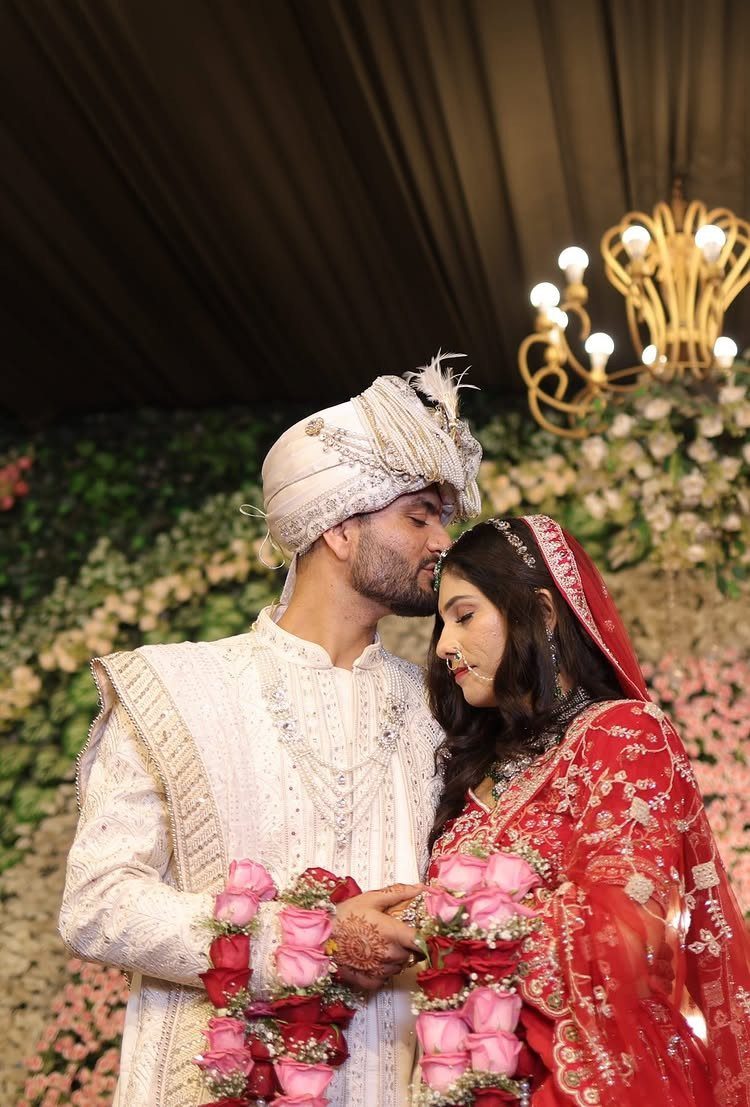
A kiss on the forehead says more than most poses with half the effort. The groom leans in, the bride tilts her chin slightly down, and her eyes can close.
Height matters here, so a bride in flats may want him to bend a little rather than her stretching up.
I would keep the background simple or ornate, like a floral backdrop, but never both busy and close. It costs nothing and takes under a minute, so ask for it twice.
4. Intimate Looks
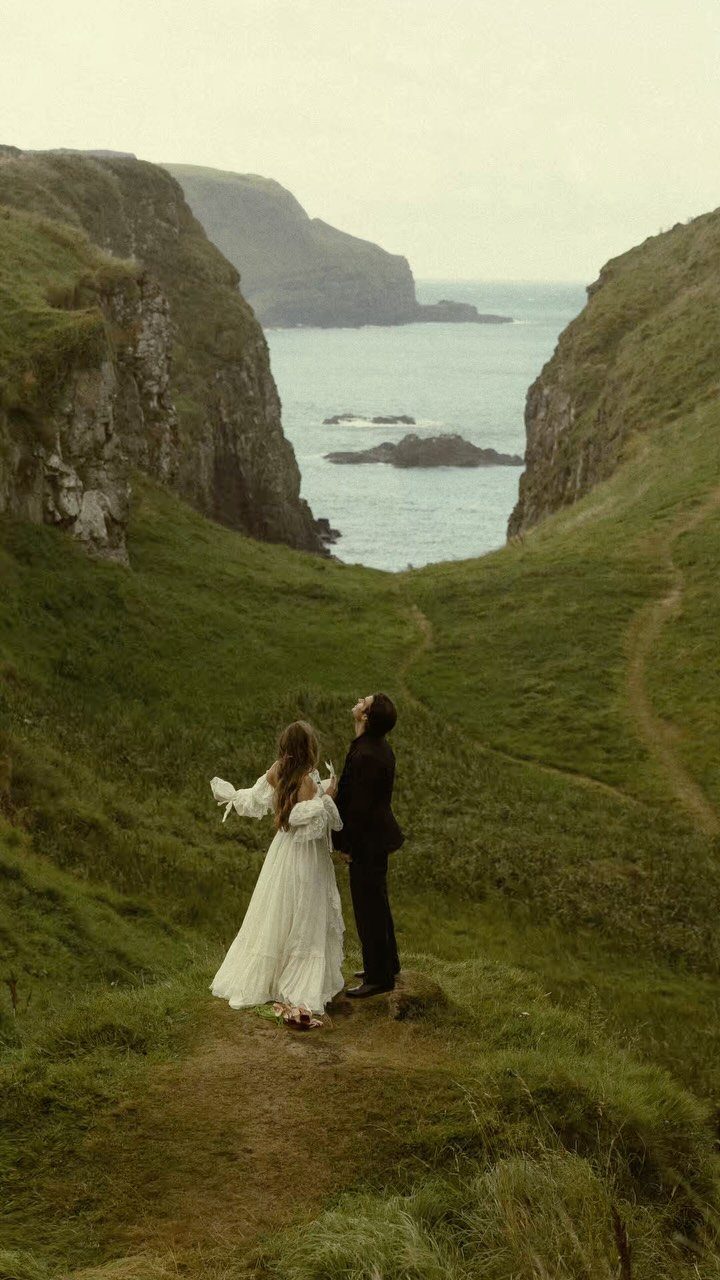
Stand face to face, close enough that your toes nearly touch, and look at each other instead of the camera. That is the whole pose, and it asks for very little acting.
Give yourselves a moment of quiet before the shutter, or share a whispered joke so the gaze turns real.
A wide, open spot like a cliffside path lets the photographer frame you small against the scenery, or move in tight for the eyes. I would ask for both.
5. The First Look
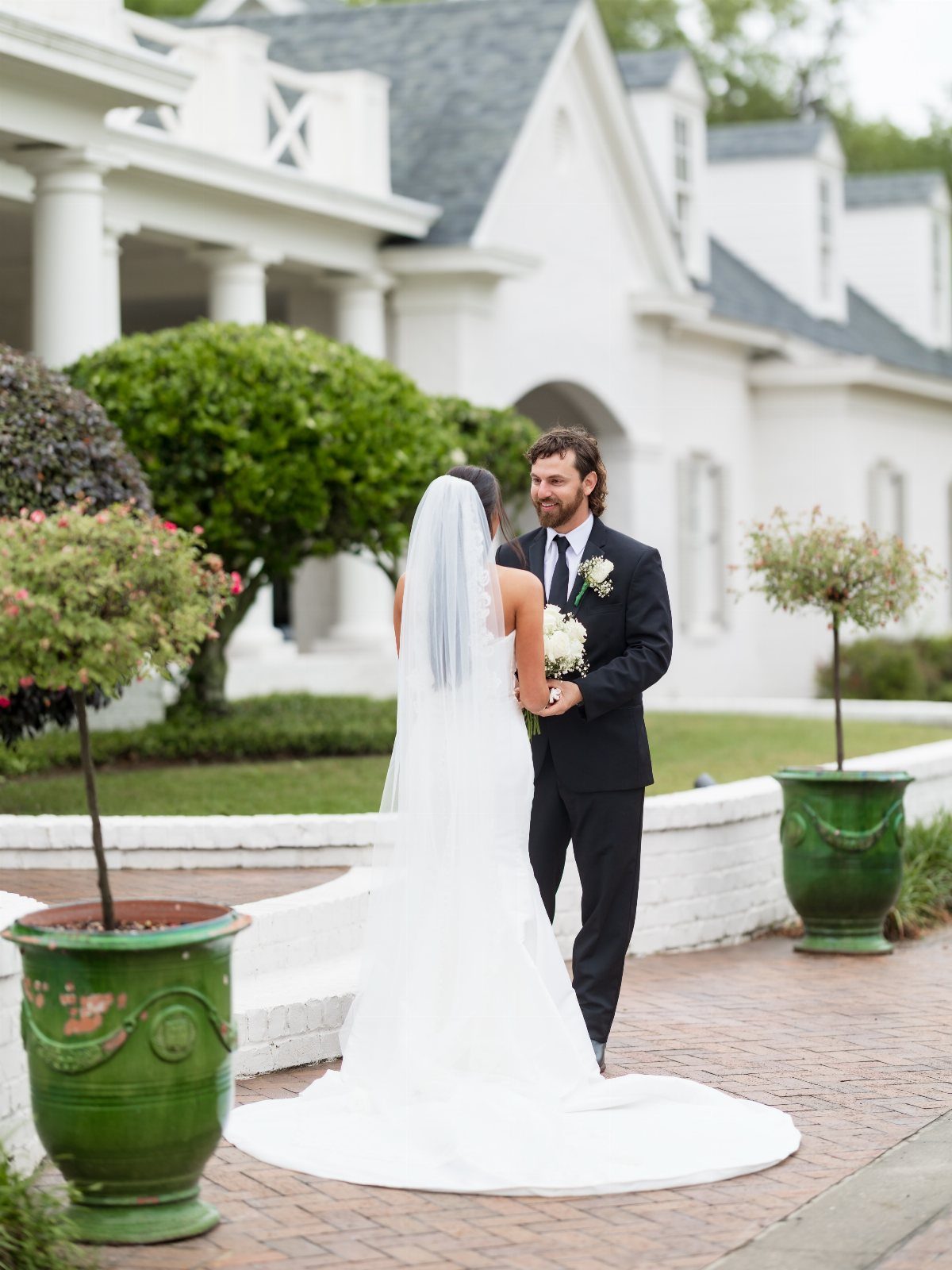
Seeing each other before the ceremony, alone, gives you a private moment that the aisle never will. Photographs of it hold real nerves and real relief.
Choose a quiet spot, like the front of a house, and give your photographer a plan for where each of you will stand before the moment arrives.
Let the first reaction run uninterrupted for a minute before any posing starts. I would plan it for the stretch before the ceremony, since it also frees up portrait time later.
6. Close-Up Emotion Shot
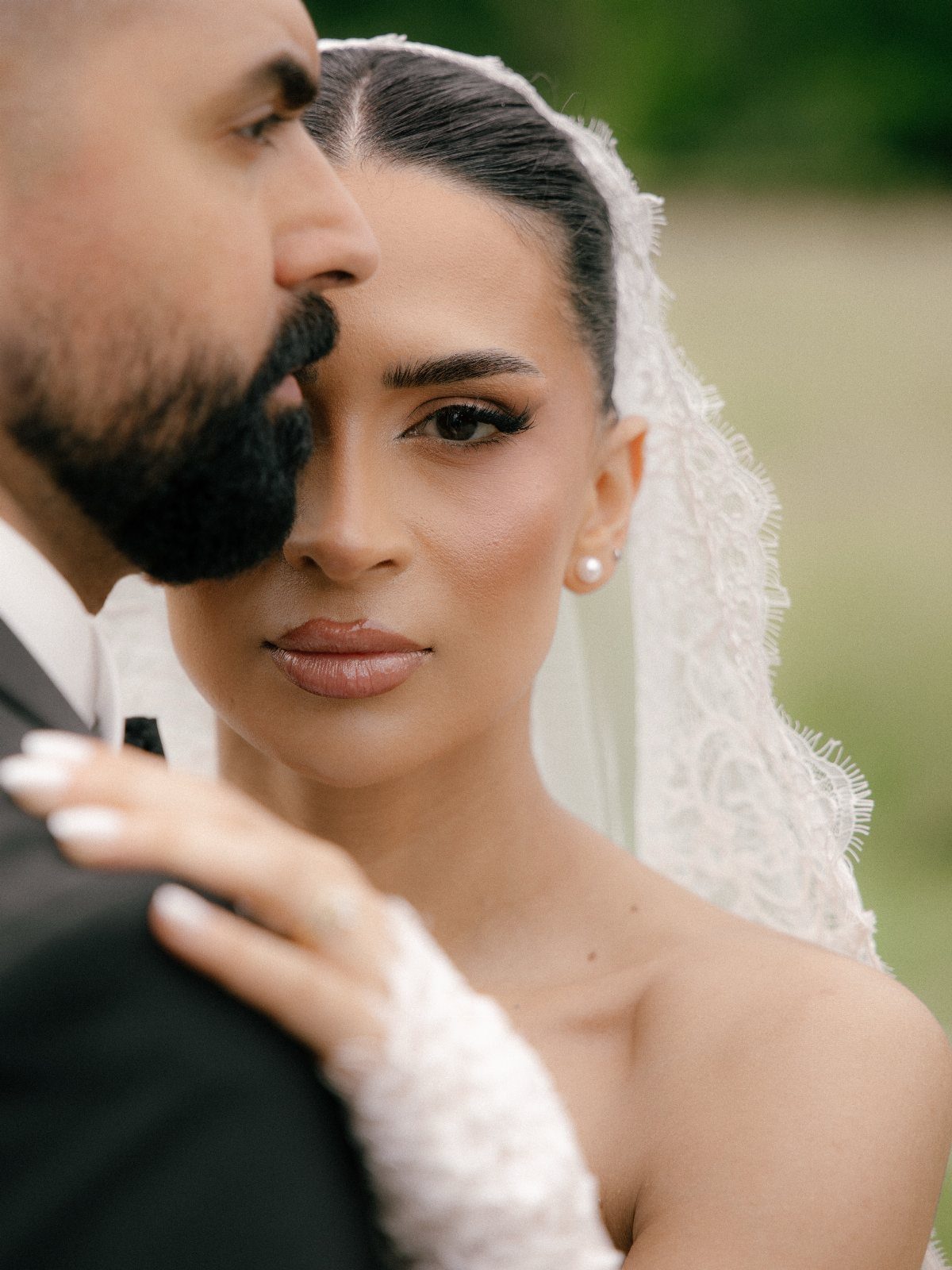
Close framing strips out the scenery, so the expression carries everything. With a veil in play, the lace adds texture without competing for attention.
Lean your heads together and let one of you look at the lens while the other stays soft.
Avoid forced smiles; think of something that makes you laugh, then let it fade. I would request a few frames of each look, since the in-between ones are often the best.
7. The First Dance
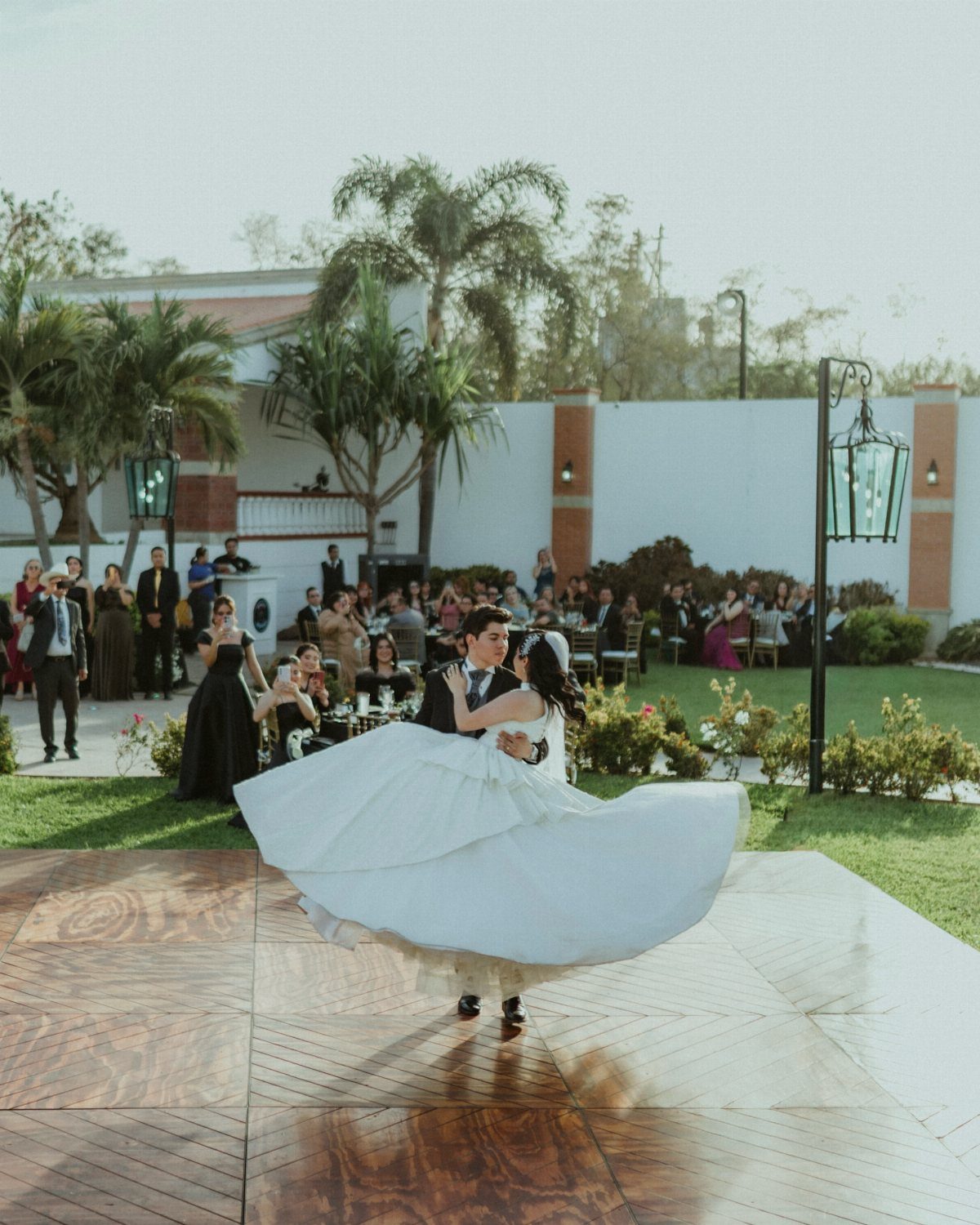
Wide frames suit a first dance better than tight ones.
Ask the photographer to start wide, then move closer once you settle into the song. I would keep the first dance short, since a few minutes gives plenty of material and keeps the room’s attention.
8. The Ring Exchange
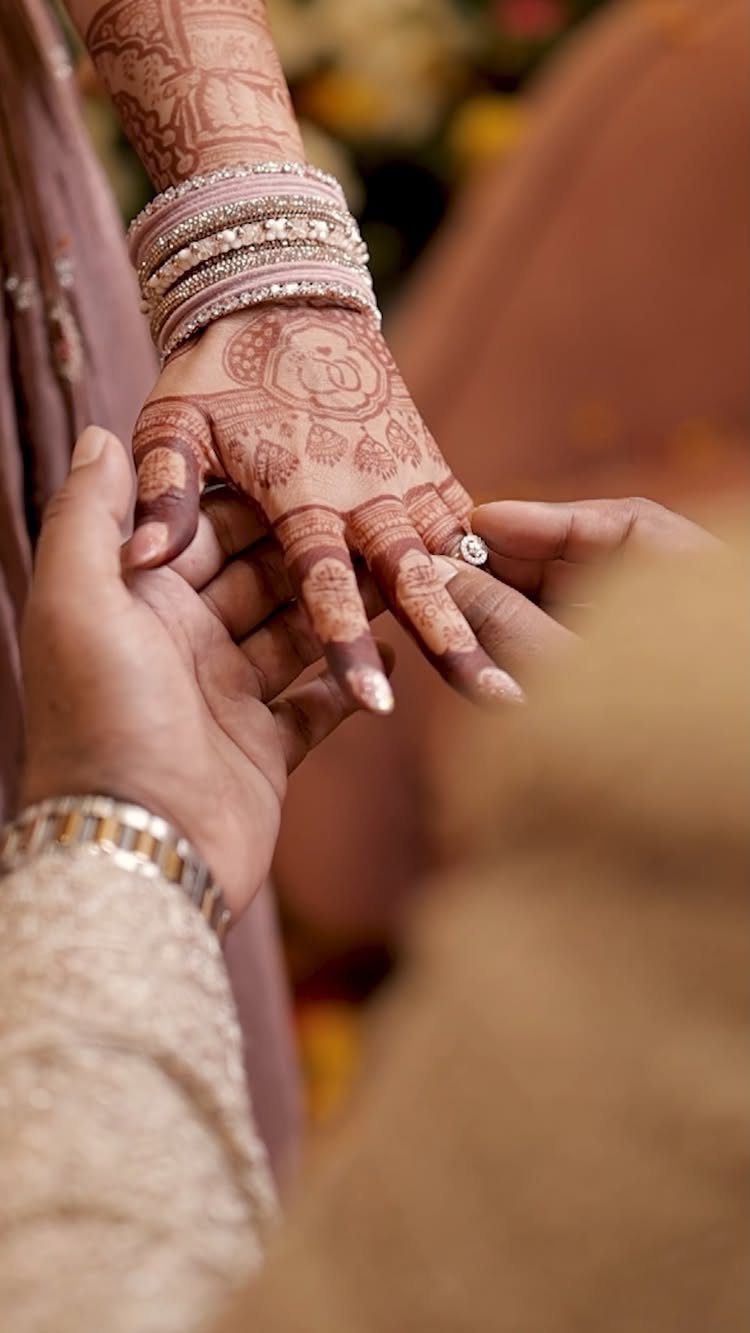
Hands tell this story, so the frame can leave faces out entirely. A tight crop on the ring going on shows the finger, the stone and any detail on the skin, such as henna.
Hold the hand still and slightly raised for a beat before the ring slides on.
9. Prom Pose
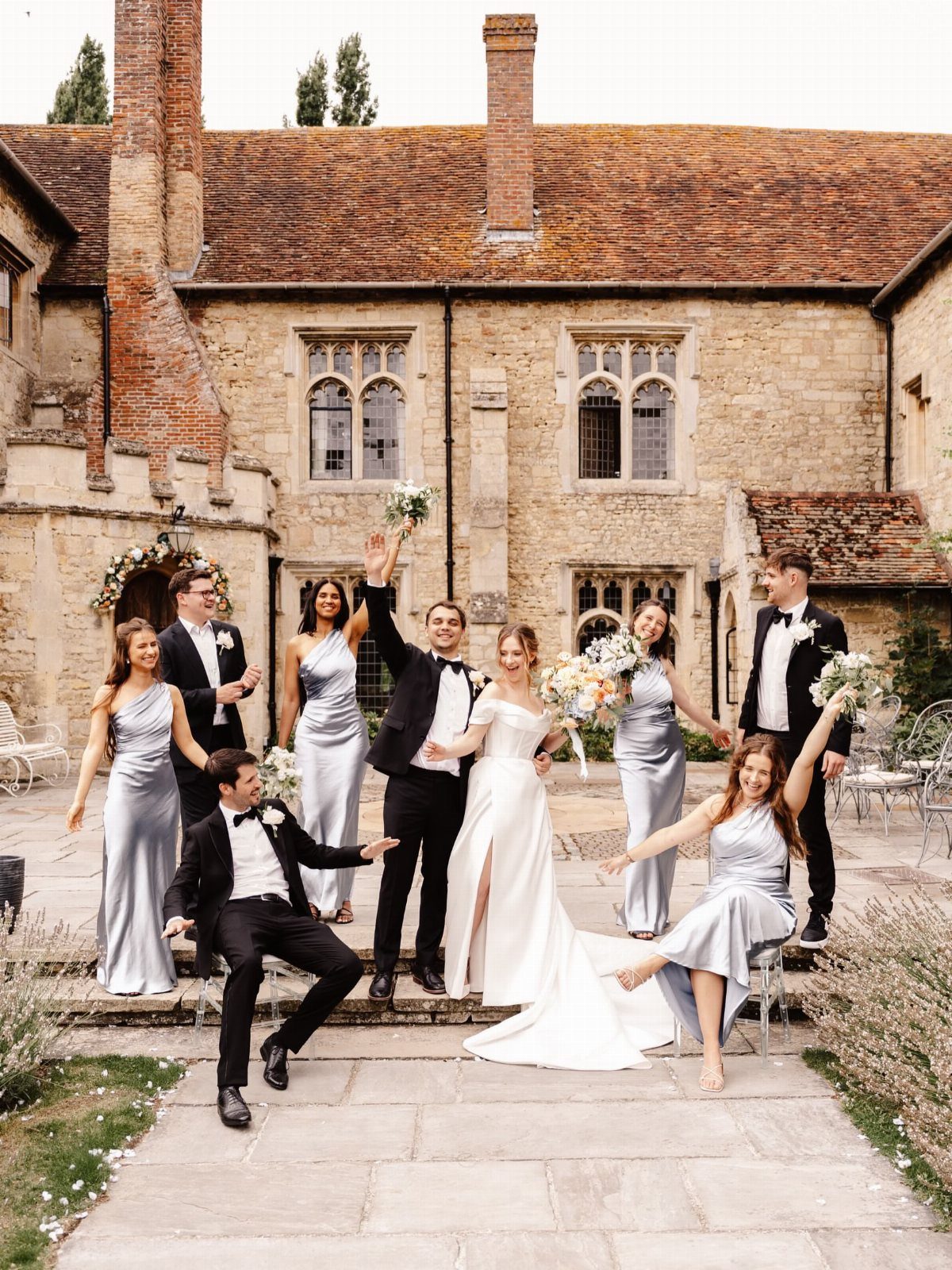
Bridesmaids in silver, groomsmen in black and a bride in white already make a strong color line, so the pose only has to add energy.
Stand in a loose cluster with the bride at the center, and let people lean, link arms or strike a silly stance. I would take one serious frame first, then a goofy one.
10. The Dip
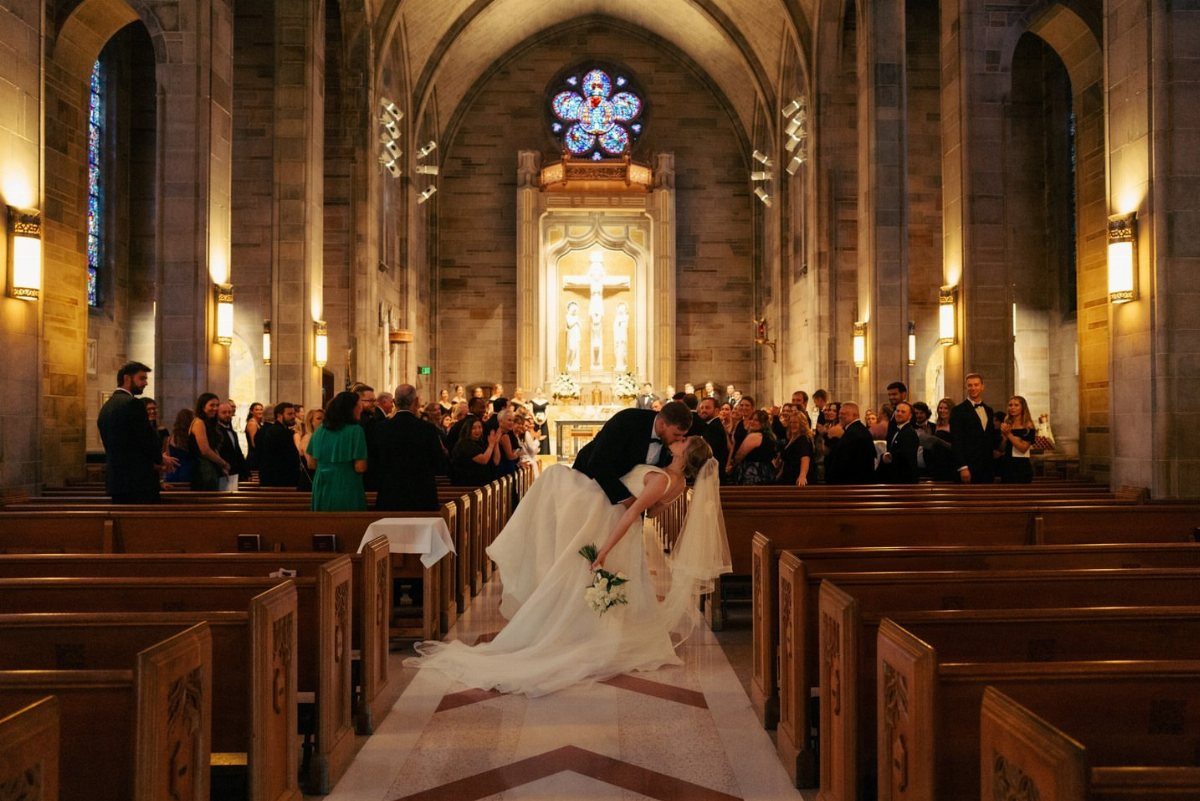
The groom supports her back with one arm while she leans into the kiss, and that support is what keeps the pose safe and graceful.
She can rest her free hand on his shoulder, which keeps her balanced and gives her arm something natural to do.
Rehearse the dip once the week of the wedding, because a dip done cold looks nervous.
Keep the lean modest and hold the kiss for a few seconds so the photographer can catch it. I would use the aisle or any spot with guests nearby, since their reactions add warmth.
11. Veil Shot
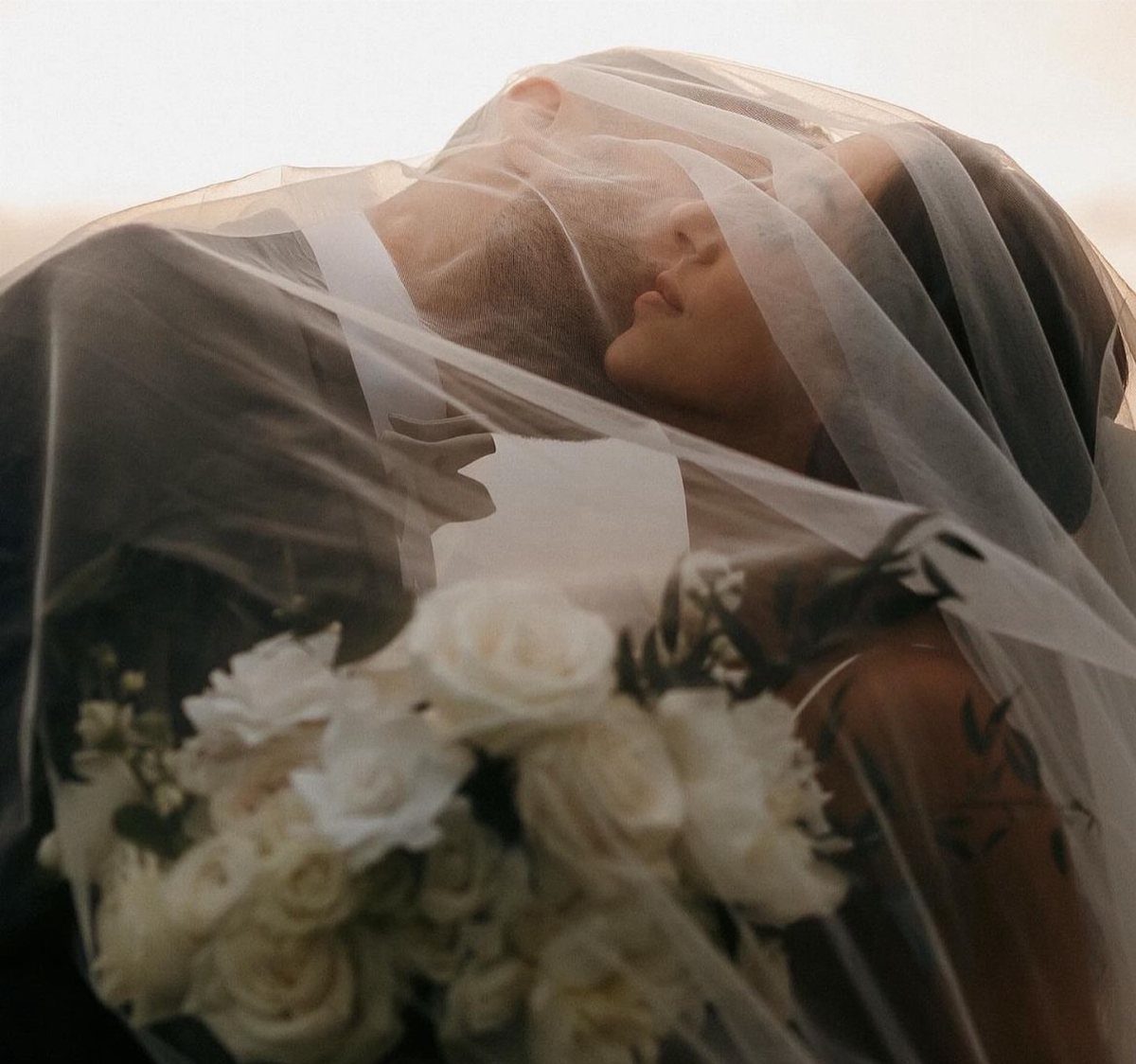
Let the veil do the framing: drape the sheer fabric over both of your heads and draw close. The light passes through it softly, and a bouquet held low in the foreground adds depth without hiding your faces.
Have a bridesmaid or your photographer’s assistant lift and settle the veil so it falls evenly. I would pick a spot with soft, even light, as harsh sun will flatten the fabric.
12. Candid Laughing Shot
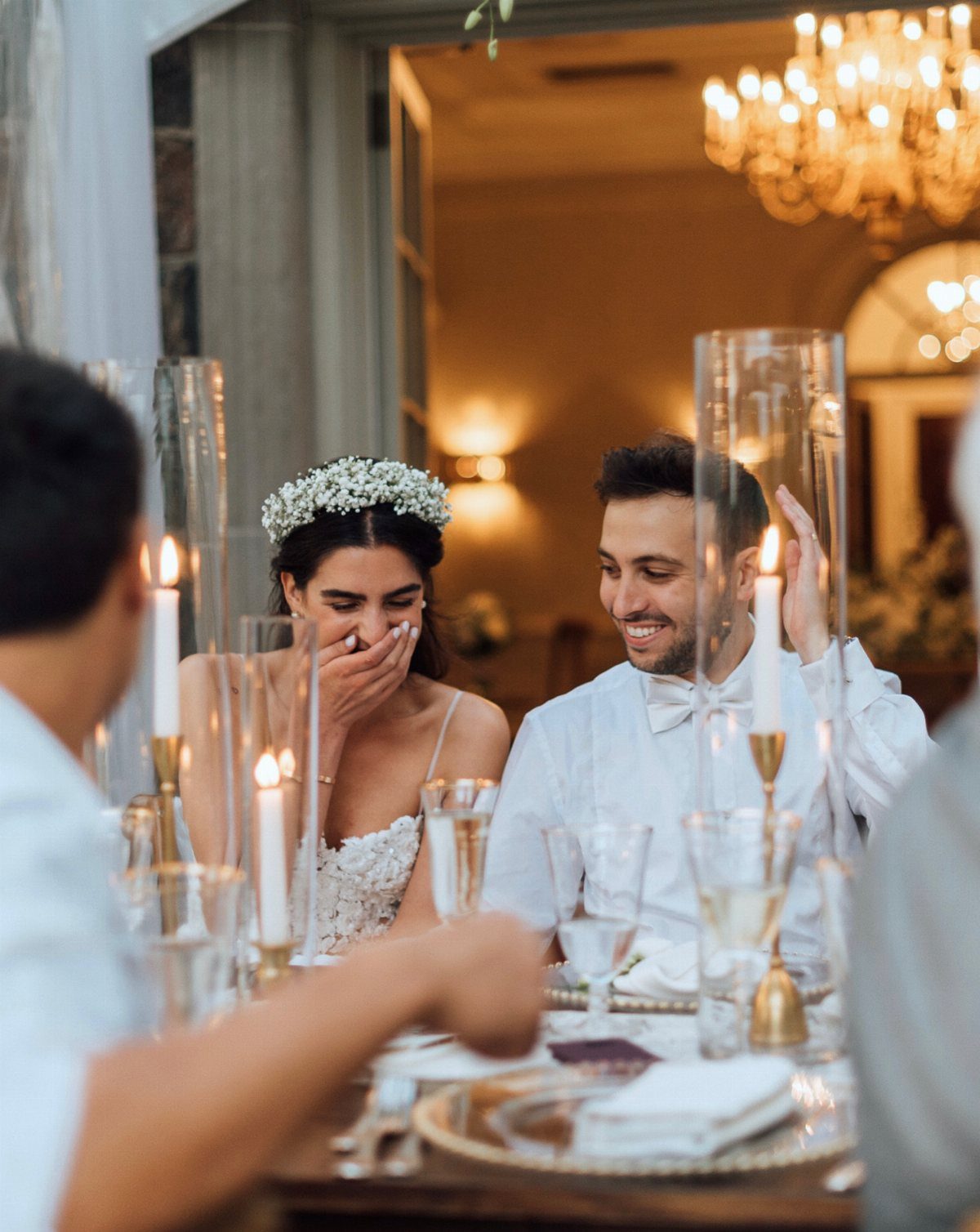
Laughter is hard to order up, so set it up instead. Sit close at the reception table, and let the photographer hover at a distance while you talk, tease each other or retell a funny moment.
I prefer these frames to posed smiles, because the warmth shows in the eyes. Candles and a chandelier already give a soft glow, so ask the photographer to work with the room’s light rather than add flash.
13. Back to Back
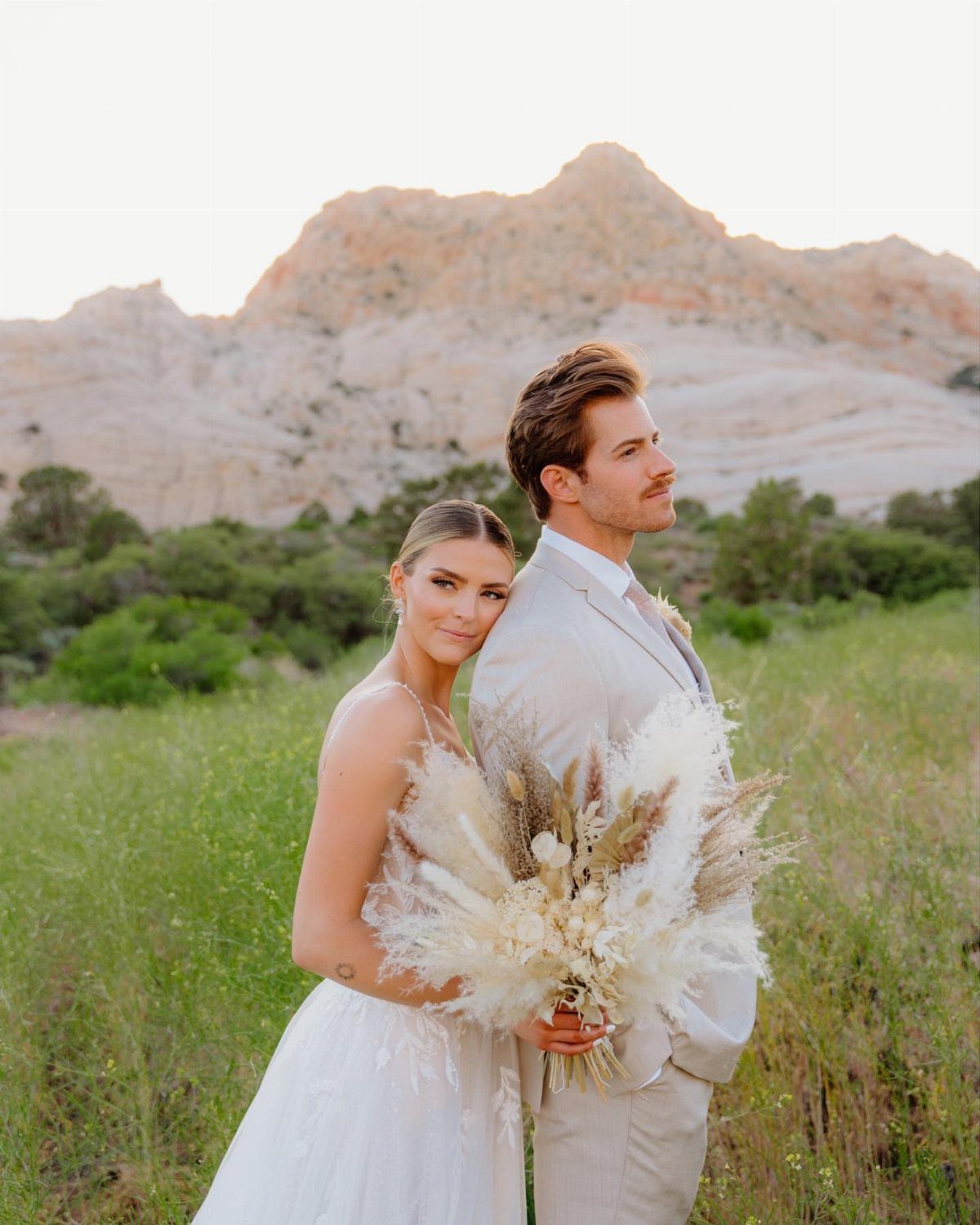
2 backs pressed together make a frame that needs no eye contact, which suits couples who feel stiff facing a lens. Lean your weight into each other, and let your joined hands hang low or swing a little.
I would ask for one frame with hands linked and one with each of you looking over a shoulder.
14. The Sunset Silhouette
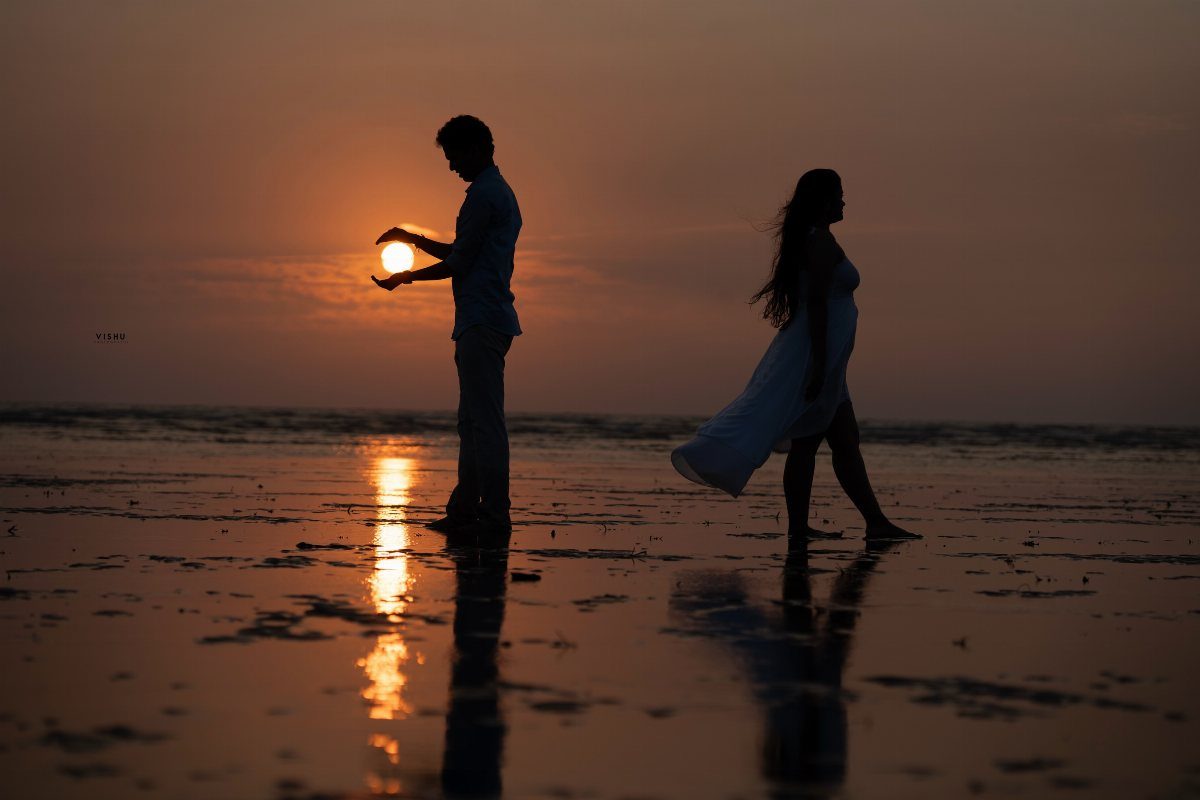
Against a low sun, faces and fabric disappear and only the outline of the two of you remains. That makes shape the whole picture, so stand apart enough for the photographer to see 2 distinct figures.
Walk slowly along the shoreline, or hold a playful gesture like cupping the sun between his hands.
I would plan it for the last stretch of daylight and ask the photographer to expose for the sky. Expect to lose detail on the dress.
15. The Twirl
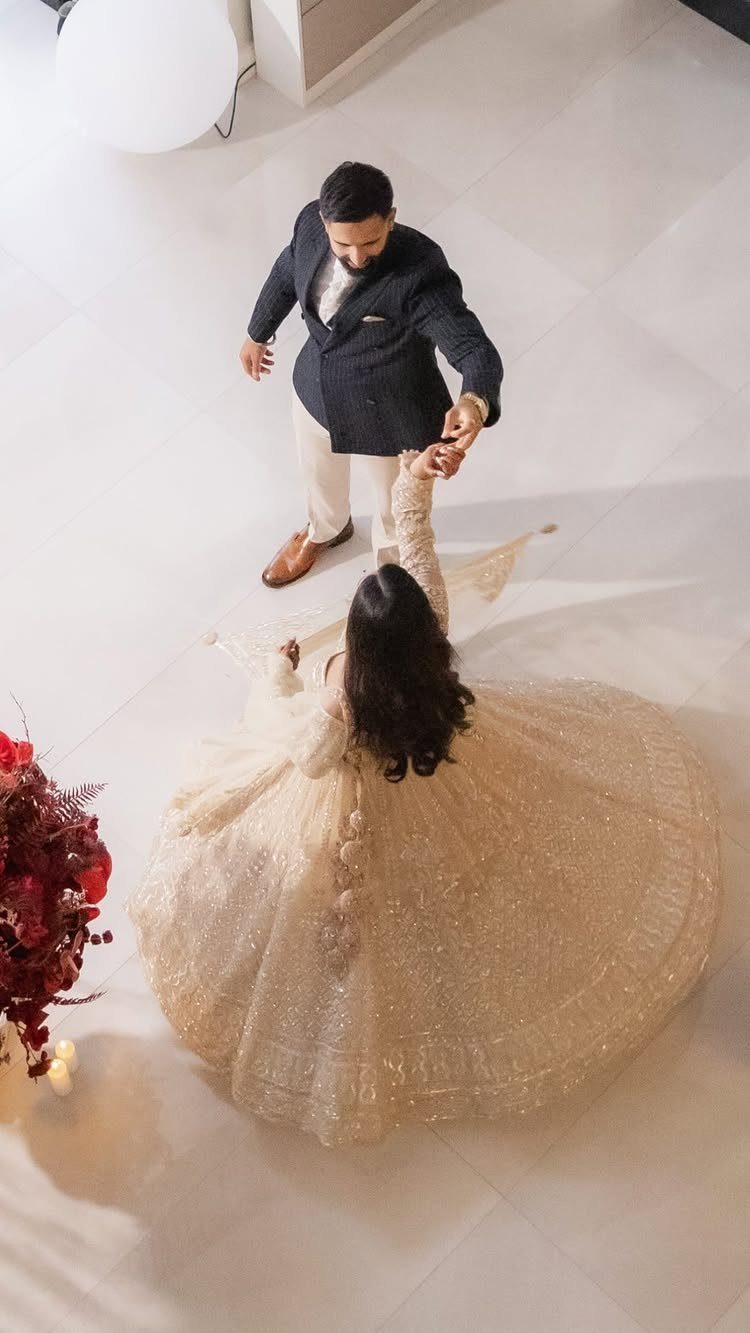
A full skirt turns a simple spin into real movement, and fabric with some shimmer or sheen catches the light as it swings. The groom holds one of her hands and lifts it overhead while she turns beneath it.
Start slowly, then let the speed build over 2–3 rotations so the fabric opens out.
I would shoot it from a high angle on a clear floor, since nothing should snag the hem. Ask for several passes, because the best frame is usually the third.
16. The Over-the-Shoulder Look
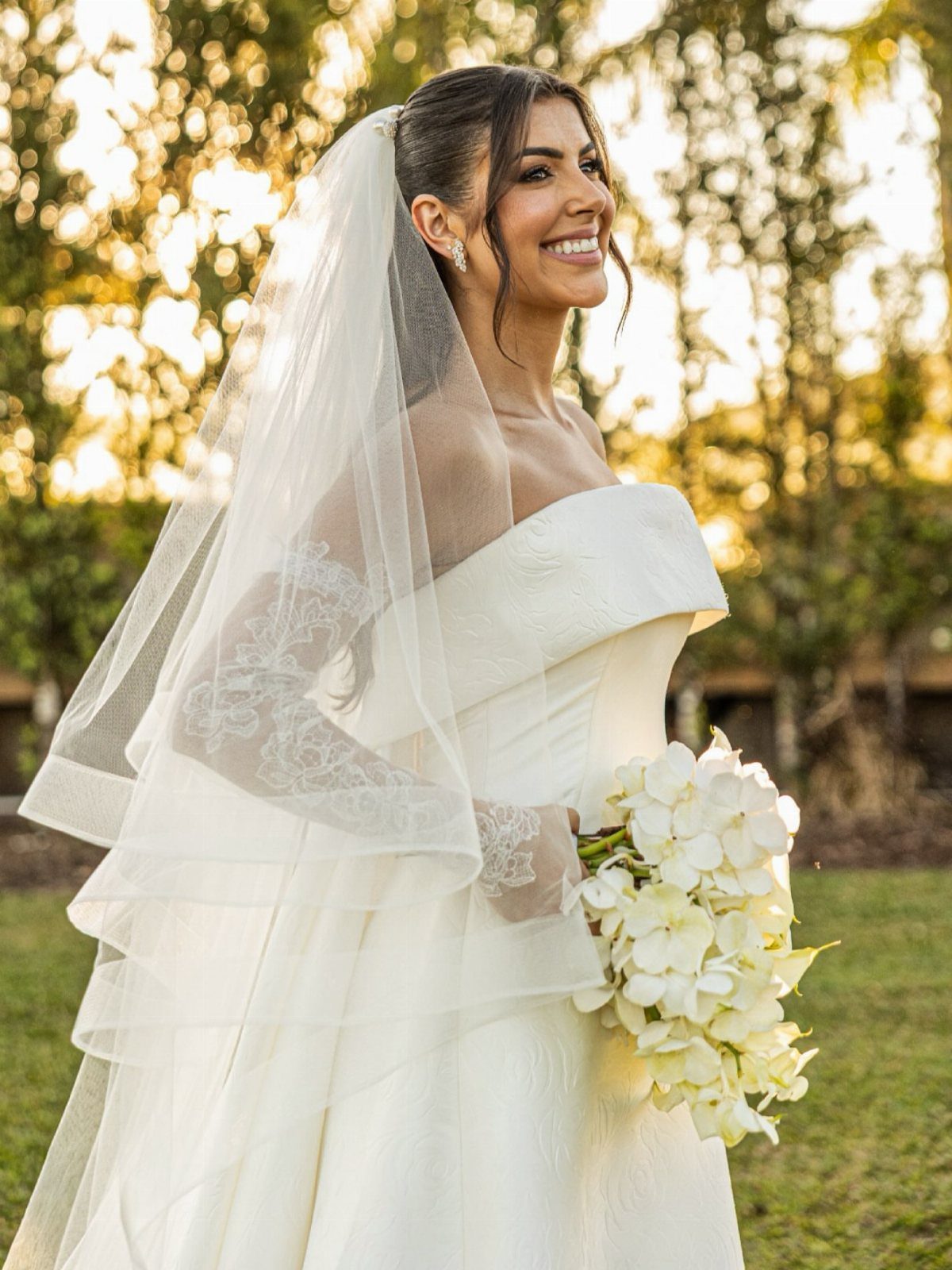
Turn your shoulders away from the camera, then look back toward it with your chin slightly down. The pose reads as a pause in a story, which gives the picture a film-still feel.
Hold your bouquet low and loose in front, and let the veil fall behind you.
I would pick a grassy spot with trees behind, so the green stays soft. Try a smile and a calm, closed-mouth look, then choose between them later.
17. Front-Hug Pose
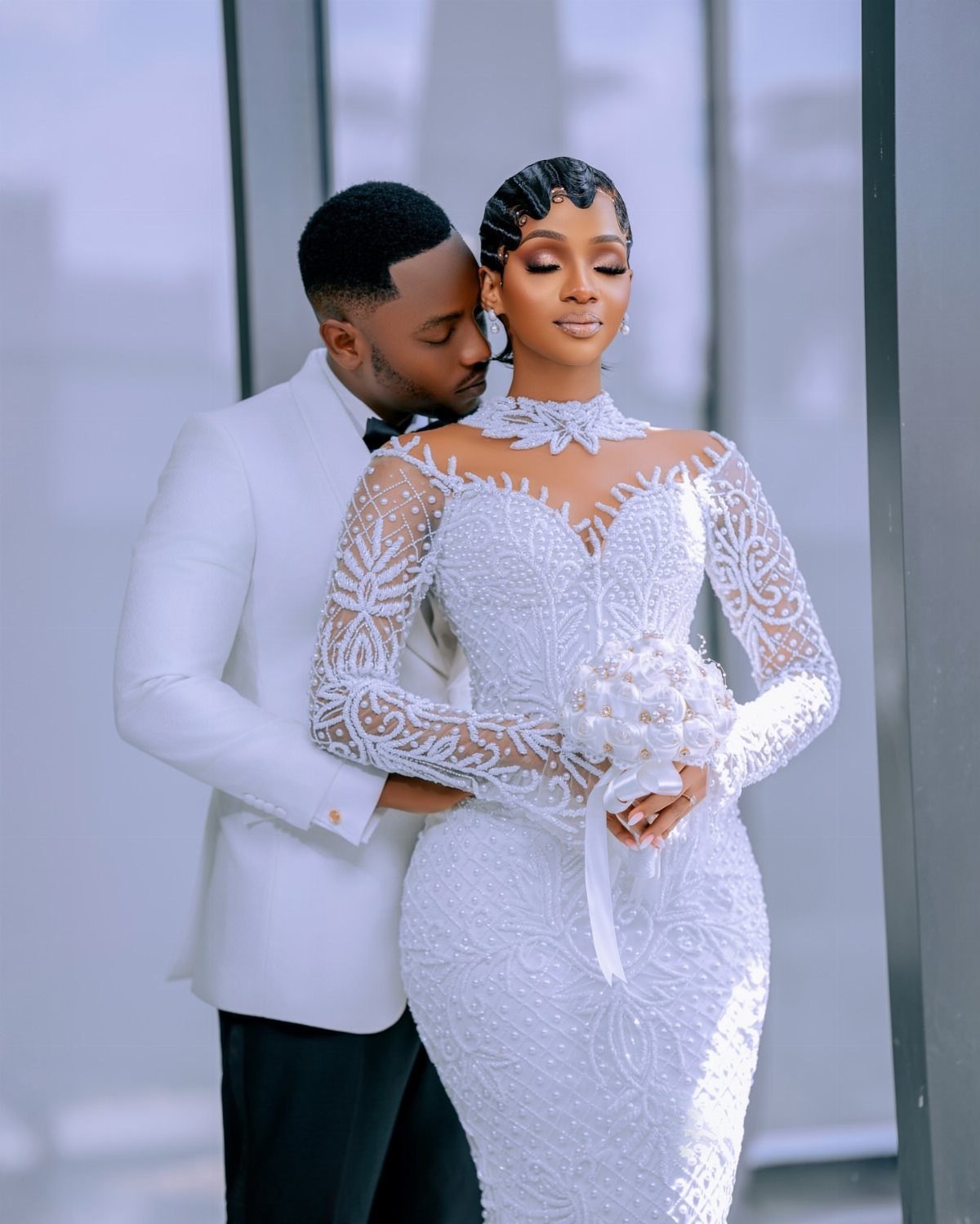
He stands behind, wraps both arms around her waist and rests his chin near her shoulder, and she leans back into him.
The pose looks sheltering and calm, and a beaded lace bodice shows up well when his arms stay low and out of its way.
Let her tilt her head toward his.
I would use a clean backdrop like a glass wall, so nothing competes with the two of you. Keep your grip soft, as a tight squeeze creases the dress.
18. The Royal Maharaja Pose
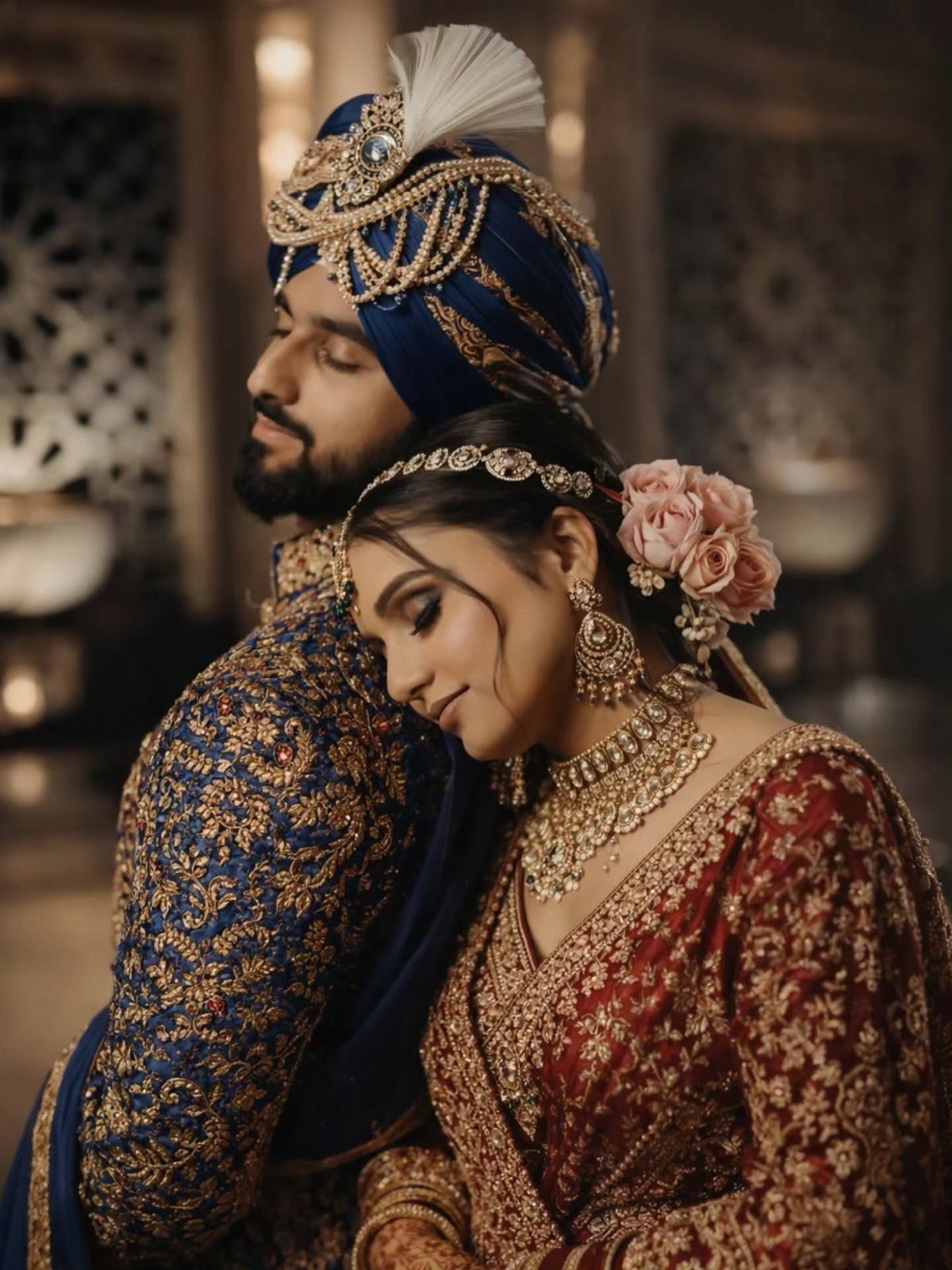
Sit or stand close, shoulders touching, with the groom slightly forward and the bride tucked beside him.
The pose suits richly layered clothing, like a sherwani with a turban or a heavily embroidered lehenga with jewelry, because it gives every layer room to show.
Keep your chins level and your posture tall, which is what makes it look regal. I would choose an indoor spot with a plain, warm background, then ask for one stately frame and one soft, close one.
19. Seated and Standing Studio Portrait
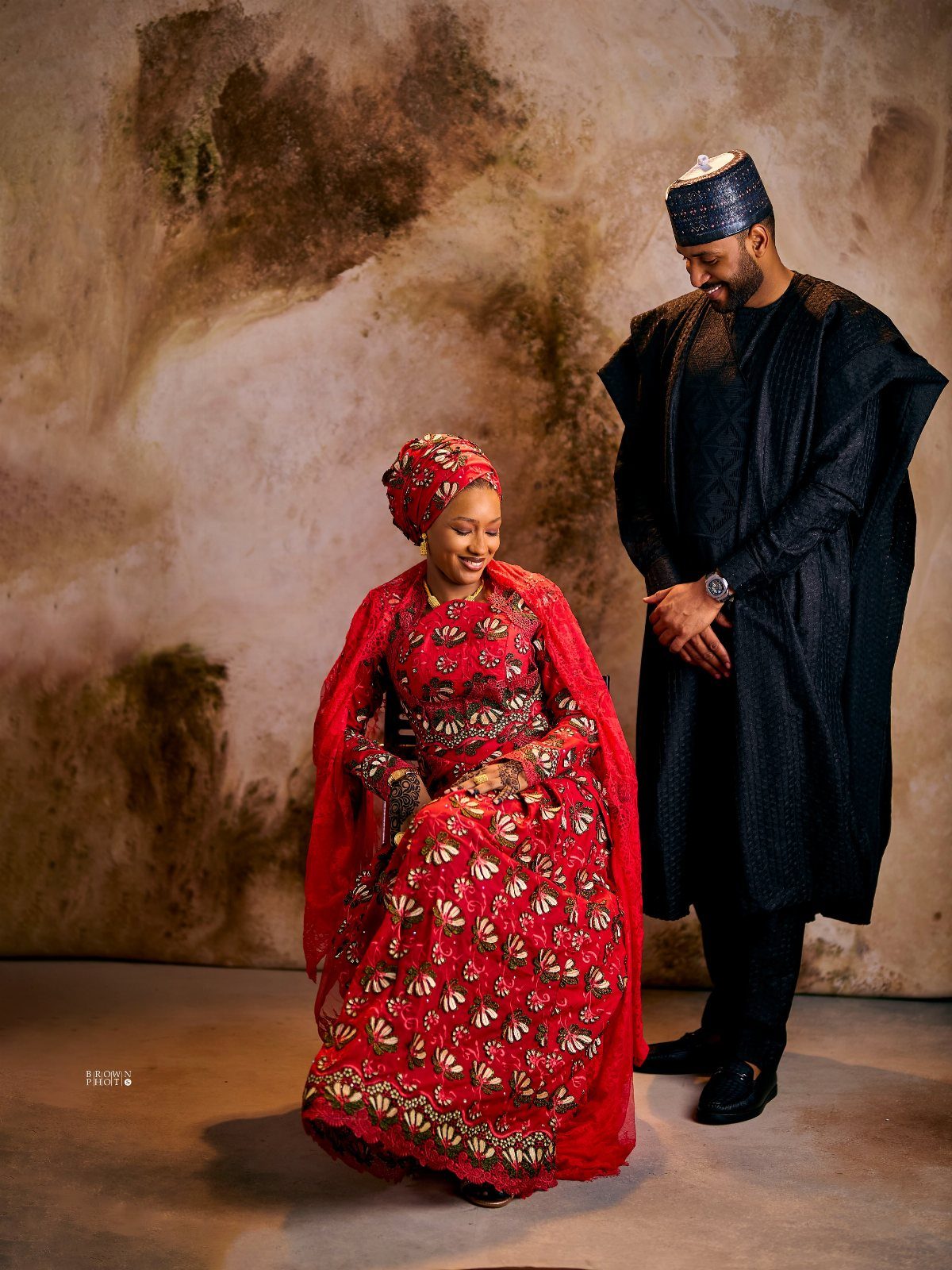
Formal studio portraits reward stillness. One of you sits on a stool or chair while the other stands beside or just behind, and that difference in height gives the frame a natural hierarchy.
Keep the seated partner’s back straight and hands resting in the lap.
The standing partner can place a hand lightly on the shoulder or stay at the side. I would choose a plain, textured backdrop, since rich fabric and color look best with nothing competing.
20. Flower Swing Pose
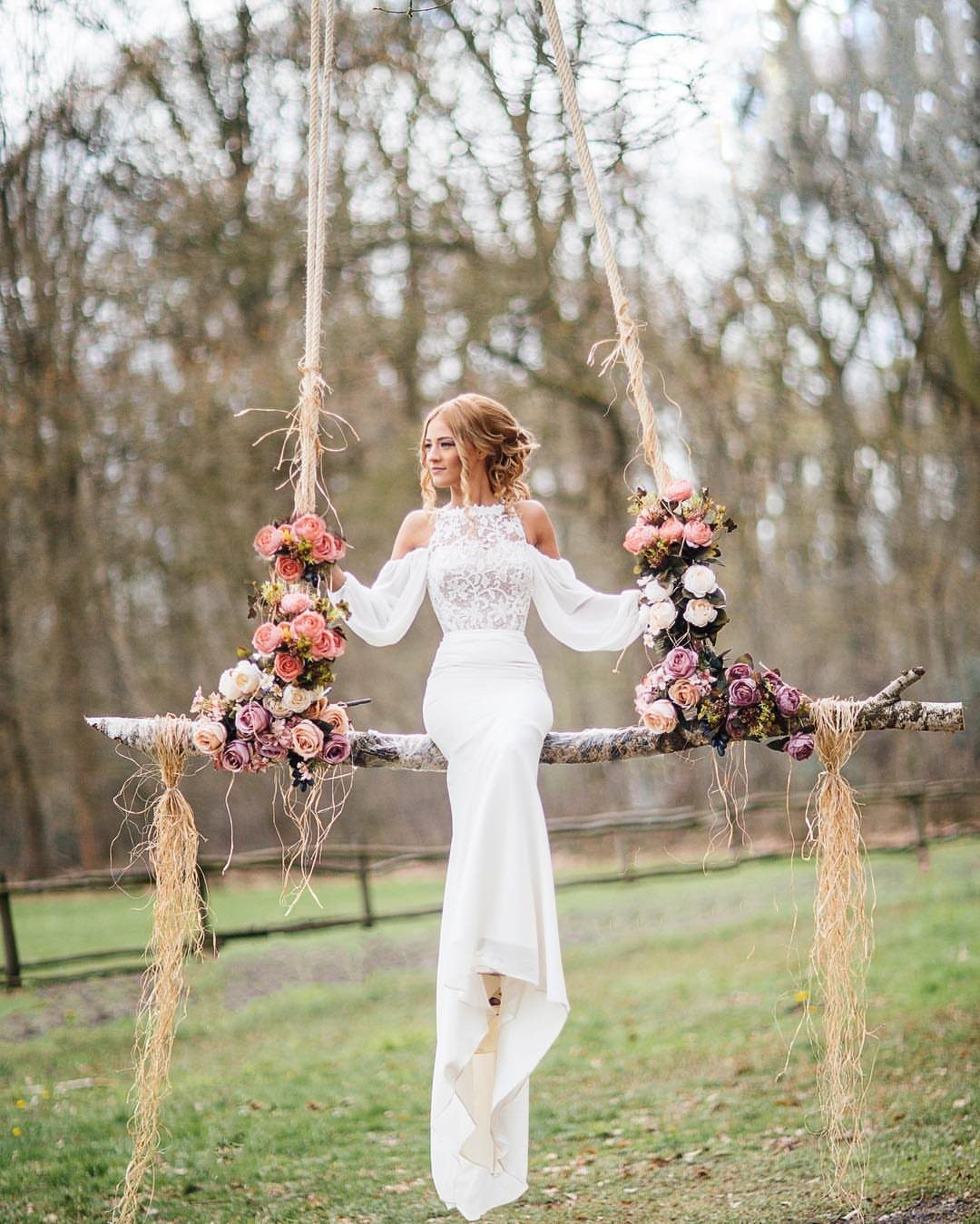
Standing on a flower-covered swing puts the bride a little above the ground, and a lace dress gets a soft, storybook frame against trees.
Hold the ropes with both hands and keep your feet planted so the board stays steady.
I would ask the photographer to shoot from a bit below or at eye level, so the flowers and the dress both stay in view. Let someone hold the swing still before you step up.
21. Ribbon Send-Off Kiss
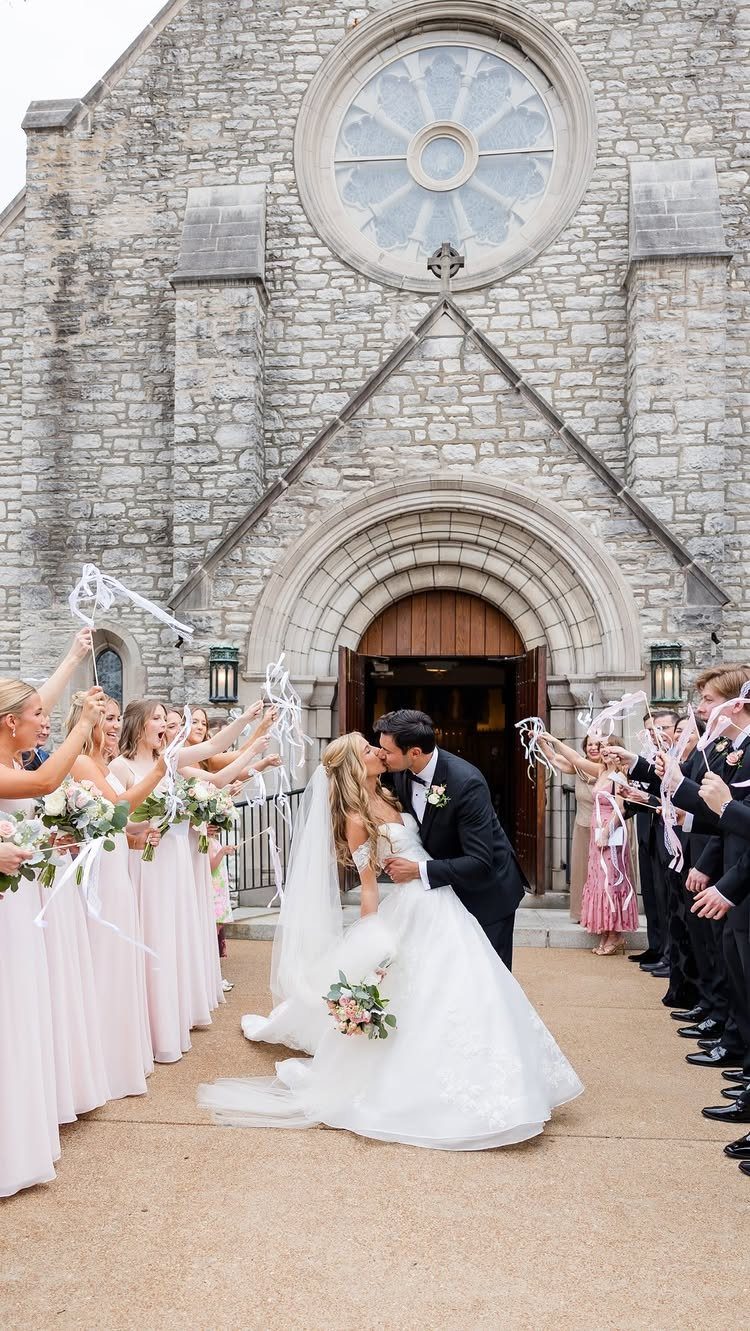
Guests waving ribbon wands turn an ordinary exit kiss into a frame full of motion, with the wedding party gathered around you as the church door closes behind.
Before the kiss, tell your photographer where the wedding party will stand so the ribbons fill the edges.
The couple’s photographer said to hold the kiss for 5 seconds, and I agree, since ribbons need that long to flutter into the frame. Hand out the wands a few minutes early.
22. Groom Kneeling on the Dance Floor
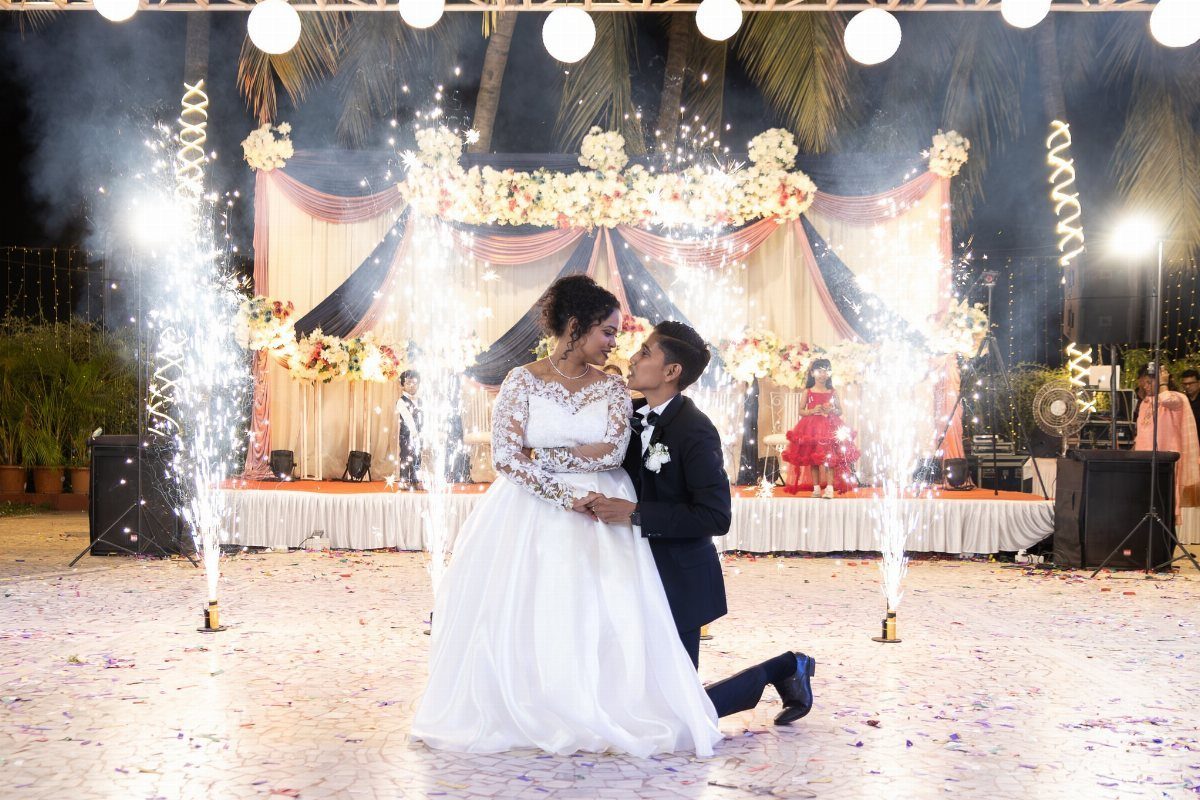
Kneeling on the dance floor flips the usual order: the groom drops low, holds her hands and looks up while she stands in her gown above him. It reads as devotion without a word.
Pick a moment when the floor is clear and the sparklers or lights are glowing behind you.
I would keep it brief, a few seconds, and let guests stay in the background so the room feels alive. Check that the floor is clean before he kneels.
23. View from Behind Toward Window
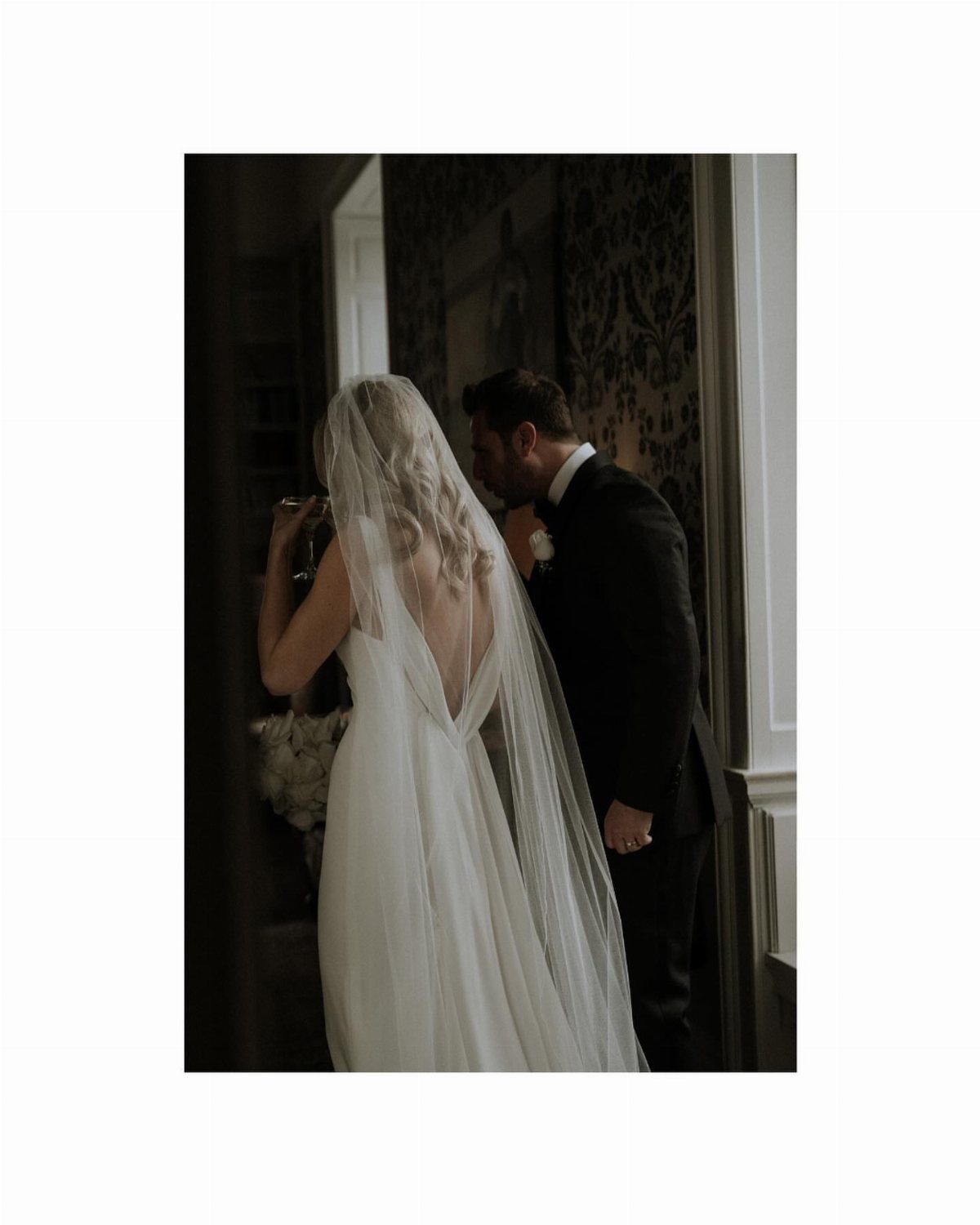
Shot from behind, a couple standing shoulder to shoulder and facing a window turns the picture toward the room and the light, so faces matter less and a bright window with good natural light does most of the work.
A veil and a dark suit read as clean shapes against the glow.
I would choose a room with patterned wallpaper or other texture, since it gives the quiet frame something to hold.
Tips for Natural Posing
Tension shows first in the shoulders and the face, so take one slow breath before the shutter clicks and let both drop. A stiff body reads as a stiff photo, and no pose fixes that.
Pick postures that suit your own build and personality.
A loose lean against your partner, a laugh you did not plan, or a hand tucked into a pocket will read better on camera than a stiff pose you never believed in.
Laughter loosens everything at once.
If a pose feels wrong, say so. A good photographer will swap it for something you’re comfortable with, and a pose you resist rarely looks good anyway.
Importance of Practice
A few evenings in front of the bathroom mirror, trying out the poses you saved, will show you which ones feel awkward before the photographer ever raises a lens.
Try different smiles and head angles until you find the ones that feel like you.
Taking turns shooting each other on your phones works too, and the results show quickly which side of your face and which angles you favor.
An engagement shoot is the best rehearsal I know. It gives you real camera time, and you walk into the wedding already used to being photographed.
Wedding portrait time is usually short, so learn variations on one basic pose. Change where your hands go or where you’re looking, and a single setup gives you several different frames.
Using the Environment
Look at the venue’s surroundings before you decide where to shoot. Trees, water, fields or an open view can serve as the backdrop, and they put the two of you in a calm, natural setting instead of a blank wall.
Scout the grounds with your photographer ahead of time, and mark two or three spots you like. Then try different angles in each one, since a small shift in position can change the whole background.
Choose scenery that supports the pair of you rather than competing with it.
Frequently Asked Questions
What poses work best for camera-shy couples?
Walking hand in hand, shot from behind, is my first pick, because nobody has to look at the lens.
A relaxed chat at the reception table makes a third option, with the photographer keeping a distance while the two of you talk and tease.
What are some tips for looking good in photos?
Right before the shutter clicks, take one slow breath and let your shoulders and jaw loosen, since tension shows up there first.
Choose postures that fit your build and your personality, such as a loose lean into your partner or one hand tucked in a pocket.
A real laugh relaxes the whole face at once, so think of something funny instead of forcing a smile.
A few evenings of practice in front of a mirror, or an engagement shoot, will show you which angles and expressions feel like you.



