The options range from a sleek high ponytail with pearls to an infinity braid that eats up chair time, and from soft short curls to a pearl jada and a round bun with gajra.
Your outfit should pick the winner: a heavily worked lehenga or sari pairs well with something like the classic bridal bun, while a detailed back or neckline wants a sleek low bun or side-swept style that keeps it in view.
1. Side-Swept Style
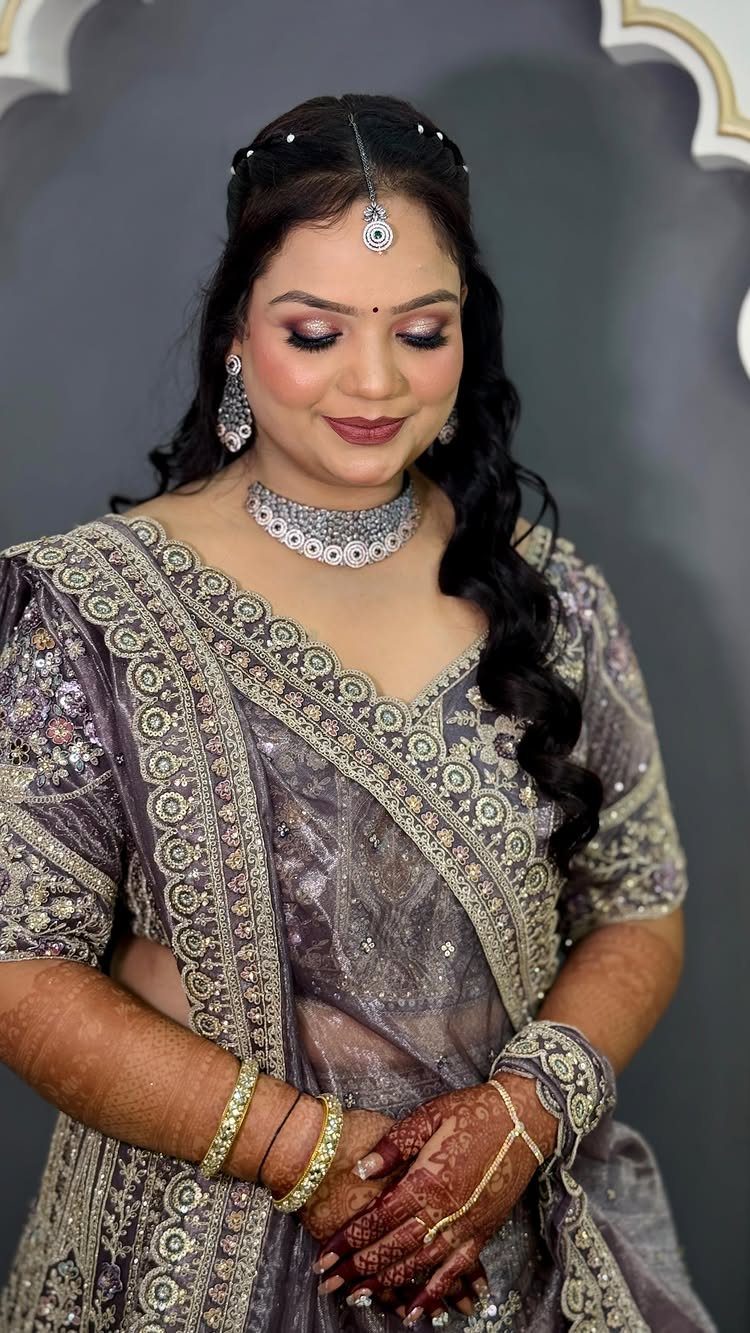
Long curls swept to one side give a grey embroidered outfit a softer, more modern frame than a center-parted updo would.
The sweep also leaves one side of the neck and shoulder bare, so earrings and a necklace get a clear line.
This one works for anyone who wants to look like herself instead of a catalog bride. Ask your stylist to pin the swept side firmly, since loose curls tend to drift as the day goes on.
2. Sleek Low Bun
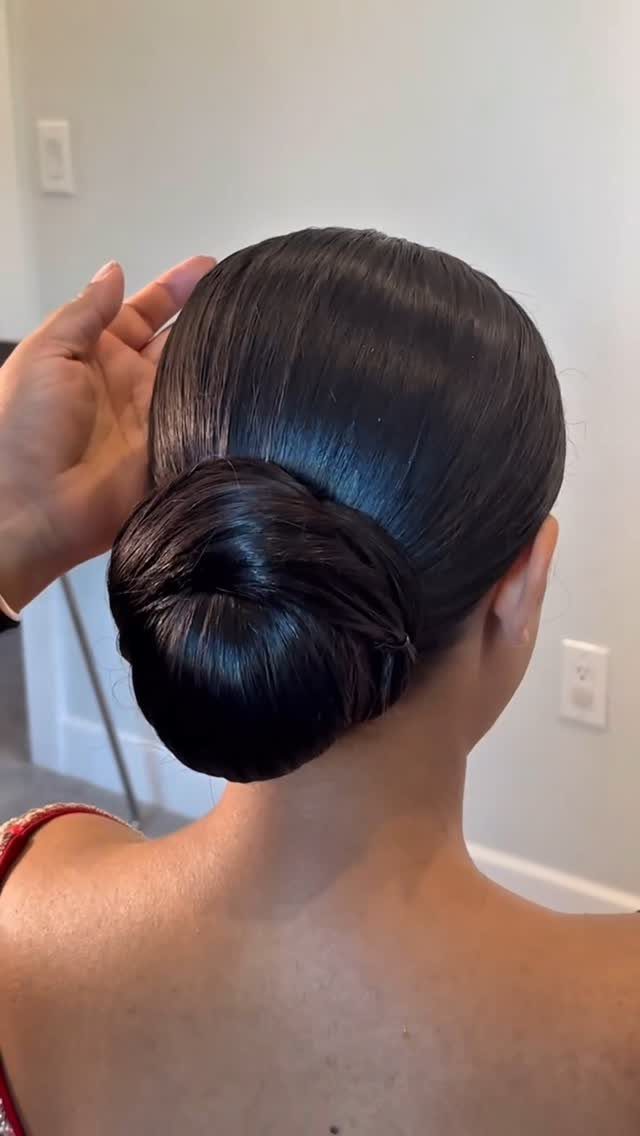
A low bun on dark hair reads as polished before you add a single accessory.
Because the hair is smooth and close to the head, the back of a red outfit stays fully visible, which matters if the blouse or neckline has detail.
At your trial, show your stylist a photo of the back view, not just the front. Sleek buns live or die on the smoothness at the crown, so ask to see that angle in a mirror.
3. Classic Bridal Bun Hairstyle
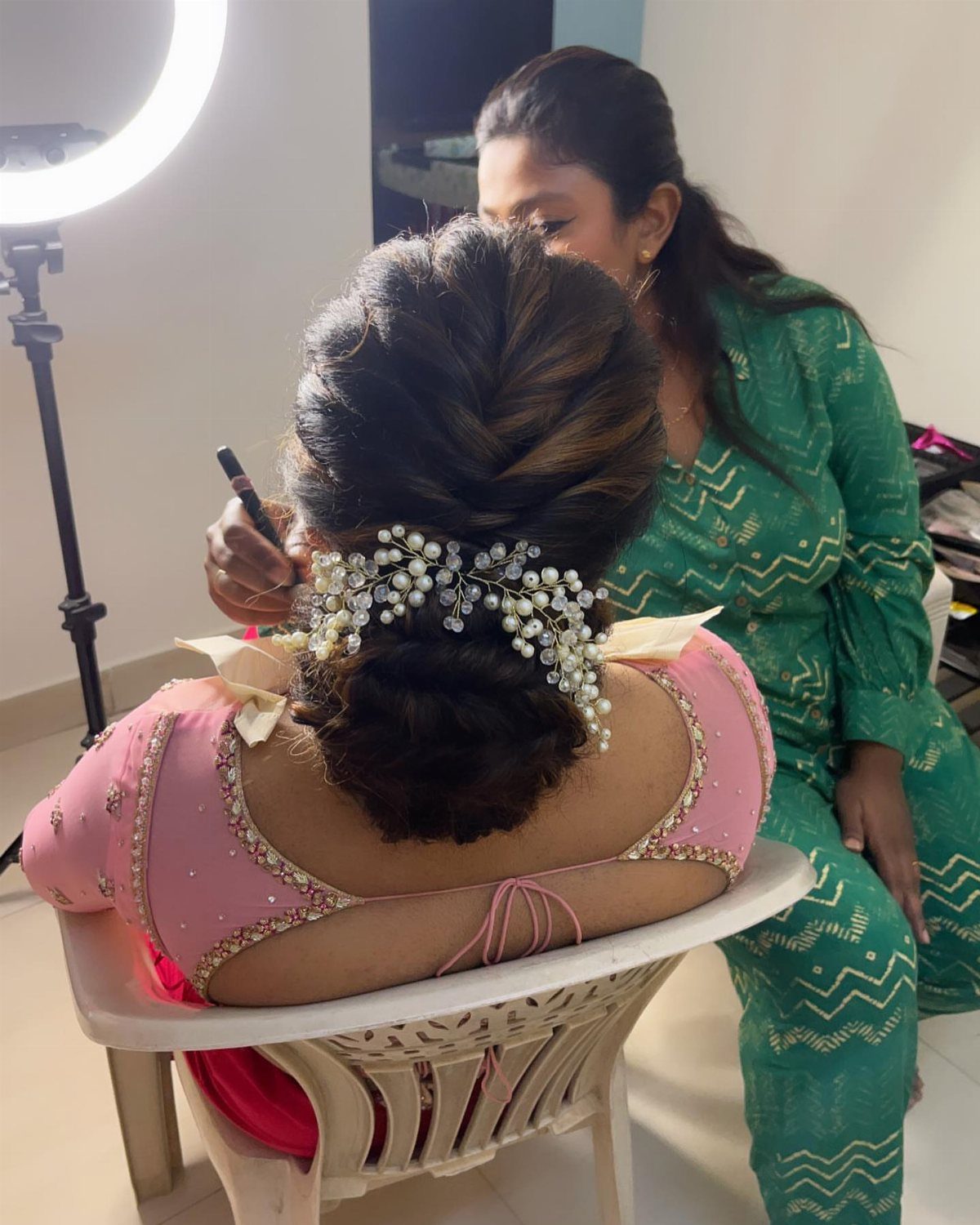
Volume is what makes a bridal bun look bridal, and a pearl accessory pinned into it is enough decoration for most outfits.
If your lehenga or sari is heavily worked, this is the style I’d choose, since it frames the outfit without competing with it.
Plan to sit through the styling with patience; a full updo like this is built in sections. Book your trial early enough to try the pearl piece in different positions.
4. Traditional Flower-Adorned Braid
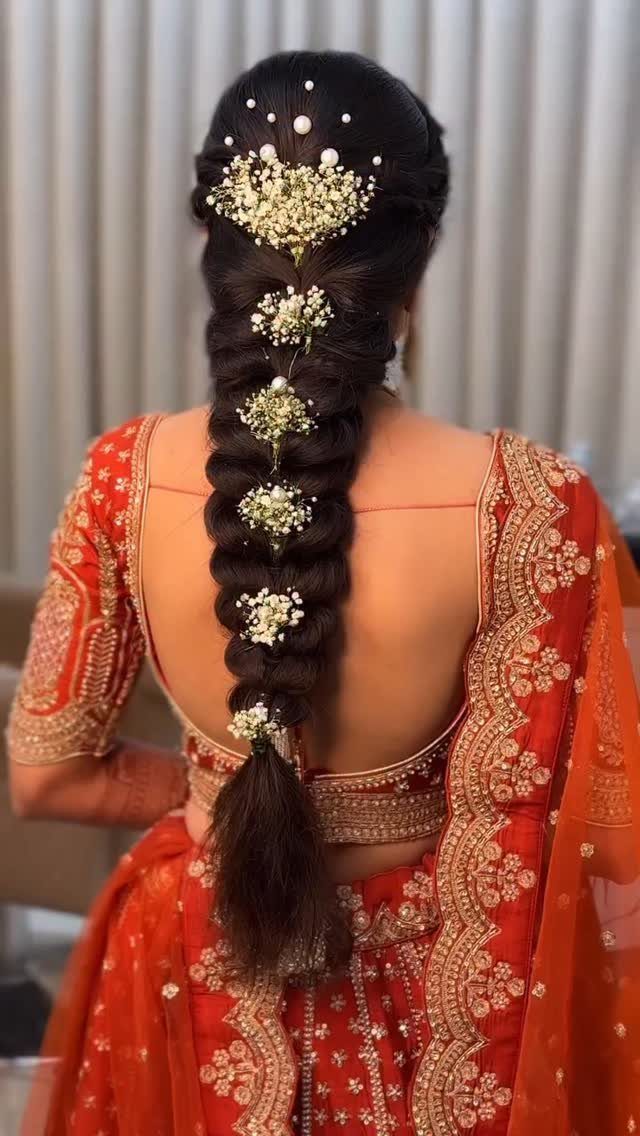
Few looks say traditional bride as clearly as a long, thick braid dressed with white flowers and pearls.
Thickness is the part to plan for.
If your hair is fine, ask your stylist how she would build the braid’s fullness, and decide at the trial how much floral you want, since a braid can look crowded if the flowers sit too close together.
5. Twisted Knot with Floral Curls
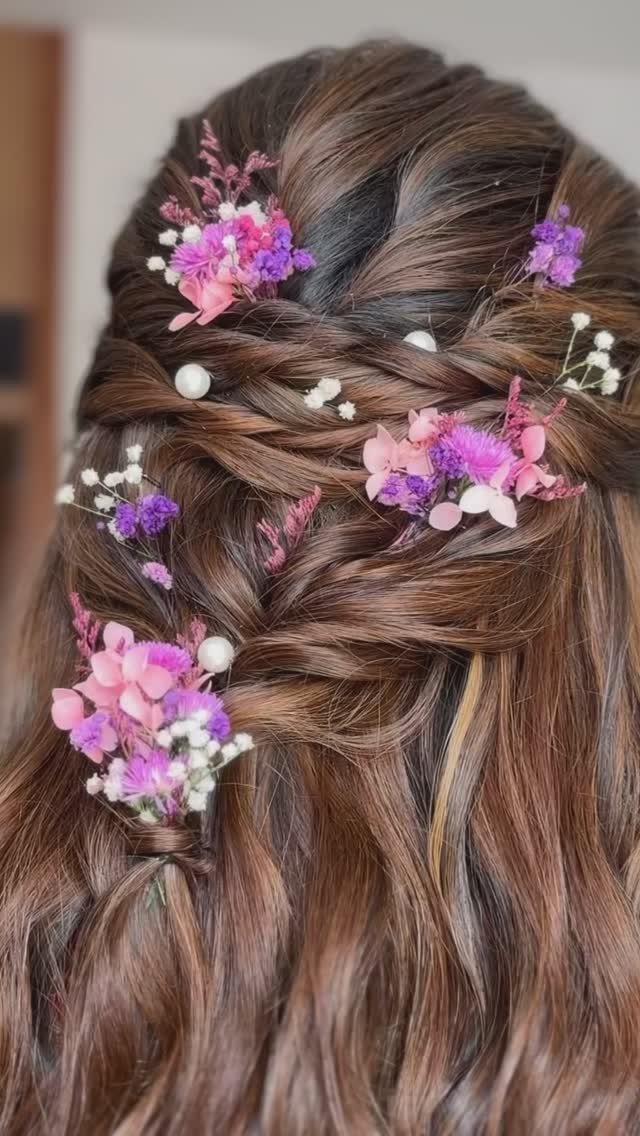
Twists pinned into a knot, with small pink, purple, and white flowers tucked between, make a quieter option than a full bridal bun. Wavy hair gives the twists texture, so they hold their shape with less fuss.
Keep the flowers small and spread them out. Pearls mixed in add a little shine without making the whole thing feel heavy, which suits a simple look.
6. Open Hair
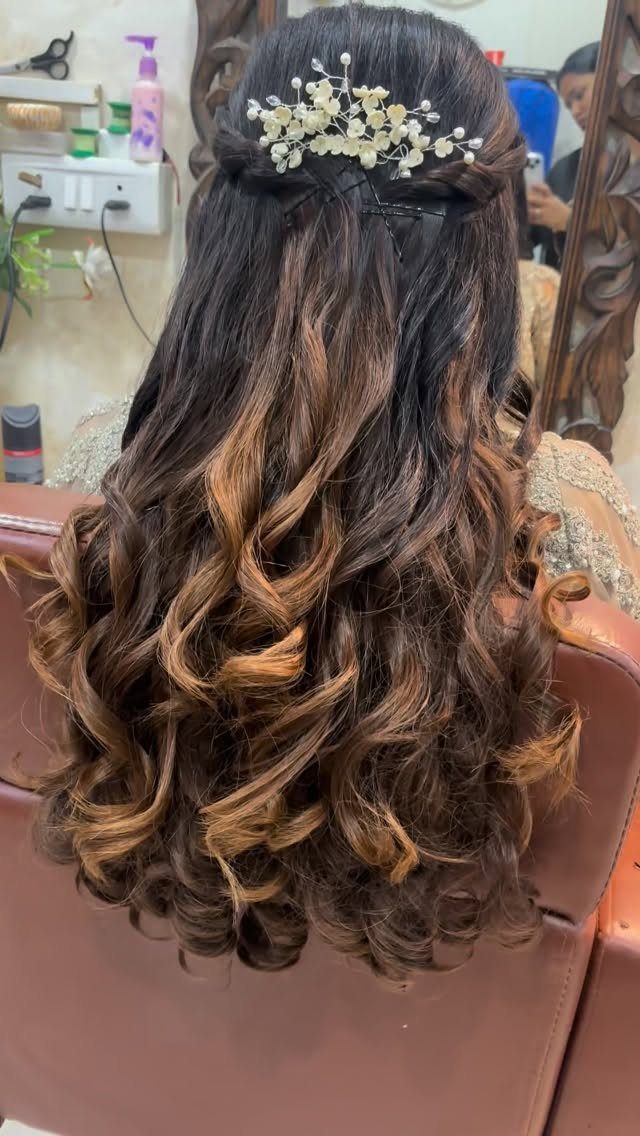
Wearing your hair open is still the less common choice for an Indian bride, though it is catching on.
Loose hair has no structure to lean on, so ask your stylist to set the curls well. Place the floral piece where it will stay put when you hug people all night.
7. Open Waves with Accessories
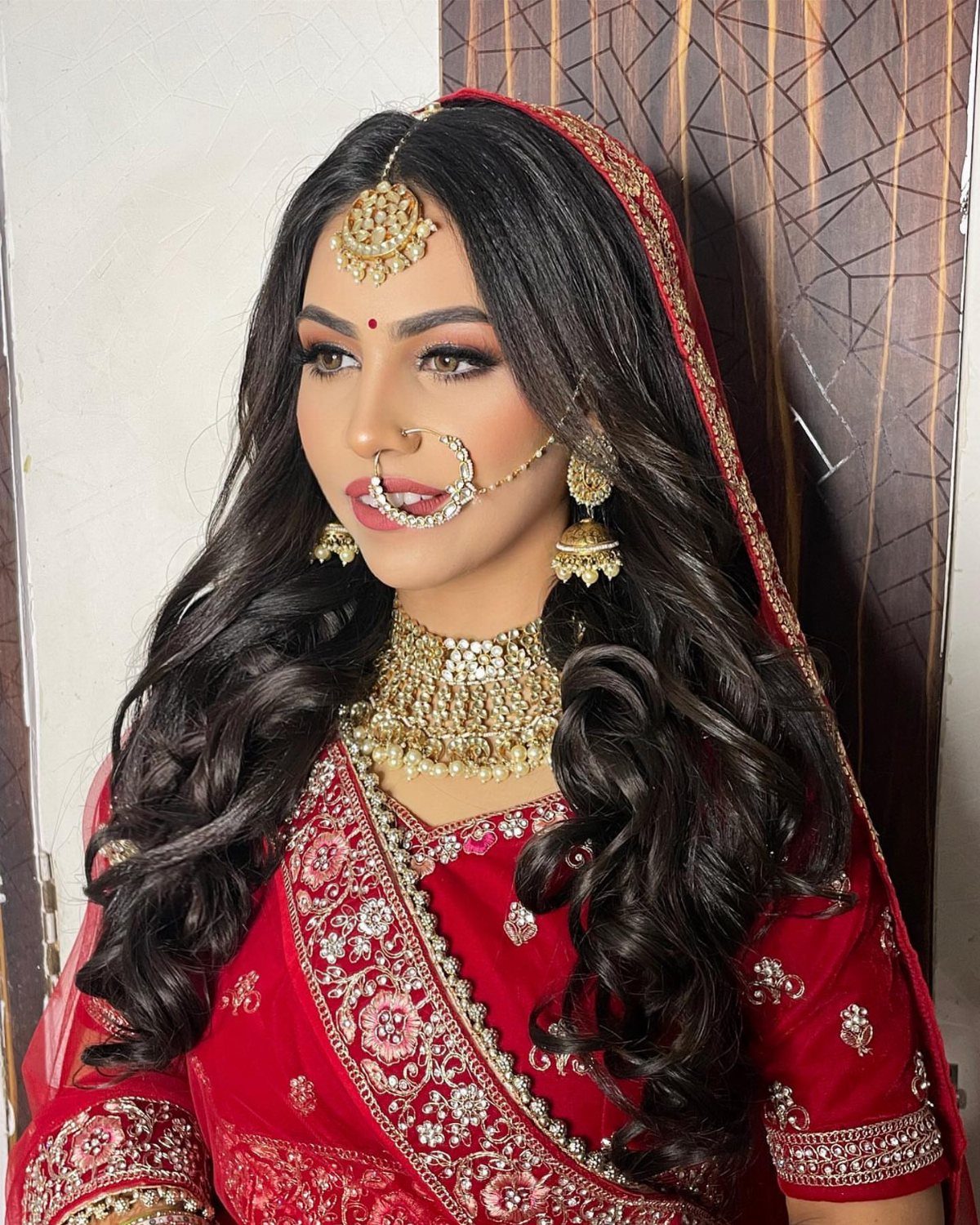
Loose waves with a maang tikka make the most of the forehead jewelry, since the hair frames it instead of covering it. The look leans fairy-tale, and red and gold hold their own against all that movement.
Ask your stylist to set the waves so they last through the ceremony, and test the tikka at your trial. A heavy piece can slide on smooth, loose hair, so have it pinned where the hair parts.
8. Soft Short Curls
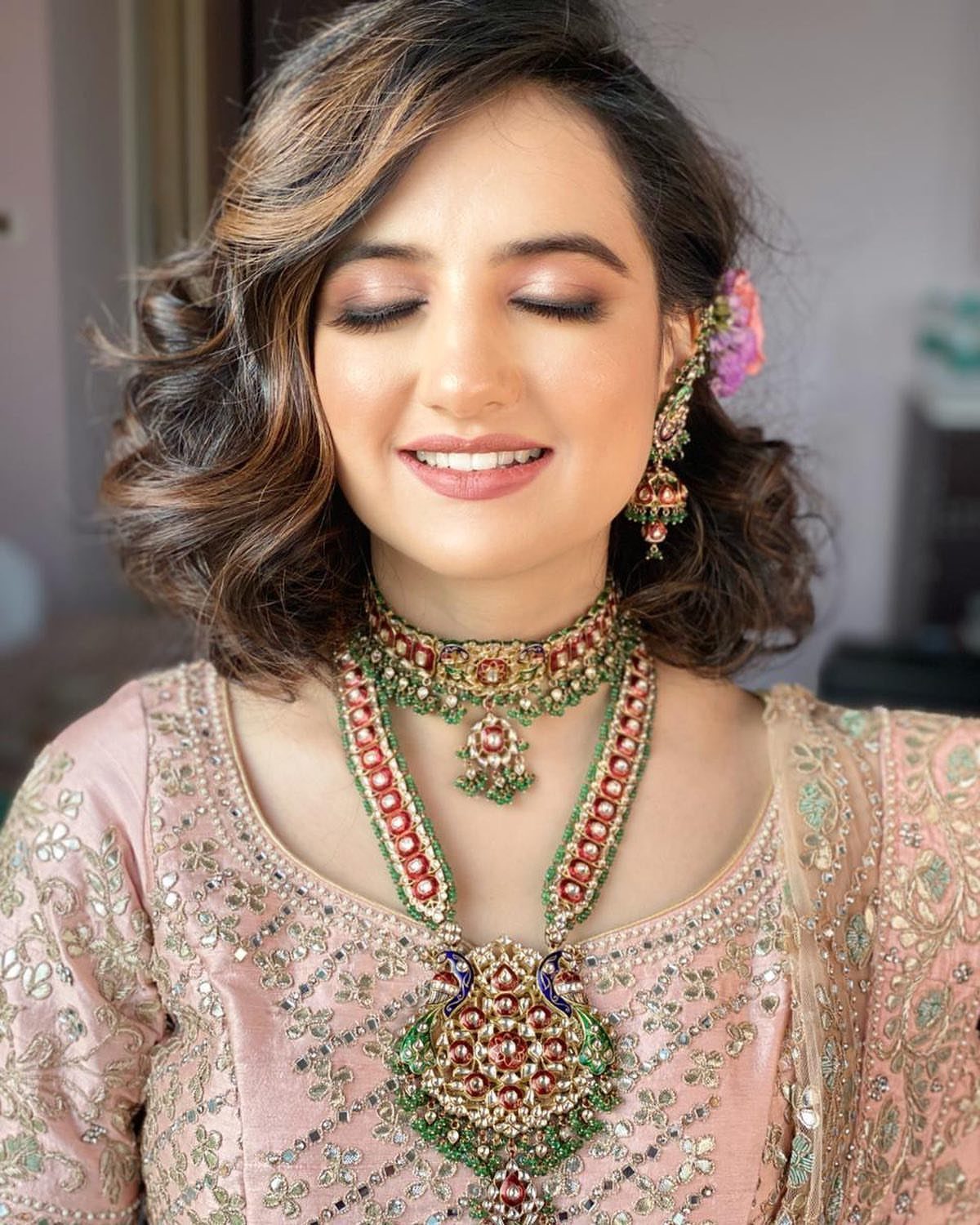
Short hair can still look full and bridal, and curls are how I’d get there.
They add volume and a soft prettiness that a straight cut can’t, and they sit well with the jewelry a bride wears with a pink embroidered outfit.
Bring your jewelry to the trial. With short hair, earrings and a necklace do more of the work, so check that the curls leave them in plain view.
9. Round Bun with Gajra
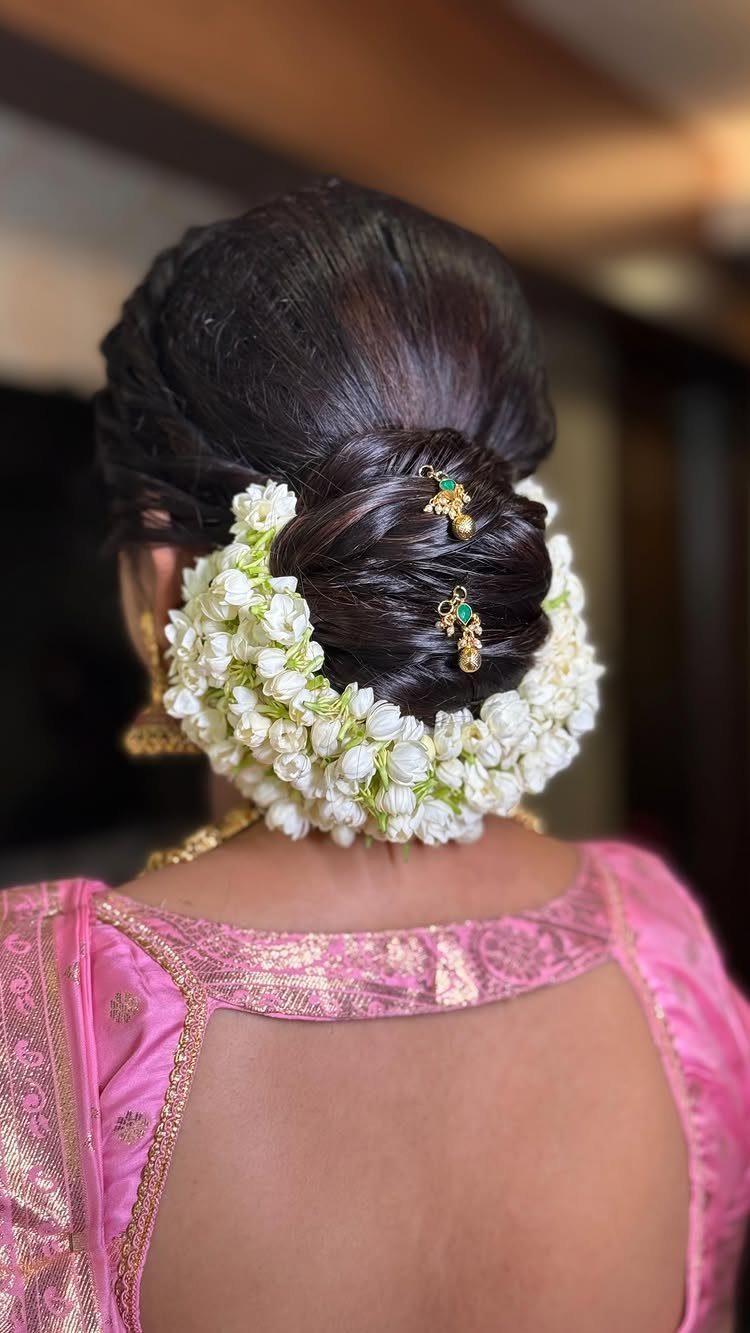
A sleek round bun wrapped in a ring of fresh jasmine is my pick when you want flowers without committing to a full floral braid.
Check with your stylist or florist on how the gajra will be attached, and when it will be fitted. Fresh flowers go on last, so leave time at the end of your morning schedule.
10. Pearl Jada!
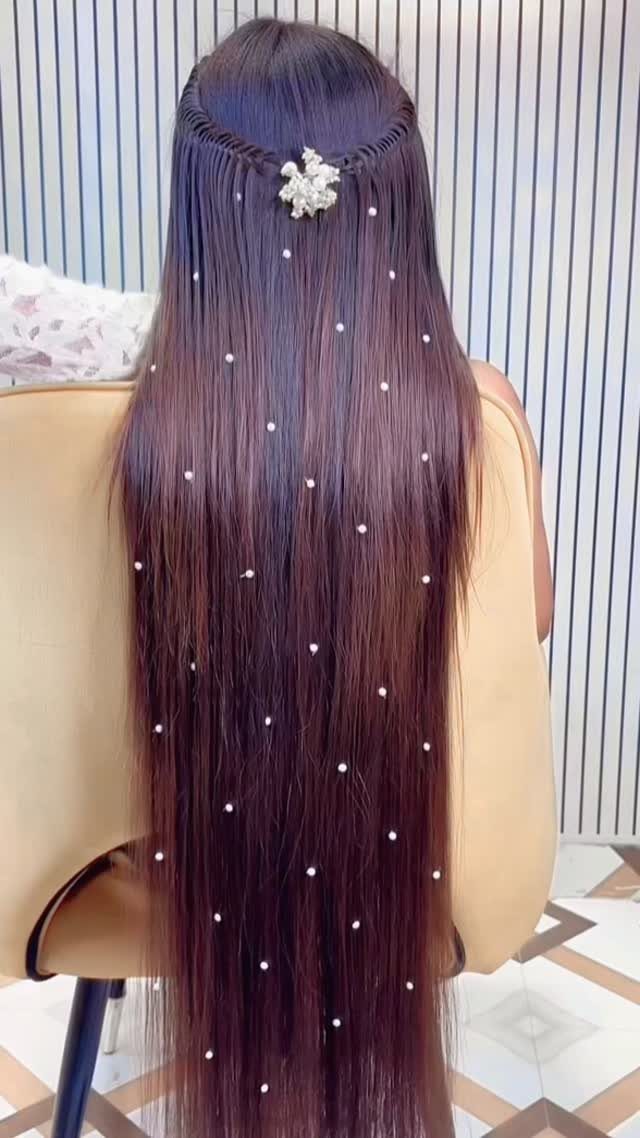
Minimal is the word for this one. Long, straight hair carries small pearls and a jeweled clip, and pearl-encrusted billas do the decorating, so nothing else is needed.
Straight hair shows every gap, so ask your stylist to space the pearls evenly. This suits a bride with long hair who wants shine without volume or heavy flowers.
11. Embellished Bun with Braided Frame
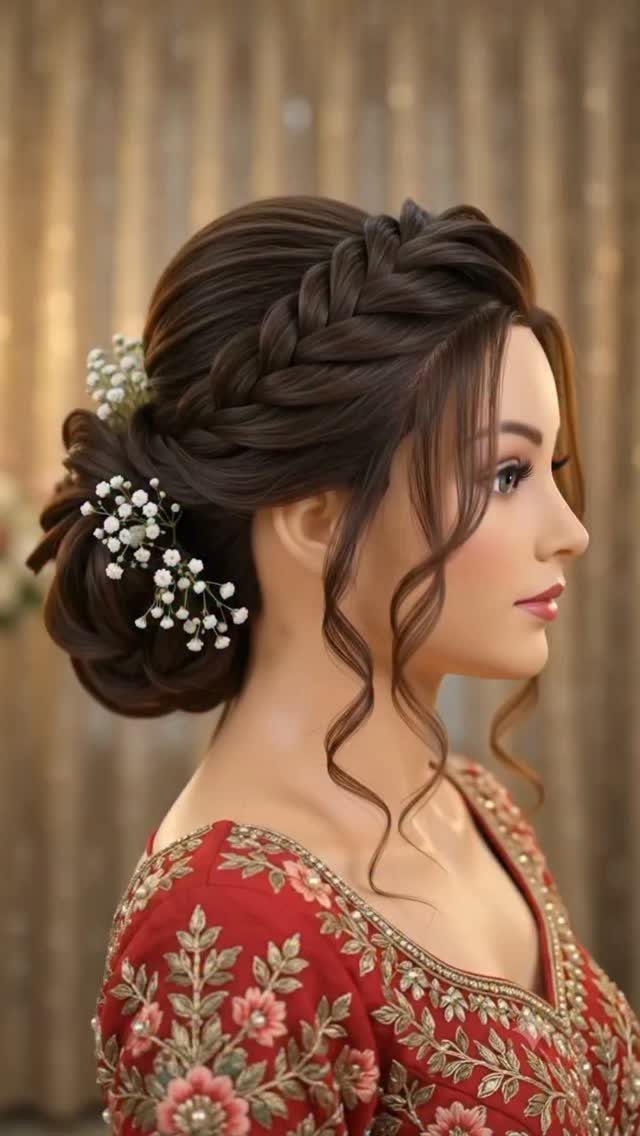
Thin braids frame a low bun here, and small white flowers and loose curls soften the edges. It is more detailed than a plain bun, yet still looks elegant.
Because the braids and curls are built in layers, tell your stylist early that you want this look. At the trial, decide how many curls you want falling free, since too many can blur the braided frame.
12. Reception Indian Bridal Hairstyle
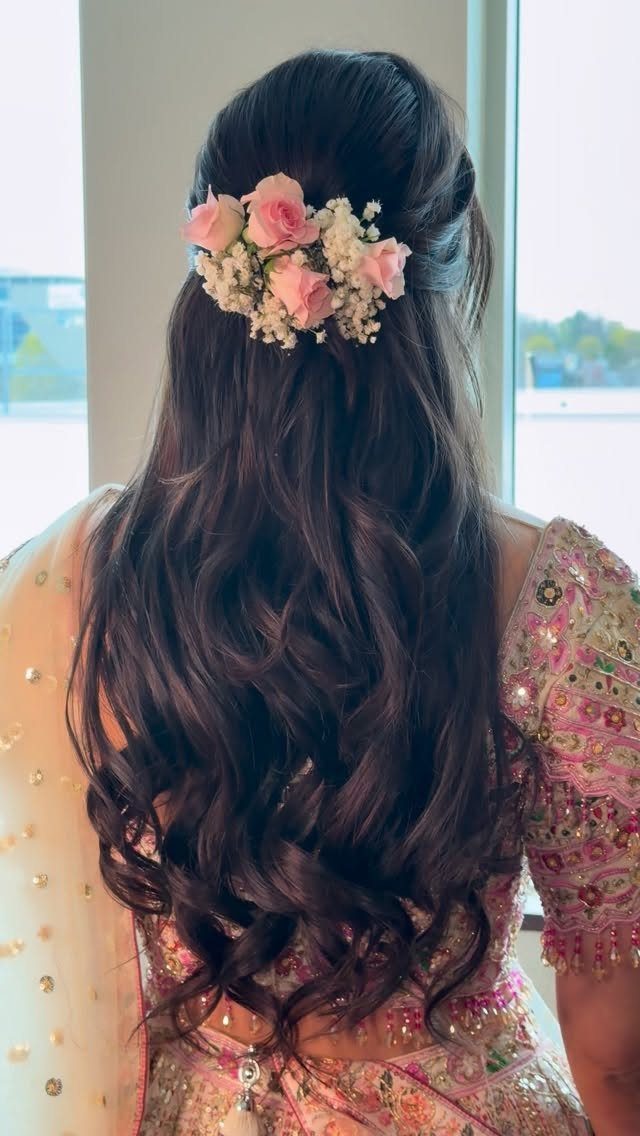
It feels modern and glamorous, and it reads as a clear change from a ceremony updo.
Have the flowers pinned at the half-up section, where they will stay put when you dance.
13. Bouffant Waves
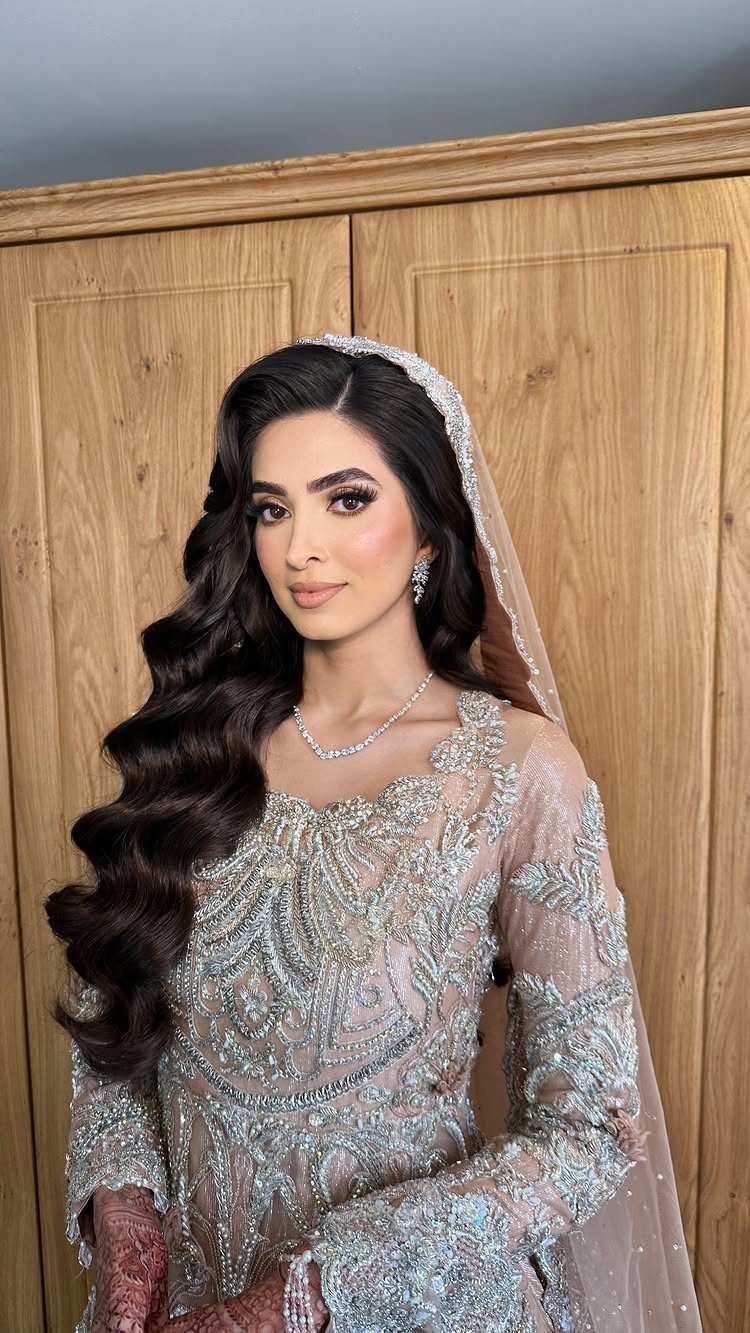
Big, dark waves with lift at the crown give a silver-embroidered outfit and veil a soft, relaxed frame. Volume is the whole look, so tell your stylist at the trial that you want it built up and not just curled.
Wear the veil to that trial. Pin it below the lift so it doesn’t flatten the crown, and check that the waves still read from the side.
14. Infinity Braid
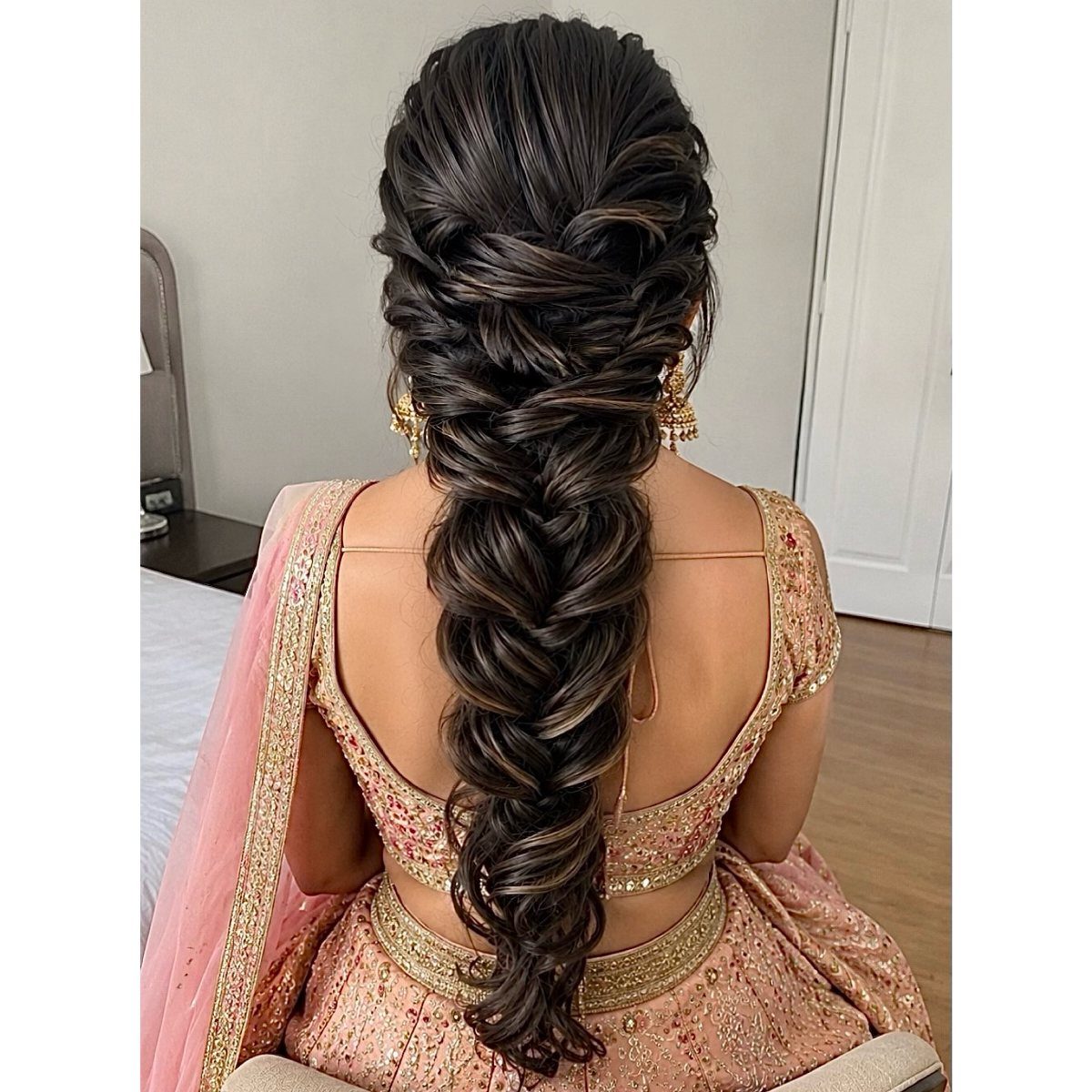
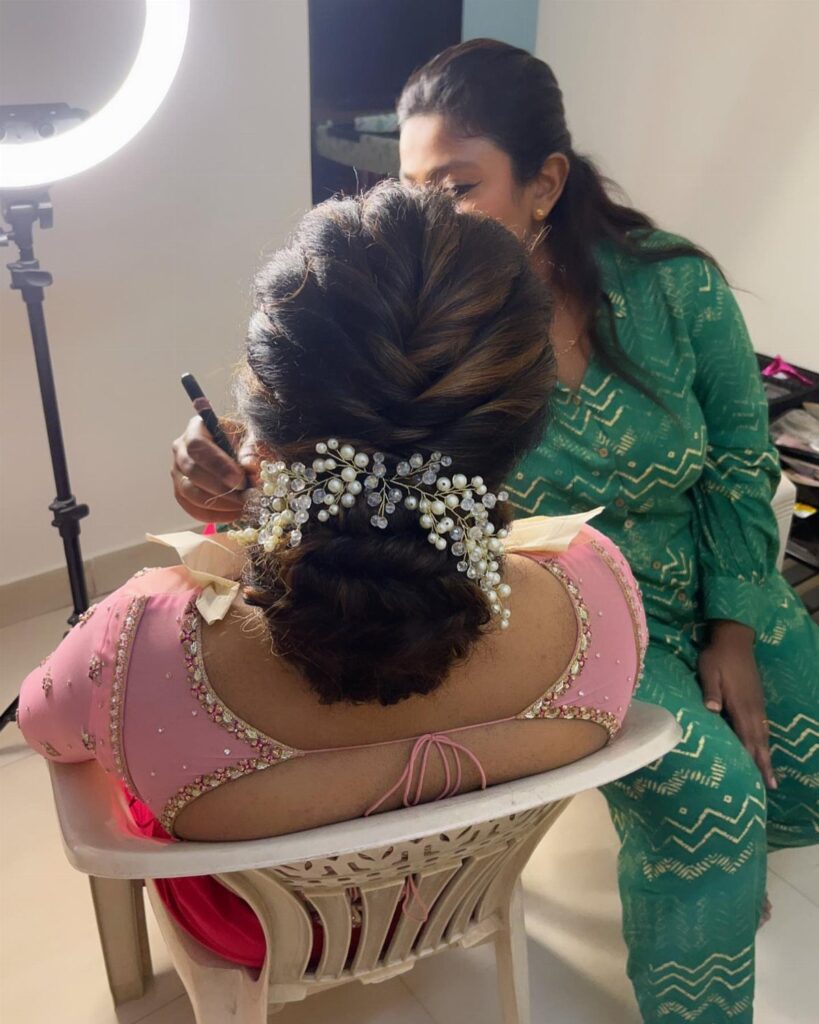
An infinity braid reads as craft more than hairstyle, and a pink and gold lehenga gives it a back view worth showing off. I’d pick it when the braid itself is meant to be the statement.
Braids this intricate take a stylist who has done them before, so ask to see her work. Plan on a long chair time, and book the trial early to settle the fullness.
15. Low Bun with Red Roses
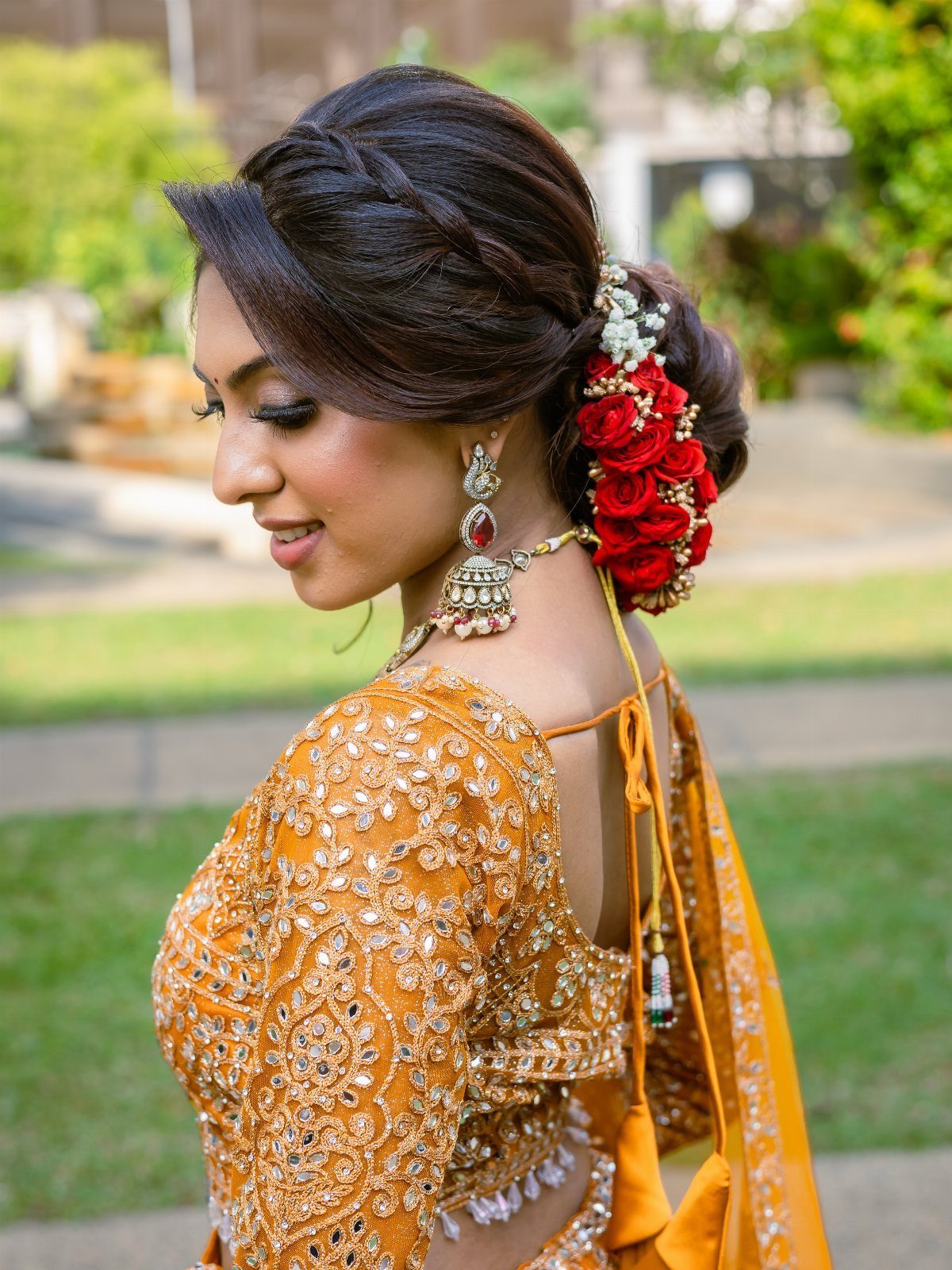
Red roses set in a vertical line down a low bun, with small white blooms between them, give a gold outfit a strong splash of color.
Of the floral buns on this page, this is the one I’d choose for drama.
Check with whoever is doing the flowers on how the roses will be attached, and keep the white blooms delicate so they don’t crowd the red.
16. Voluminous Textured Braid with Gold Jewelry
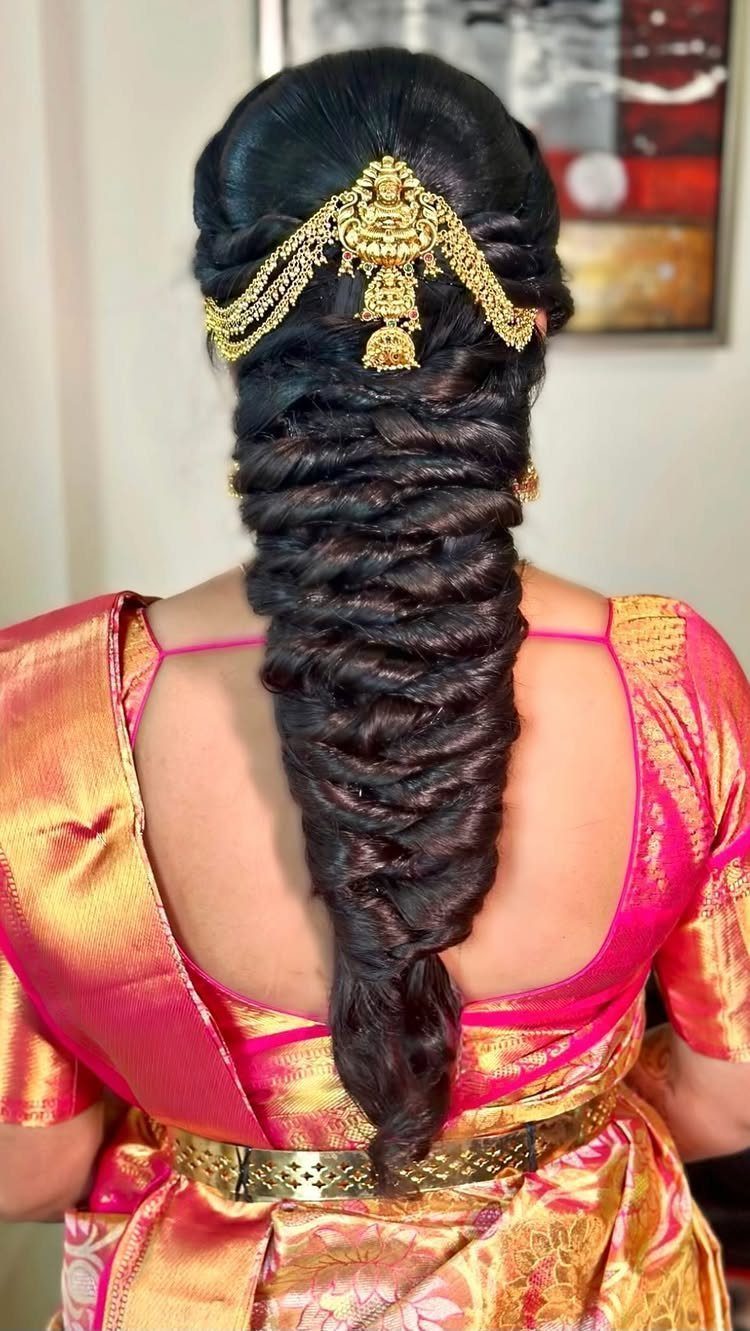
A thick, textured braid with gold hair jewelry suits a pink and gold saree, since the metal picks up the zari without any extra flowers.
The texture is what makes it look full, so the braid should look a little loose, not pulled tight.
At the trial, wear the jewelry you’ll use and check it stays put when you turn your head.
17. Braided Half Updo with Pearl Accents
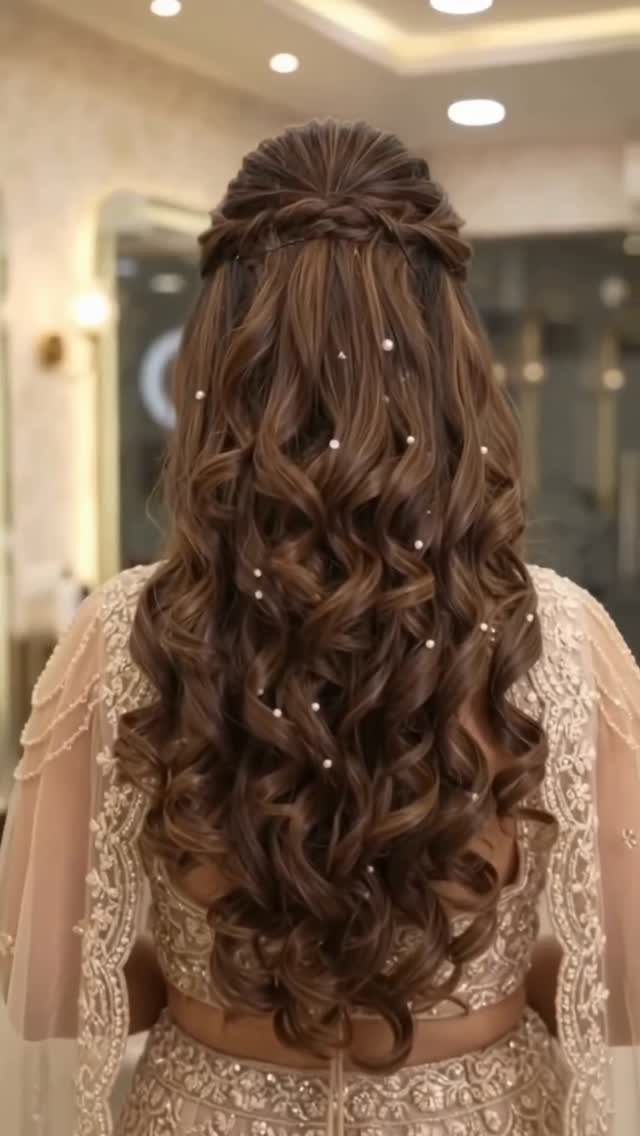
Long curls left to fall, with one braid pulled in and a few pearls scattered through, give a gold outfit movement and a little polish. It holds open hair in place without pinning it all up, so you get both.
Keep the pearls sparse so the curls stay the focus. Ask your stylist to pin the braid firmly, then test the look by tilting your head and hugging someone at the trial.
18. Sleek High Ponytail with Pearls
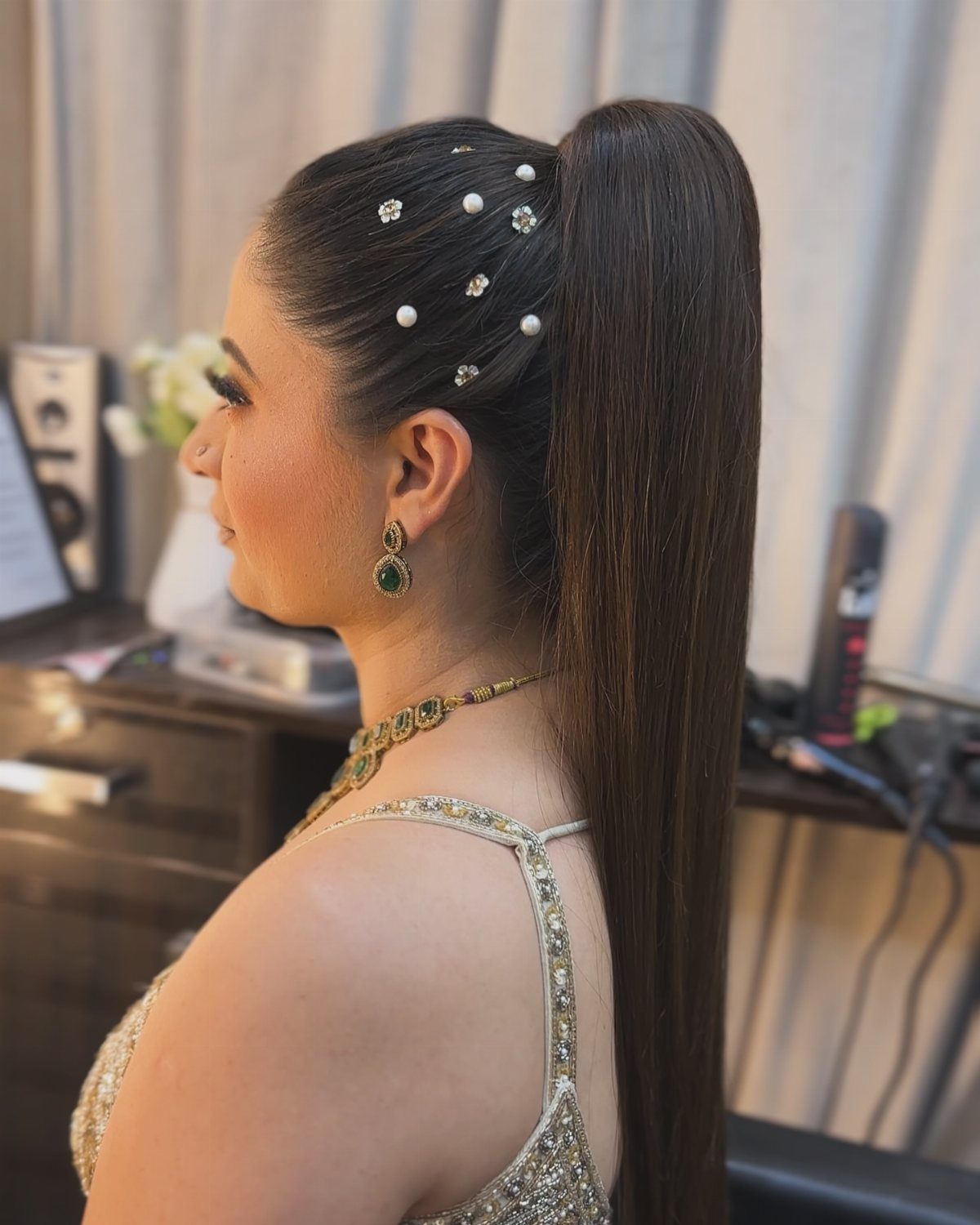
A high, glossy ponytail with a few pearl pins at the side is the cleanest look here. It shows off earrings and a necklace completely, which matters with a gold dress and traditional jewelry.
Place the pins at the trial; I’d keep them to one side so the line stays sharp.
19. Half-Pinned Spiral Curls with Silver Accessory
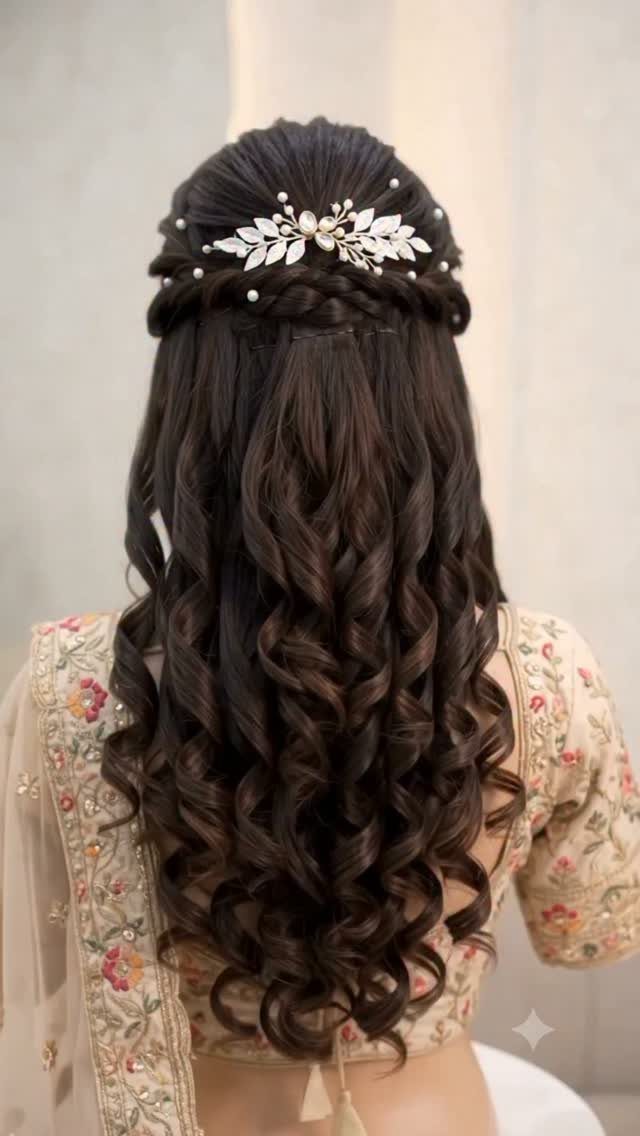
Tight spiral curls pinned back on one side, with a silver leaf accessory and a few pearls holding the pin line, keep the length of dark hair while clearing the face.
From behind, the curls spill over an embroidered beige blouse, so the back detail still shows.
Spirals this defined need to be set well before the pins go in, so ask your stylist how she’ll make them last.
At your trial, wear the blouse and check that the leaf piece sits where the curls can’t cover it. Silver also pairs better with pale, cool tones than yellow gold does, which is why I like it here.
Choosing the Right Hairstyle
Start with the outfit, then work outward to the dupatta or veil, your makeup, and your jewelry. The hairstyle has to sit well with all of them, so settle the dupatta or veil placement before you settle the style.
Schedule the trial a few days before the wedding so what you picture and what your stylist builds have time to match. Check the result under different lighting, because a look that works indoors can read differently outside.
Comfort counts more than people expect. Pick something practical for the length of the event, and remember that soft, natural textures usually photograph better than very stiff ones.
Face shape and personal style belong in the decision too. A good bridal style flatters your face shape first, and a braid, bun, or tucked-in floral can carry your family’s tradition without feeling like a costume.
Hair Accessories
Let the outfit pick the jewelry: a maang tikka or matha patti suits a lehenga with heavy borders, a jhoomar works with a side-swept look, and jeweled pins, a tiara, or fresh flower garlands fit lighter or fusion outfits.
Decide on it before the hair, since the style should be built around the piece.
Pick the accessory before the hair, since the style gets built around the piece. Clip-in streaks can add volume and color depth, which gives a heavier accessory something to sit against.
Anchor anything heavy with bobby pins or small hair clips hidden under the strands, because a matha patti that slides during the pheras is a problem you can’t fix mid-ceremony. Tug gently at the trial to test it.
A light mist of flexible-hold hairspray at the end keeps flyaways down without making the hair stiff. Light is the word: too much leaves hair stiff, and soft texture photographs better.
Hair Care Tips
Begin your hair routine about 4 weeks out, since that is roughly how long it takes to see a change in shine and softness.
Switching to a sulfate-free shampoo and using a deep-conditioning mask once a week keeps strands from drying out.
Get a trim to clear split ends, wash your scalp regularly, and add a weekly oil massage with gentle brushing, which stimulates blood flow to the roots.
Skip chemical treatments close to the date, since you don’t want a surprise right before styling.
On the wedding morning, don’t wash your hair. Slightly day-old hair holds curls and updos better and has less frizz, so wash it the day before.
Frequently Asked Questions
What are the most popular Indian bridal hairstyles right now?
Soft curls, textured buns, sleek low buns, and braids with floral accents are the ones showing up most.
Half-up styles are also common. Both styles photograph well, and they flatter nearly every face shape, which is why stylists keep reaching for them.
A full bun with a few pearls tucked in suits a heavily embroidered lehenga or sari, because it frames the outfit instead of fighting it.
How do I choose the best hairstyle for my face shape?
If your face is round, build height at the crown or sweep the hair to one side; an oval face can wear nearly any style. Square and heart-shaped faces suit soft curls, loose waves, or a romantic side bun.
Start with the outfit, though, and let the dupatta or veil placement settle before the style does. Pick the style that flatters your face first, then work your family’s tradition into it.
Can I use hair extensions for my Indian bridal hairstyle?
Yes, extensions add both length and volume, so styles look fuller and more dramatic.
They help most with intricate braids or voluminous curls, and short-haired brides can use them to recreate longer looks. Bring them to your trial so your stylist can blend them with your own hair.
How do I keep a heavy hair accessory like a matha patti from slipping?
Hidden bobby pins or small clips, set under sections of hair, hold it in place.
At your trial, give it a gentle tug to see if it shifts. Smooth, loose hair slips most, so pin a tikka at the spot where the hair parts.
When should I schedule my bridal hair trial?
Schedule it a few days out, which leaves time to adjust until the look in your head matches what your stylist builds. Bring the veil or dupatta, your jewelry, and the blouse if the back detail matters.
Should I wash my hair on the morning of the wedding?
No, wash it the day before. Hair that is a day old grips curls and pins better and frizzes less.