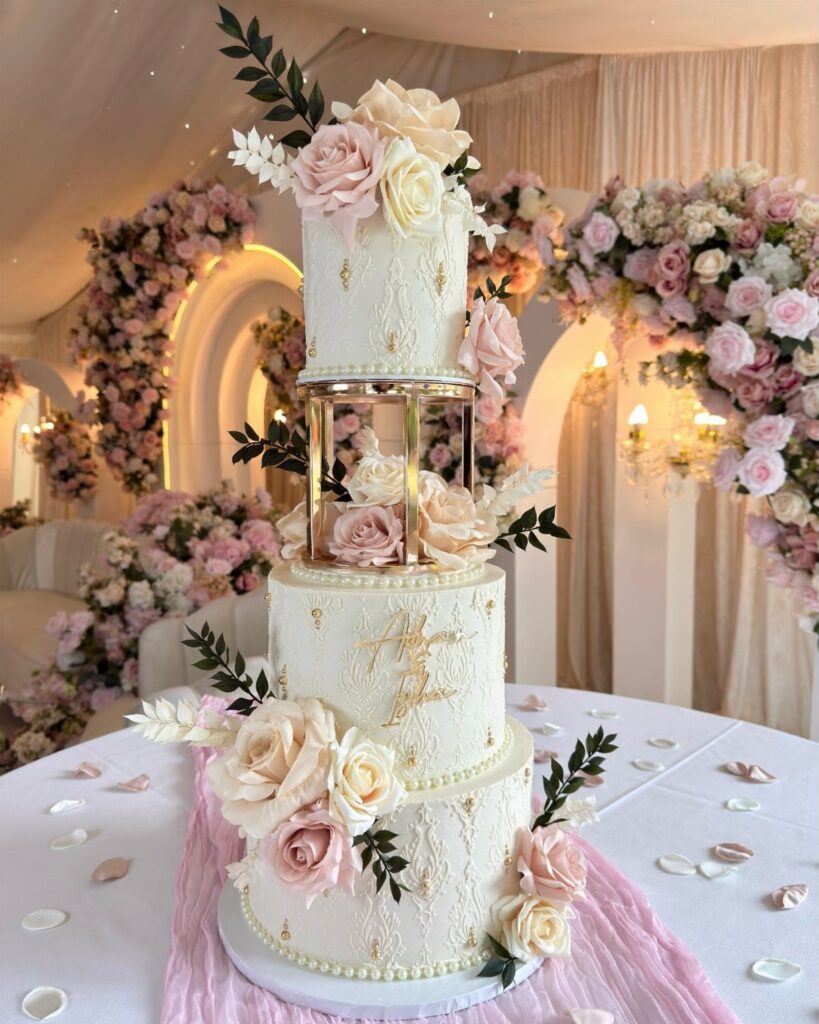
Floral wedding cakes run from a classic white cake with a floral cap to cascading flowers, buttercream petals, hand-painted brushwork, lace texture or sugar flowers, and the price follows the hours someone spends on them.
Your budget and your baker’s skill decide which one is yours: scattered fresh blooms or greenery cost less than buttercream flowers, painted florals or sugar flowers, which all bill by labor.
Whichever you pick, ask who places the flowers and whether each one is food-safe; the Safety of Flowers on Cakes section below covers what to check.
1. Floral Wedding Cake with Cascading Flowers
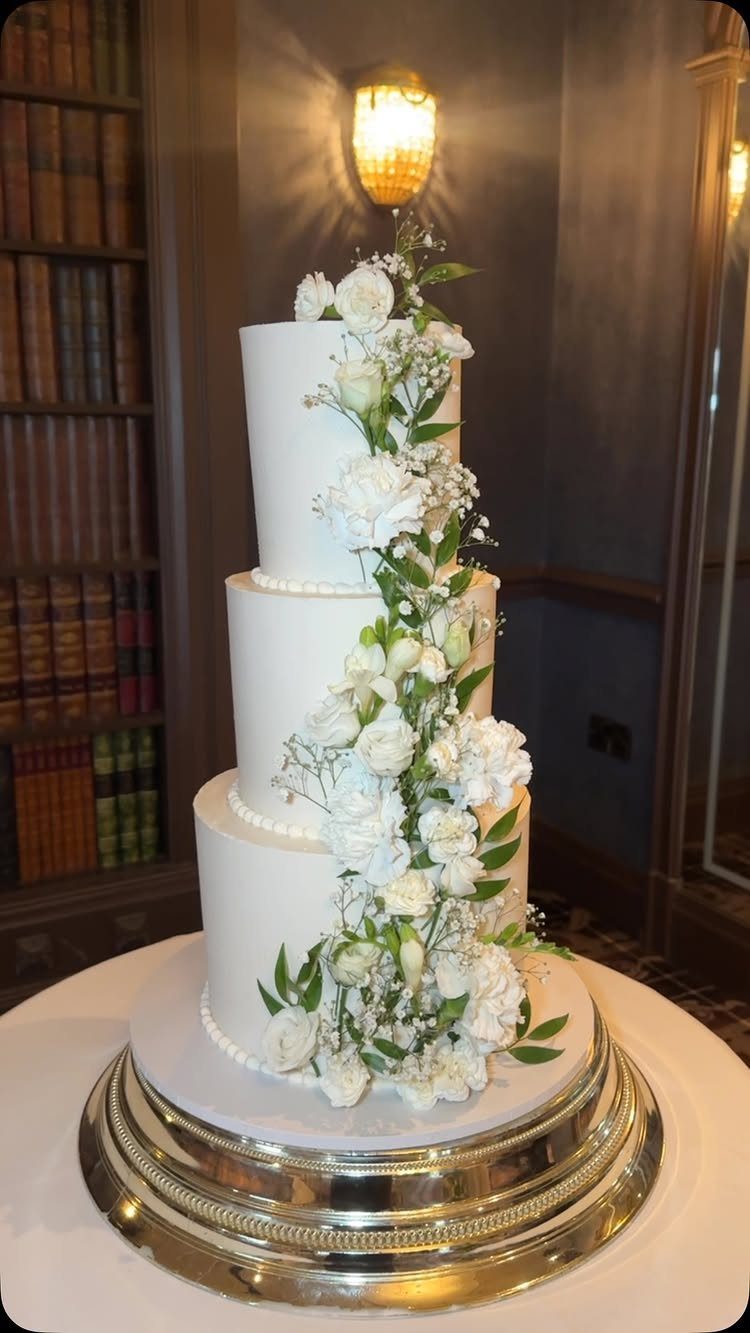
Flowers that spill down the side of a tiered cake draw the eye from the top tier to the base, so the cake reads taller than it is.
On a three-tier white cake with greenery, as here, the white blooms keep the look quiet while the leaves add movement.
I would pick this over a flat topper if the cake sits on a stand, since the trail needs room to fall.
Ask your florist and baker who places the flowers, and when, so the trail is set only once the cake is in position.
2. Painted Floral Cakes
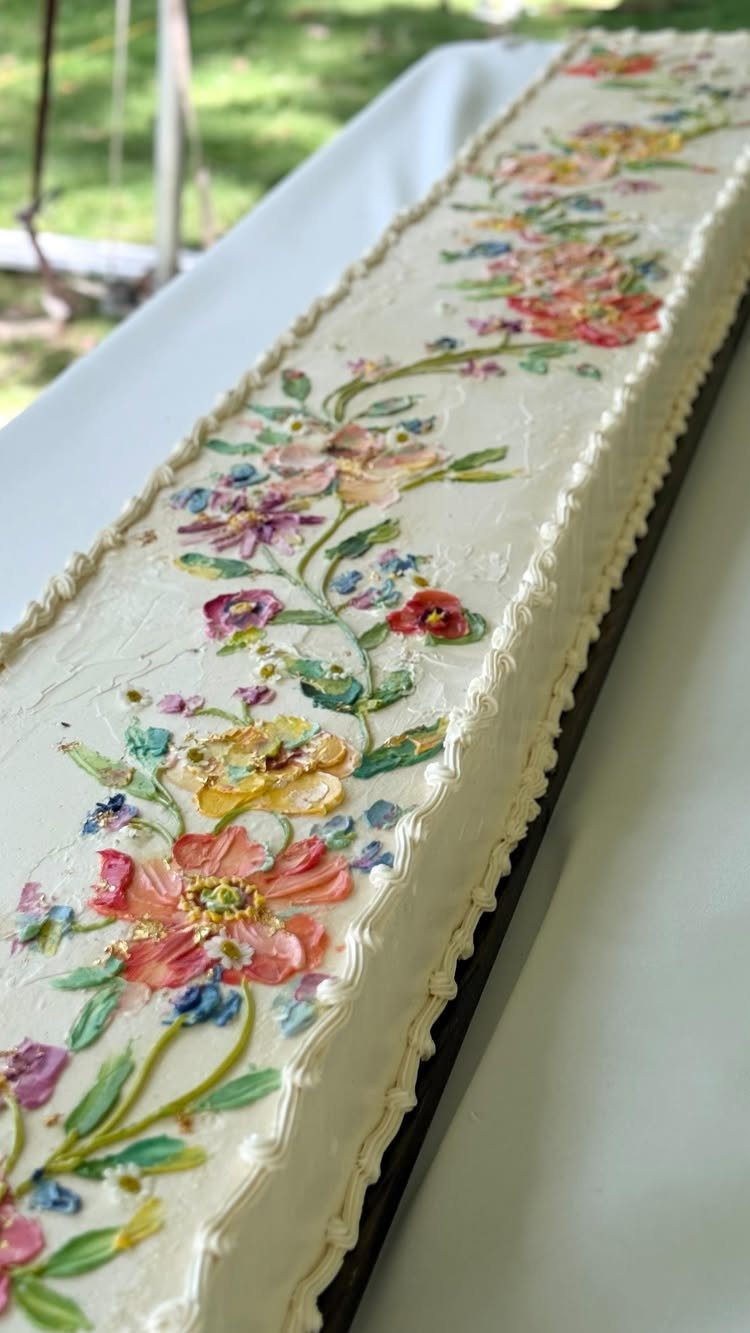
Brushwork gives a plain white cake the look of a watercolor, and on a long rectangular cake like this one the painted flowers have a wide canvas to spread across.
Textured buttercream strokes in several colors, with a piped border to frame them, read as hand-made in a way sugar flowers rarely do.
A sheet-style cake also suits an outdoor table. Ask your baker for photos of painted work they have already done, because the style depends on one person’s hand.
3. Jewel-Toned Purple Flowers on Cake
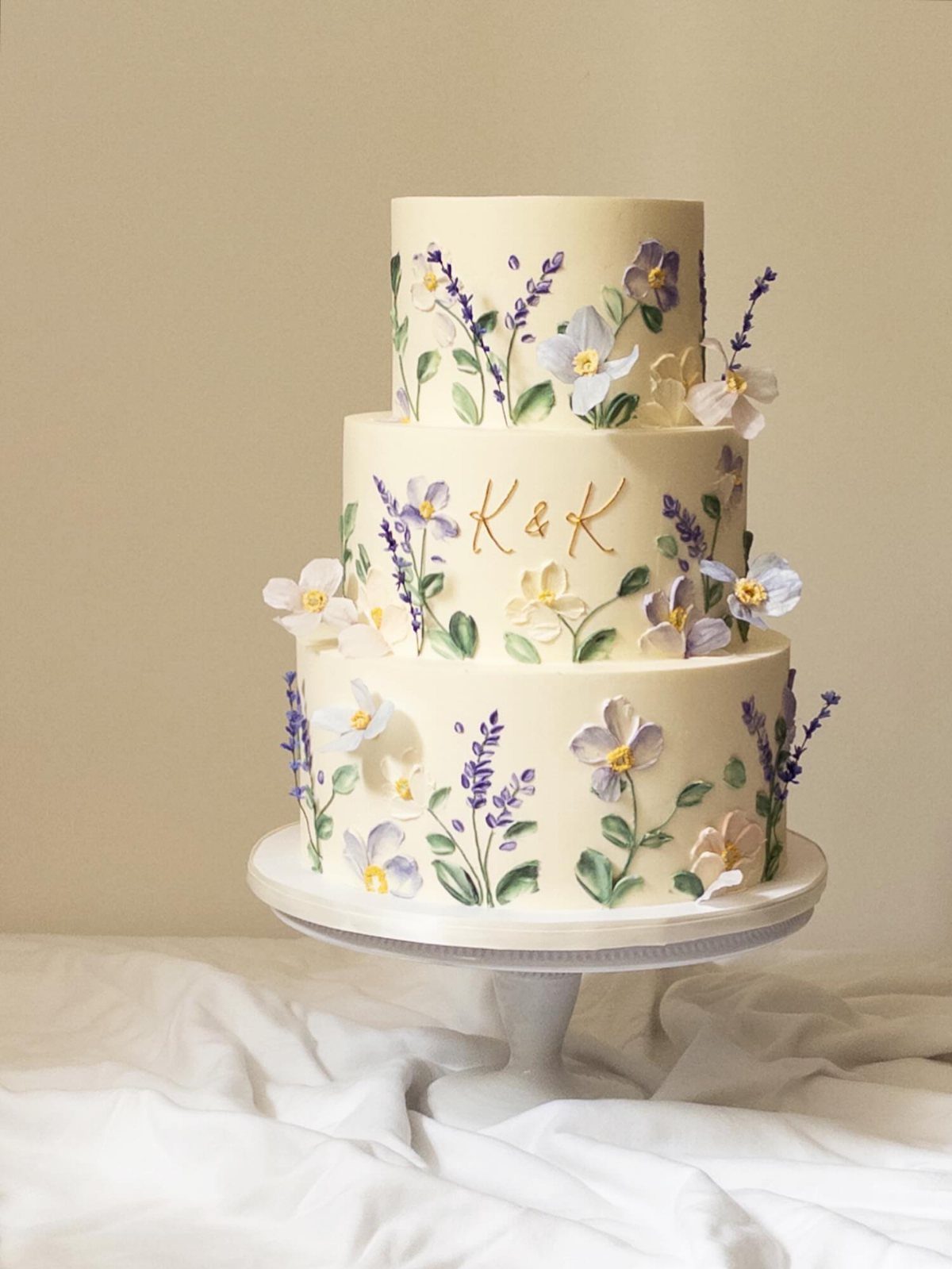
Deep purple against white is a bolder choice than the usual pastels, and it holds up well on a three-tier cake.
Add vines wrapped over painted details, and gold initials on the middle tier, and the cake looks like a storybook prop.
I like that the plain backdrop lets the color do the work.
Keep the gold lettering small so it stays a signature rather than a second focal point. If purple feels like too much, use it on one tier only.
4. Floral Wedding Cake Toppers
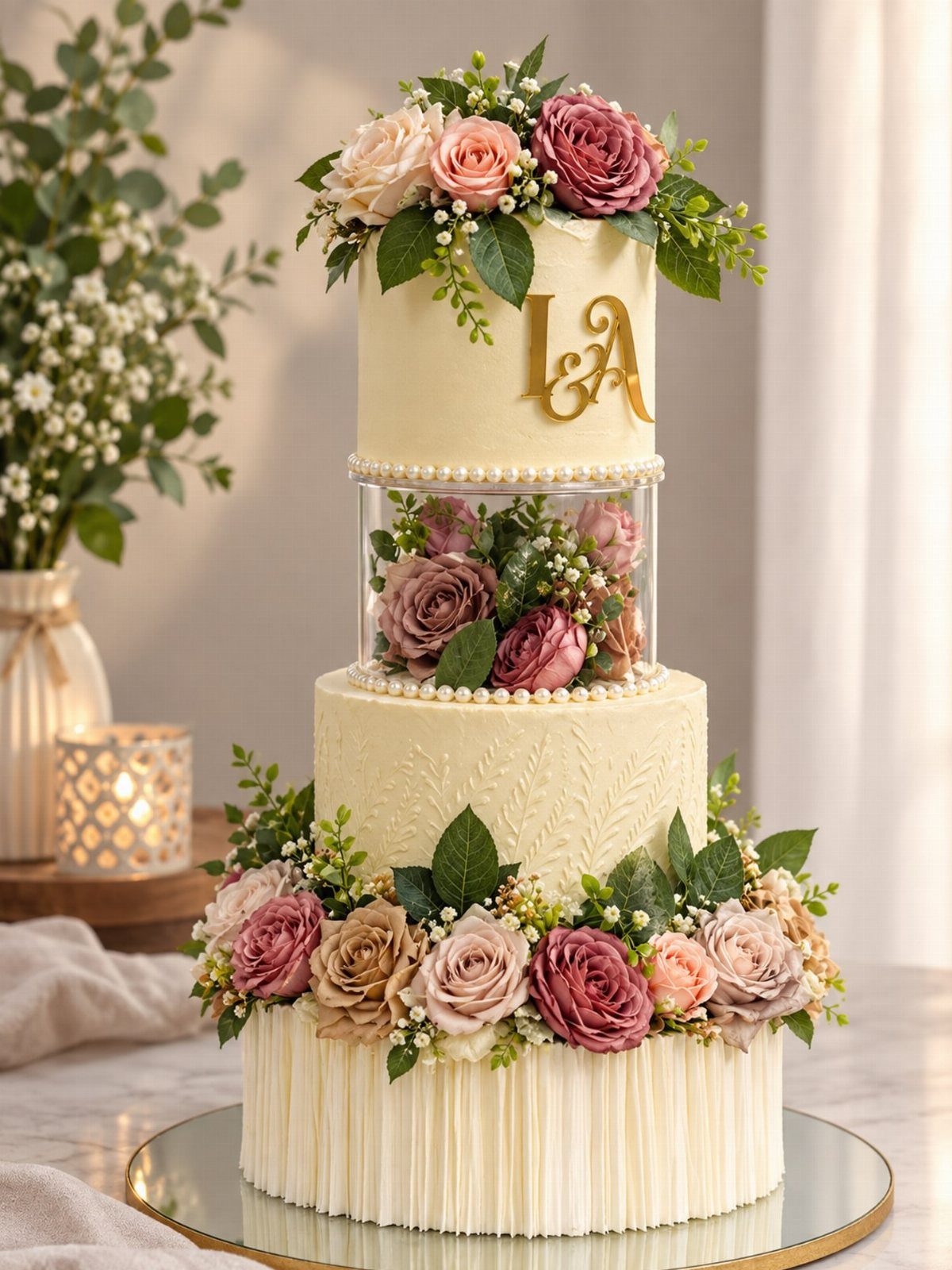
A cluster of fresh roses on top does the job of a traditional topper and brings in color without any extra décor.
Pink and peach roses on a white cake give a soft contrast, and the cake itself can stay simple.
My preference is to keep the arrangement compact so it doesn’t crowd the top tier. Ask your florist to build it separately, so the baker only has to set it in place.
Toppers can scale up well past a single cluster of blooms: a flower-filled acrylic tier or monogrammed initials push the price toward custom work, so decide early how much of the cake you want to carry the florals.
5. Buttercream Flowers
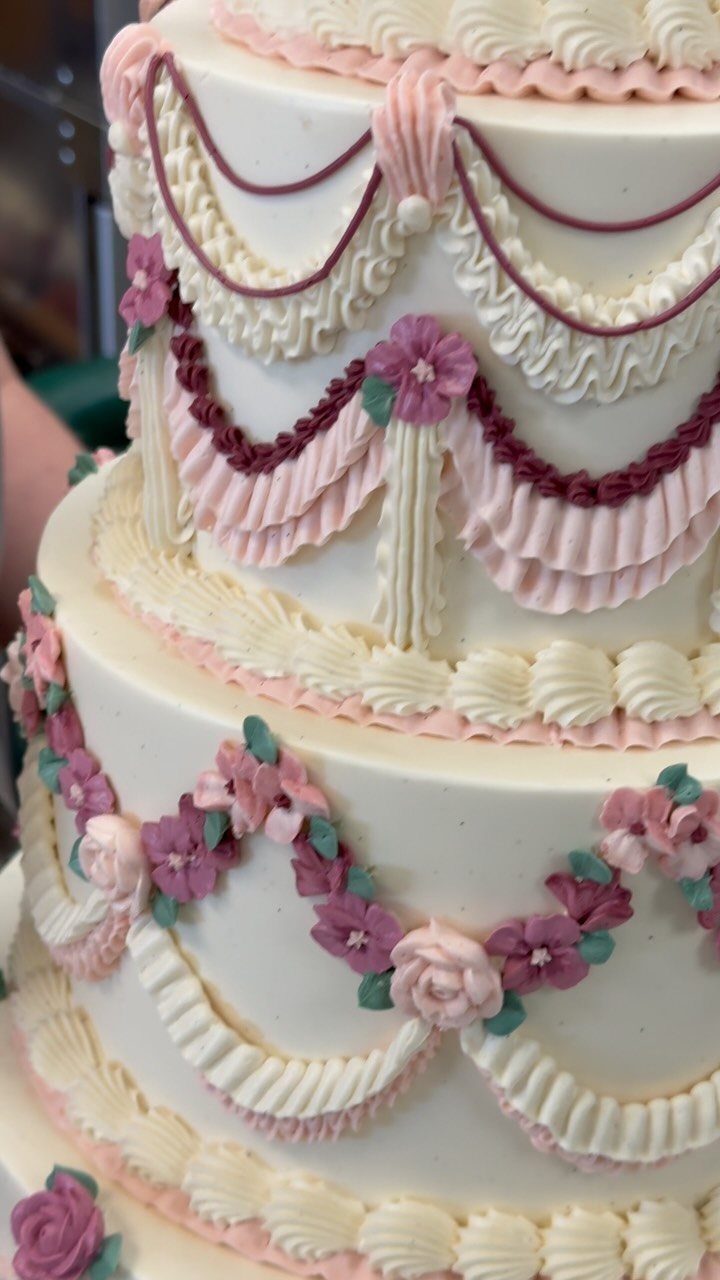
Every petal on a buttercream flower is piped by hand, so this style rewards a baker with a steady wrist and a good eye for color.
Pink and purple blossoms with piped swags, as on this multi-tiered cake, keep the whole design in one material.
I find that cohesion appealing: flowers and frosting match in texture, so nothing looks added on. The main cost is labor, so expect a more detailed pattern to take more of your baker’s time and your budget.
6. Classic White Cake with Floral Cap
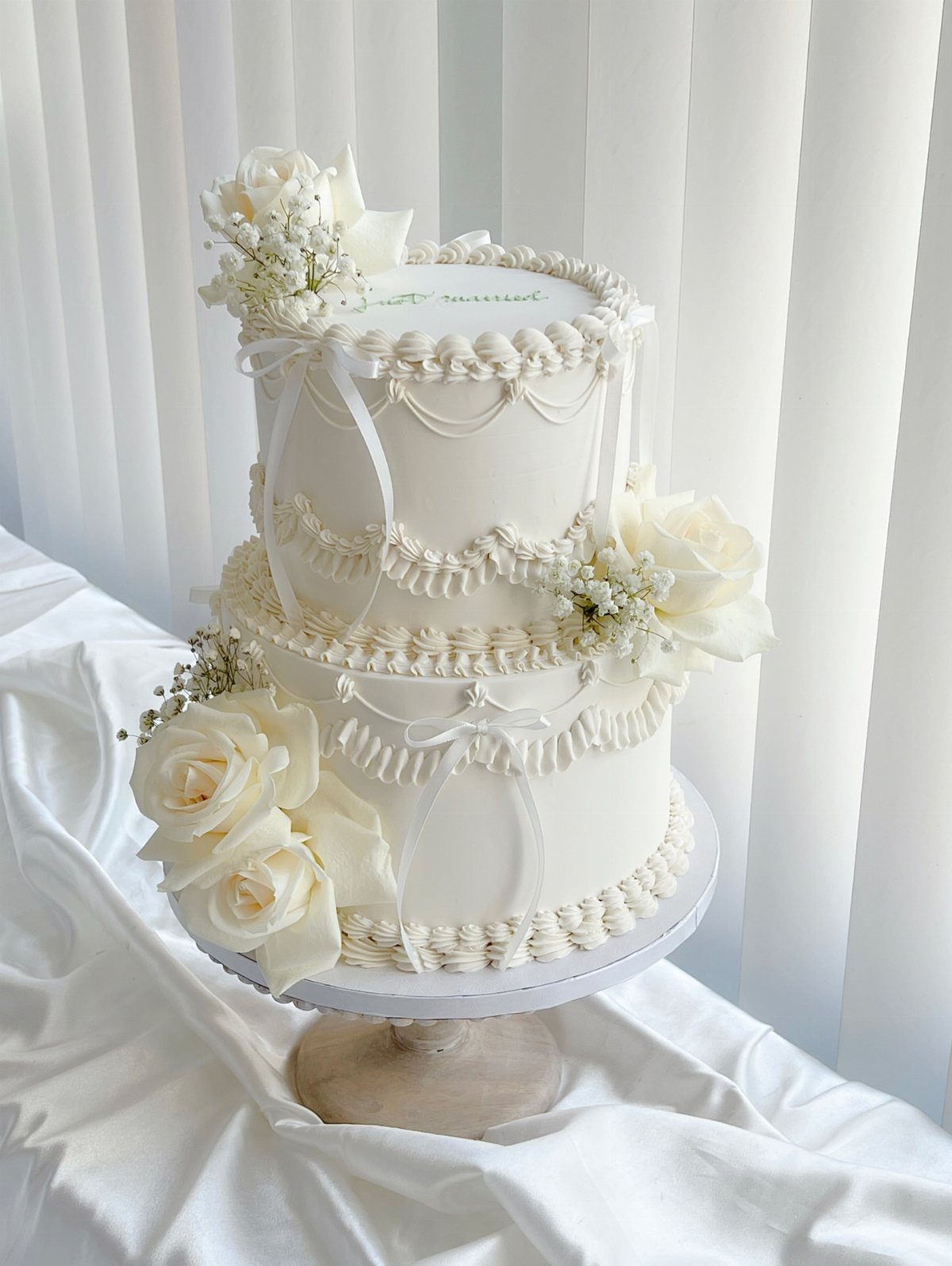
2 tiers, white frosting and a cap of white roses with baby’s breath: this is the version I would give a couple who wants a cake that looks timeless in photos and never overwhelms the table.
Flowers sit only at the top, so the arrangement is easy to plan and easy for a florist to match to your bouquet.
Keep the buttercream piping fine and the ribbon to one or two bands; that gives the white cake some detail without crowding the flowers on top.
A smaller cake like this also tends to suit a modest guest count and a tighter budget.
7. Floral Wedding Cake with Sugar Flowers
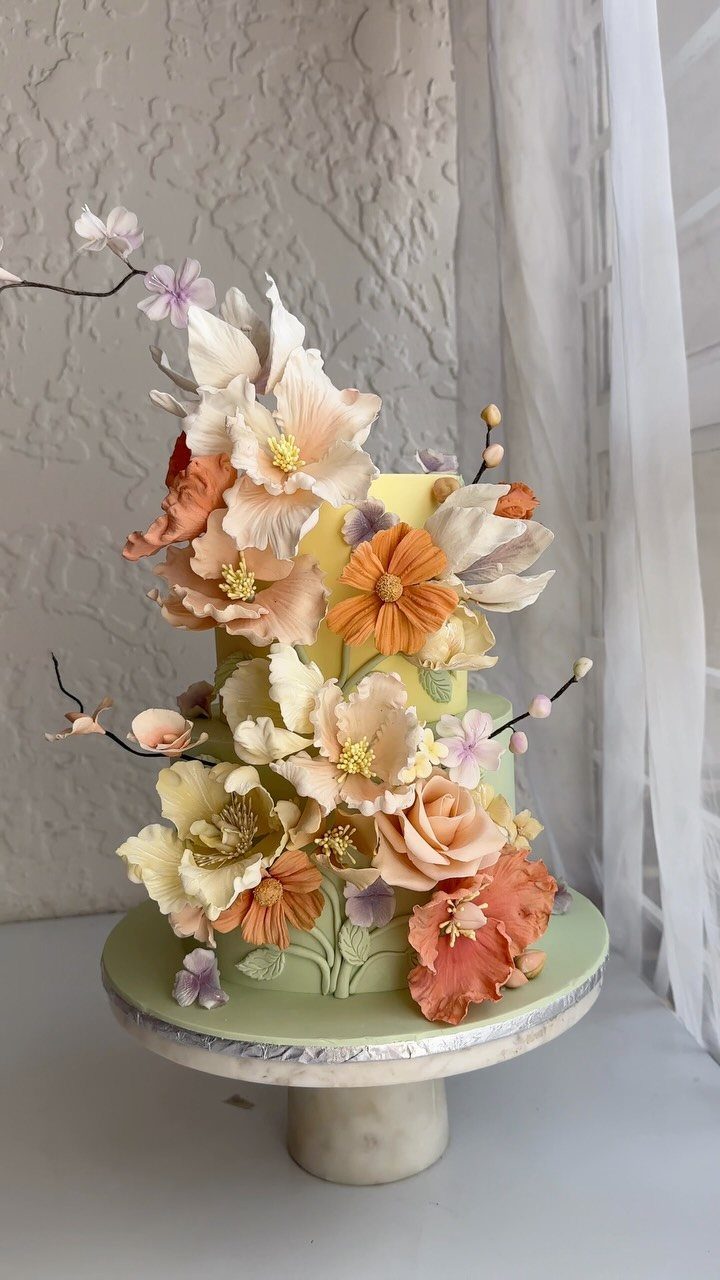
Sugar flowers let a cake carry orange, cream and purple blooms that look real and never wilt.
I like that they can be made weeks ahead, and that you can keep them afterward.
Ask your baker whether the flowers are edible or only decorative, and tell them your bouquet colors so the sugar blooms match. Expect the price to follow the hours of handwork.
8. Flowers Between Tiers
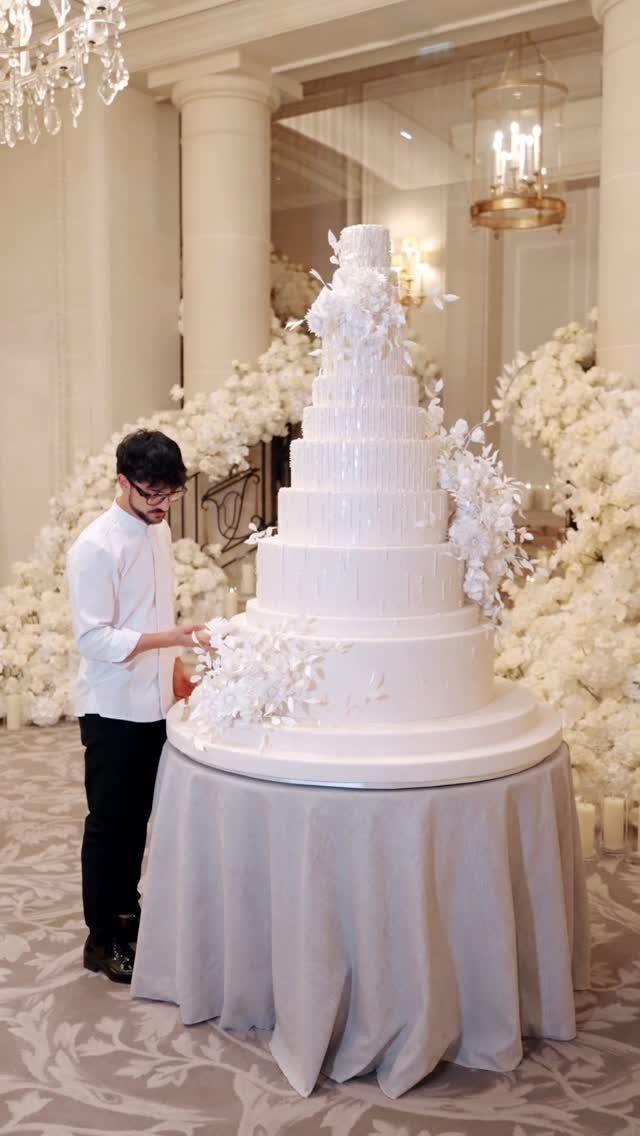
White flowers tucked between the tiers turn each layer into its own shelf, which makes a tall cake look softer and more finished.
On a multi-tiered white cake like this, the blooms hide the seams where one tier meets the next.
I would choose this for a ballroom or any large room, where height reads well.
Ask your florist to match the blooms to the room arrangements. Have the baker and florist agree on who places them, so the flowers go in once the cake is set.
9. Floral Wedding Cake with Scattered Flowers
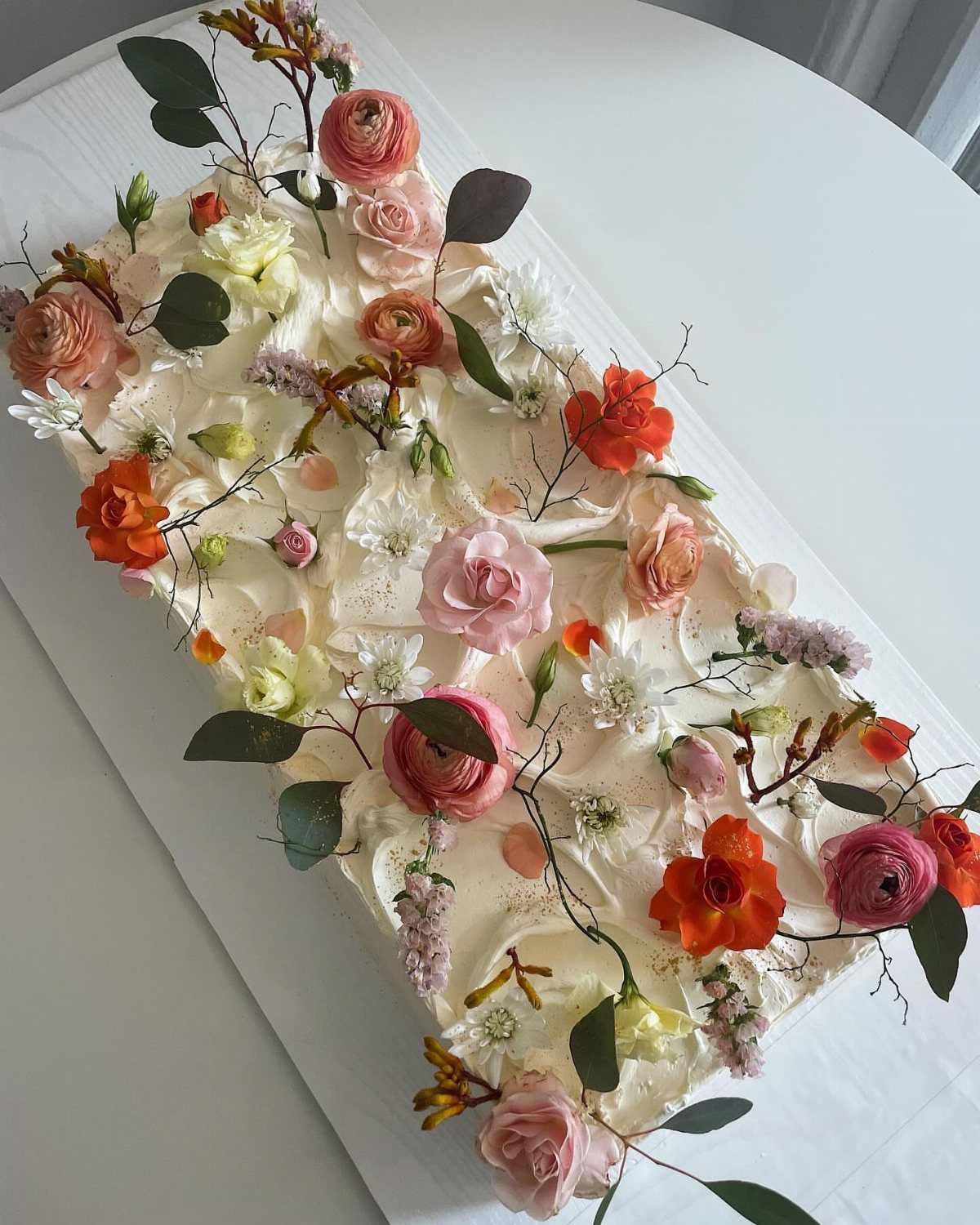
Large blooms laid loosely across a white frosted sheet cake feel relaxed and generous.
Scattered fresh flowers work best on plain frosting, since a smooth white or buttercream finish lets the pink, orange and white blooms and their green leaves carry the whole design.
I prefer this over a tight design when the budget is modest, since a simple cake and a handful of fresh flowers cost less than detailed piping.
Give your florist the cake’s size, and ask them to bring a few extra blooms so you can adjust the spread once the cake is on the table.
10. Rustic Floral Wedding Cake
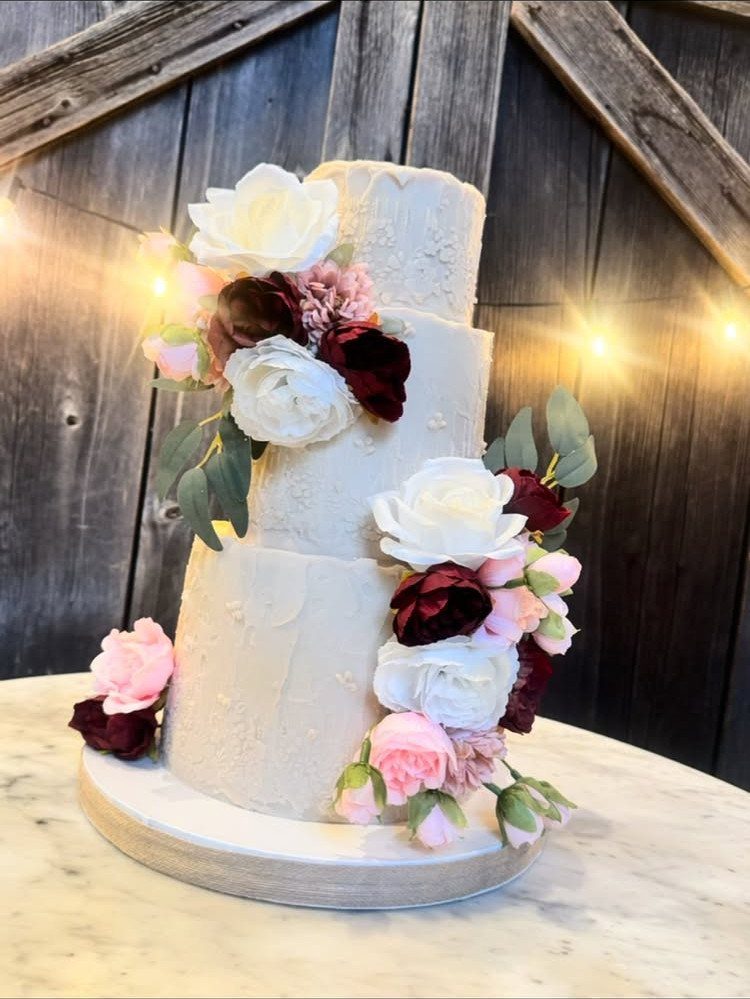
3 tiers on a wooden base keep the whole cake in the same earthy family.
I would keep the frosting smooth and let the roses supply the drama.
A wood slab or plain board under the cake does more for the look than extra decoration. If you want it softer, add white blooms among the dark ones, as here.
11. Floral Cake with Greenery
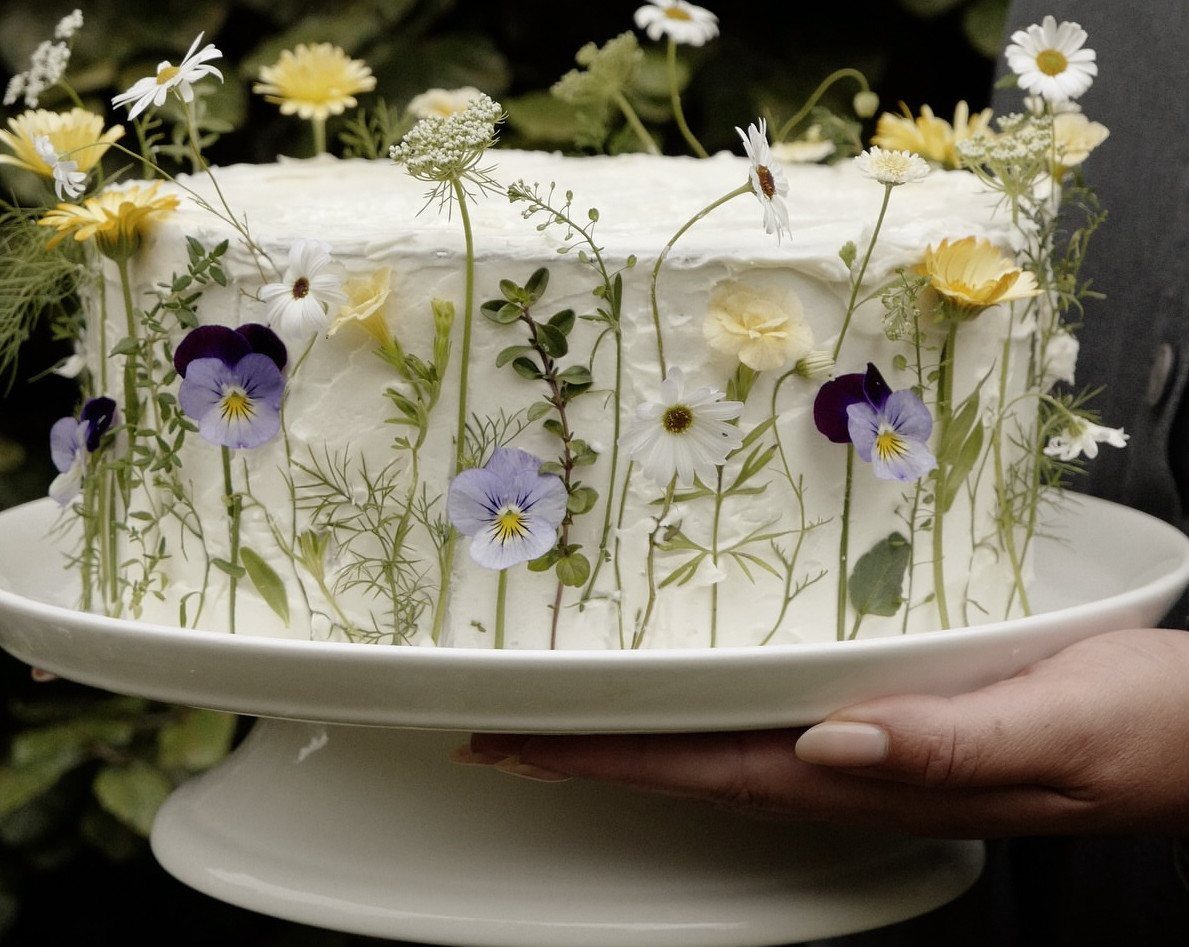
Wildflowers and small leaves pressed onto white frosting give a cake that looks picked from a meadow, so keep the frosting smooth and let the greenery supply the texture.
Mixed blooms and greenery in different sizes feel natural, so no 2 sides need to match.
My advice is to choose flowers in a tight color range and let the greenery fill the gaps.
Ask your baker how the flowers will be kept off the frosting that gets eaten, and have them confirm the blooms are safe to place on a cake. A plain white stand keeps the focus on the plants.
12. Floral Cake with Gold Leaf
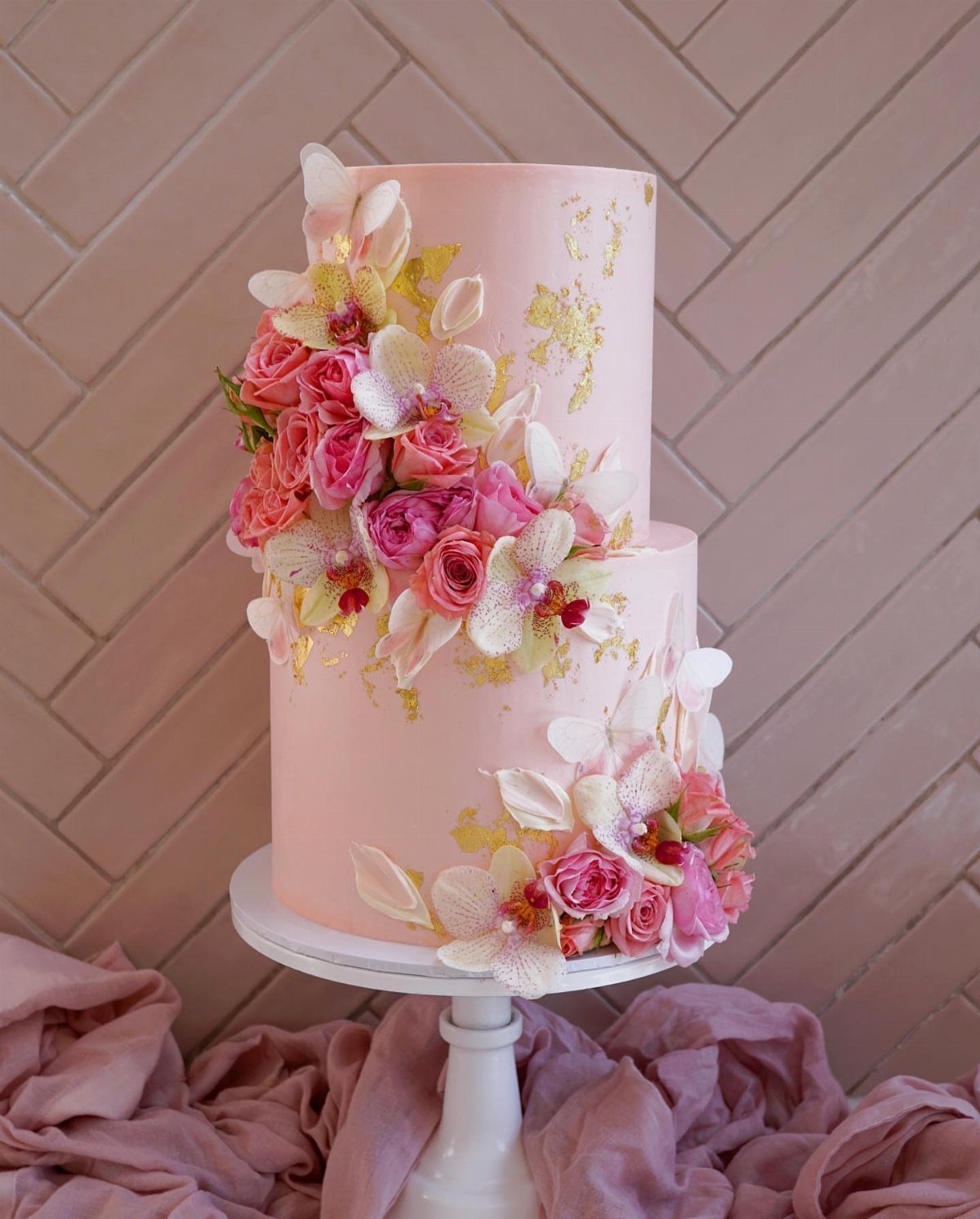
Pink roses, white orchids and flecks of gold leaf on a light pink cake keep everything in one soft palette. The orchids add shape against the round roses, and the gold catches light without taking over.
I would use gold leaf sparingly, a few flakes near the flowers rather than across the whole tier.
2 tiers is enough for this look and keeps costs down. Ask your baker how the gold is applied, and whether the flowers are food-safe.
13. Red Roses and Baby’s Breath
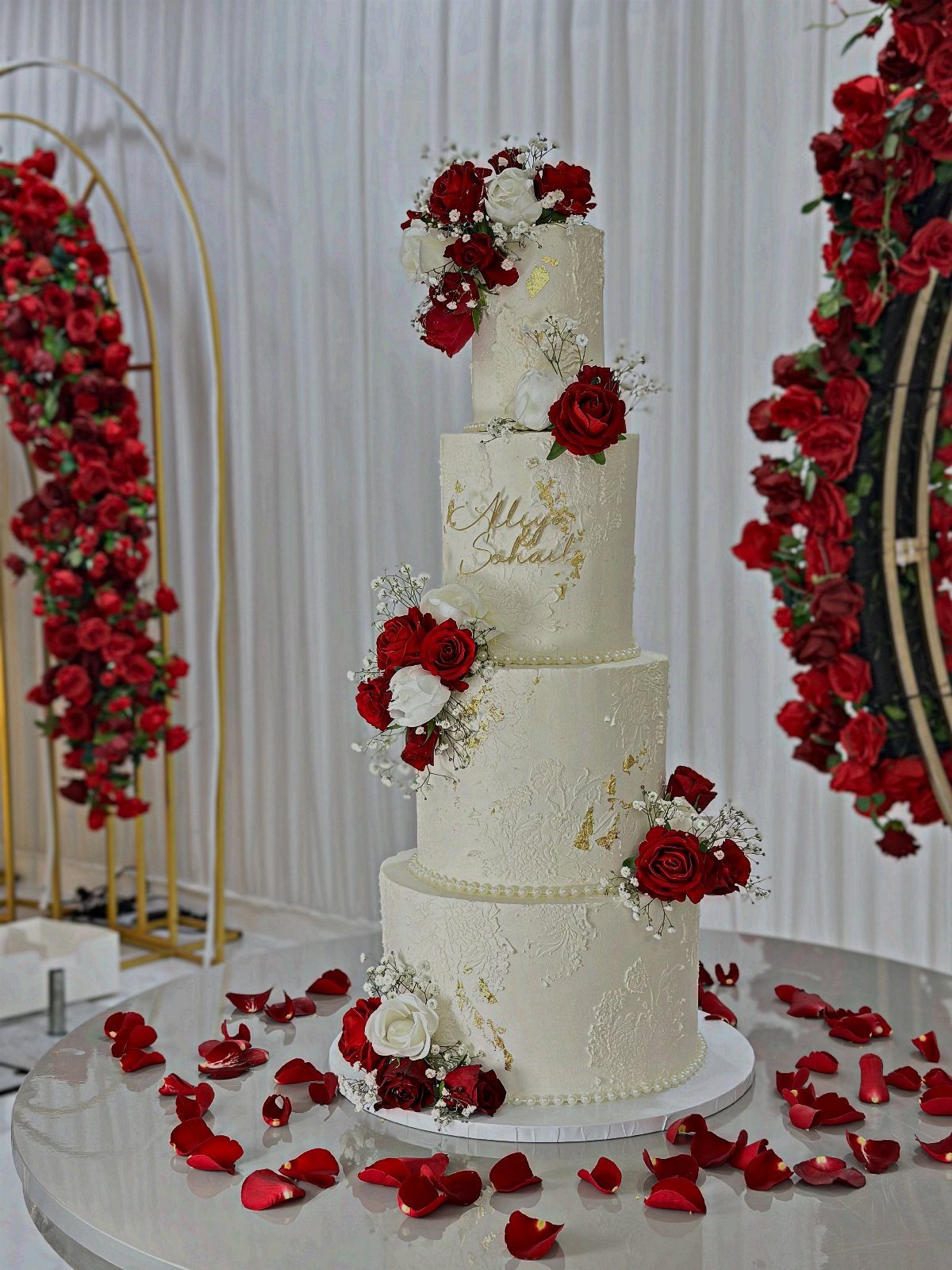
Red roses against 4 tiers of white frosting make the strongest contrast you can put on a floral cake, and a few white roses and baby’s breath tucked between them keep it from turning heavy.
Gold script on the second tier adds a signature without a second color of flowers.
I would keep the frosting plain, since the red does all the work.
Ask your florist to repeat the red in your bouquet so the cake and the table feel planned together. Baby’s breath is light and fills the gaps between blooms.
14. Lace Texture and Roses
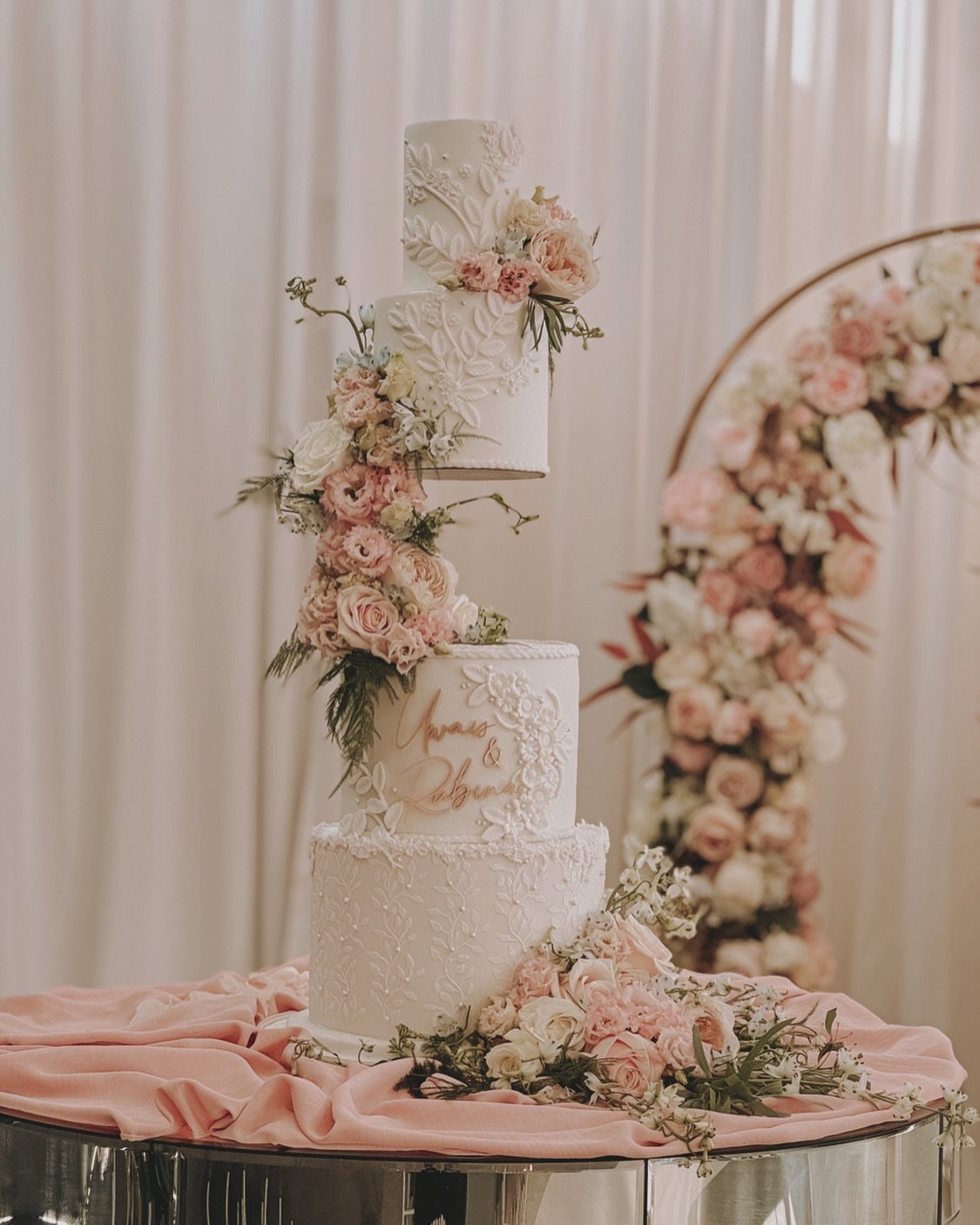
Piped lace gives each tier a fine pattern, so pink and white roses can sit in clusters without the cake looking bare.
On a four-tier cake with names in script, as here, the lace is the detail guests notice up close.
My pick is to keep the roses to a few clusters and let the lace carry the rest.
Lace piping is slow handwork, so expect it to raise the baker’s price. Ask for photos of lace they have already piped.
Safety of Flowers on Cakes
Not every pretty flower belongs near food. Some blooms are toxic, and even pollen or plant oils that touch the icing can make a guest sick.
Dyes, sprays and certain essential oils also rule a flower out, so ask about each one.
A bare stem pushed straight into the cake can carry pesticides or sap into the crumb, so keep stems out of the sponge and buy flowers grown without pesticides.
Then tell the caterer to pull the flowers off before slicing, so none end up on a guest’s plate.
Choosing Cake Flavors
A cake has 2 parts, flavor and design, and flavor is the part you get to taste before you commit. Book the tasting and treat it as one of the fun jobs on your list.
Skip the dry vanilla sheet with synthetic-tasting frosting. Citrus, warm spices and a good dark chocolate are worth raising with your baker, and so is anything built on ingredients grown near you.
Local fruit and seasonal flavors give guests a reason to want a slice. If you use fresh flowers, a flavor that hints at the blooms ties the whole cake together.
Presentation Tips
Matching the flowers on the cake to the bouquets and table arrangements makes the cake look planned rather than added at the last minute.
Give that person a name and a time.
A pick with a tiny water reservoir keeps each bloom drinking, so the flowers look fresh longer on the table.
Keep the blooms chilled until decorating begins, and keep the finished cake cool as long as you can, because warmth is what makes petals wilt.
Frequently Asked Questions
How to decorate cakes with flowers?
A bare stem pushed straight into the cake can carry pesticides or sap into the crumb, so use only blooms you know are pesticide-free and edible.
Match the blooms to your bouquet and table arrangements so the cake looks planned, and decide with your baker and florist who places the flowers and when.
Keep the flowers in the fridge until the moment you start decorating, since heat is what makes petals go limp.
What are popular floral cake styles?
Cascading flowers that trail down the tiers, a compact cluster of fresh blooms on top, and painted floral brushwork are among the most popular.
Buttercream flowers, sugar flowers and blooms tucked between tiers are also common. Cascades make a cake look taller, while buttercream and sugar flowers cost more as the handwork grows.
How much should I pay for my wedding cake?
I can’t give you one figure, because the price follows the labor and the design.
A simple cake with a handful of fresh flowers costs less than detailed piping, and hand-piped buttercream, lace work or sugar flowers raise the baker’s price with the hours involved.
Where can I buy edible fresh flowers for cakes?
Your florist or baker is the first call, because both can order blooms that are grown to be used around food.
Buy from a grower who can tell you the flowers were never sprayed or dyed, and ask how they were raised; a harmless petal can still carry chemical residue onto the frosting.



