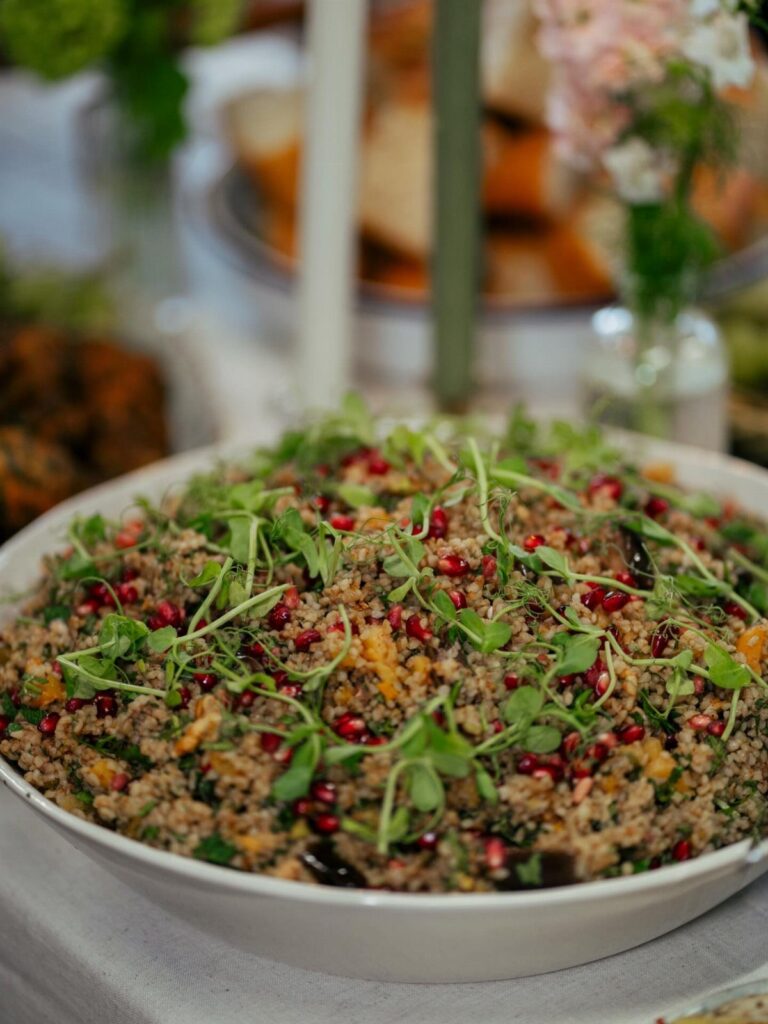
The ideas here run from a hog roast carved to order and staffed food stations to grazing boards with no chafing dishes at all, and what sorts them is how much staff and space your venue and caterer can give you.
Corn on the cob holds in a chafing dish for an hour or more, which makes BBQ the forgiving pick if you have less help.
1. Wedding Buffet Food Dishes
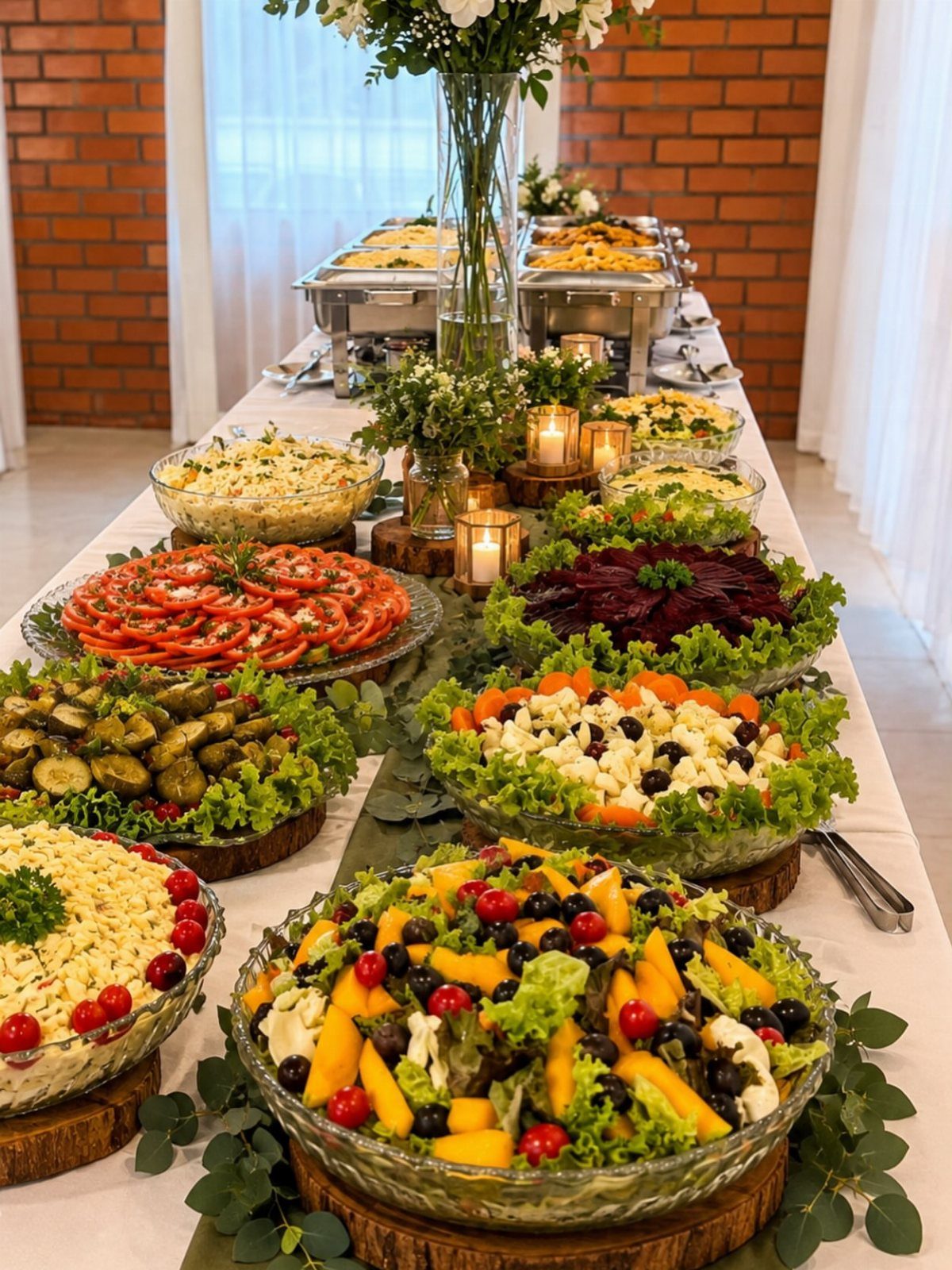
Self-serve buffets work best when the table gives guests a clear order: plates first, then cold salads, then hot dishes from the chafing dishes. That way nobody balances a full plate while reaching for a spoon.
A long table like this one can hold several large bowls and warming trays at once, so guests choose their own portions and the line moves quickly.
I would put the salads at the start and keep the hot dishes together at the end.
Ask your caterer how many dishes your table can hold before it looks crowded.
2. Food Stations
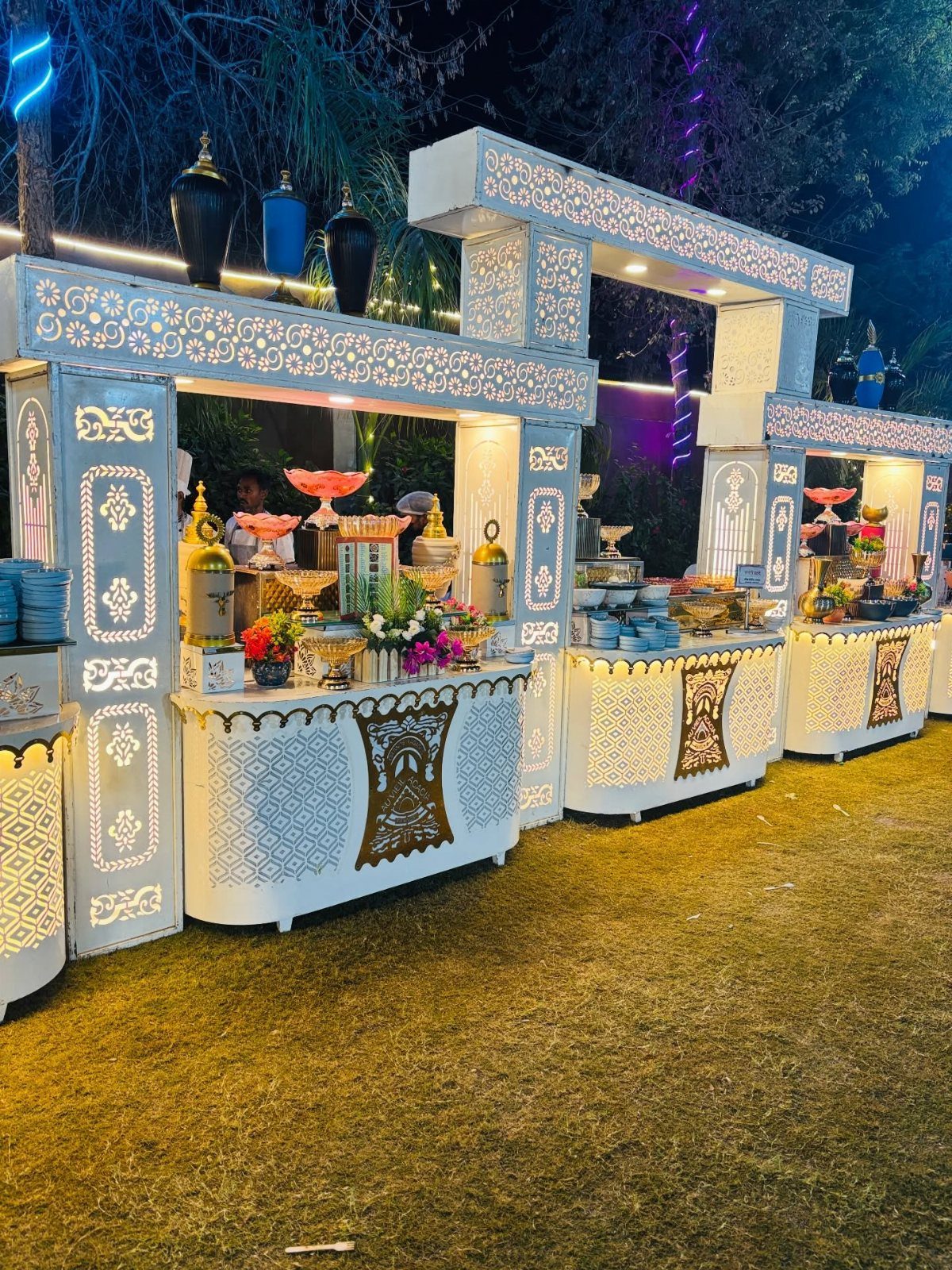
Stations turn dinner into something guests walk around for, with a staffed counter for each dish or cuisine.
Because a person stands behind every counter, the food gets plated or finished in front of guests, which a plain buffet line cannot do.
Pick two or three cuisines instead of six, and put them far enough apart that lines do not tangle. Staff cost money, so ask your caterer how many people each station needs.
I like stations set outdoors at dusk, where the counters double as decor.
3. Grazing Boards
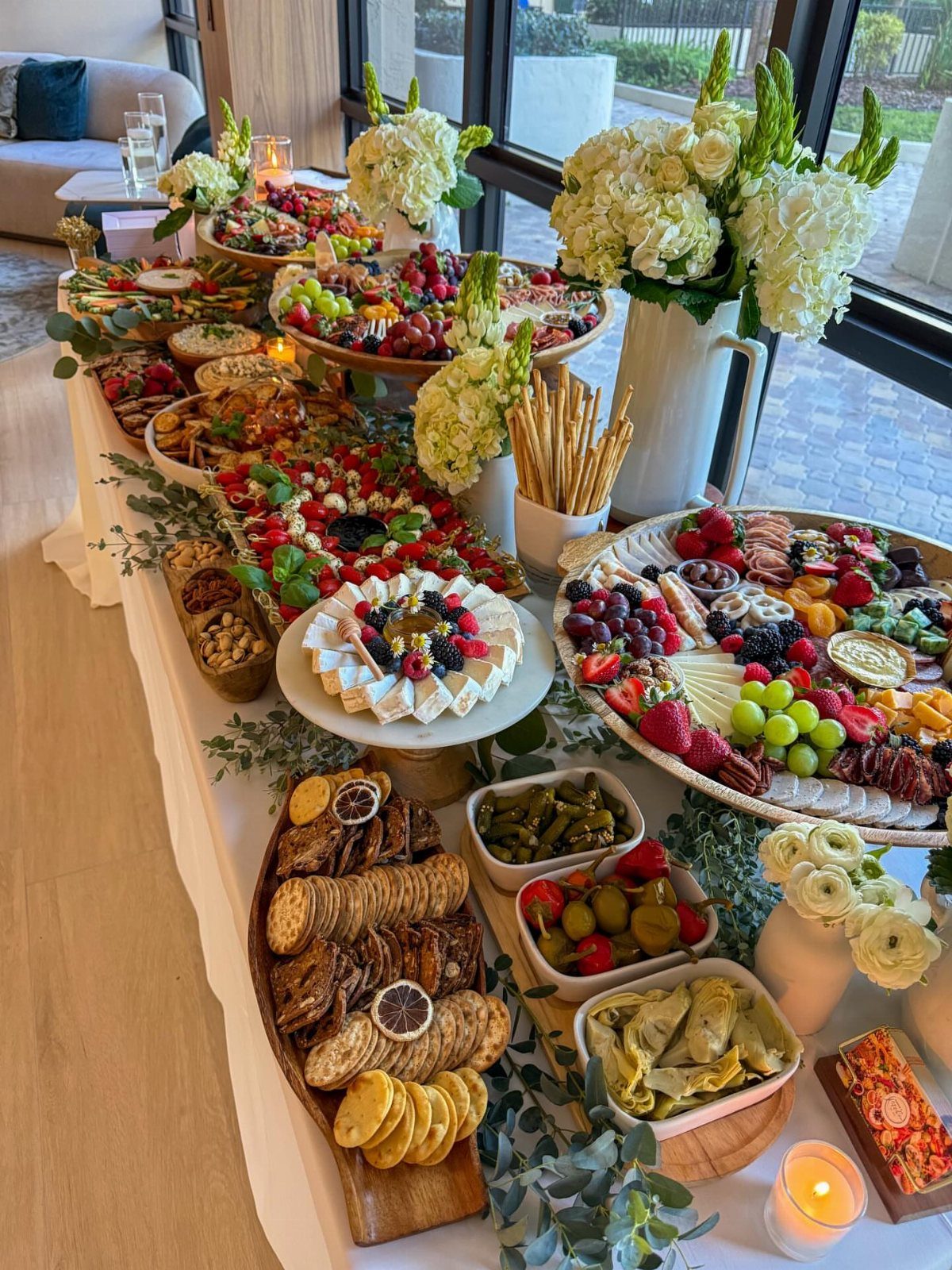
Grazing boards swap the buffet line for shared platters guests pick at while they mingle. Cheeses, fruit, crackers and olives need no carving and no chafing dishes, so the setup stays simple.
Spread several boards along one long table so guests can reach them from both sides and no single board becomes a crowd. Mix soft and hard cheeses, and keep the crackers in separate bowls to stay crisp.
Boards suit a cocktail hour well. For a full dinner, I would pair them with a hot dish.
4. Hog Roast
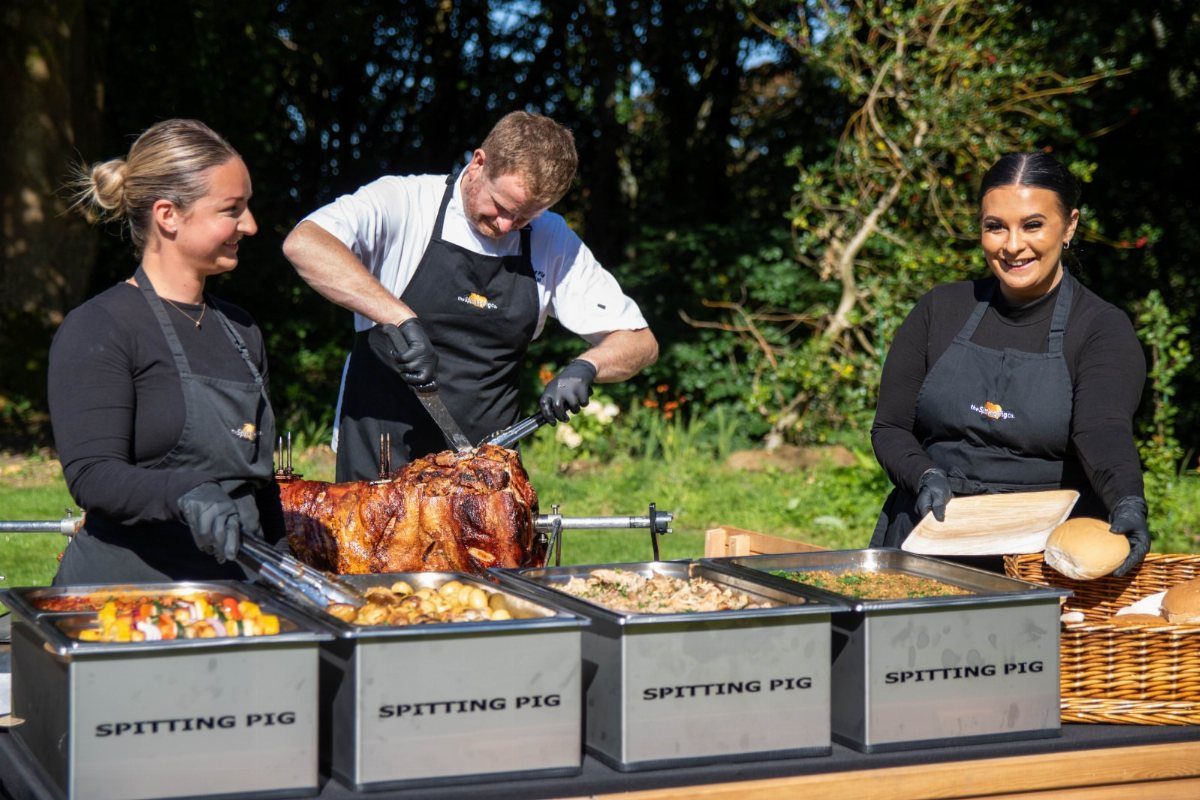
A whole pig on a spit gives you a centerpiece and the main course in one. Carvers slice meat to order, which keeps portions even and lets guests see the pig before it reaches the plate.
Plan side dishes on separate trays, as in this setup, so the line has something to move along. Ask the caterer how many guests one pig feeds, and whether carvers and serving trays are included in the price.
It is a casual choice, best for garden or barn receptions instead of formal ballrooms.
5. Dessert Stations
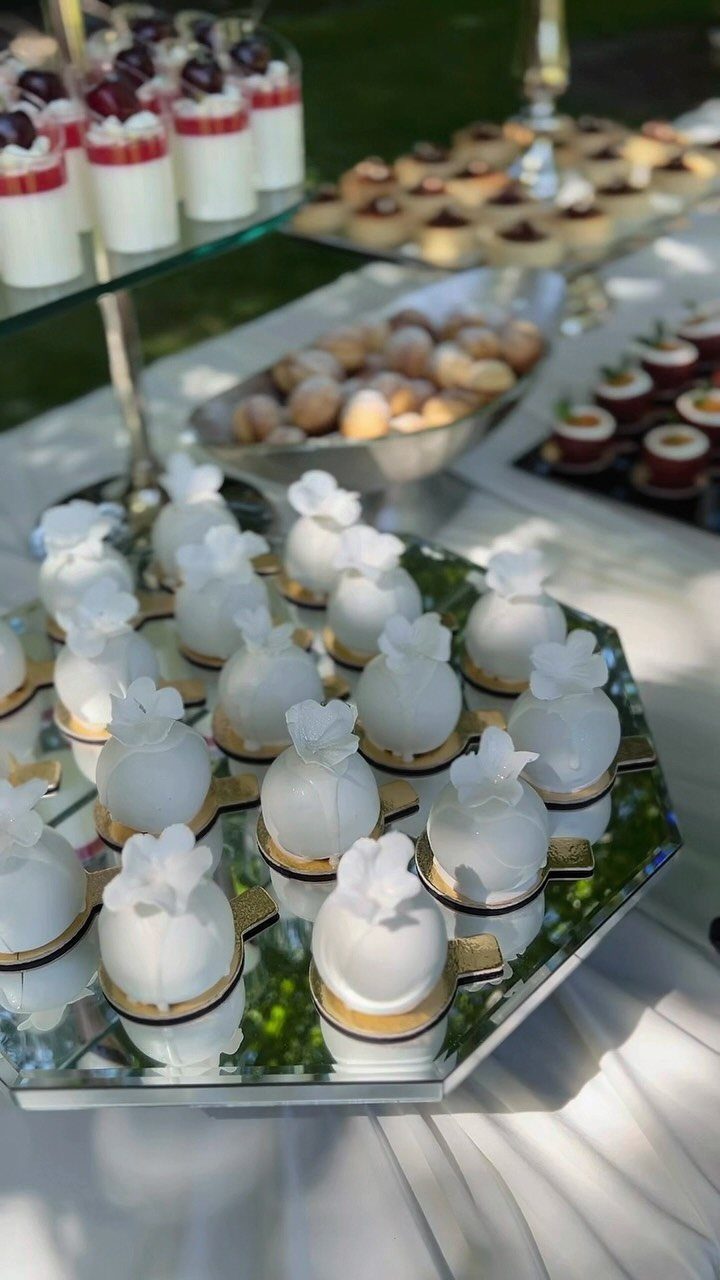
A dessert station lets you skip the single cake and offer small bites instead. Cake pops, mini tarts and little berry cream cakes are easy to pick up with one hand, so guests can eat while they dance.
A mirrored tray makes a small spread look fuller, and white flowers on top tie the sweets to the rest of the decor. Set the station out when dinner ends, not before.
Mini desserts take more handling than one cake, so ask your baker about the cost per piece.
6. Customizable Menus
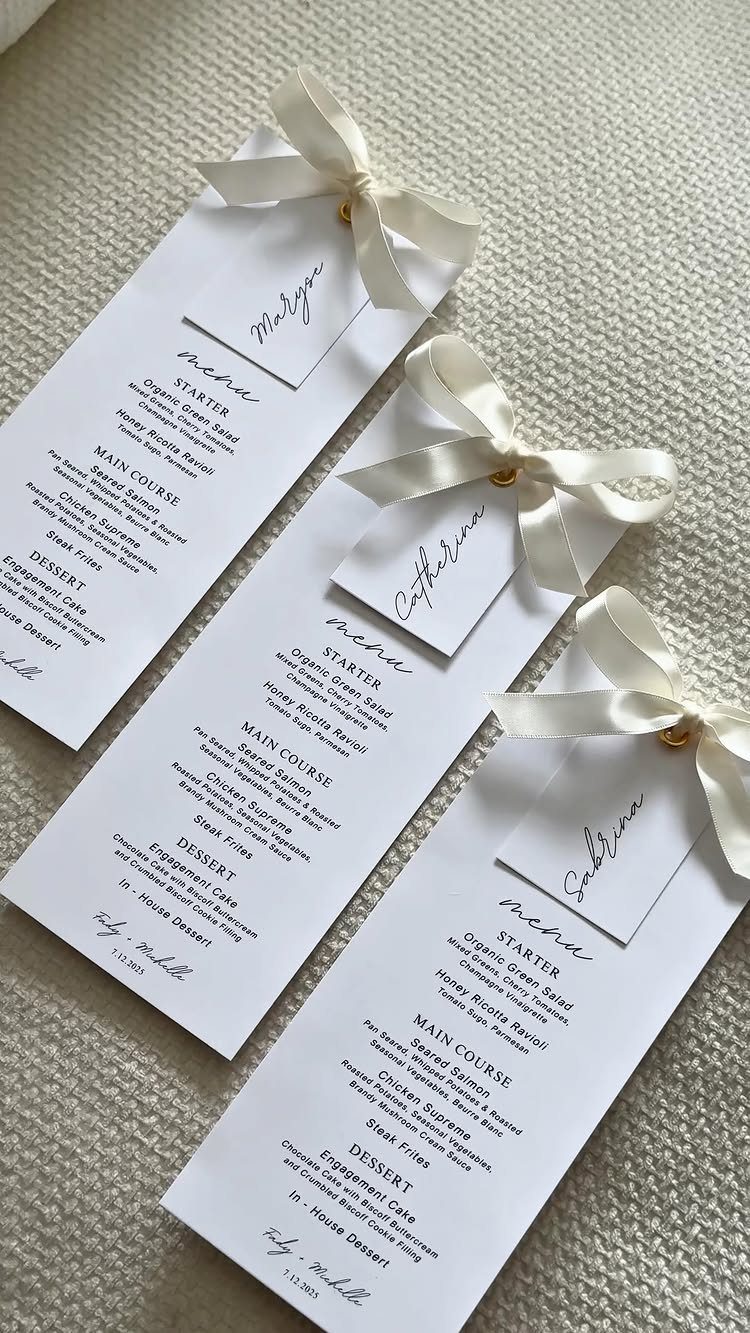
A menu with each guest’s name on it is a small detail that reads as hospitality. Starter, main course and dessert are listed, and the name tells every guest the meal was planned with them in mind.
Collect meal choices on your RSVP cards, then print each menu to match. Give your caterer the final count by their deadline, so the right plates land at the right seats.
Satin ribbons cost little, and they make plain white menus feel finished.
7. Fish & Chips
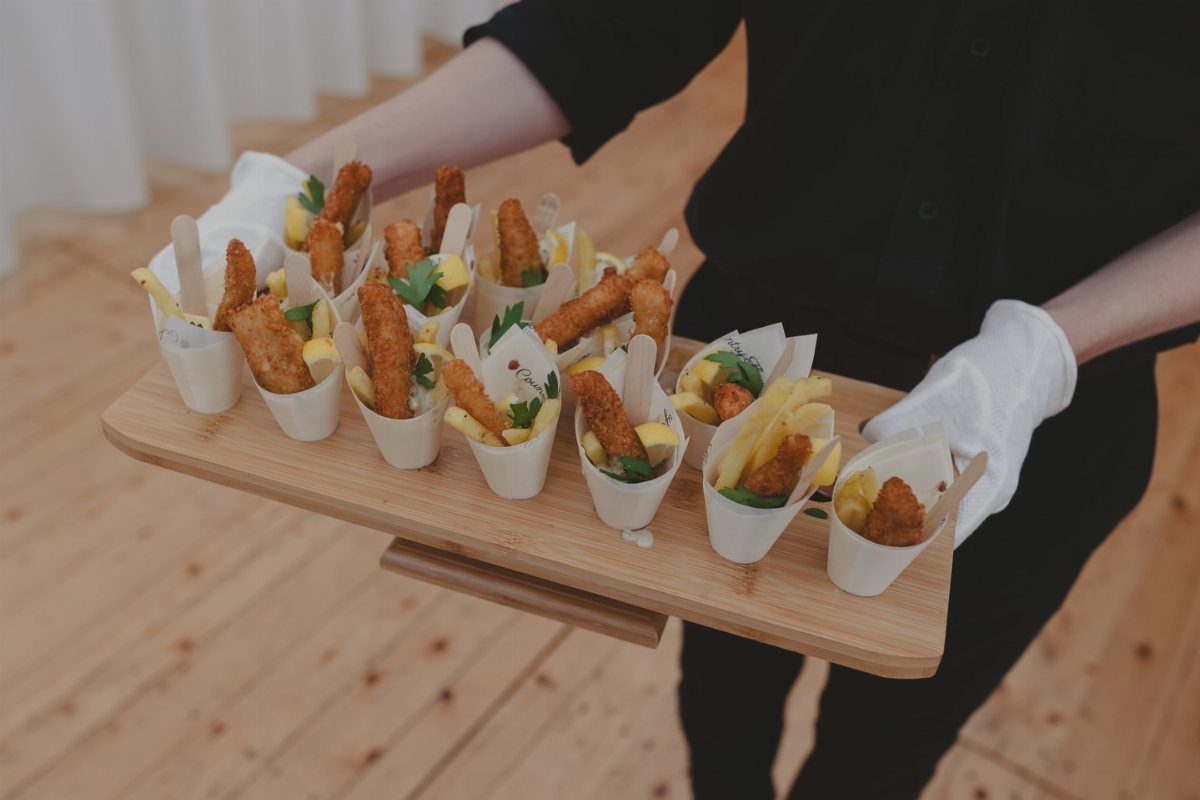
Fish and chips in paper cones turn a heavy dinner into something guests can eat standing up.
Each cone holds a portion of fried fish and chips, so no plates or cutlery are needed and the late-night crowd can eat with one hand.
Have a server pass them on a wooden tray, as here, or set out a station and let guests grab their own. Ask your caterer whether the fish is fried on site, since fryers need space and ventilation.
Cones make a good second round after the dancing starts.
8. BBQ
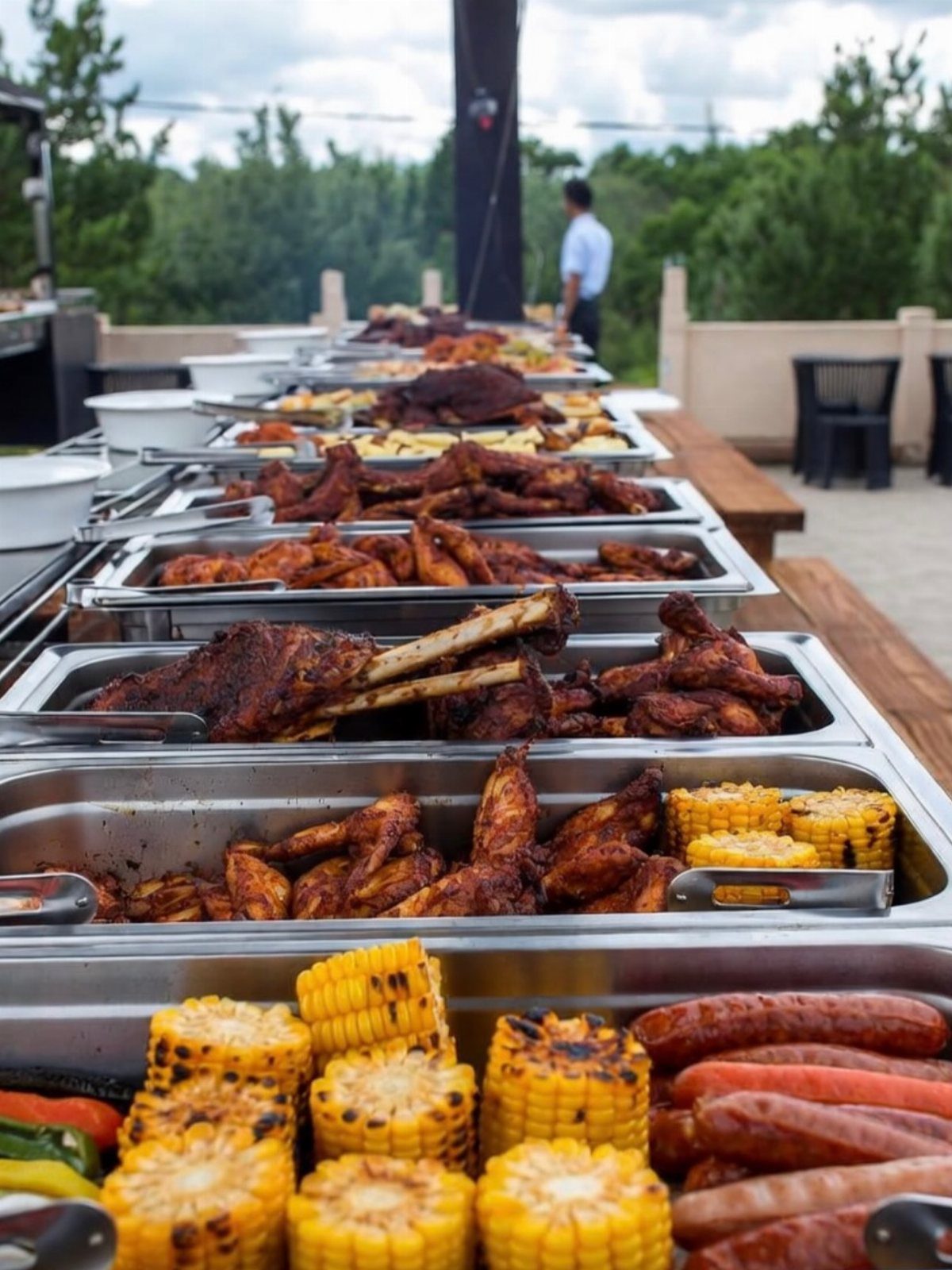
Smoked or grilled meats hold up well on a buffet, and corn on the cob stays good in a chafing dish for an hour or more, which makes a BBQ menu forgiving if the line moves slowly.
Outdoor receptions suit this style, and I would choose it for a relaxed afternoon wedding.
Put plates at the front and keep the corn near the end, so nobody carries a loaded plate past the spoons.
Add napkins, and plenty of them.
Dietary Requirements
Ask about allergies and dietary needs on the RSVP card, with a line for notes next to the meal choice. Guests with a serious allergy would rather tell you early than guess at the table.
Ask how they keep those dishes separate from the rest, and whether serving spoons are kept apart.
Buffet lines add a wrinkle. Lines move slowly and trays get picked over as they empty, so a buffet only looks good if servers are restocking and wiping down the dishes throughout service.
Label every dish clearly, so guests with restrictions can read the card instead of asking a server.
Check that the table and line have enough room, too. A cramped setup makes safe choices harder to spot.
Cost Considerations
Compare per-head quotes for a buffet and a plated dinner before you decide. A buffet can come out cheaper per person than a formal dinner, and guests can pick what they like, which helps with fussy eaters and family crowds.
A plated meal needs more service staff, which raises the price.
Plated service has to be tied to a firm entrée count ahead of time, and you give up variety, though the food comes out looking and tasting the same at every table.
Some couples ask guests to bring a plate to cut costs. That works for a casual family gathering, but agree on who brings what so the table is not all desserts.
A written staffing number should come with every quote you collect from a caterer, so ask for it up front.
Guest Experience
A buffet lets every guest build a plate to their own taste. The cousin who loves sides and the friend who always wants steak both leave happy, and nobody has to pick an entrée months ahead.
Seconds are allowed, too, which guests notice.
Live cooking adds energy.
Counters also add dimension to the room, so think about layout as part of the look. Leave enough space for the lines, because a crowded corner takes away the relaxed feel you are after.
Frequently Asked Questions
What is the cheapest way to feed 100 people at a wedding?
A buffet is usually the cheapest route, since it can come out lower per person than a formal plated dinner.
Servers are the line item that pushes a plated dinner above a buffet, so ask for both quotes in writing and compare the totals. Ask for the staffing number in writing with every quote.
How much does a buffet cost for a wedding?
Cost varies widely with the menu and the guest count, so no single figure fits every wedding. Stations and live carving add staff, so they push the price up.
What is the most popular food to serve at a wedding?
Chicken, beef and a vegetarian option are the common choices. Collect meal preferences and dietary needs on your RSVP card so the menu fits your guest list.