The options here run from a tray of mini desserts that needs no forks to a seafood boil poured onto a covered table, and your headcount decides where you land.
Pizza and taco bars sit at the easy, budget-friendly end; lobster raises the price quickly.
1. Mini Desserts
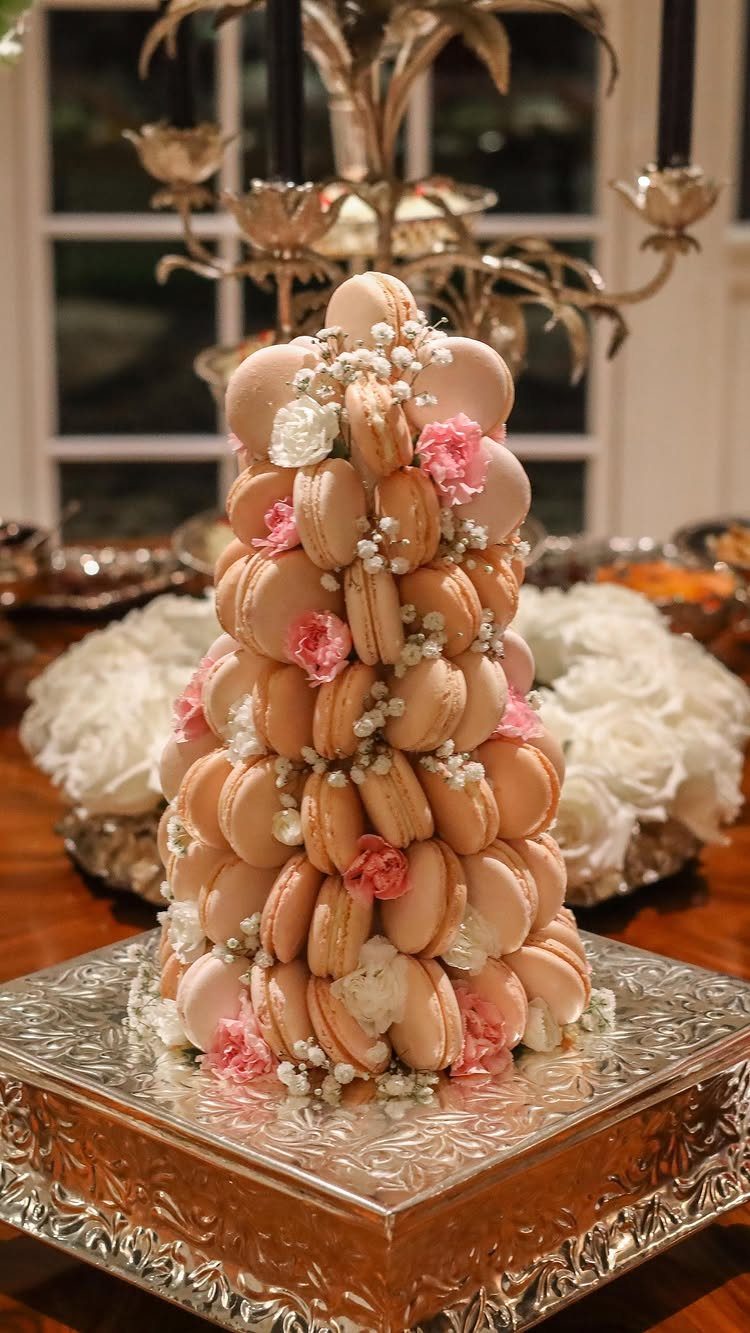
A macaron tower makes dessert the centerpiece, and it takes no plating, no cutting and no forks. Guests grab one on the way to a seat, which suits a rehearsal dinner where people keep standing up to talk.
Stacking your own tower is fiddly, so I would ask the bakery to deliver it assembled.
Pastel shades with a few fresh or sugar flowers look as good as they sound, and they pair well with a candelabra or a simple tray.
Order a few extra; macarons vanish faster than you expect.
2. BBQ Buffets
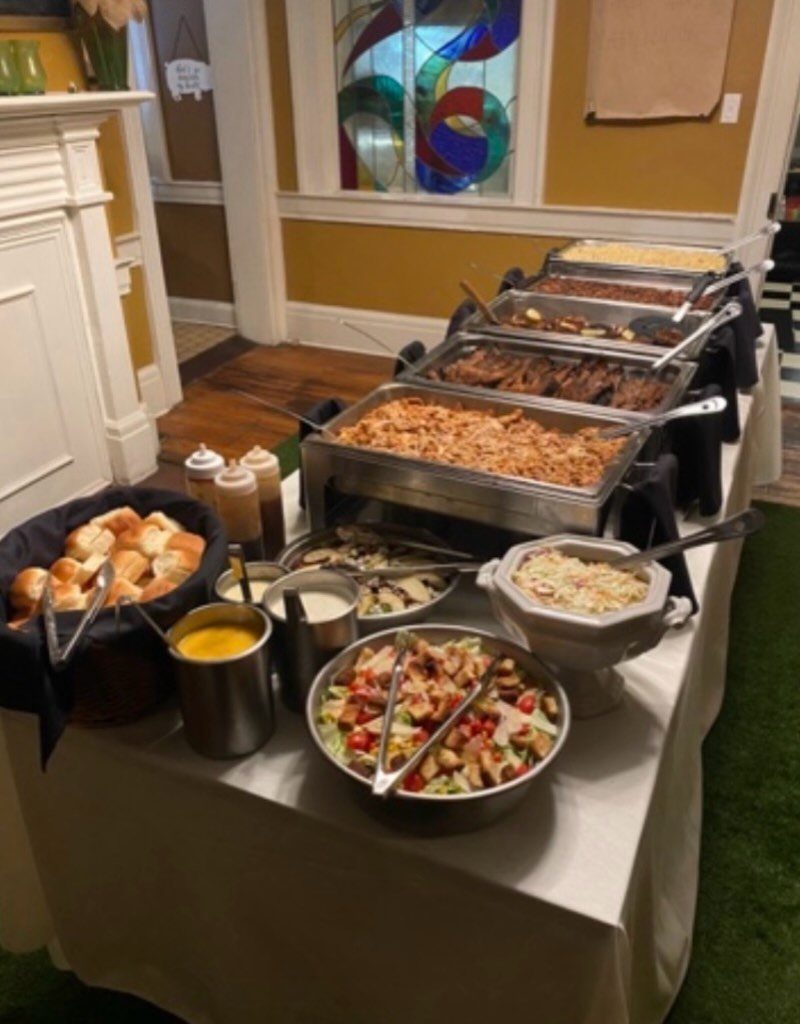
Grilled meats with seasonal sides keep a rehearsal dinner relaxed, and a buffet line lets each guest build a plate they will actually eat.
Chafing dishes hold the meats at serving temperature, so dinner doesn’t depend on the clock. Put cold sides like salad and coleslaw in bowls, and set out a basket of rolls so guests can make sandwiches or skip the bread.
I would offer two meats and 3 sides rather than a huge spread. It keeps cost and waste down, and a smaller menu is easier for a caterer to do well.
3. Taco Bars
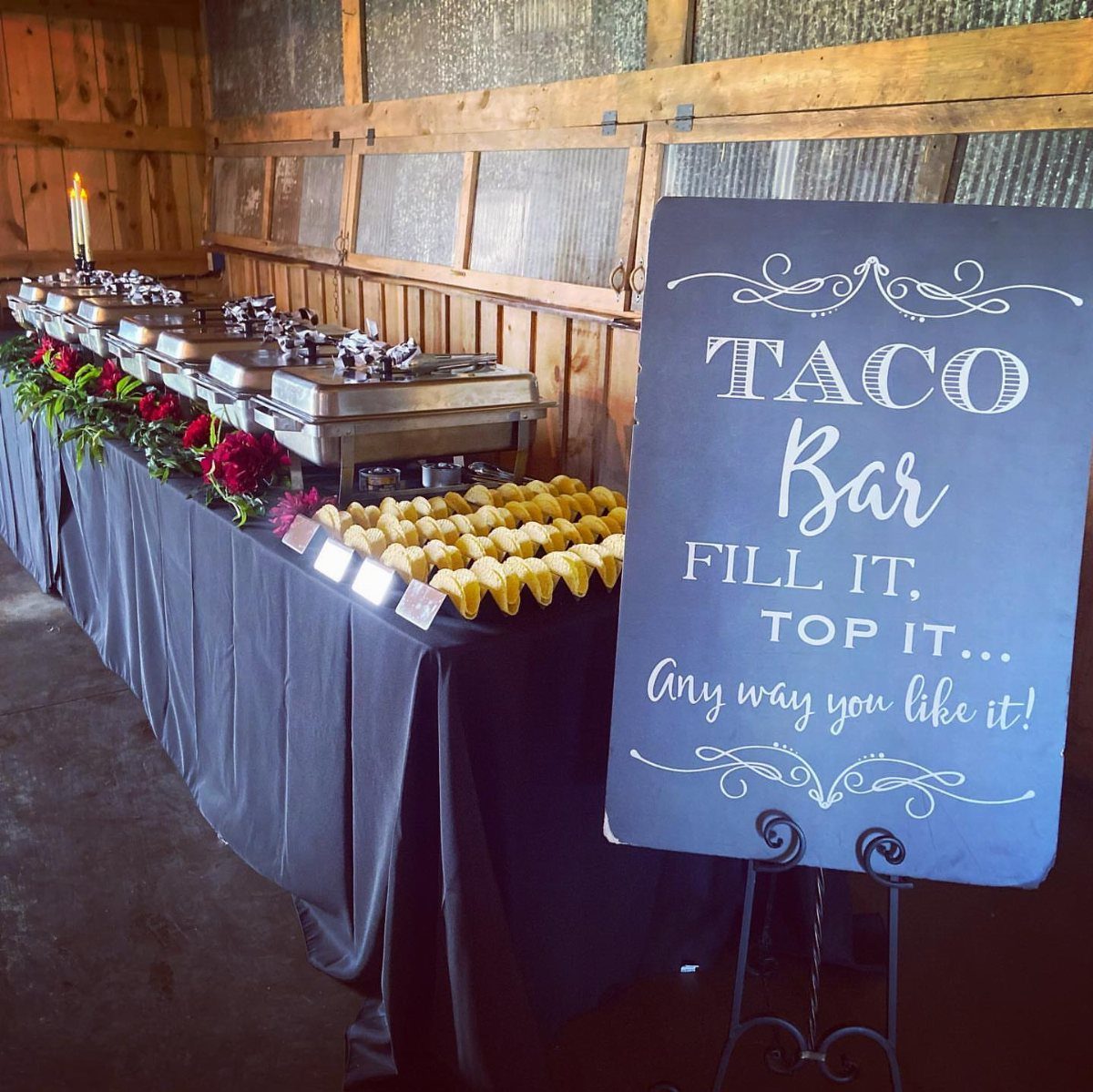
Fill the table with warm fillings, shells and toppings, then let guests build their own tacos. That solves the picky-eater problem better than almost any menu I know.
Keep proteins in chafing dishes so they stay hot, and put toppings in small bowls with their own spoons. Offering corn tortillas alongside shells is a kind move for guests avoiding gluten, though check the label.
A chalkboard sign over a taco bar tells people it’s a build-your-own setup, and clear labels on each tray help the line keep moving. Two proteins plus one vegetarian filling covers most groups.
4. Grazing Tables
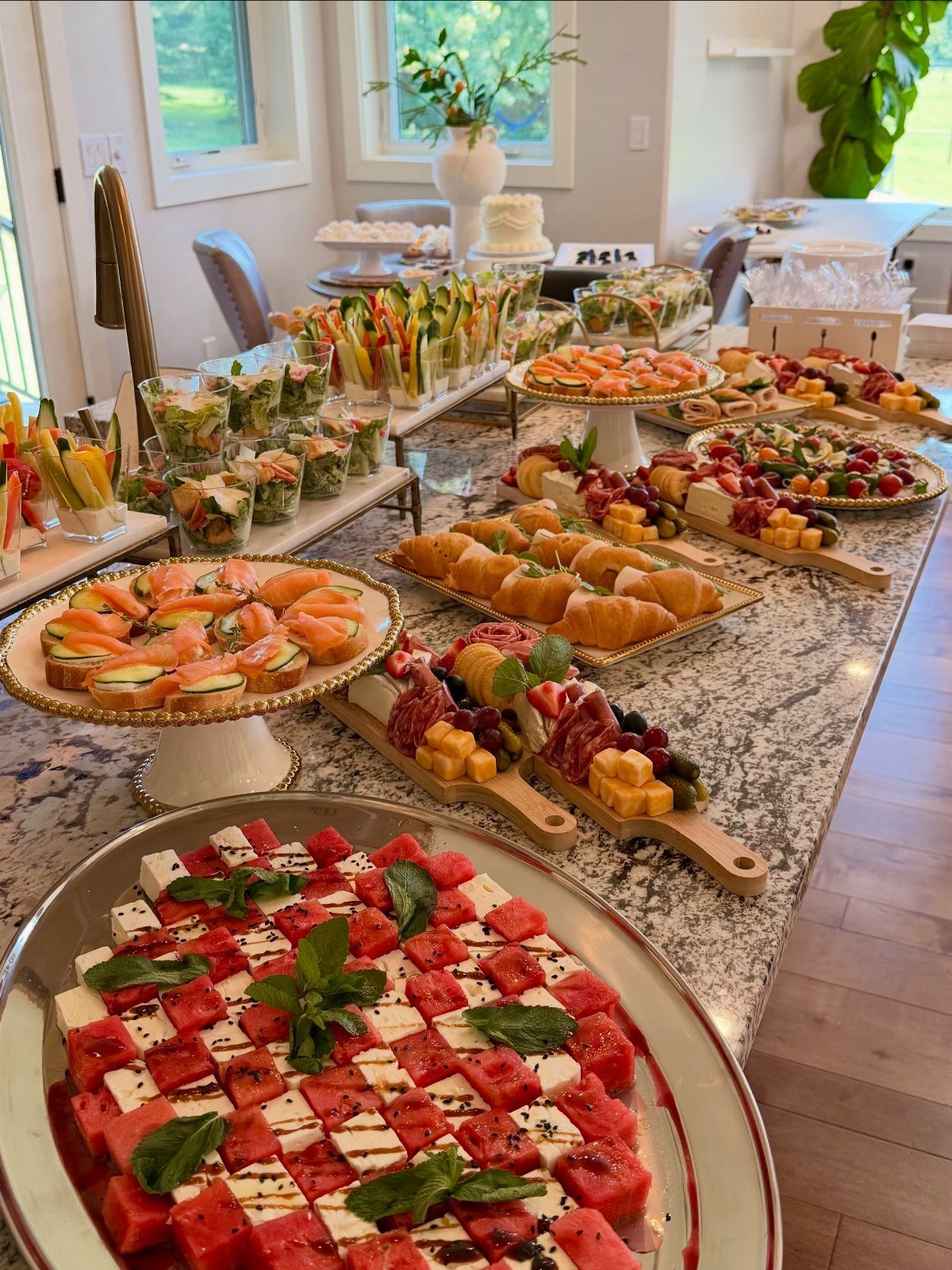
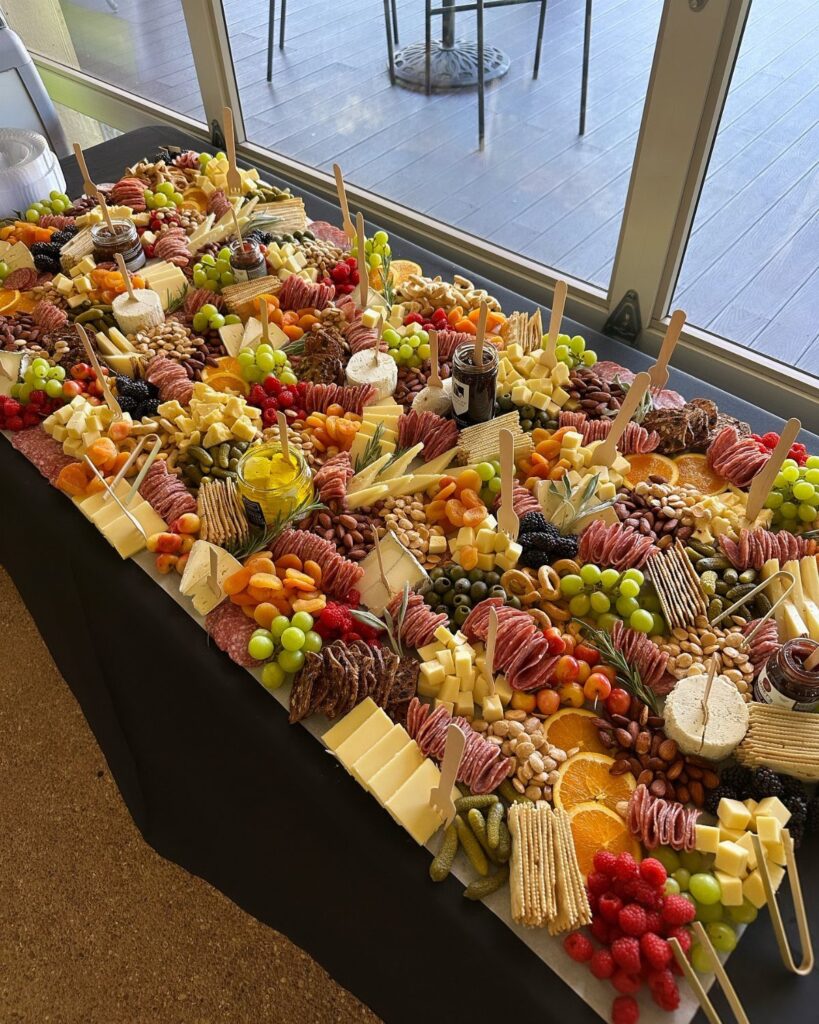
Grazing tables work best when the food is easy to eat standing up: cured meats, cheeses, fruit, vegetables and something fresh like smoked salmon.
Guests drift around the table and talk, which is just what a rehearsal dinner needs while both families meet.
Mix salty and sweet, and include a few options for vegetarians. Watermelon with feta is a bright, cooling addition to a grazing table, and it holds up well on a warm evening.
Cost depends heavily on the meats and cheeses, so put your money there and fill the gaps with produce. I would label anything containing common allergens.
5. Seafood Boil
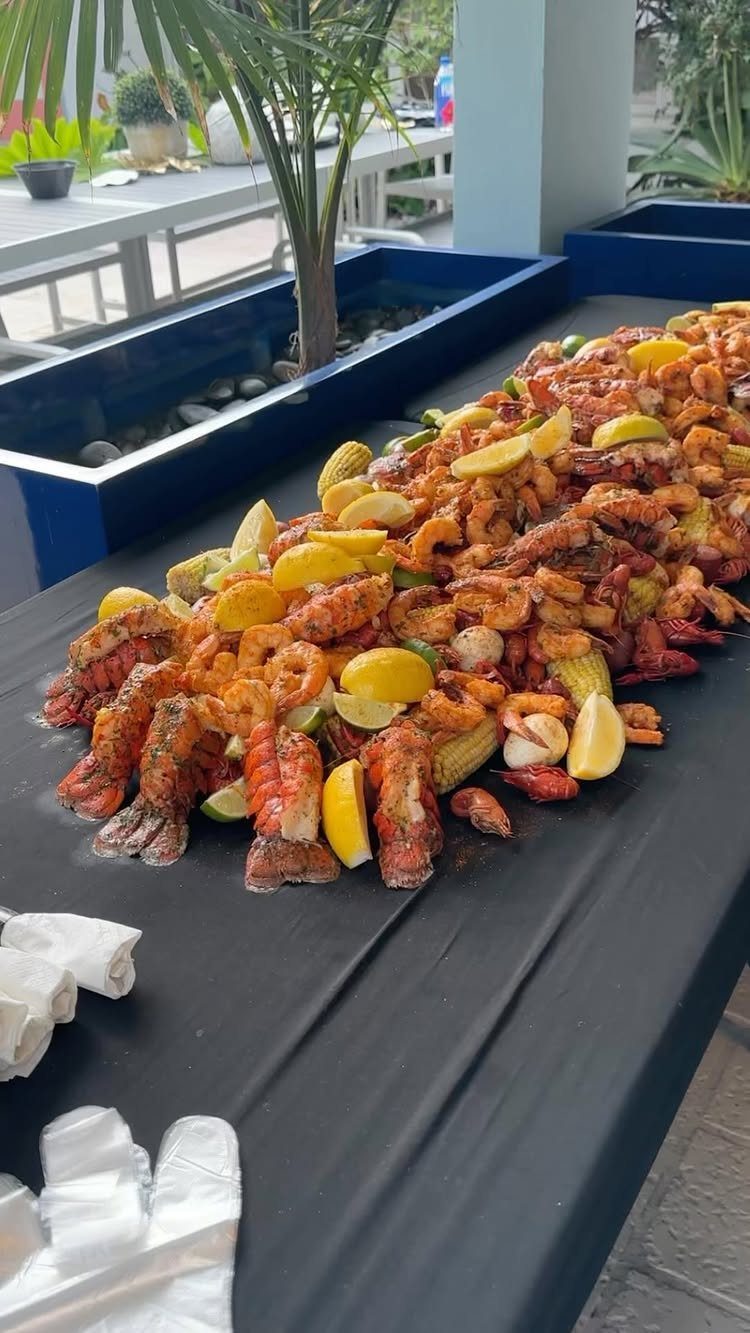
Pour a seafood boil straight onto a covered table and dinner becomes the event. Shrimp, crab, lobster, corn and lemon wedges, piled in the middle, need no plates to look generous.
Cover the table in a dark cloth, which hides stains, and set out rolls of paper towels, bowls for shells and wet wipes. Everyone eats with their hands, so skip fancy outfits or offer aprons.
Shellfish is the main limit: allergic guests need another option, and lobster raises the price quickly. Shrimp and corn stretch the budget best.
6. Quiches and Pastries
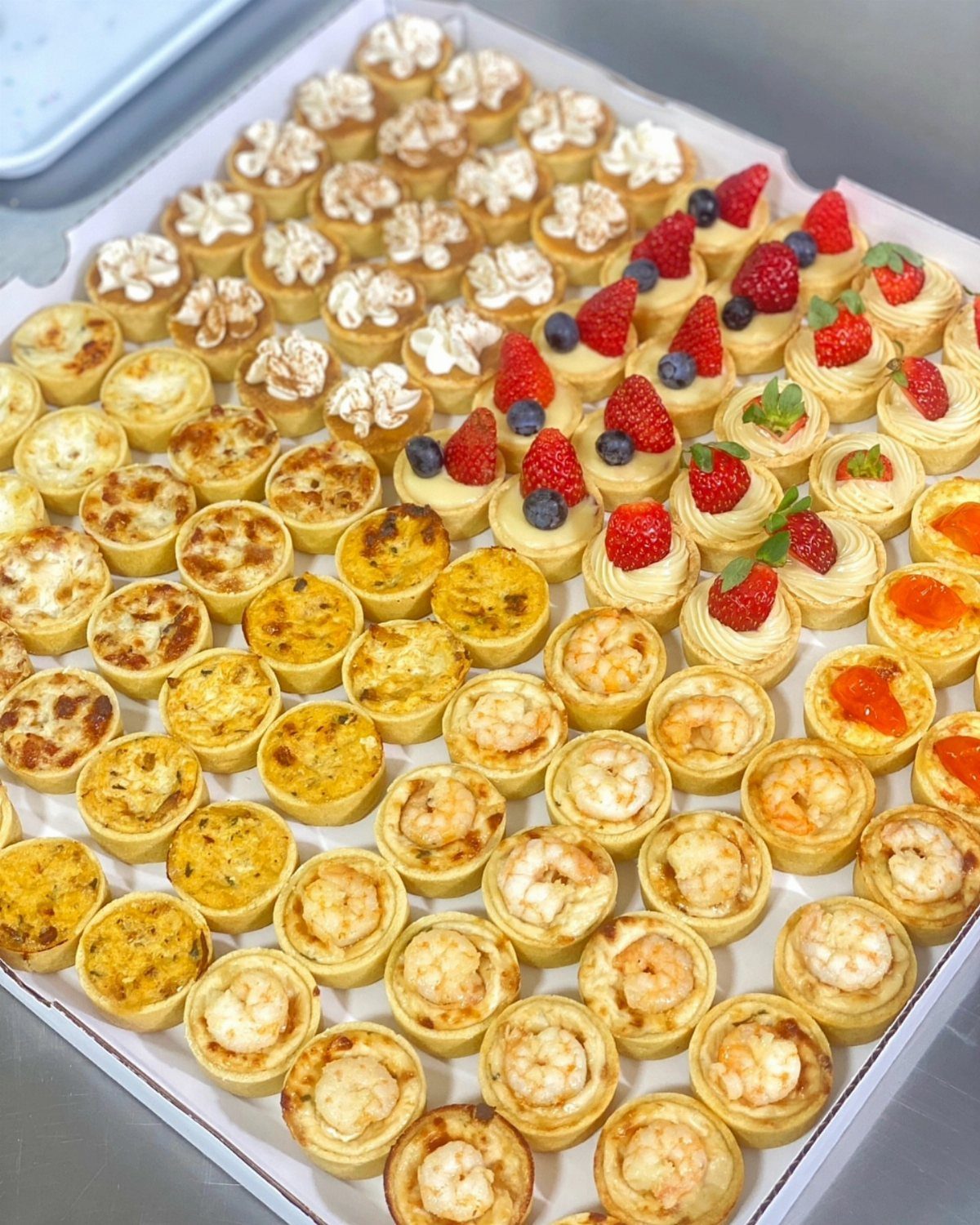
Bite-size pieces mean guests can taste several without committing to a full slice, and a white catering box travels easily if a bakery makes them. Ask for a vegetarian quiche alongside the shrimp so nobody is left out.
I like these best as a starter or a light dinner paired with a salad. They are less filling than a buffet, so plan more pieces per person than you think.
7. Grilled Chicken with Seasonal Accents
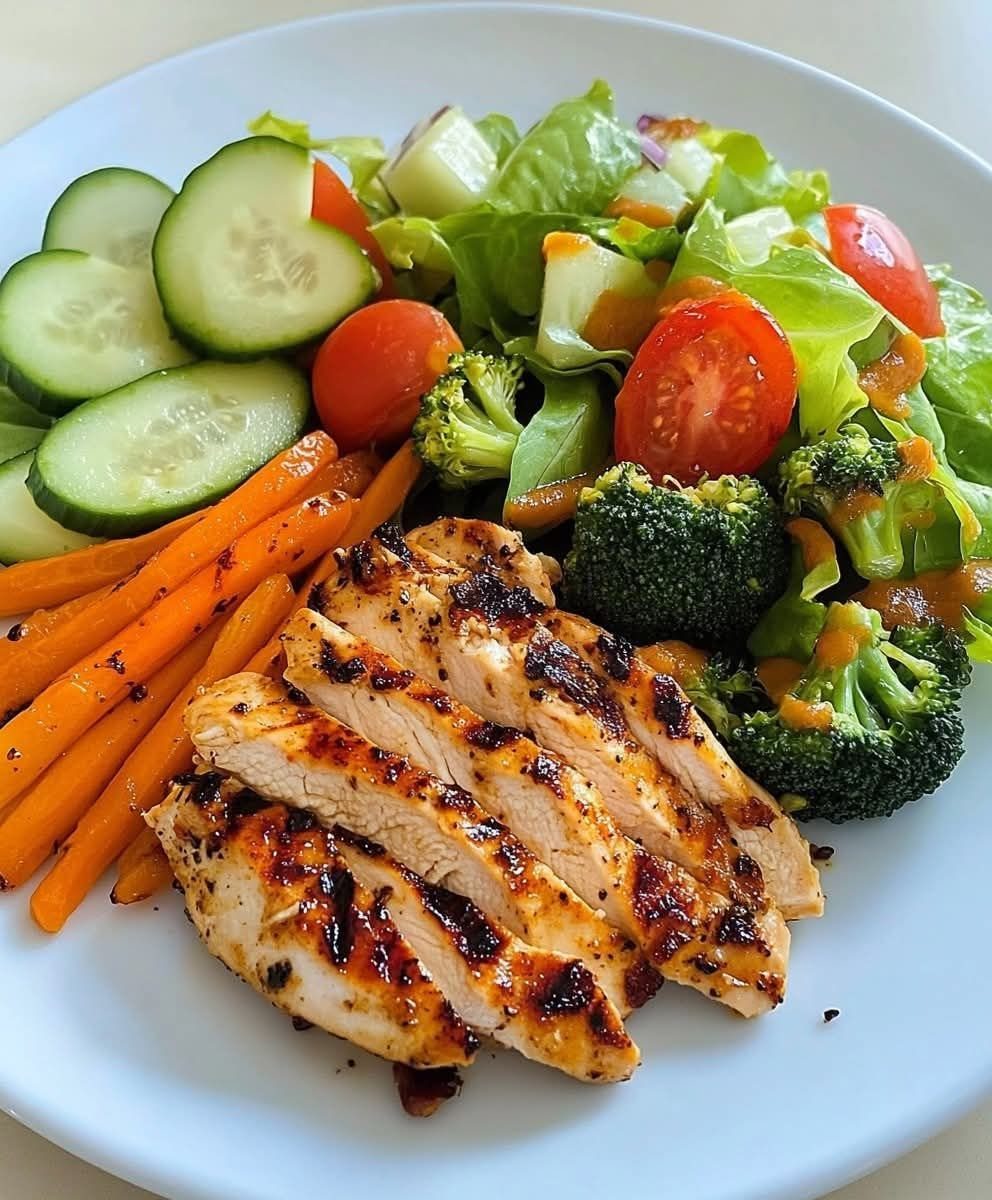
Sliced grilled chicken breast is the safe pick for a mixed crowd, and it works with almost any side.
Slicing the chicken before it reaches the plate makes it easier to eat with a drink in hand. I would pick one seasonal vegetable and one salad, then stop there.
8. Pizza with a Variety of Toppings
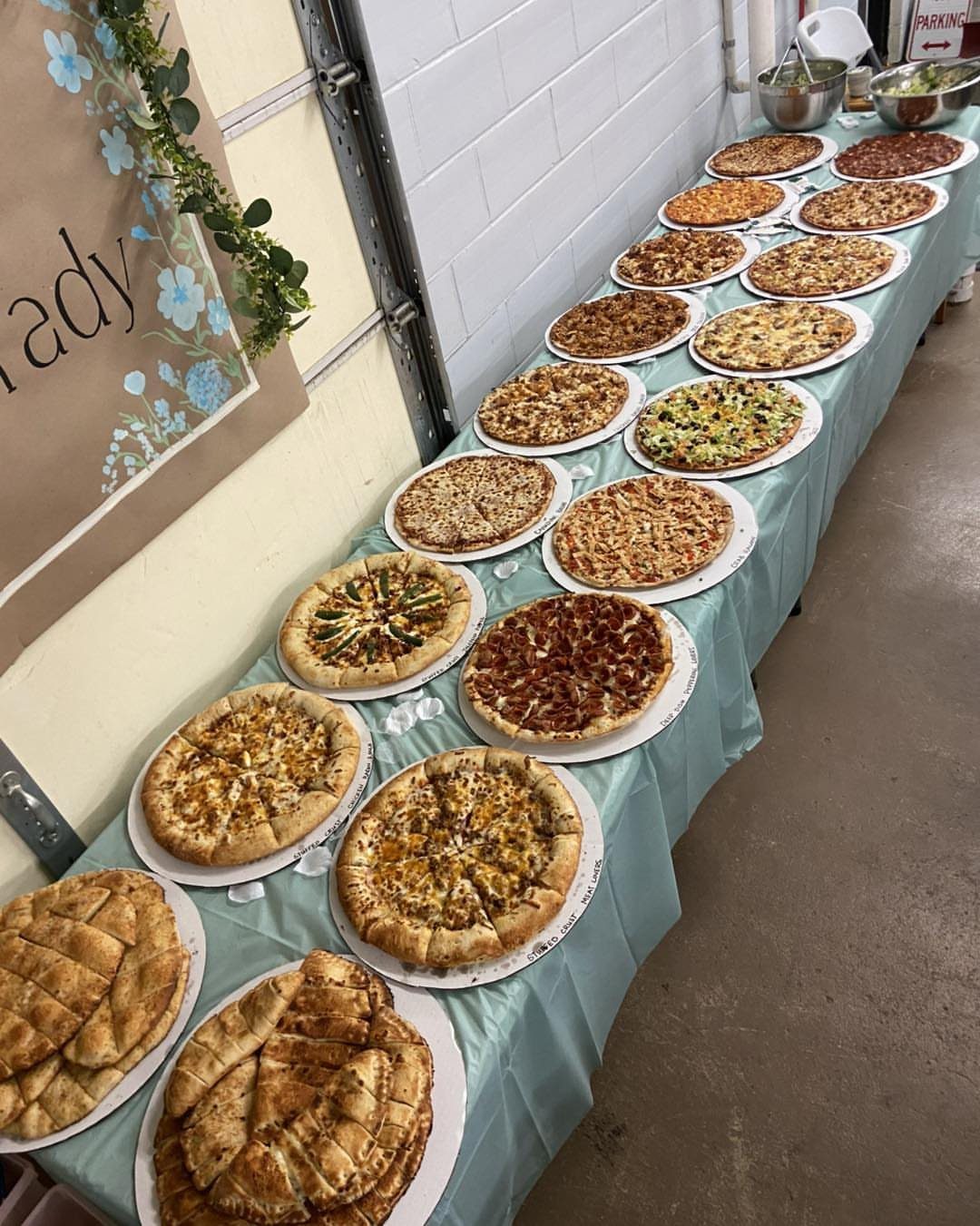
Pizza is the budget-friendly answer for a rehearsal dinner with a long guest list and no time to fuss.
Set the pies along one table, each on its own plate, and guests can sample a slice or two of different toppings.
Order a mix: a plain cheese for kids and picky eaters, a vegetable pie, and one or two meat options. A light tablecloth makes the spread look planned rather than takeout.
I would add a label card beside each pizza so guests can spot the toppings quickly.
9. Baked Apricots with Brie
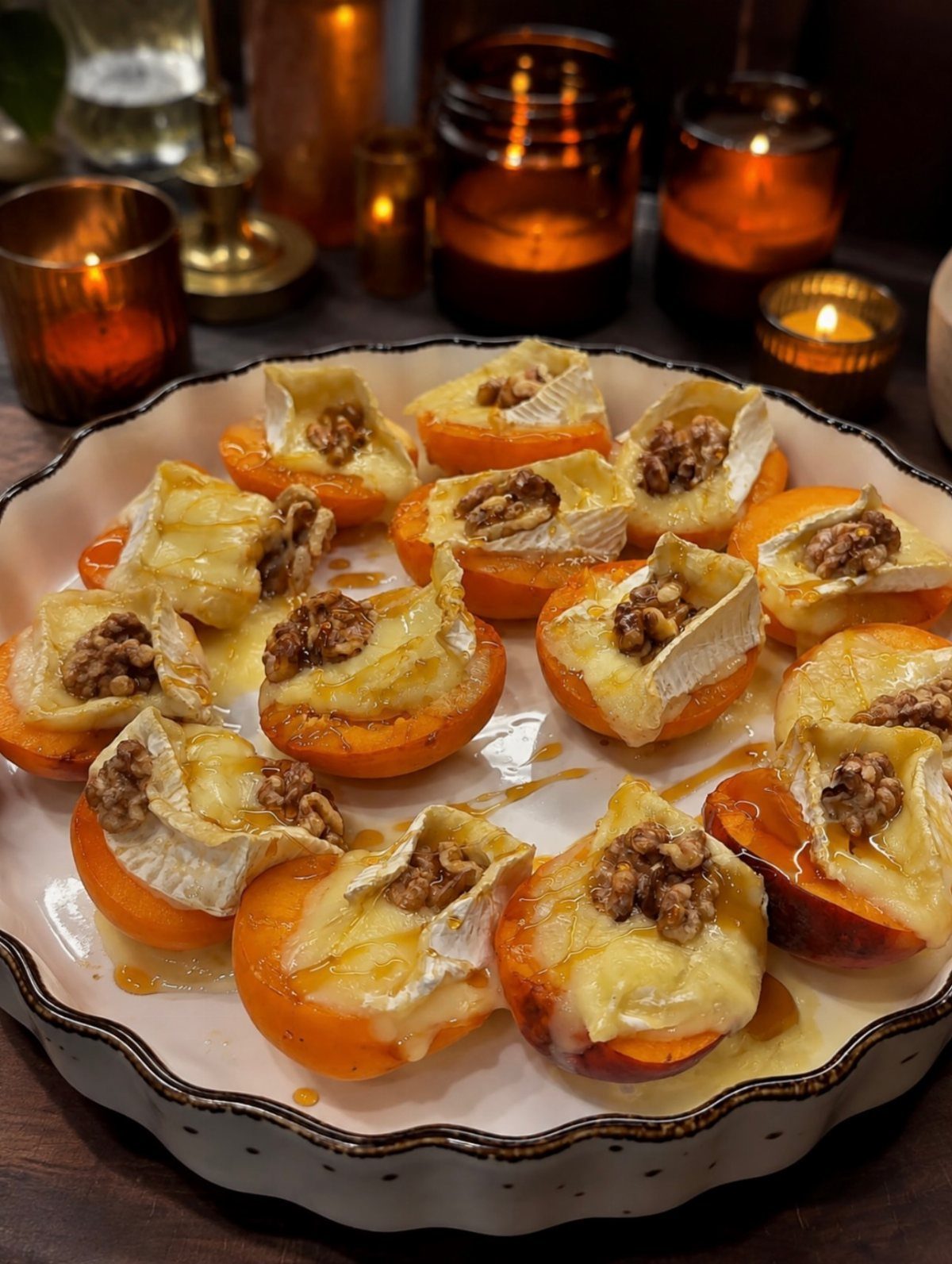
Warm apricot halves filled with melted brie, then topped with walnuts and a drizzle of honey, read as an elegant appetizer yet need almost no cooking skill. Bake them just before serving so the cheese stays soft.
The sweet and salty mix suits a candlelit table, and it gives vegetarians something with real flavor. Walnuts are a tree nut, so I would say so on a small card for guests with allergies.
One platter shared between a few tables is plenty as a starter.
10. Appetizer Platter Assortment
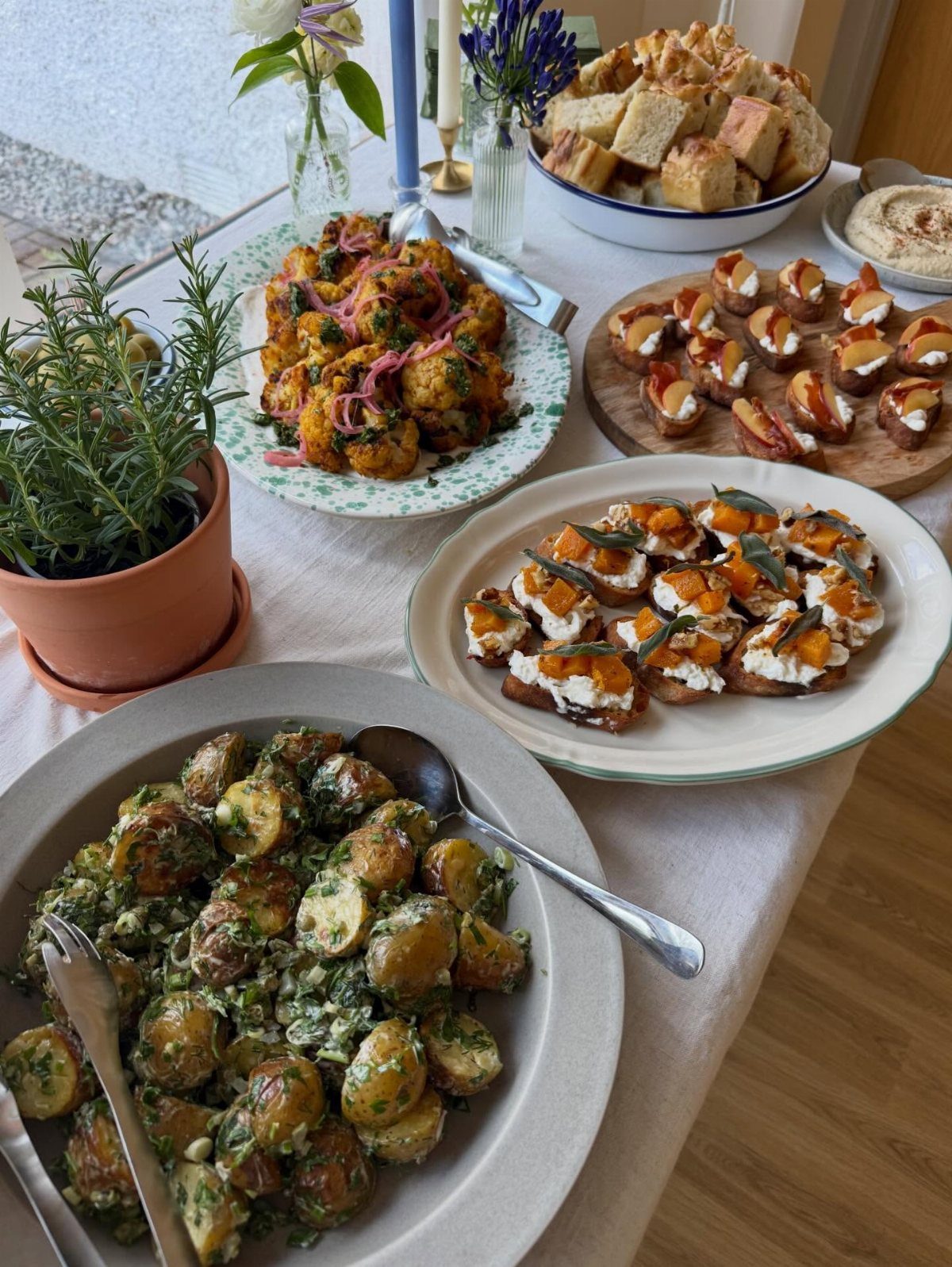
A spread of finger foods lets every guest find something. Crostini, roasted potatoes, fried cauliflower and a bowl of potato salad cover crunchy, creamy and hearty, and none of it needs a knife.
Choose dishes that taste fine at room temperature, since platters sit while people talk. Mixing in a vegetable option like the cauliflower keeps the table friendly to vegetarians.
I would rather make a few dishes well than a dozen average ones, and a few flowers and candles on the table do the rest.
11. Gourmet Bruschetta
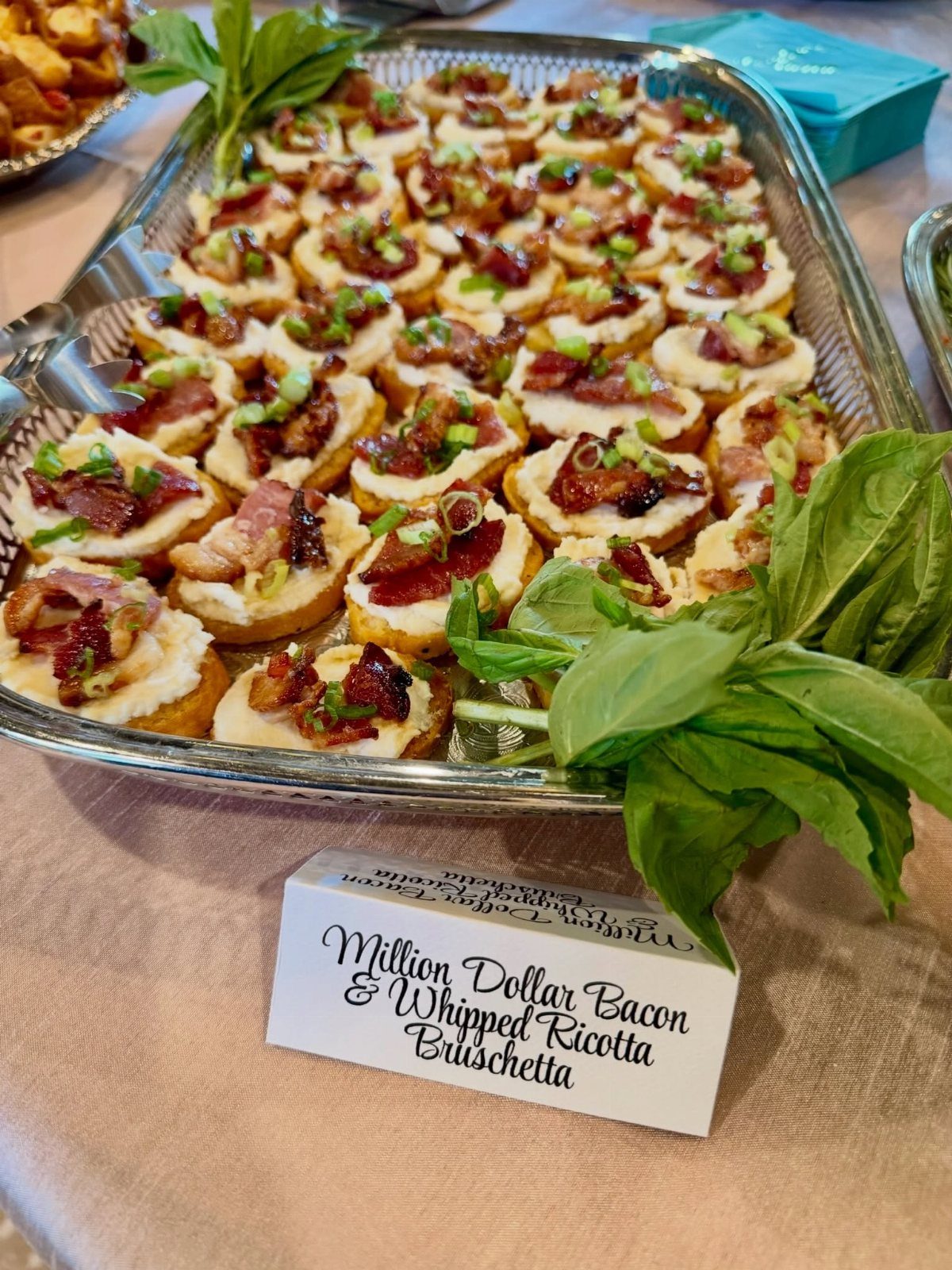
Whipped ricotta with candied bacon on toasted bread tastes far more expensive than it costs. The creamy cheese, the sweet-salty crunch and a leaf of fresh basil give you a canapé that feels special without a caterer’s price tag.
Whip the ricotta ahead and chill it, then assemble the toasts close to serving so they stay crisp.
Bacon means a vegetarian guest needs a second topping option.
12. Pulled Pork Deviled Eggs
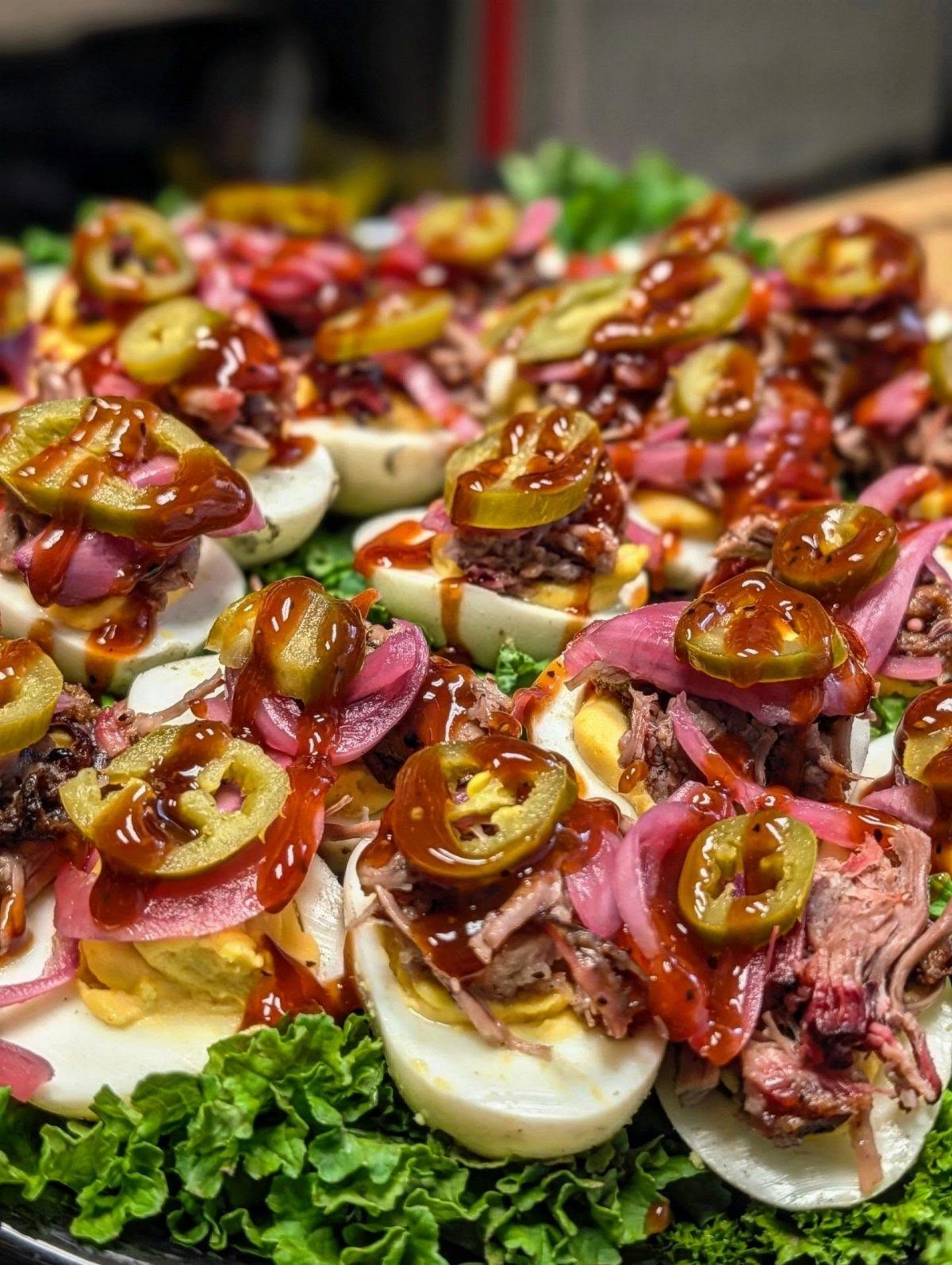
Pulled pork on a deviled egg is a fun Southern twist that fits a casual rehearsal dinner. Each egg gets a spoonful of pork, a swirl of barbecue sauce, pickled red onions and a jalapeño slice.
Make the eggs and pork ahead, and top them shortly before serving so the sauce doesn’t run. Serve on green leaf lettuce, which keeps the eggs from sliding around on the platter.
I would go light on jalapeños, or put them on only half the eggs, so cautious eaters aren’t caught off guard.
Choosing the Right Venue
Start with the headcount, because capacity decides everything else. A room that fits your list with space to stand and talk beats a charming one where guests sit shoulder to shoulder.
Check the practical items before you fall for the look: parking, accessibility for older relatives, and a weather backup if any part of the night is outdoors. Ask what the backup is and who makes the call.
Kitchen access matters more than most couples expect. A venue with a working kitchen lets a caterer cook and hold food on site, while a space without one limits you to food that travels well.
A rehearsal dinner menu should fit the space it is served in, so a tight back room and a open garden call for different food.
Travelers tend to like comforting, familiar dishes, and an outdoor setting suits brighter seasonal ones. For a small group, family-style service makes the table feel warm.
Service style counts too. Past about 40 guests, a buffet keeps lines moving and costs less per head; a plated dinner wins when toasts and a start time have to hold.
Beverage Service Options
A short, well-chosen drink list beats a full bar. It is easier to stock, quicker to serve, and cheaper than covering every request.
A solid lineup is beer and wine, one or two signature cocktails, and a few drinks for guests who skip alcohol: seasonal mocktails, sparkling water and fresh lemonade. Coffee service after dinner gives the night a clear finish.
Name the signature cocktails after something personal, like a shared favorite flavor, and print them on a small sign at the bar.
For a rehearsal dinner built around the drinks, a guided wine or beer tasting gives guests something to do besides stand around.
The scenery does most of the decorating, so a little greenery and a hint of your wedding colors is enough.
Monogrammed wine glasses double as keepsakes.
Frequently Asked Questions
What is typically served at a rehearsal dinner?
Crowd-pleasers like BBQ, Italian food, taco bars, buffets and family-style meals show up most.
A taco bar is a strong pick because guests build their own plates, which handles picky eaters. Keep the menu small, such as two meats and 3 sides, so the caterer can do it well and cost stays down.
What are the trends for rehearsal dinners in 2026?
Relaxed, interactive formats are leading: food stations, grazing tables and casual buffets over formal coursed dinners. If the wedding is a destination event, a welcome party for everyone who traveled can take the place of a formal rehearsal dinner.



