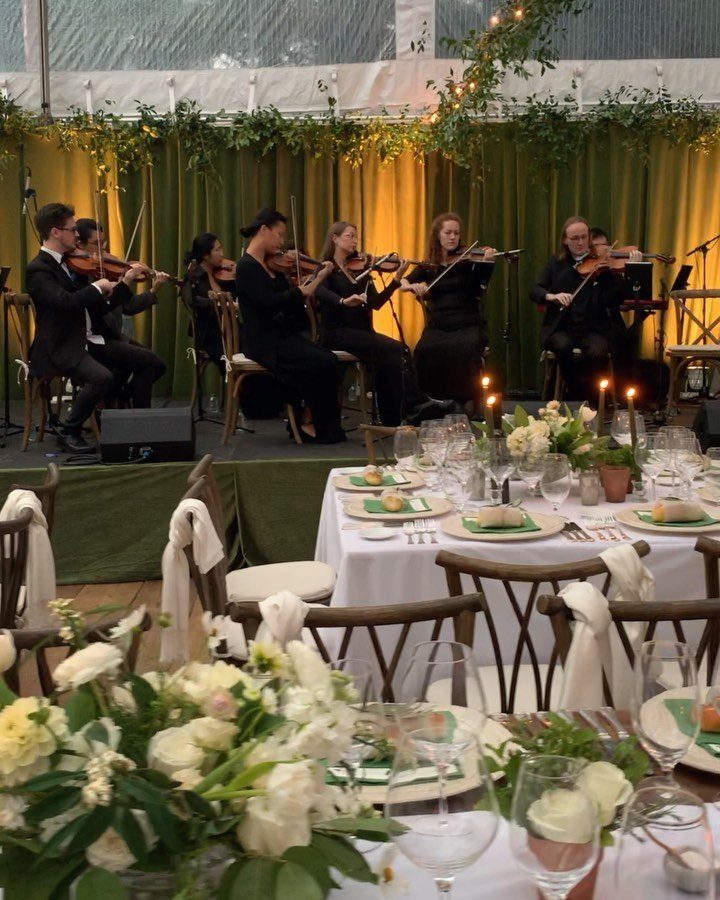
Dinner music runs from heritage sounds and smooth jazz to acoustic folk and classical strings, and each one sets a different mood while guests eat.
The deciding fact is your venue and budget: a live group costs more than a playlist, and a grand piano only works if the room has one or can bring one in.
Whichever style wins, keep the volume low enough that guests can talk at a normal level and still hear the toasts, which matters just as much when a DJ is running the room.
1. Traditional Music Reflecting Heritage
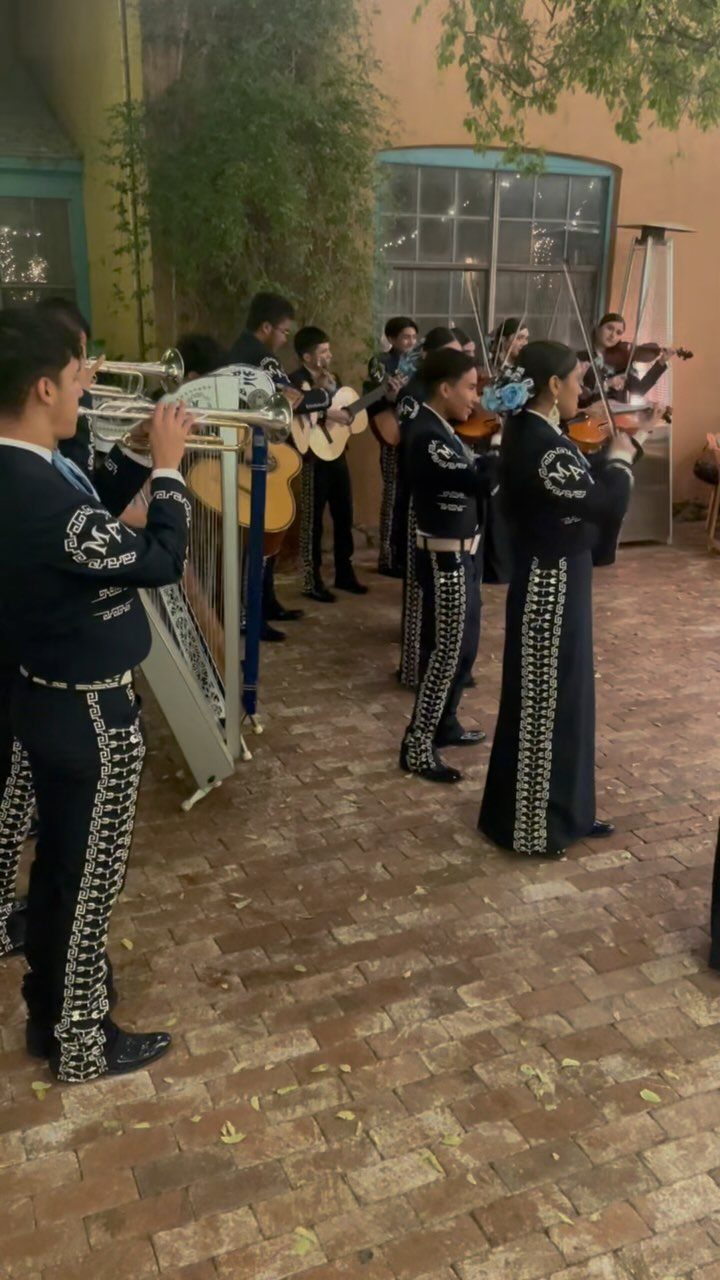
A mariachi band is a bold way to put your heritage into the dinner hour. A mariachi-style group with trumpets and guitars can fill a courtyard without any amplification fuss.
Hiring a full band costs more than a playlist, so I would book it for cocktail hour or the first course, not the whole meal.
Ask for a set list ahead of time and request slower songs while guests are eating, so conversation still carries.
Whatever tradition you honor, a live group tied to your family’s roots will be the music guests mention afterward.
2. Smooth Jazz Wedding Dinner Music
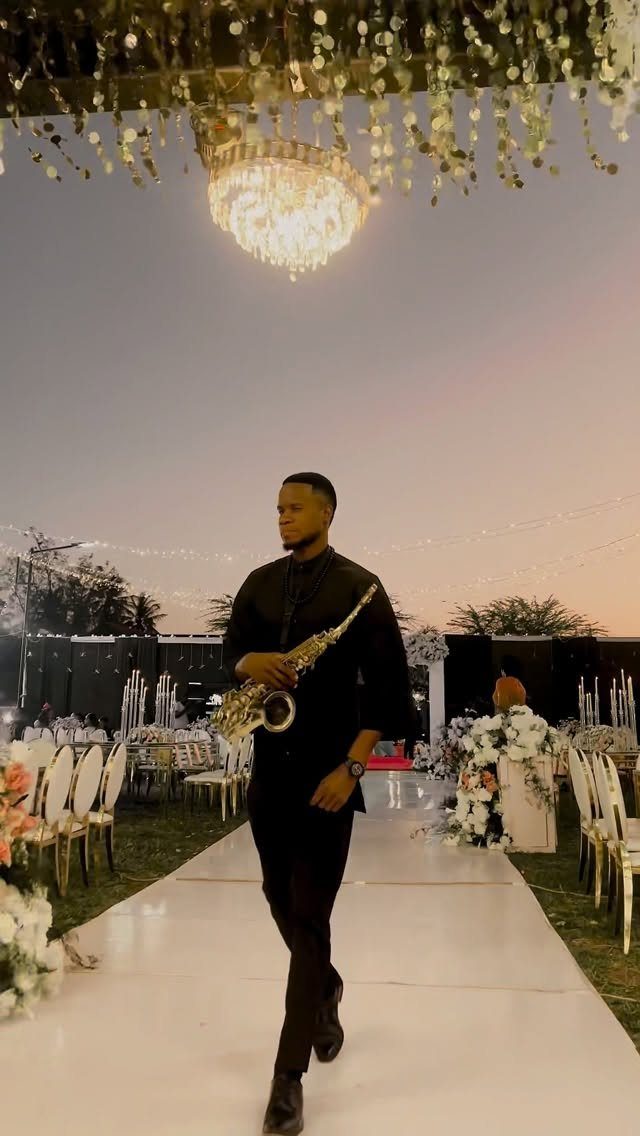
Saxophone is what makes jazz at dinner feel relaxed instead of formal. A player who can walk the space, as one does here between chairs and florals, turns background music into something guests can enjoy up close.
Standards and mellow instrumentals are the safer repertoire here, since anything loud competes with the toasts. A solo sax over a backing track costs less than a full combo, which helps a tighter budget.
Ask the player to step away from the tables during speeches.
3. Acoustic Folk Wedding Dinner Music
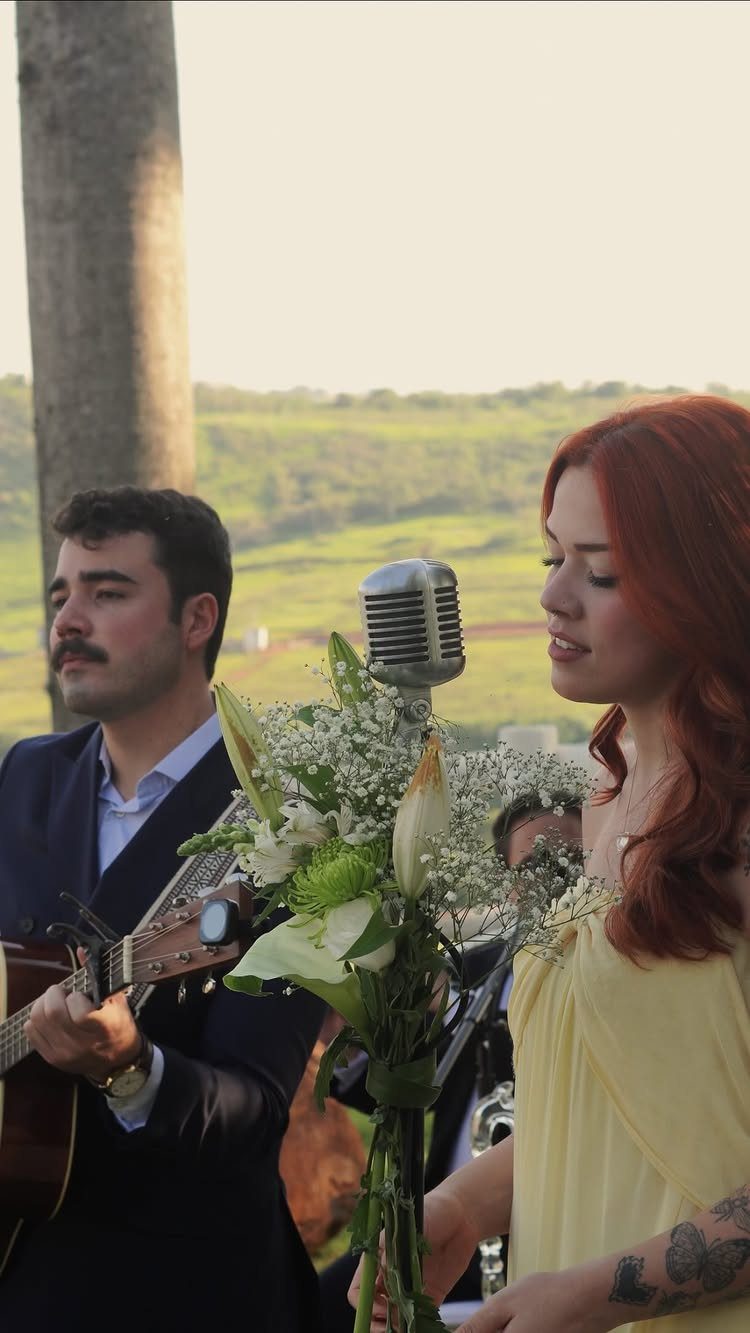
Acoustic folk works best when the sound is small: one guitar, one or two voices, a single vintage-style microphone. Played softly, folk keeps the meal cozy, so guests can chat across the table at a normal volume.
A duo is usually cheaper than a full band, so it suits modest budgets well. I would pick songs people know and request softer arrangements of them, which gives a familiar feel without the volume.
Tell the duo your timeline so they pause for toasts.
4. Wedding Dinner Music Classical Elegance
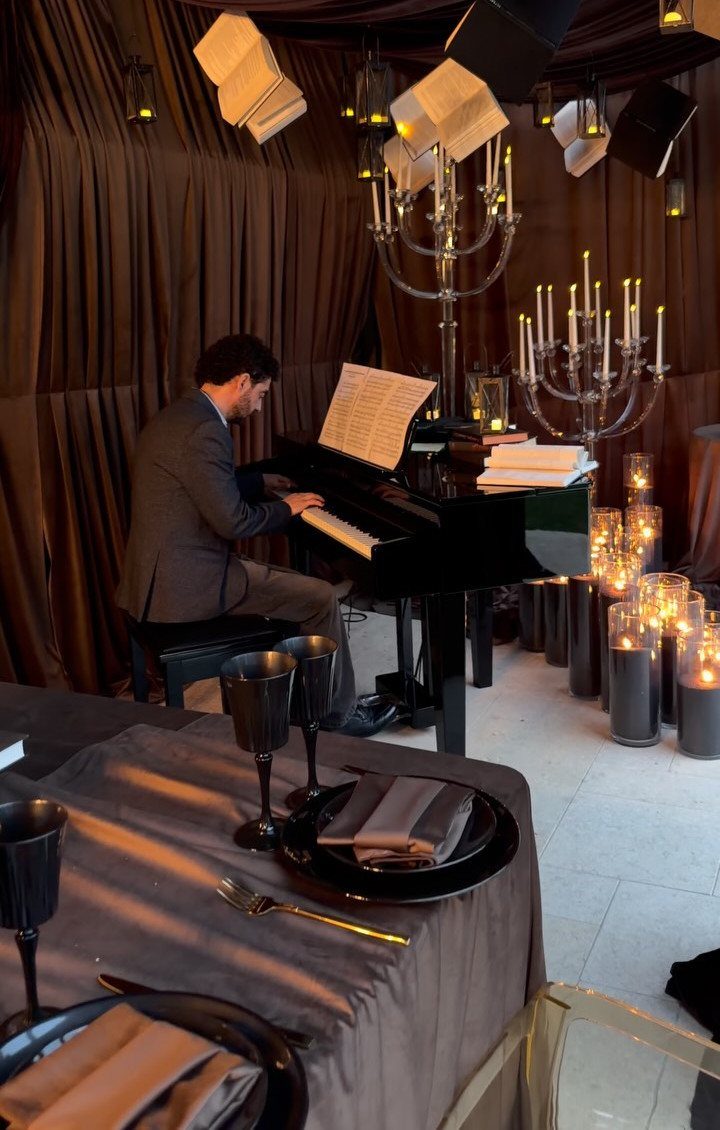
Classical music on a grand piano gives dinner the most formal tone of any option here. A solo pianist covers the whole meal alone, with no sound system beyond the instrument itself.
Check first that your venue has a piano, or can bring one in, because renting and moving a grand adds real cost. If it does not, a recorded classical playlist is the cheaper stand-in.
I like asking the pianist to mix in classical arrangements of pop songs you love, so the evening feels personal.
Importance of Wedding Music
Every phase of the day asks something different of the music, and guests feel a mismatch even when they can’t name it.
A ceremony playlist should tighten the room before the big moments and let it breathe right after them. During cocktail hour, I like warm, easy music that gives guests something to mingle over without stealing the room.
At dinner, the volume should be loud enough that people notice it and low enough that nobody has to raise their voice to talk.
Think of each stretch of the day as a question of pacing, and the playlist will follow. Music that works correctly goes unnoticed; music that misses gets felt right away.
The dance floor is the same. Music that climbs in steps pulls people onto the floor, but a set that peaks in the first 20 minutes and then drops tends to leave it empty by hour two.
Hiring a Professional DJ
A professional DJ earns the fee in the things guests never see.
A good DJ moves from one phase to the next with no silence, keeps the volume right for the room, and changes course when guests react, not when a printed schedule says so.
My first question for any DJ is about gear, and it matters most for outdoor ceremonies, where basic consumer speakers often cut out or sound thin.
Also ask what the backup plan is if something breaks, since there is no second chance that day.
Someone who has played venues like yours already knows how a barn, a ballroom and a vineyard each handle sound, and where the speakers should sit so every table hears the same thing.
The MC role matters too: grand entrances, first dances and introductions land better with a steady voice running them. On a tight budget, a DJ is the one hire I would protect.
Planning Music for Different Phases
Build the music plan one phase at a time, and write the order down before you pick a single song.
For the ceremony, map each transition: guest seating, processional, bridal entrance, any special moment, then the recessional. Each one needs music that guides the feeling.
After dinner, the reception music should rise gradually, one layer at a time, until people are dancing.
Think about the age range of your guests as you plan that build, so the early dance songs reach grandparents and college friends alike. Save the biggest crowd-pleasers for after the floor has filled.
Choosing what to play in the background during your reception dinner can be tricky. You’ll want songs about romantic love to fit with the theme, while avoiding classic breakup numbers.
Frequently Asked Questions
What are the best wedding songs?
For dinner, mellow standards and easy vocals are a safe bet.
Think Frank Sinatra’s "Fly Me To The Moon," Etta James’s "A Sunday Kind Of Love," Van Morrison’s "Moondance," or the Bee Gees’ "How Deep Is Your Love." They keep the room warm without pulling attention away from conversation.
What song brings everyone to the dance floor?
No single song does it; the order matters more.
A dance floor fills when the energy climbs a little at a time; a set that burns hot for 20 minutes and then sags will usually leave the room half empty by the second hour.
Open with songs that a grandparent and a college roommate can both sing along to, then hold the heaviest hitters until people are already out there.
What is some good background music for a dinner party?
Smooth jazz, standards, and mellow vocals work best.
Try Nat King Cole’s "Smile," Norah Jones’s "Come Away With Me," or Tony Bennett’s "Cheek To Cheek." Soft acoustic folk or a solo piano also keeps the volume low enough that guests can talk across the table.
What should wedding dinner music sound like?
Dinner music should sit in the background: present enough to set a mood, never loud enough to compete with the table.
Guests should be able to talk at an ordinary volume without raising their voices. If anyone has to lean across the table to hear their neighbor, the volume is too high, no matter what is playing.
How do you choose music for each part of the wedding?
I would break the day into phases and write the running order on paper before choosing a single song.
Should you hire a DJ or a live band for a wedding?
If money is tight, the DJ is the hire I would protect first. A good DJ handles smooth transitions, volume, and the MC role, and adapts to the crowd in real time.



