The ideas here run from a First Look to a Sparkler Send-Off, and the shots that cost almost nothing, like Couple Under the Veil or Walking Hand-in-Hand, sit beside ones that need a helper, a spare bottle for the champagne spray or a plan for backlighting.
Your schedule picks the shots for you: the light you have decides which ones work, so check your sunset time first and spend the best stretch on the portraits you want most.
Family Formals and the other group shots are the easiest place to lose time, since 10–15 of them take 20–30 minutes.
1. First Look
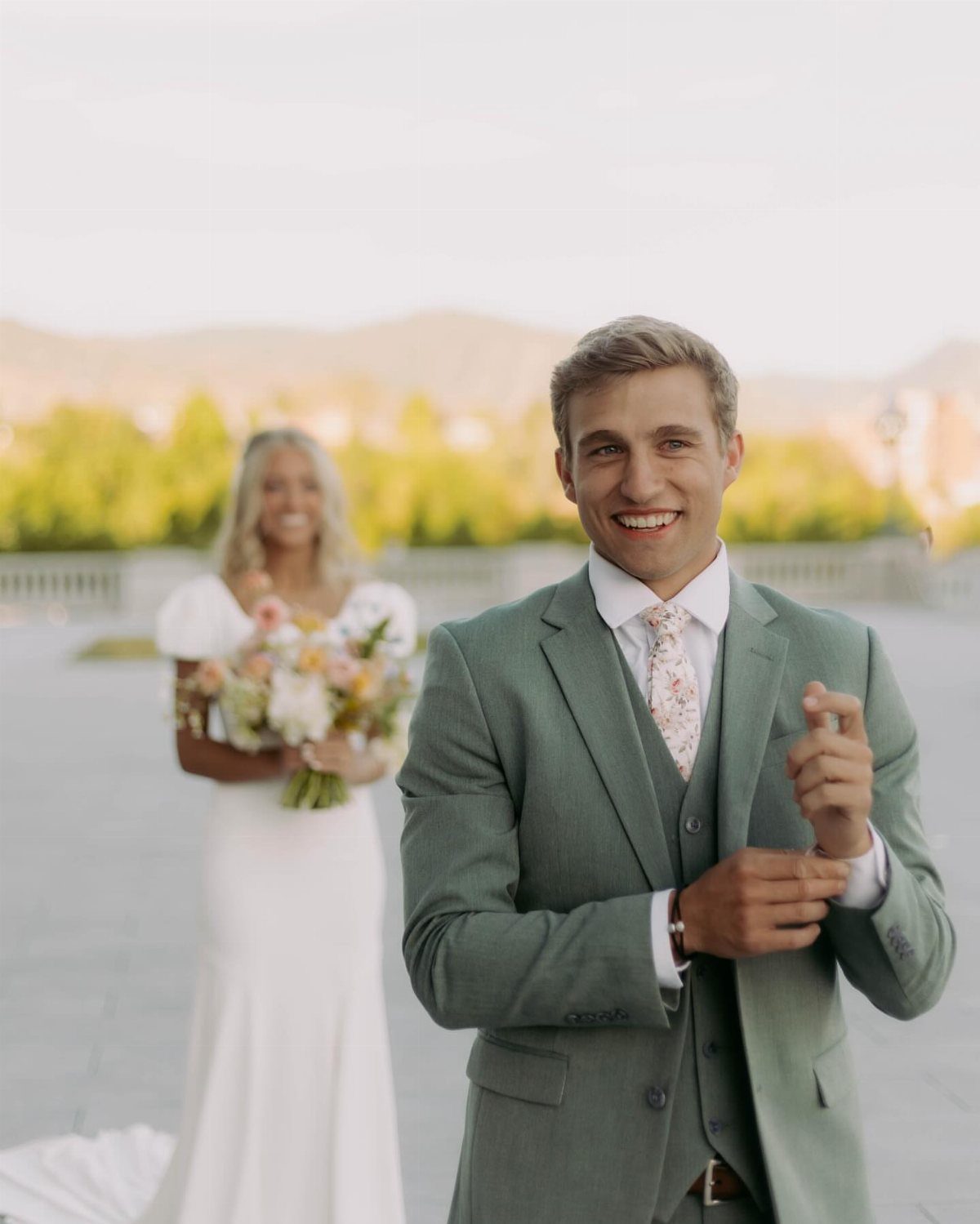
A first look puts the two of you alone before the ceremony, with one person waiting and the other walking up behind.
Having the waiting partner face away, or stand with a relaxed smile like the groom here, gives the photographer a clean reaction to catch.
Pick a quiet spot with room to approach, such as an open terrace. Tell your photographer which partner you want to see the other’s face first, since that choice decides where they stand.
2. Bridal Party Photos
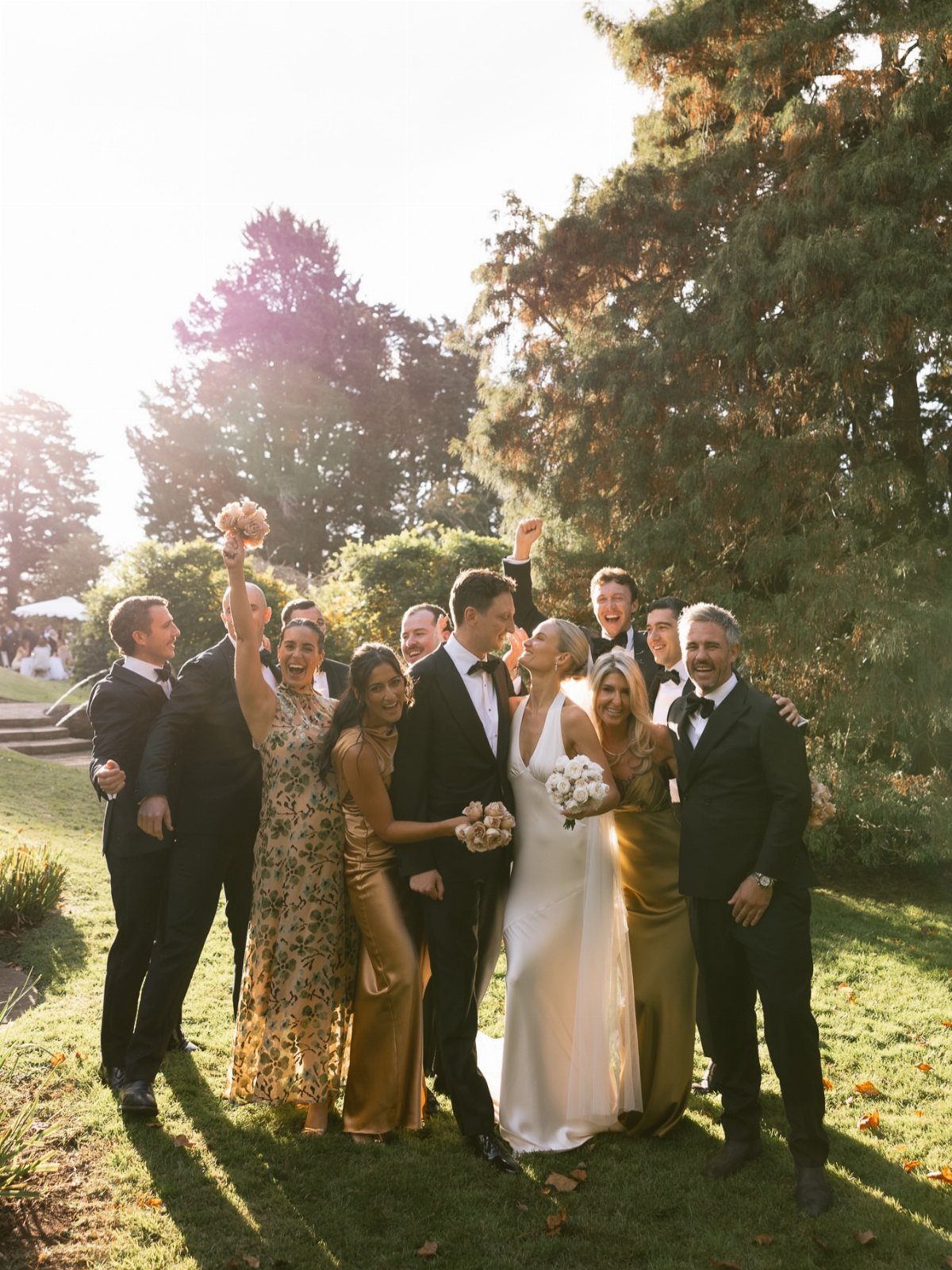
Loud beats posed for a group this size.
A long row of people looks stiff unless someone gives them a job, so ask everyone to cheer, laugh or shout on the count of three, then shoot a few frames in a row.
Put the couple in the center and let the 2 sides frame them.
Matching tones, like the suits and gold dresses here, keep a busy group looking tidy. I would ask for one serious frame and one wild frame, then keep both.
3. Couple Portraits
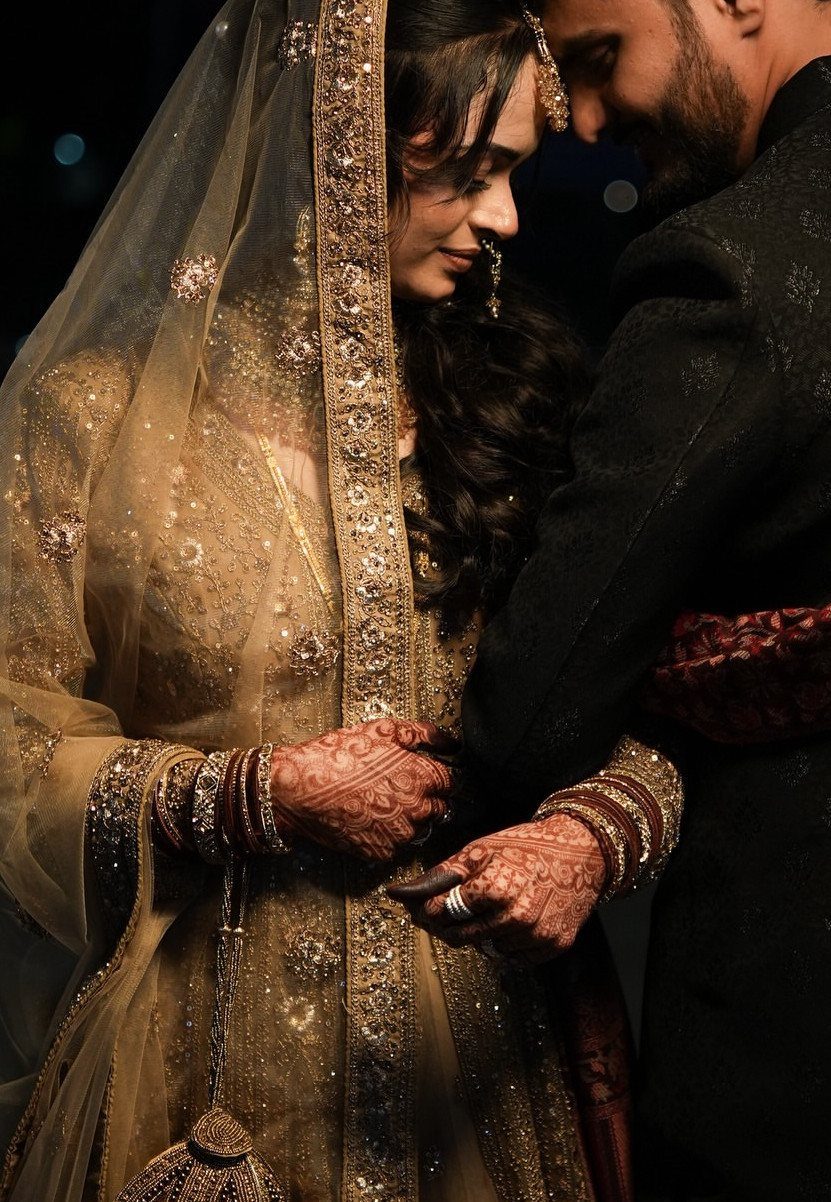
Tight framing makes a couple portrait feel private. Standing close enough that the photographer fills the frame with the two of you leaves out the venue and keeps attention on how you hold each other.
Embroidery, veils and jewelry reward a close crop, so ask for detail frames along with the faces.
4. Bridal Portraits
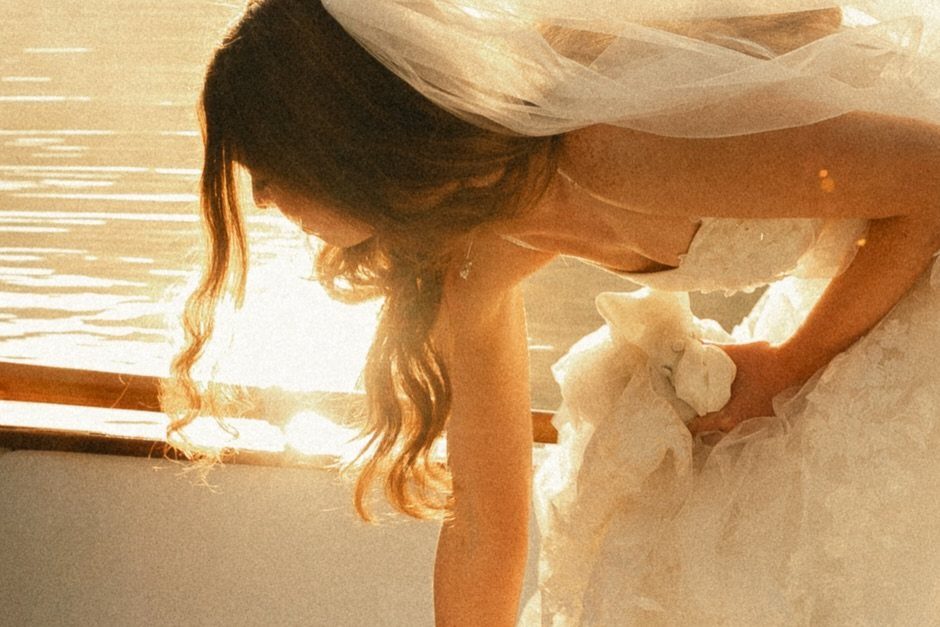
Solo bridal portraits are where the dress gets its due, and light does most of the work. Warm, low sun on the veil and skin, with the bride leaning slightly forward in profile, looks soft without any editing.
Ask your photographer to shoot from the side as well as the front.
Bring a helper to fix the veil between frames, since it shifts constantly. If your schedule allows only one stretch of good light, I would spend it here.
5. Wedding Ceremony Photos
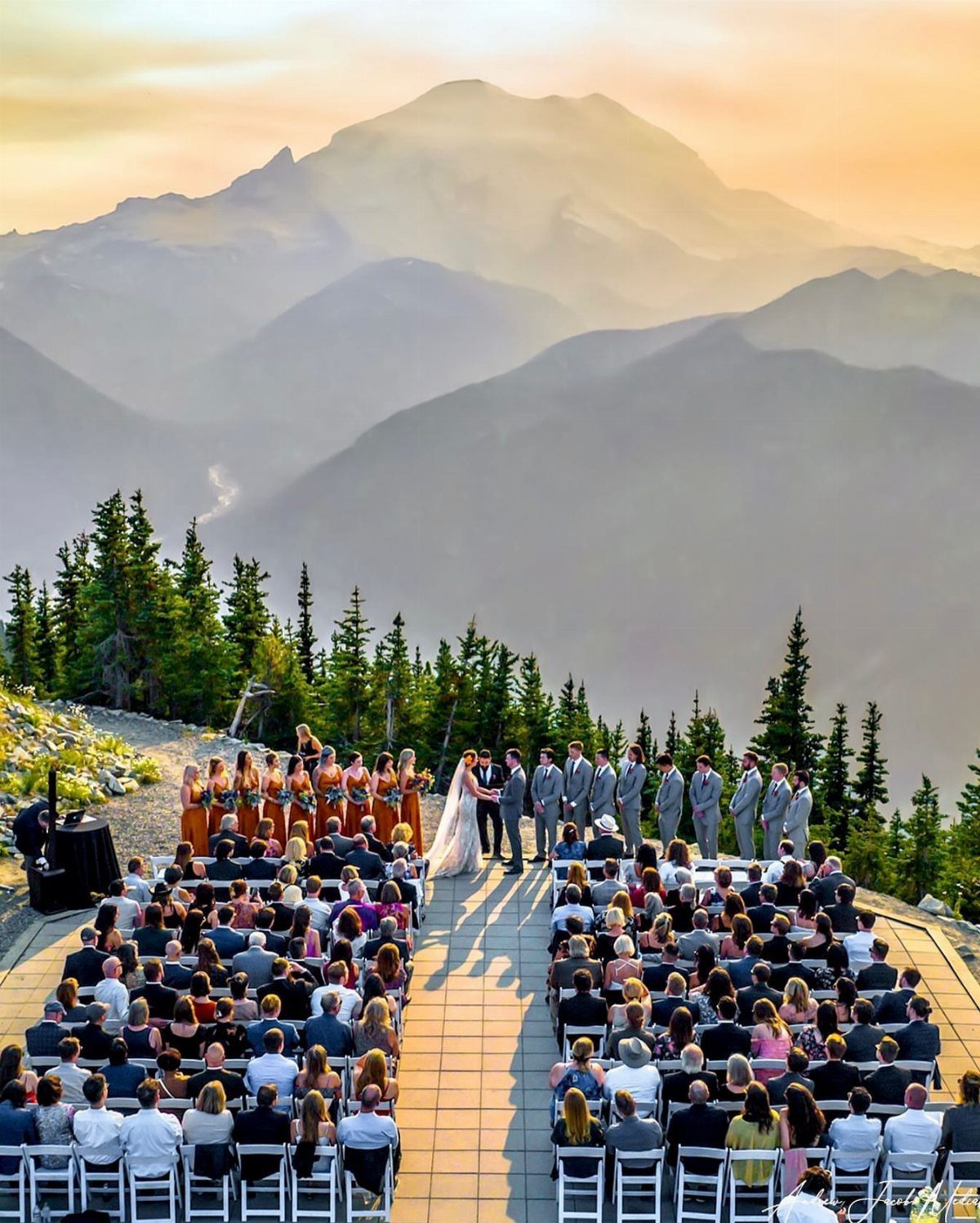
Ceremony photos carry the moments you cannot repeat, so decide your must-haves ahead: the walk down the aisle, the vows, the rings and the first kiss.
A wide frame that includes the backdrop, like mountains behind the guests, tells the story of where you married.
Talk to your officiant about where the photographer may stand. Ask for both wide shots and close ones, because the kiss deserves a tight frame and the setting deserves a wide one.
6. Wedding Rings
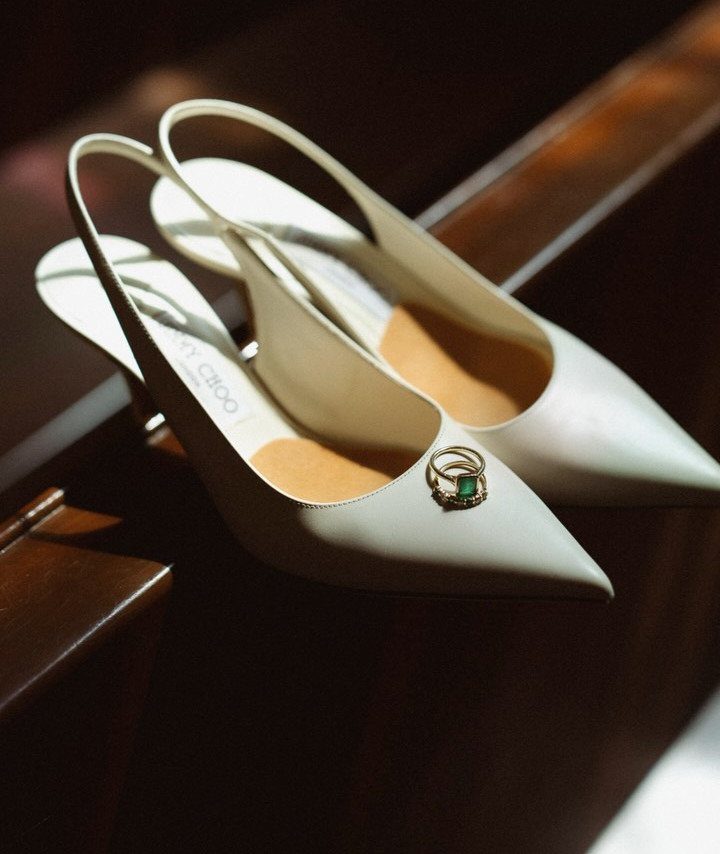
Rings photograph best when they sit on something with meaning or texture.
Gather the rings, shoes and any other small pieces before the photographer arrives, so styling takes minutes.
Dark surfaces make light metal and bright stones stand out. Ask for a macro lens if you want fine detail on the stone.
7. Fun Props
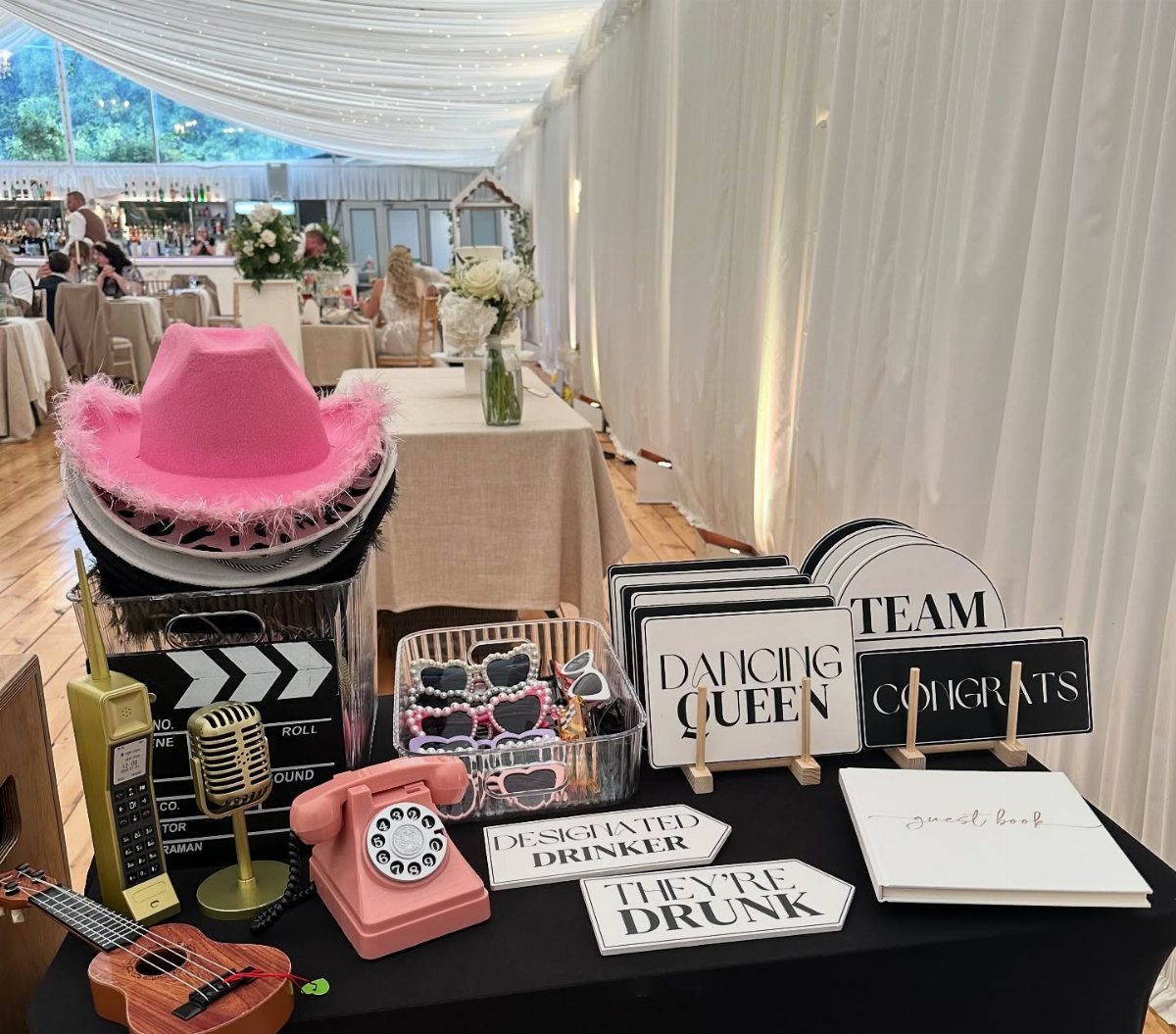
Props work best when they are funny enough to start a conversation. Signs with a little attitude, like "DESIGNATED DRINKER" or "THEY’RE DRUNK," get guests laughing before the camera clicks.
Set the table out in one spot, say near the tent entrance, so people can grab something and join a group shot.
A mix of wearables, like the pink cowboy hat, and things to hold, like the ukulele, gives everyone a way in. Keep the signs short so they read from a distance.
8. Golden Hour Portraits
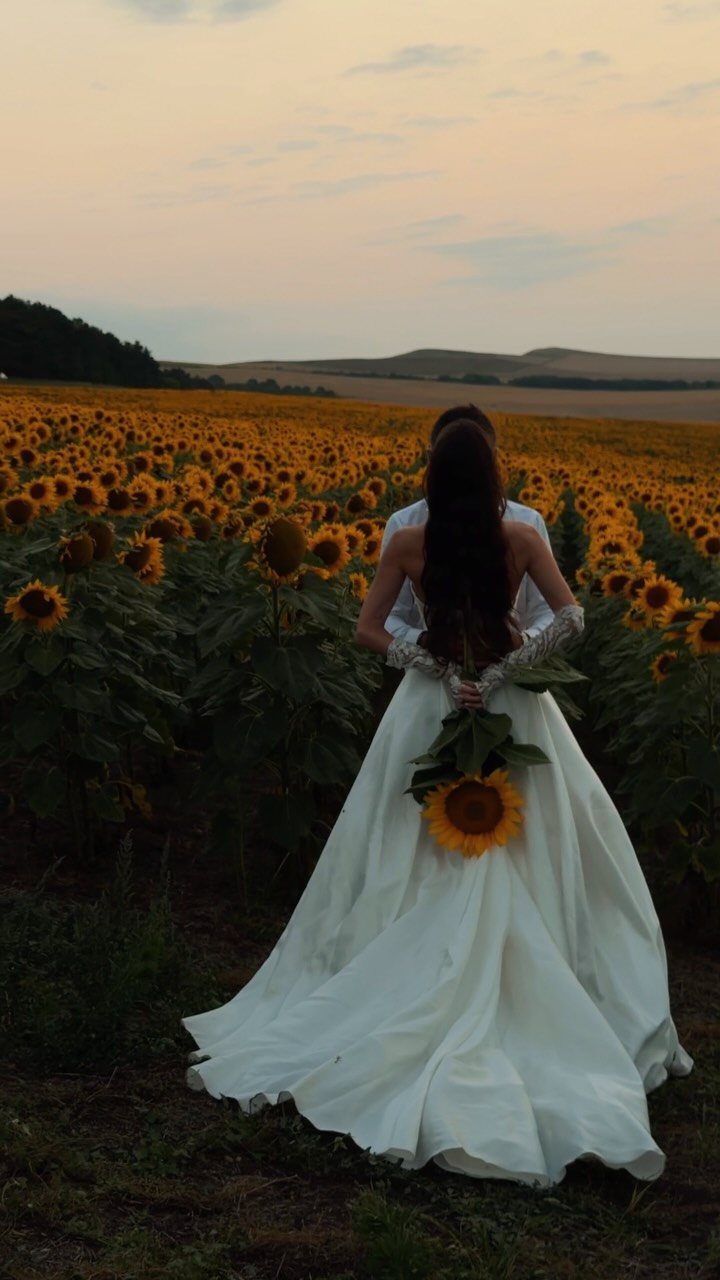
Low, warm evening sun is the softest light a wedding day offers, and a sunflower field gives it a colorful frame.
Plan the portraits for the hour around sunset, and ask your photographer when the light will be best at your venue.
Keep your schedule loose, since a late ceremony can eat the window. A pale gown stands out well against the yellow, so I would pick a field or open spot with plenty of space behind you.
9. Candid Moments
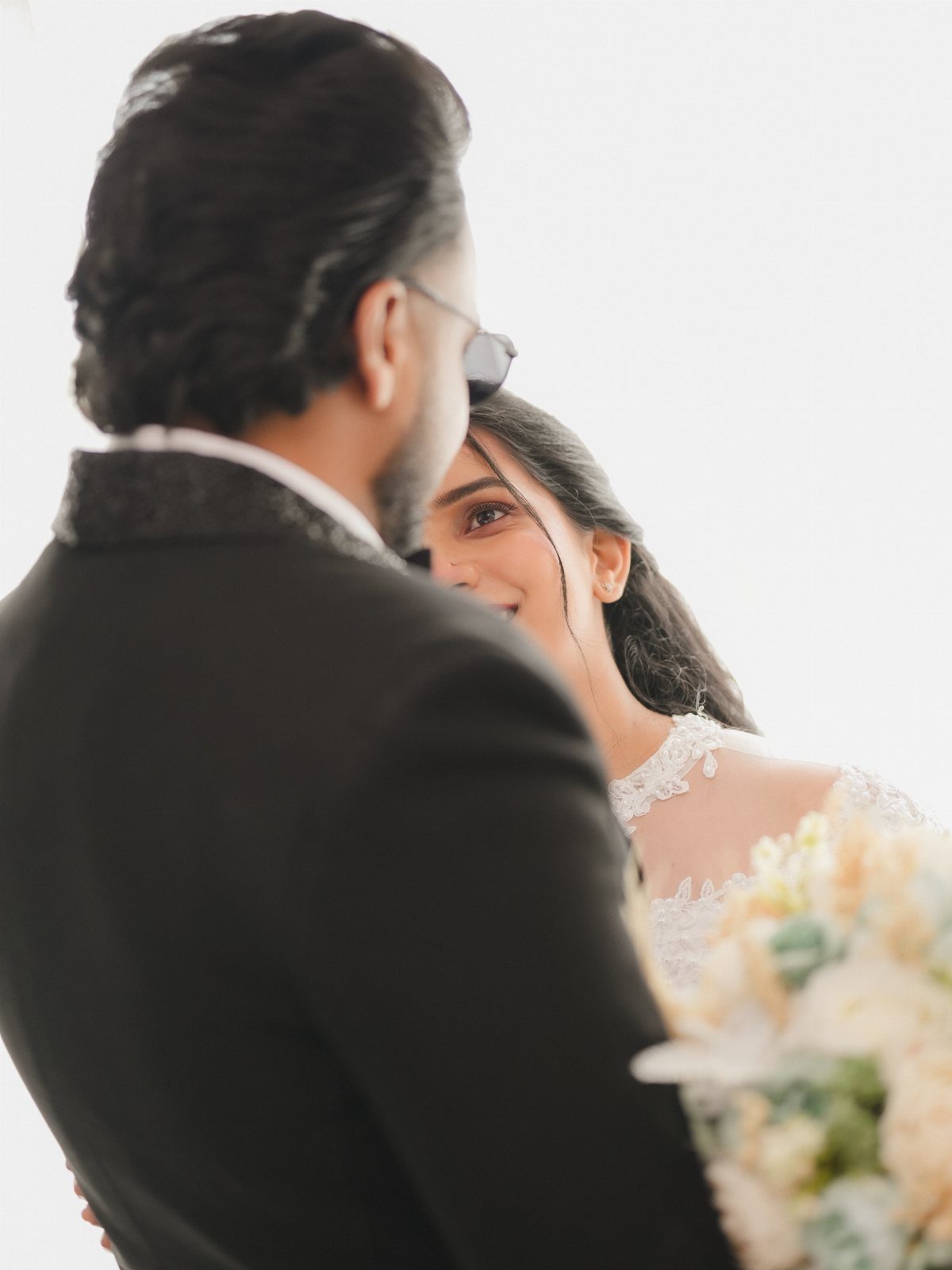
Candid frames are the ones where nobody is looking at the camera. A look between the two of you, mid-laugh, often beats the most careful pose.
Tell your photographer you want these, then give them room: stand close, say something only your partner would find funny, and let the shutter run.
I would take a few quiet minutes together over any posing direction, because real smiles show up when you stop performing.
10. Sparkler Send-Off
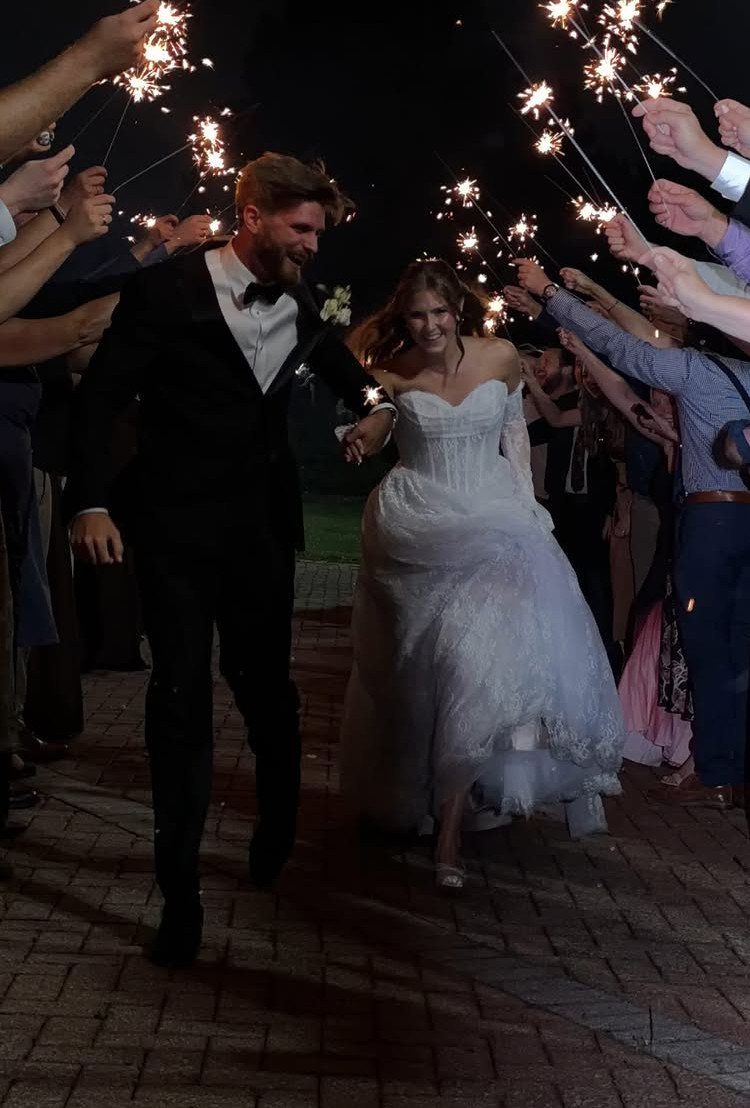
A sparkler send-off closes the night with a glowing tunnel of guests and a clear path for the couple to walk through.
Line people up on both sides of a paved path so you have an even lane to move down.
Hand out sparklers before the exit and light them all at once, since a full line of glow is what makes the shot work.
Ask your photographer to stay ahead of you, and walk slowly so there is time for a few frames.
11. Couple Under the Veil
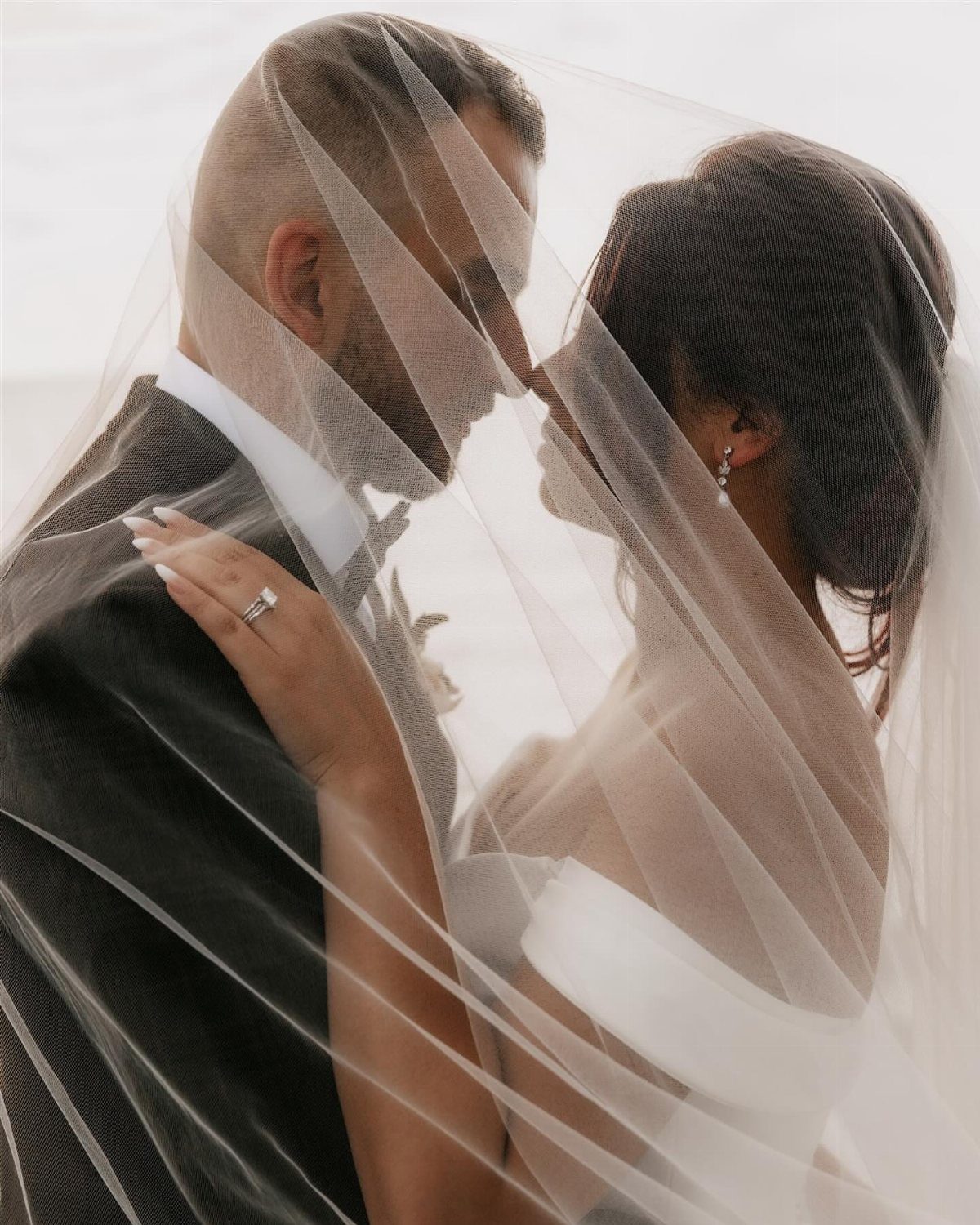
Draping the veil over both of you makes a small, private room in the middle of a busy day. Face each other close, so the sheer fabric softens everything around your faces.
Bring a helper to hold the veil up and spread it, then let it fall over the two of you. Slow down once you are under it: a quiet moment, forehead to forehead, photographs better than any stiff pose.
12. Aerial Shots of the Wedding Venue
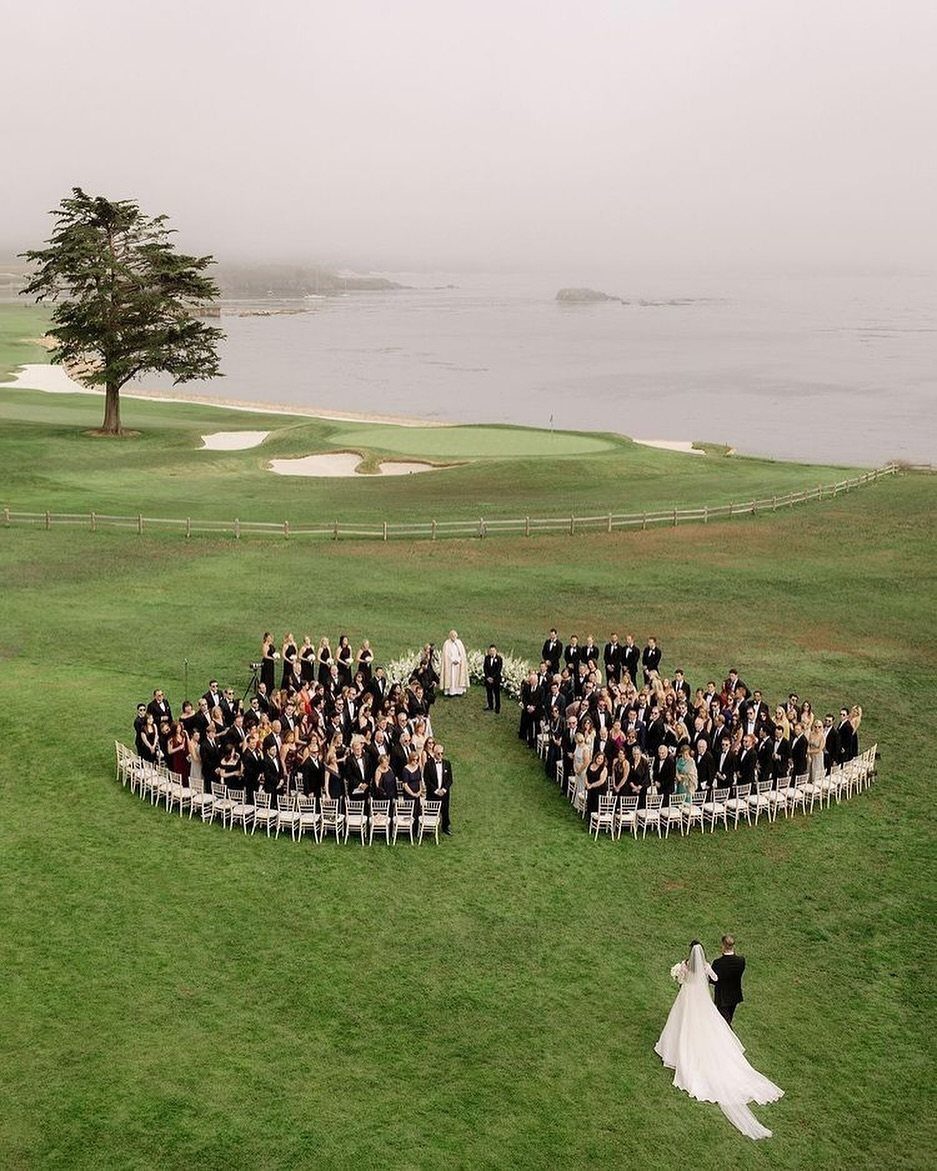
Ask your photographer whether they can shoot from above, and check venue rules early. Plan the arrangement with a few people helping place the crowd, and keep the walk-away short so the shape stays clear.
13. Backlighting Silhouettes
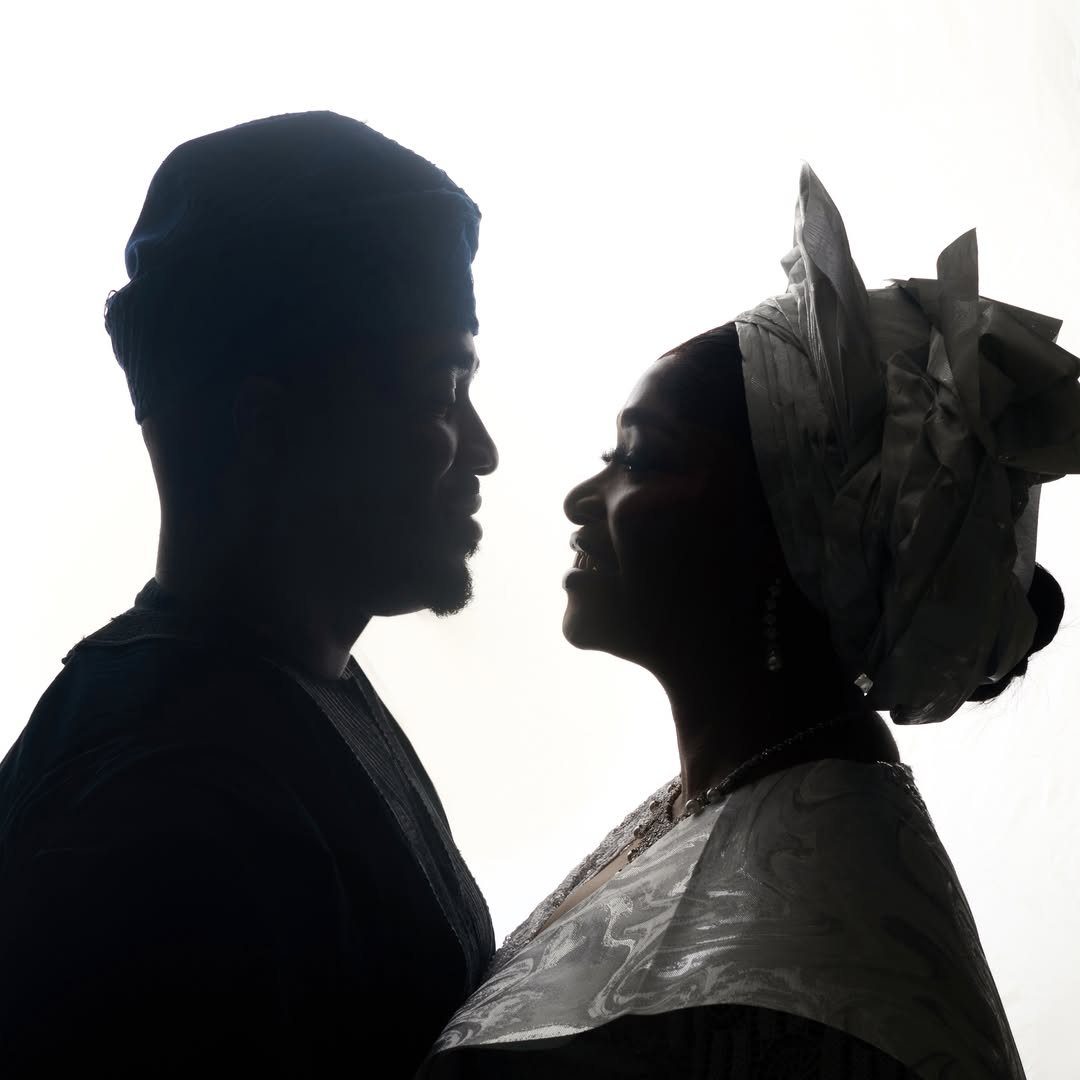
A silhouette turns the couple into pure shape, so the outline of the clothing does all the talking. Traditional Nigerian attire suits it well, because the flowing sleeves and the headwrap read clearly even with no color or detail showing.
Face each other in profile, close enough that the lines of your noses and chins almost meet.
Ask your photographer to expose for the bright background, which darkens you into outlines. Stand a little apart from anything cluttered behind you.
14. Hugs with Parents
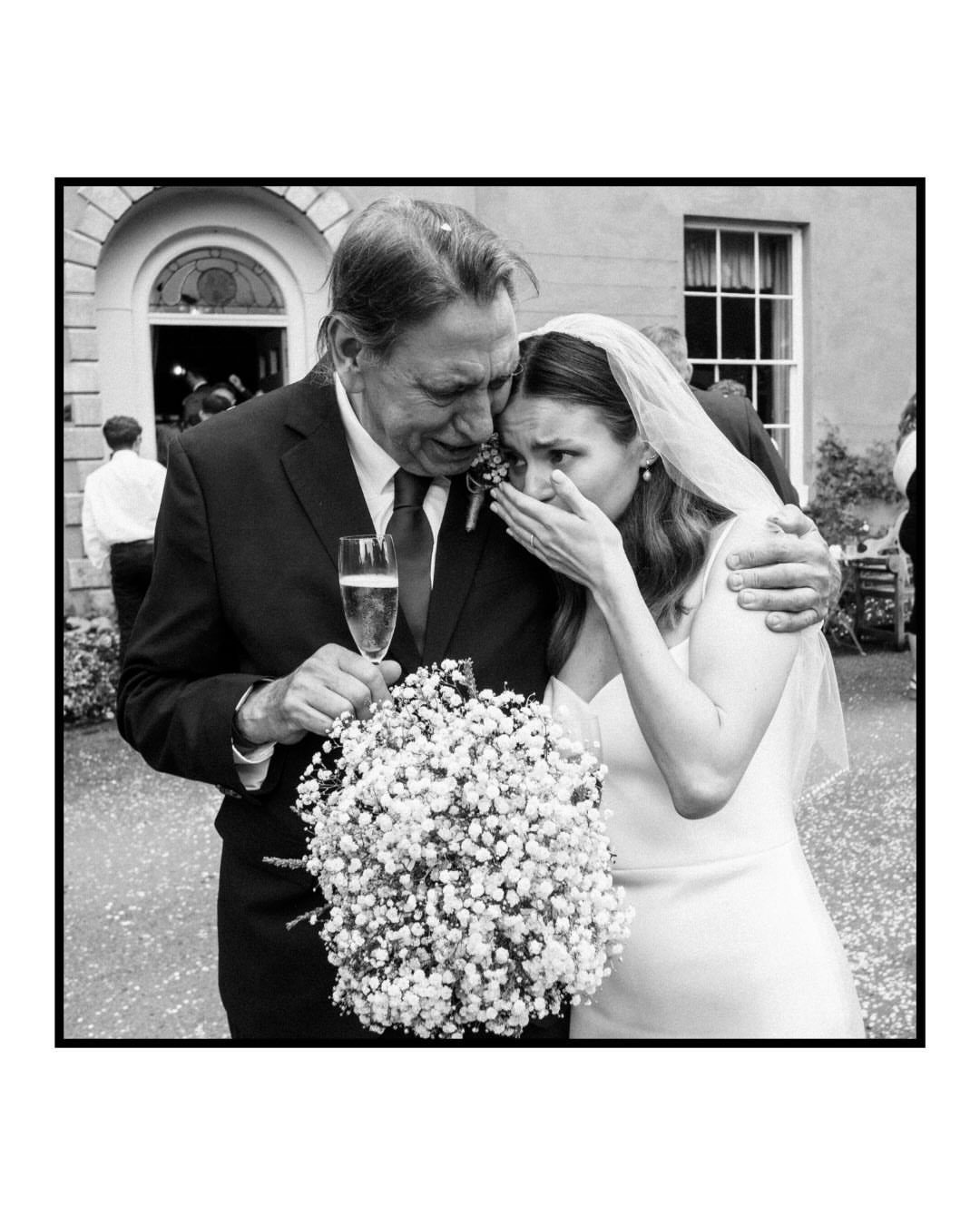
Quiet moments with a parent are easy to miss in a loud day, so ask for one on purpose.
A hug between a bride and her father, black and white, drink and bouquet still in hand, needs no staging at all.
Pick a calm minute, maybe before the toasts, and tell your photographer who you want.
Black and white keeps attention on the faces and the embrace rather than the colors around them. I would give the photographer a short list: each parent, one at a time.
15. Reflections and Shadows
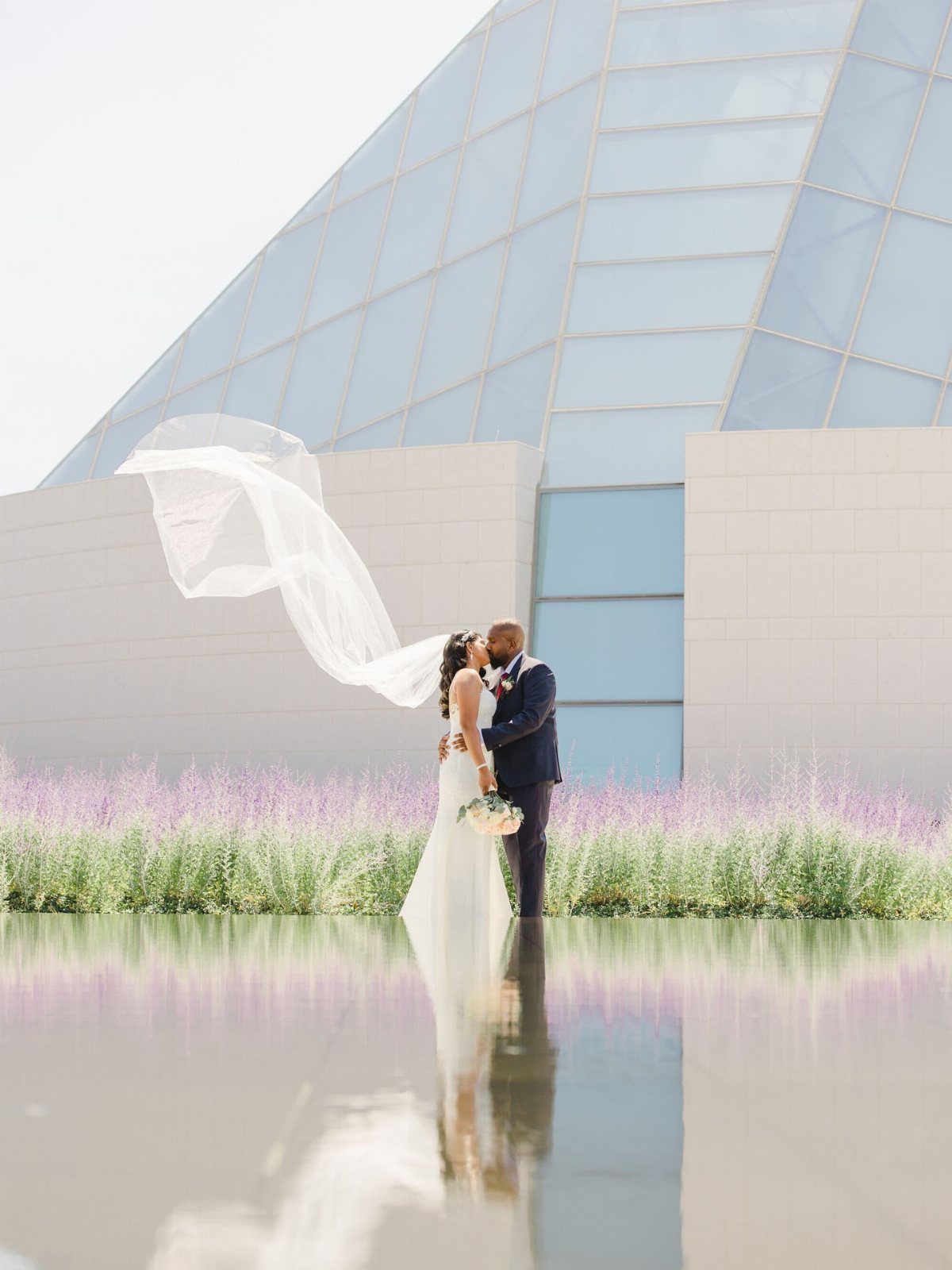
Still water works like a mirror, and a kiss doubles into a second picture. A shallow pool in front of a modern building gives you clean lines to frame the couple against.
Look for a pool, puddle or glass surface at your venue, and ask your photographer to shoot low so the reflection fills the lower half.
A veil caught by the wind adds movement, so I would keep it loose. Stand still while the water settles.
16. The Tug-of-War Challenge
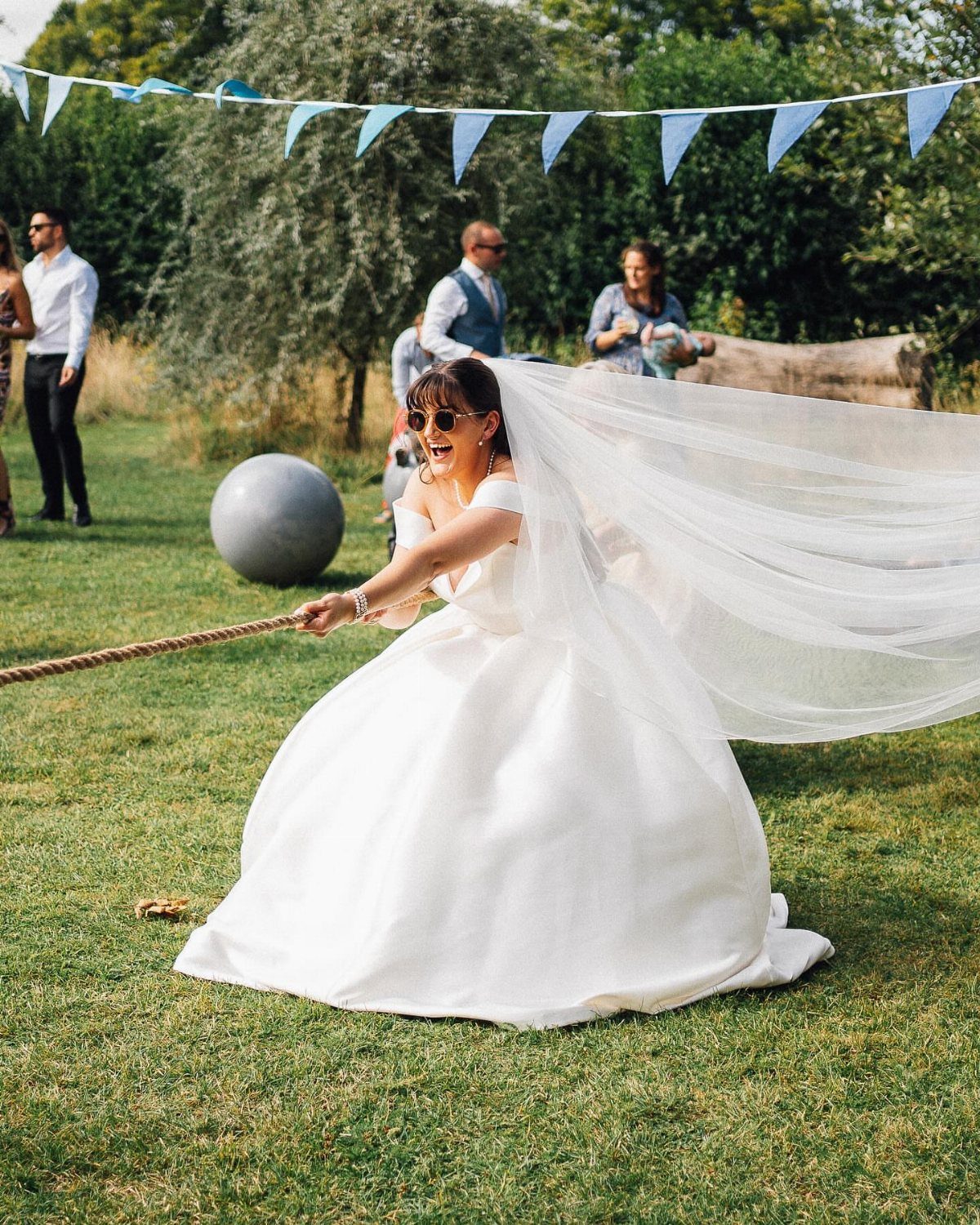
A tug-of-war gives the couple something to do with their hands and a reason to laugh. Hand the bride one end of the rope in her gown and veil, and the effort does the posing for you.
Choose a flat patch of grass and split the wedding party into teams.
Keep the rope in reach of the photographer’s frame, and let a few rounds run so the expressions loosen. I would add a signal for who wins before it begins.
17. Groomsmen Lifting the Bride
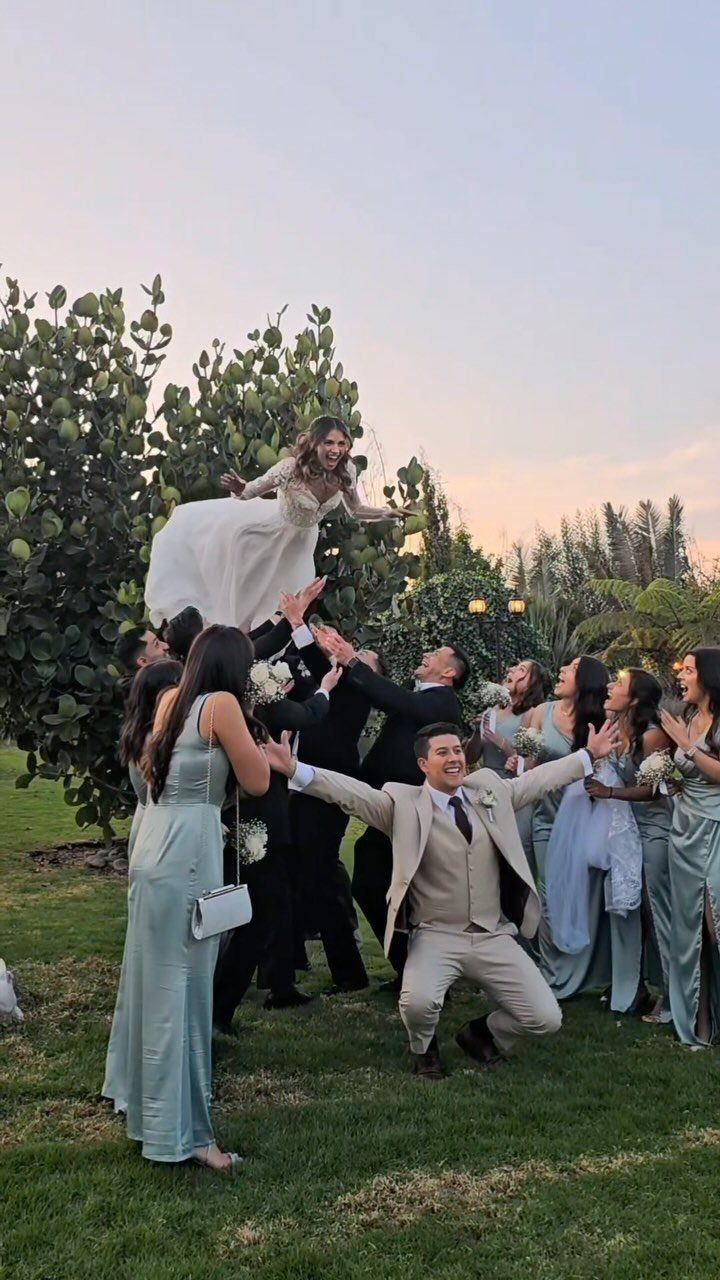
Lifting the bride gets everyone laughing, and the laughter is what you are after. Have the groomsmen gather close, count to three, and raise her together, with the rest of the party cheering around them.
Use several lifters instead of two, so nobody strains. Ask the bride to wear shoes she can kick off, and pick flat lawn for solid footing.
Do it at sunset if your schedule allows, since the light flatters the whole group. Try it twice at most.
18. Wedding Party Spraying Champagne
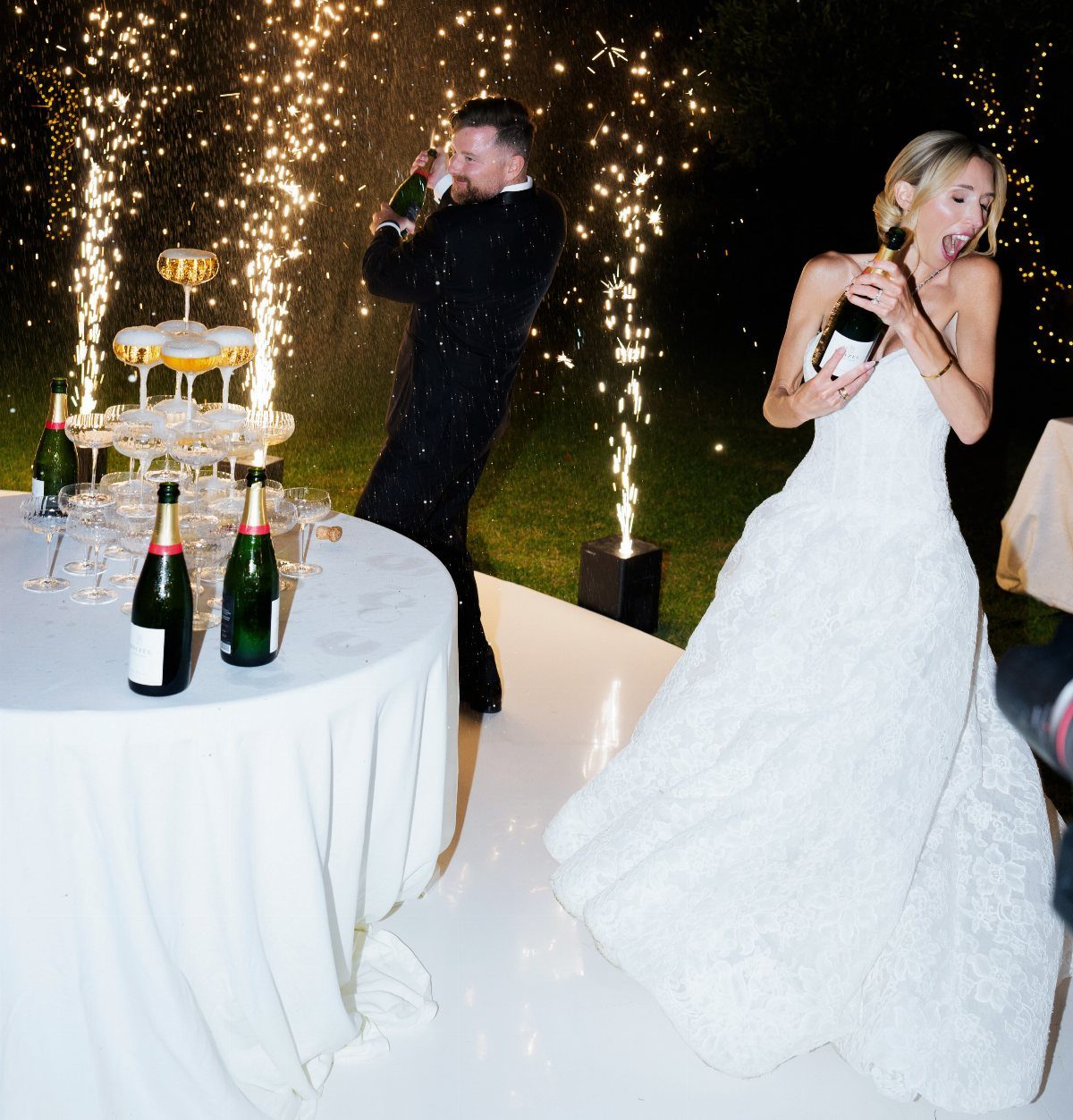
Spraying champagne is messy, loud and over fast, so rehearse the plan before the corks fly.
Open the bottles in a controlled way first, then give each person one and have everyone spray together on the count so the photographer gets the burst at its peak.
Keep dresses and suits clear of the stream, and buy a few spare bottles, because the first round usually goes by in seconds.
19. Wedding Party Tossing Confetti
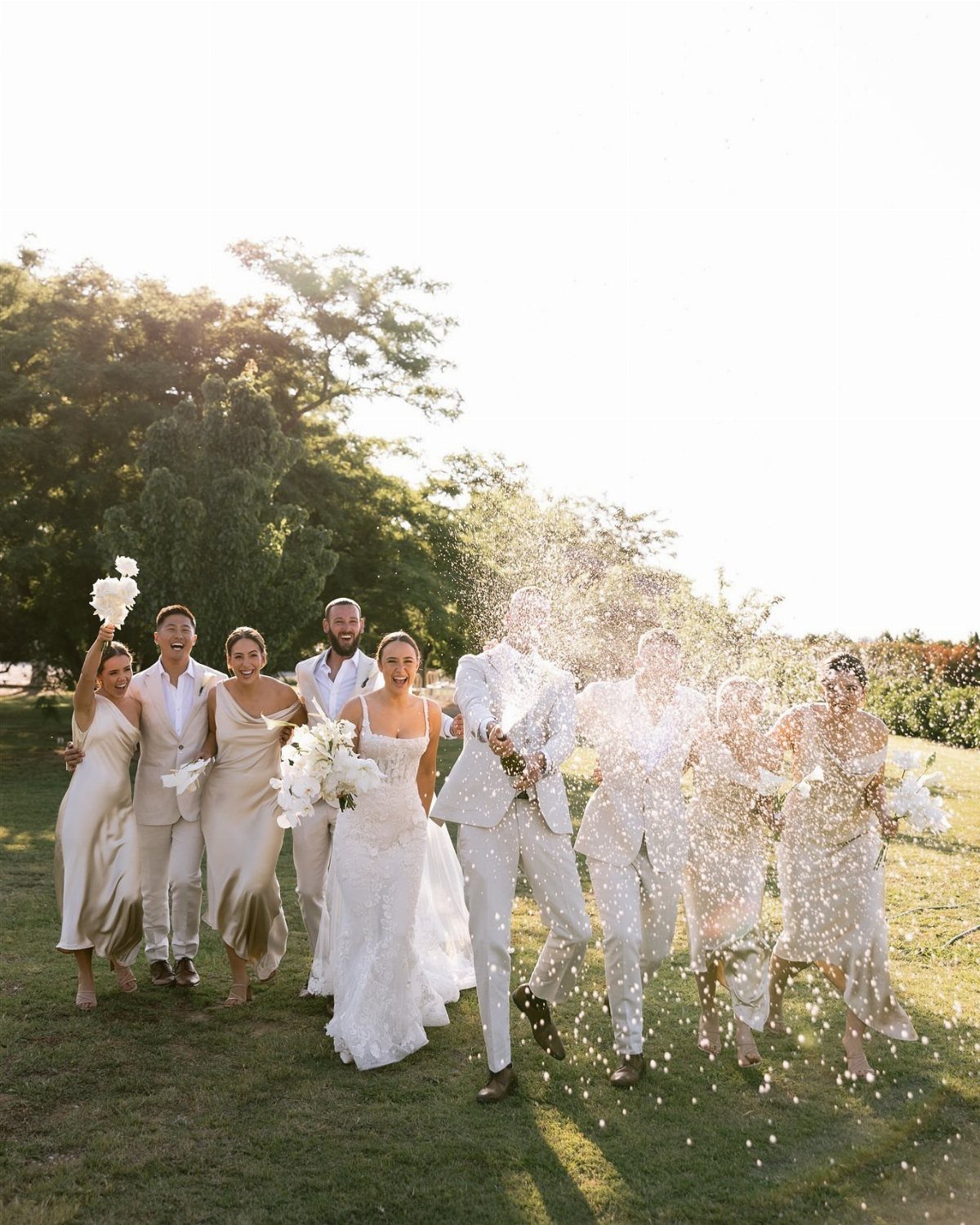
Give everyone a handful and toss on the count of three, so the cloud hangs in the air together.
Ask your photographer to shoot a burst of frames while you walk through it. Throw high, not at each other, and check your venue’s rules on confetti first.
20. The Cutting of the Cake
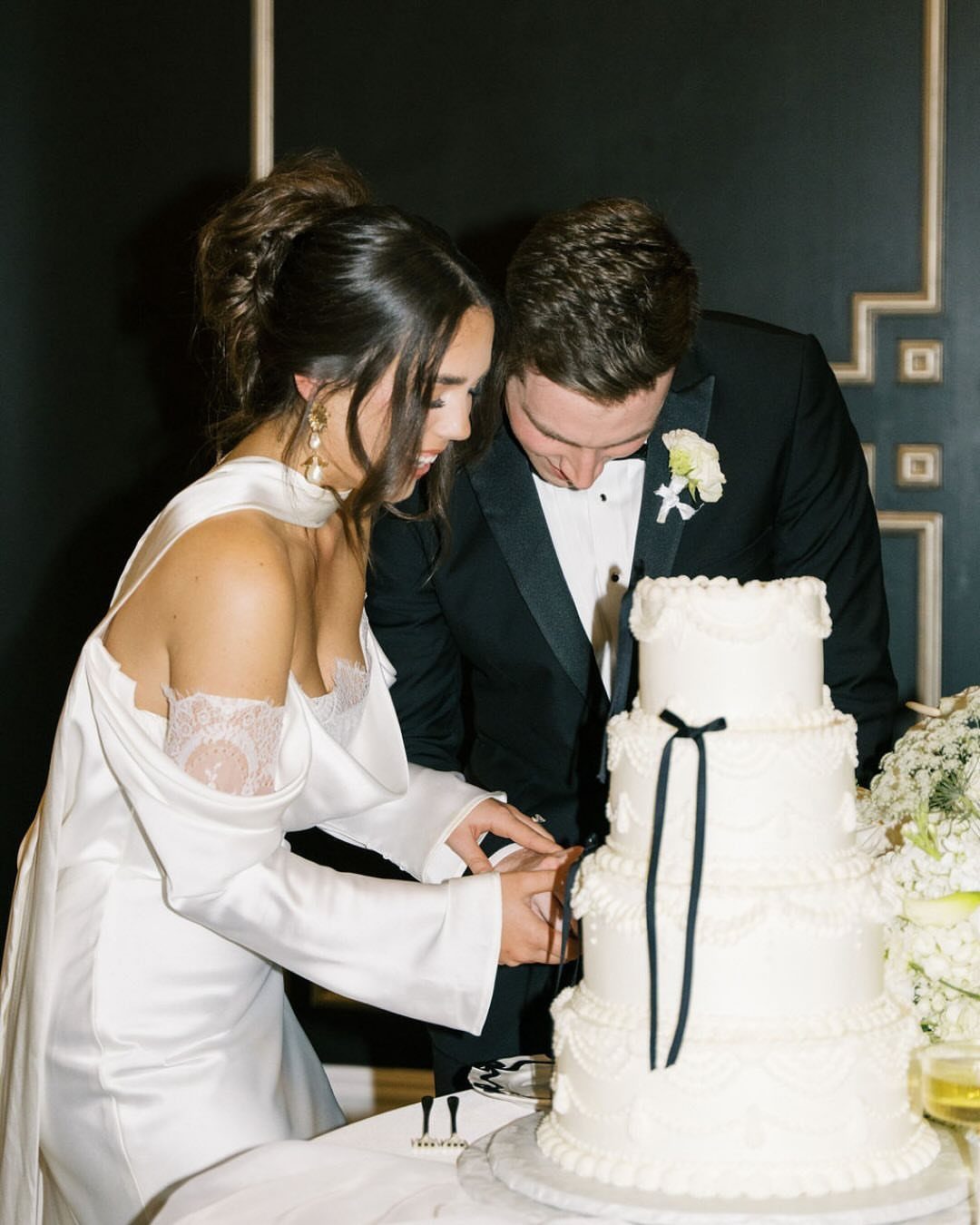
A cake cutting can look relaxed instead of cheesy if you skip the big smiles at the camera and watch the knife.
Cut together, hands stacked, and take your time over the first slice.
I would ask for one frame of the cut and one close frame of the tiers, then stop. Nobody needs a long photo session over cake.
21. Family Formals
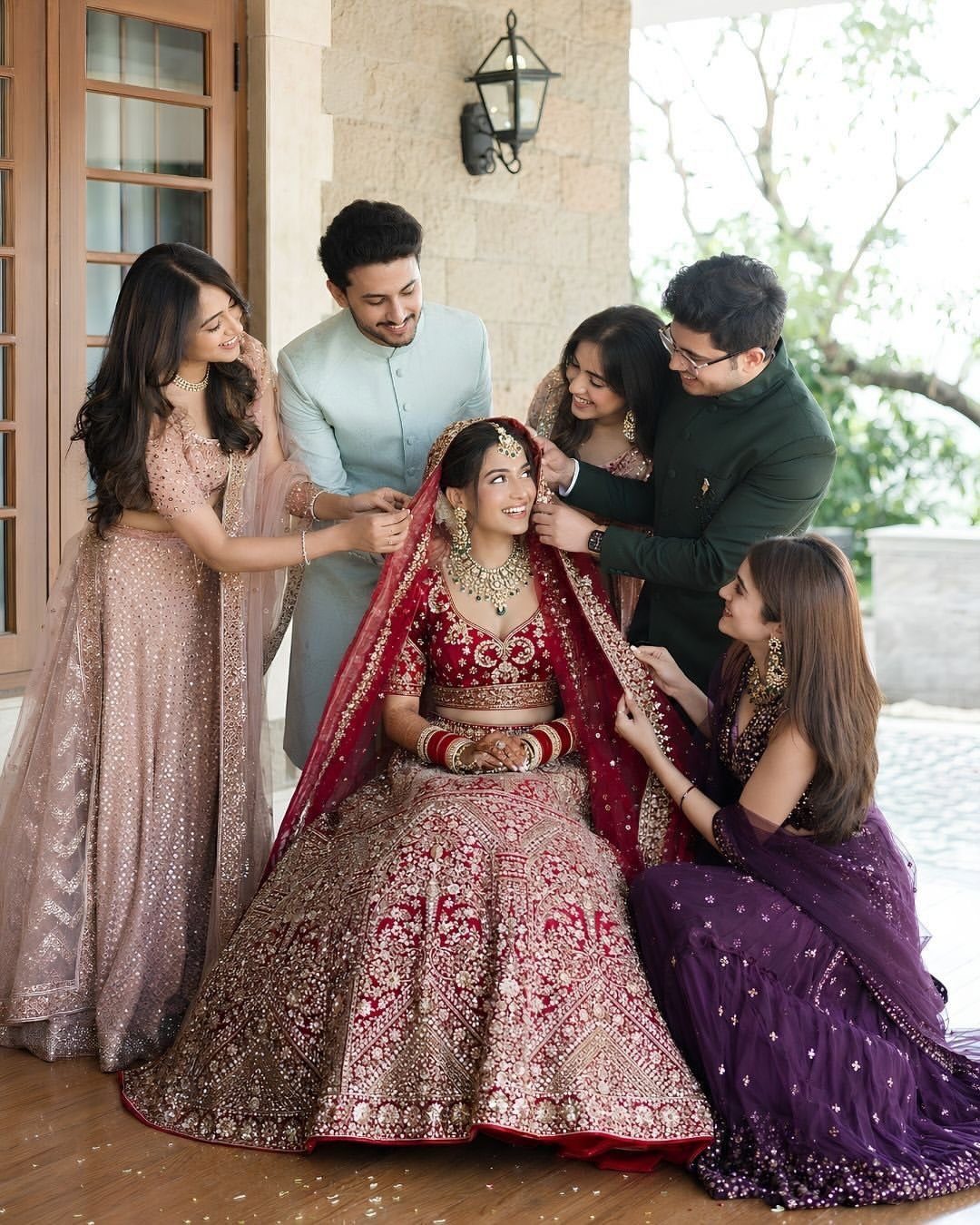
Family formals are the classic group portraits, and a short list keeps them moving. Write down each grouping ahead of time, such as the bride with each side of the family, and hand it to the photographer.
Keep the groups small and gather people before you start, since hunting for an uncle eats the clock.
A plain stone wall behind the family keeps attention on the outfits, and a bold color like red stands out against it. I would shoot one smiling frame and one calm one.
22. Walking Hand-in-Hand
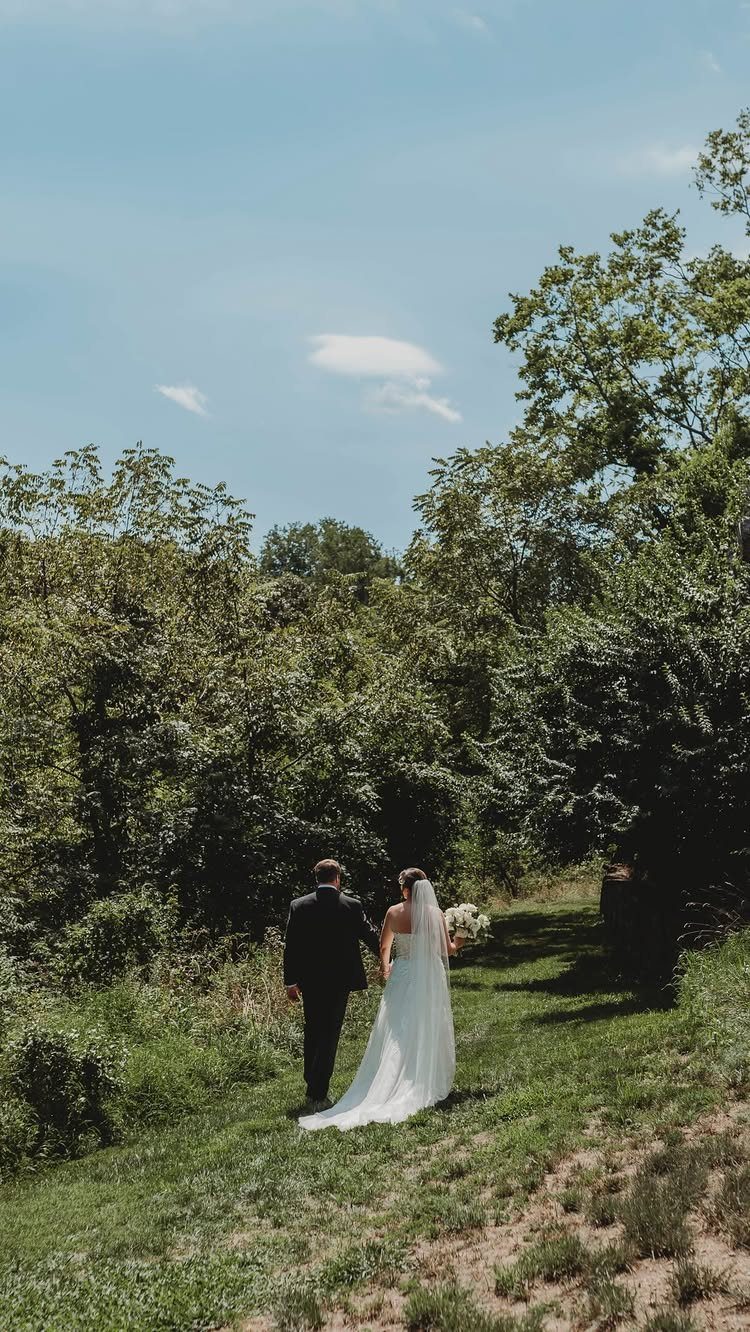
Walking away from the camera, hand in hand, gives a portrait with motion and no pressure to smile. An open green field with trees ahead leaves room for the photographer to follow behind you.
Walk slowly and at an easy pace, not a staged one, and glance at each other now and then.
A white gown stands out well against grass, so I would choose a spot with a clear path and no clutter underfoot.
23. Nighttime Portraits
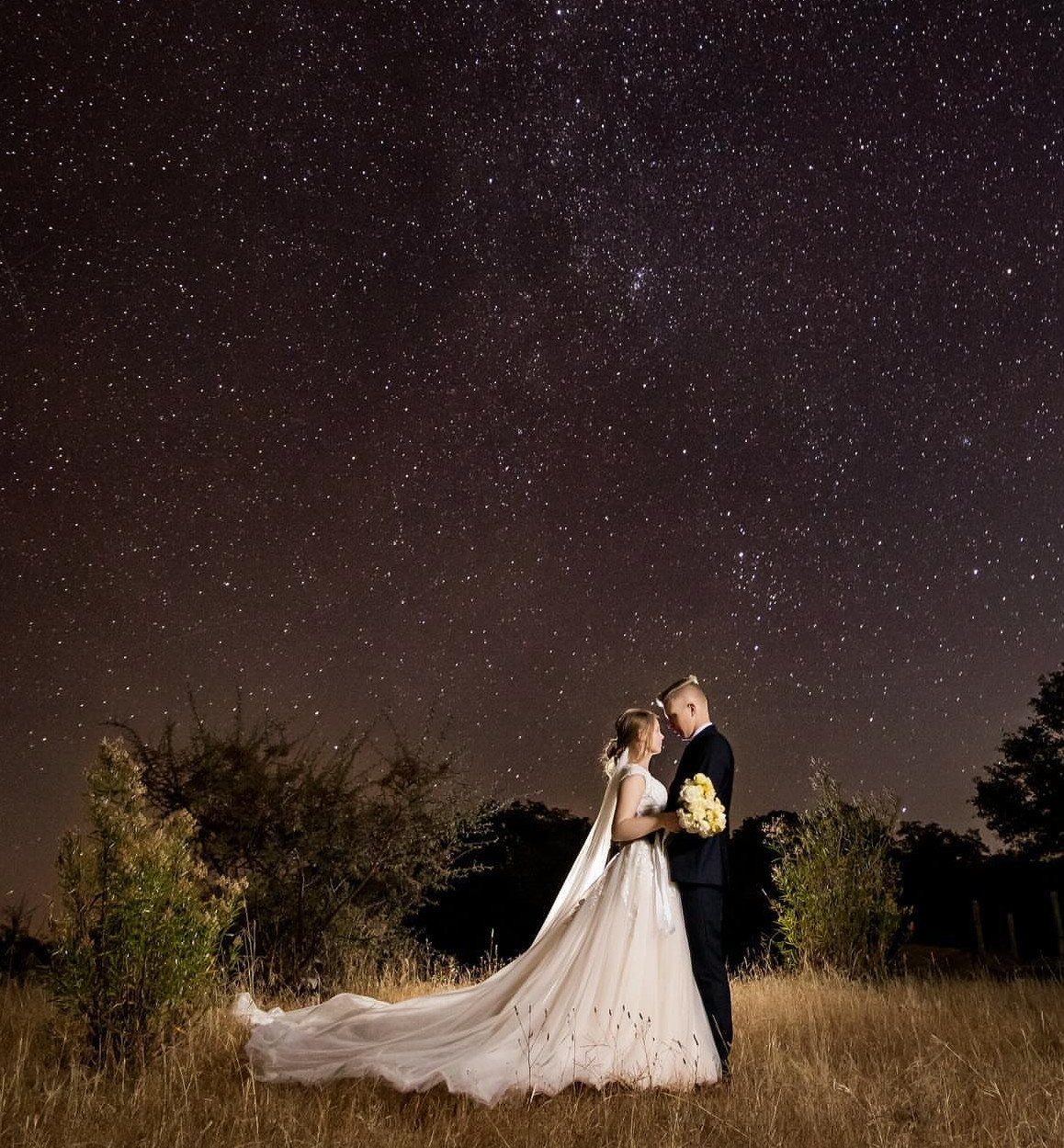
A night sky full of stars turns a field into a private stage, so plan this one with your photographer well before the day.
Ask whether they bring off-camera lighting, since you will need some light on your faces while the stars stay visible.
Stand facing each other and hold still for each frame.
Yellow flowers, like the bouquet here, add a spot of color against the dark. Take it after the reception starts, once the guests are busy.
24. Bouquet Toss
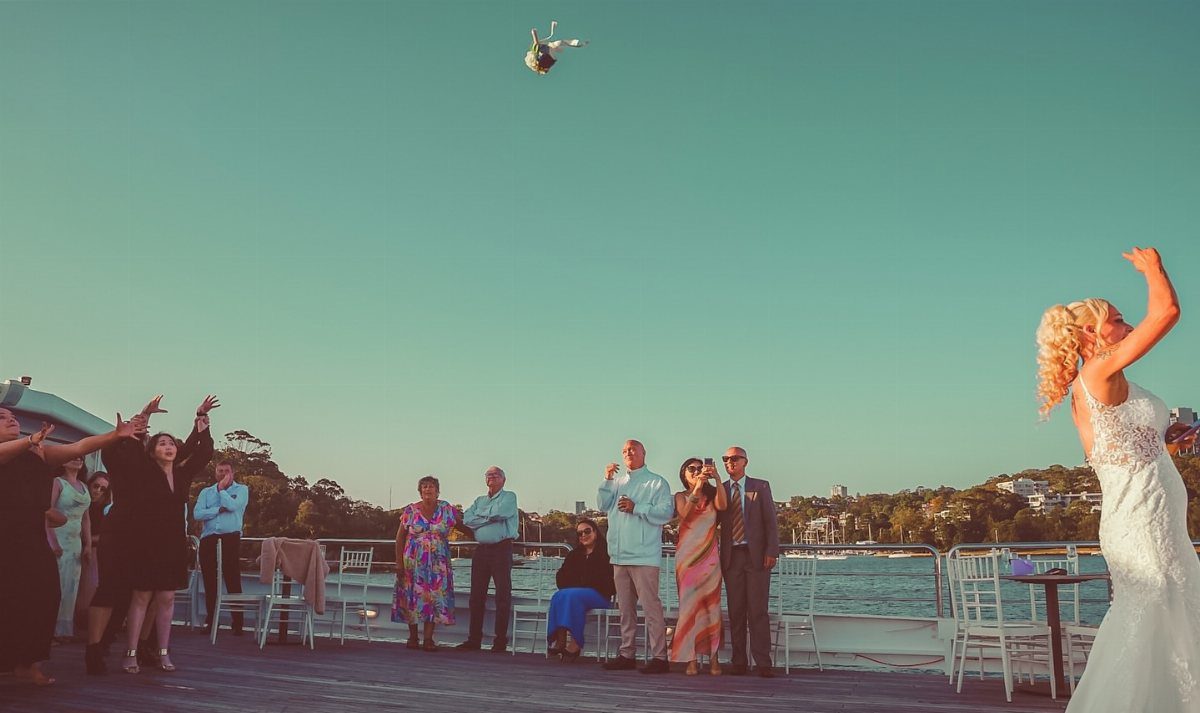
A bouquet toss is over in a second, so decide the plan first.
Gather the guests who want to catch it in one cluster behind you, and have the bride turn her back, then throw high so the bouquet hangs in the air.
Ask your photographer to stand facing the crowd, where the reaching hands and reactions are.
I would do 2 throws, since the first often goes by before anyone is ready. Pick a spot with open space around it, like a deck.
25. The Chase
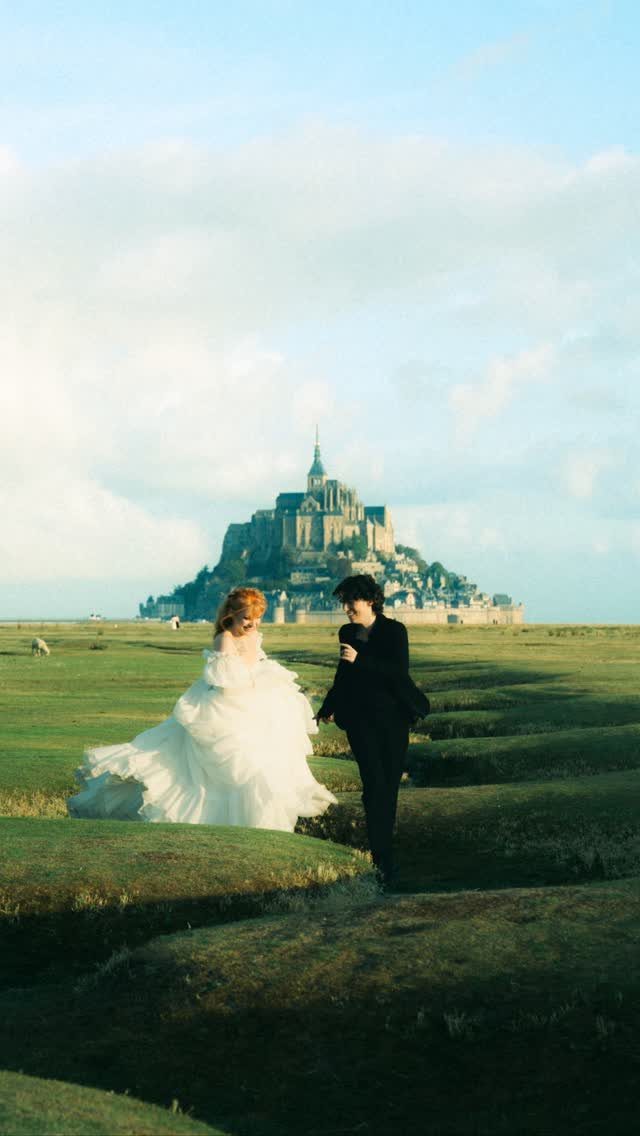
Running through a field gives you a portrait that is pure motion, and an open stretch of grass with a landmark far ahead gives the frame its sense of place.
A white gown against green grass reads clearly from a distance.
Pick flat ground with nothing to trip on, and hold hands so you stay together.
Have your photographer stay a few steps ahead on firm, clear ground, with a spotter nearby if the path is uneven, and keep the shutter firing while you stride toward the lens.
I would run it two or three times, since the first pass is usually stiff and the laughing starts on the second.
Wear shoes you can move in, or carry the heels.
26. The Lean and Kiss
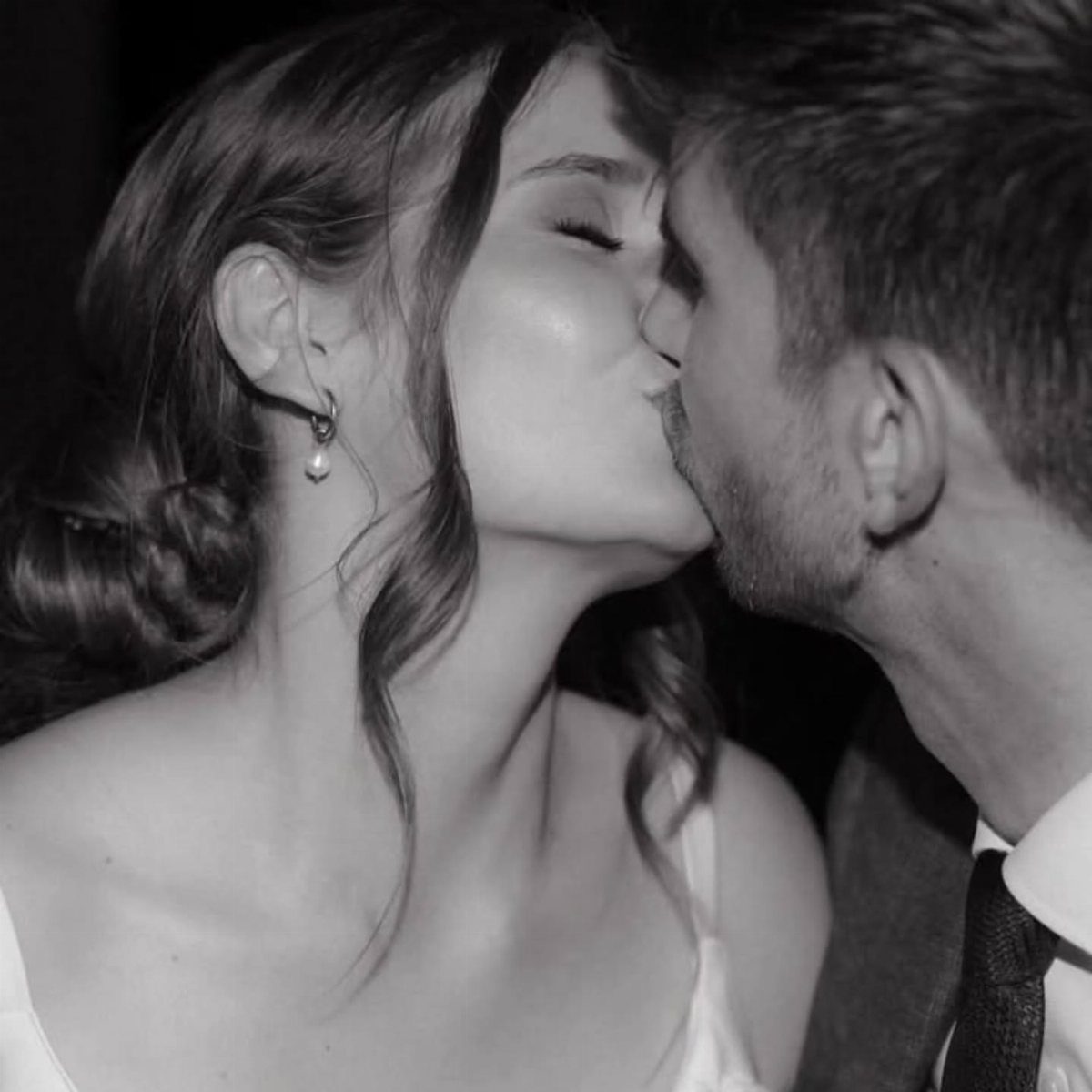
Black and white strips this pose down to skin, fabric and the small curve of a lean, so there is nothing to look at but the kiss.
Stand close, tilt your heads toward each other, and let your foreheads or noses nearly touch before the lips do.
Keep the background dark and plain so the faces carry the frame.
I would ask the photographer for a tight crop, and then give them a slow count: lean in, pause, kiss. Dress details like pearl earrings or a tie show up well at this distance, so choose them with care.
Comfort and Movement Tips
Nobody poses well when they are trying not to pose badly, so give yourselves permission to get it wrong. The small imperfections are usually what make a frame feel like you.
A slight tilt toward the lens flatters almost everyone, while pulling back tends to make you look guarded. That small tilt creates connection and keeps the photos from looking stiff.
Loosen up anywhere your body bends: elbows, fingers, wrists. If your hands are clenched around each other, the photo will show tension, so breathe out, loosen your fingers, and shake your hands loose before the shutter clicks.
Keep moving, even in small ways. Give your hands something easy to do: rock slowly side to side, trail your fingertips along your partner’s arm, or tuck a loose strand of hair behind their ear.
When your photographer gives a prompt like "walk toward me" or "snuggle up," keep doing it until they say stop. They will shoot from different angles while you move, and the best frame often comes a few seconds in.
Timing for Best Photos
Build the timeline around the light, not the other way around. Check the sunset time for your date as soon as you can, since days run shorter in some seasons and a rigid timeline can miss the best light.
Squeeze portraits into a rushed gap and you may get nice but ordinary photos. Extra time with your photographer lets them experiment with more inventive shots.
If the ceremony runs late or your venue bans outdoor portraits, plan a backup. Off-camera flash outside the venue works well, and so do portraits lit by string lights, neon signs, or big marquee letters.
Group Photo Strategies
Most of the time in family formals goes to finding people, not taking pictures. Plan on 20–30 minutes for 10–15 group shots, since each one should take just 2–3 minutes.
Name a family wrangler on each side, someone who knows the relatives by face, and give them your written list. Their job is to call people forward before the photographer needs them.
One or two ushers can round up the guests for you. While one group is being photographed, they can line up the next so the photographer never waits.
Photograph grandparents and elderly guests first, so nobody is left standing for long.
Frequently Asked Questions
What are some good ideas for wedding pictures?
Start with a first look, a close-cropped couple portrait, and a golden hour session around sunset.
Add candid frames where nobody looks at the camera, a veil portrait, and a few playful group shots like confetti or champagne spraying. Mixing quiet and loud shots gives you a set that feels like the whole day.
What is the 30-5 rule for weddings?
The rule gives 30 minutes to couple portraits and 5 minutes to each family grouping. For family formals, I plan a bit tighter: 2–3 minutes per group, or 20–30 minutes for 10–15 groups.
Whichever version you choose, a printed list of the groupings and one relative on each side who knows everyone by name will keep the portrait block from running long.
How far in advance do you do bridal portraits?
Bridal portraits usually happen shortly before the ceremony, while the dress and hair are fresh. Check your sunset time before anything else is booked, since the rest of the day’s schedule bends around that window.
When the good light only lasts a short time, I would give it to the bride’s solo portraits and have someone close by to straighten the veil between shots.
What are the trends in wedding photography for 2026?
Expect more candid, documentary-style frames mixed with styled portraits that look cinematic.
Unique angles and creative use of natural light are also part of the direction. A photographer’s gallery tells you how they handle candid moments: open a full ceremony and a dance floor sequence and see whether the frames feel unposed.



